
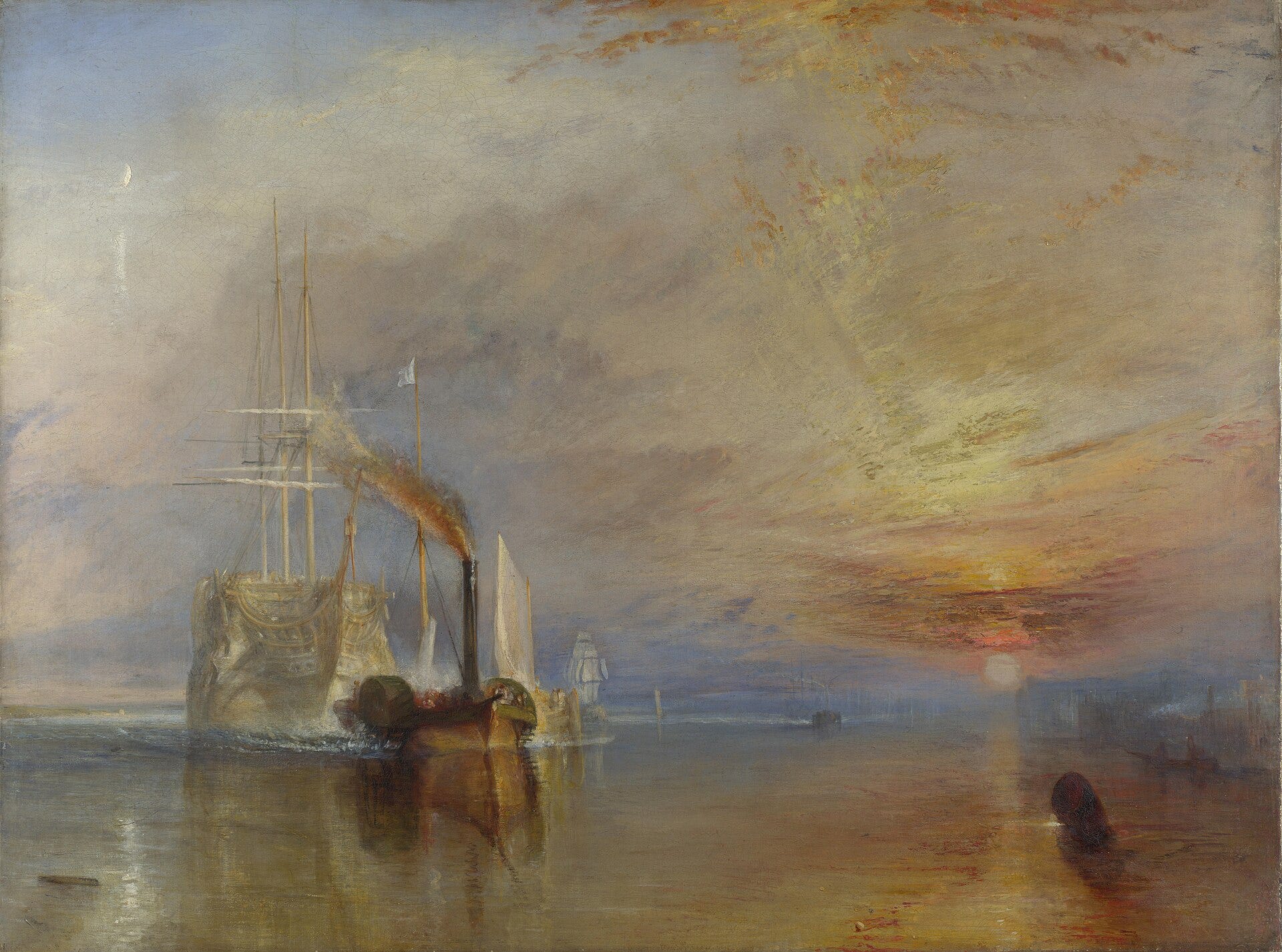
Marine painting is the painting of ships and the sea: fleets at anchor, naval battles, merchant ships coming into harbor, a single vessel portrayed for its owner. It became a genre of its own in the Dutch Republic early in the seventeenth century, when the country lived from overseas trade and from its navy. Its best-known picture is The Fighting Temeraire, painted by J. M. W. Turner in 1839.
The name comes from the Latin marinus, "of the sea," which is built on mare, the sea. In English, a painting of this kind can simply be called "a marine," the way a picture of a face is called a portrait.
Cool Stories About Art is a newsletter to learn art the fun way.
Join 200,000+ readers and get:
10 new art stories / month
The entire archive of content (1,000+ articles)
Comment, ask questions, and chat with other readers
The Fighting Temeraire is a good place to start, because it shows what the genre expected of a painter and how freely Turner used those expectations. The ship was real. The Temeraire had fought at the Battle of Trafalgar in 1805, and in 1838 she was towed up the Thames to be broken up.
A captain or a ship owner who ordered a picture of his vessel wanted her shown exactly as she was, down to the rigging. Turner kept some of that precision and dropped the rest. He painted the Temeraire white and gold, although her paint was black and yellow, and he showed her three lower masts standing, although by then they had most likely been removed.
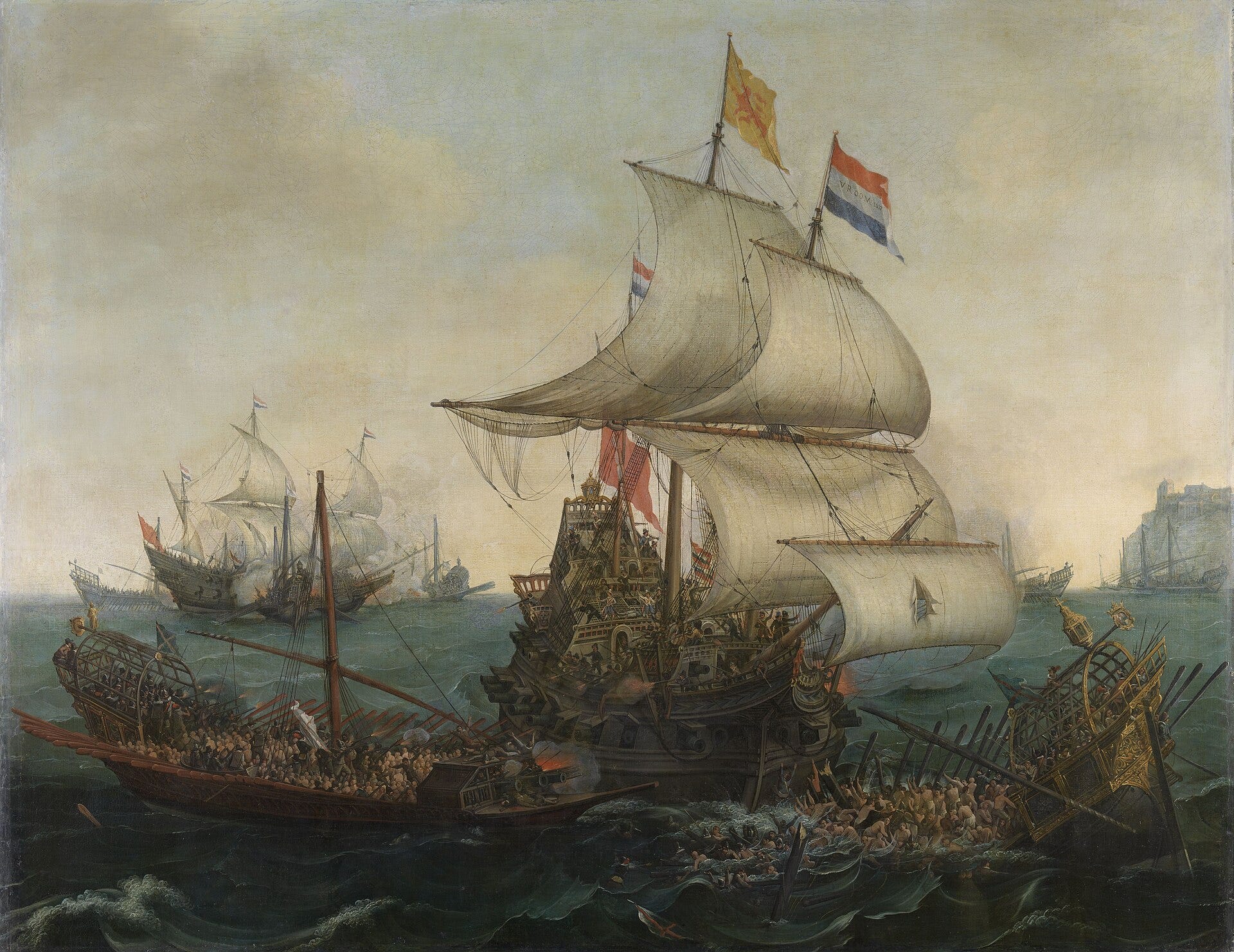
Those liberties only make sense against the rules they bent. The rules had been set two centuries earlier in Holland, by painters who sailed, sketched from boats and were paid to get every ship right.
A sea power paints its ships
Marine painting grew out of Dutch trade. Early in the seventeenth century the young Dutch Republic became a great sea power. The Dutch East India Company was founded in 1602 and the West India Company in 1621, and the merchants who invested in them were glad to buy pictures of the harbors and fleets that made their money.
The painter usually credited with founding the genre is Hendrick Cornelisz Vroom, from Haarlem. Before he painted ships, he had spent years traveling on them, and he knew how they were built. He put that knowledge into his paintings, where the ship itself, drawn correctly, is the subject.
His A Fleet at Sea, from around 1614, is one of the earliest Dutch marine paintings. It shows a 24-gun Dutch warship sailing through a harbor among the fishing and cargo boats of the coast. In a picture like this, the ship comes first and the sea is its setting.
What You'll Discover
The painter who sketched a battle from a boat.
How a king brought marine painting to London.
What a ship's owner wanted from a painter.
The print Turner said made him a painter.
What Turner changed on the Temeraire.