
Monochrome painting is painting in a single color. A monochrome can be built from the shades of one color, from light to dark, or it can be one color laid over the whole canvas.
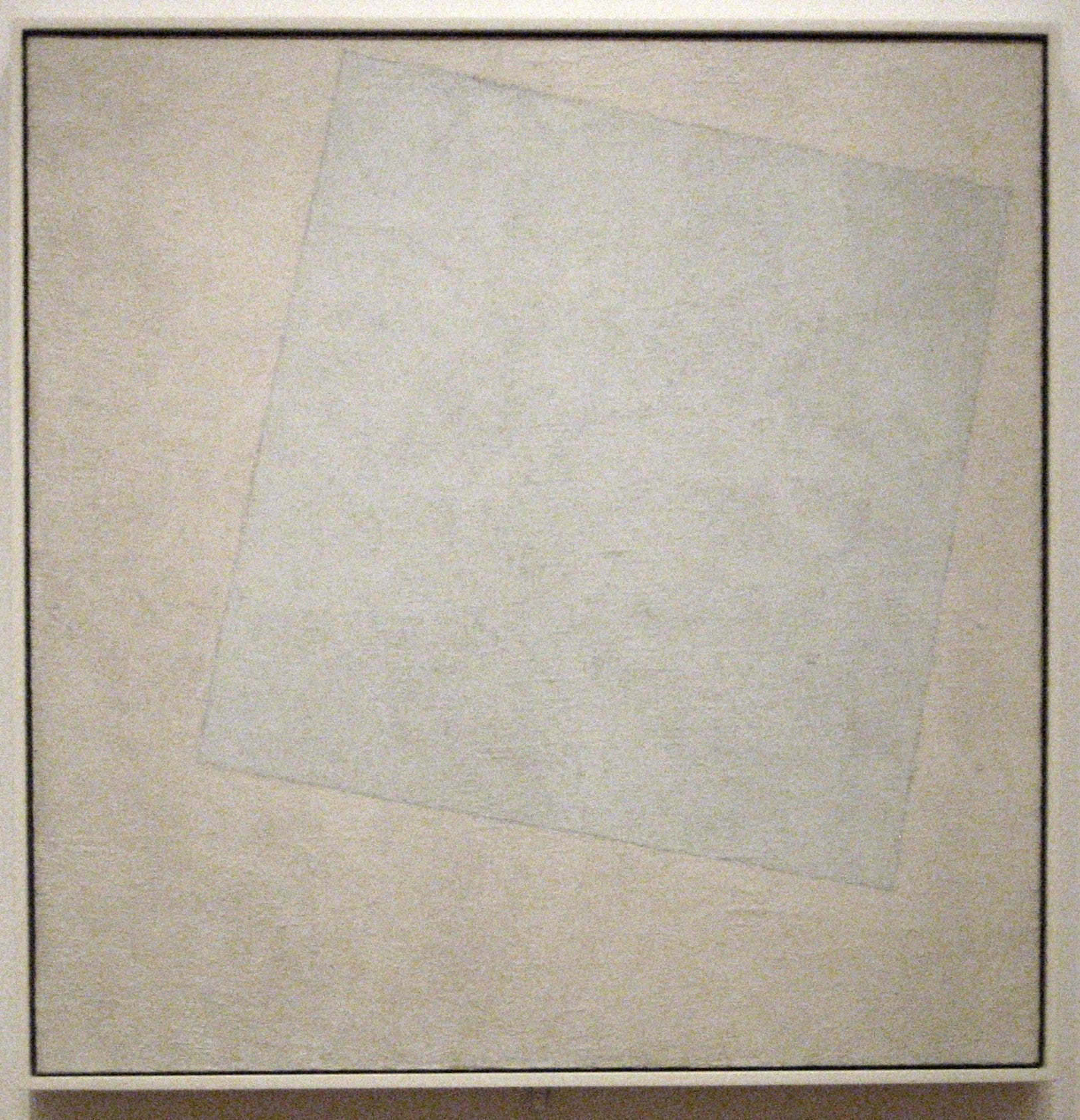
In the twentieth century, that second kind became an art form of its own, with the white canvases of the Russian painter Kazimir Malevich, the blue ones of the French artist Yves Klein and the black ones of the American Ad Reinhardt.
The word comes from the Greek monokhrōmos, "of a single color," built from monos, "single," and khrōma, "color." It entered English in the 1660s for a painting or drawing done in shades of one hue. For a long time that was all it meant: a picture without the full range of colors, not a picture of one flat color.
Cool Stories About Art is a newsletter to learn art the fun way.
Join 200,000+ readers and get:
10 new art stories / month
The entire archive of content (1,000+ articles)
Comment, ask questions, and chat with other readers
Long before anyone took it seriously, the canvas in one flat color was a joke. On October 1, 1882, a group of Paris artists and writers called the Incohérents held an exhibition in the Left Bank apartment of the writer Jules Lévy.
They wanted to make fun of the academic art establishment. The poet Paul Bilhaud hung a black monochrome there. It is the earliest monochrome painting that has been documented.
The humorist Alphonse Allais took up the gag. He showed a white monochrome at an Incohérent show in 1883 and a red one in 1884. In 1897 he gathered such pictures in a book, Album primo-avrilesque, an April Fools' album, and gave each one a comic title. The white page is called First communion of anaemic young girls in snowy weather.
For Allais, a canvas in one color showed how far painting could be pushed into absurdity. In 1915, thirty-three years after Bilhaud's joke, the Russian painter Kazimir Malevich showed a picture almost as bare, a black square, and this time nobody was joking.
Pictures painted in gray
Long before Malevich, artists worked in one color for practical reasons. For centuries they made drawings in brown or black ink, diluted to different strengths to get lighter and darker tones. In oil painting, the same approach is called grisaille, from the French gris, "gray." A grisaille is painted entirely in grays, and the forms come from light and shadow alone.
Grisailles were often made as a guide for engravers. These craftsmen copied paintings as black and white prints, and a picture already reduced to grays showed them every shade of light and dark they had to reproduce.
The Metropolitan Museum of Art in New York owns an Odalisque in Grisaille by Jean-Auguste Dominique Ingres and his workshop, painted around 1824 to 1834. It is a smaller gray version of his Grande Odalisque of 1814, now in the Louvre, with only a slight blush of color on the back and the ear.
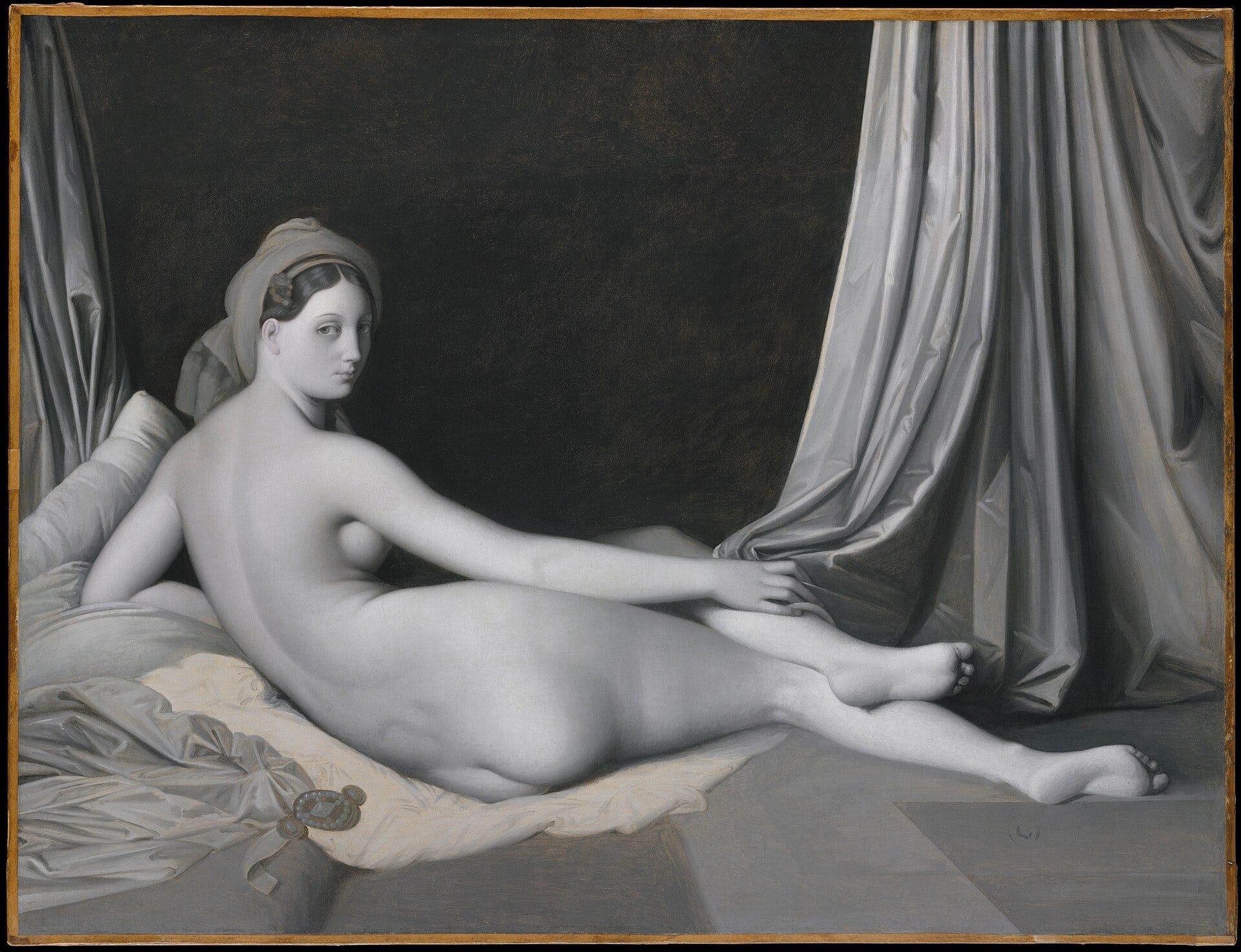
These pictures are monochromes in the old sense. They still show a body, a face or a scene. The monochrome that people argue about today shows nothing but its color, and that kind begins with Malevich.
What You'll Discover
Where Malevich hung his Black Square.
Which Moscow painter announced the end of painting.
Who really painted Rauschenberg's white panels.
What Klein actually registered in 1960.
What hides inside Reinhardt's black canvases.