
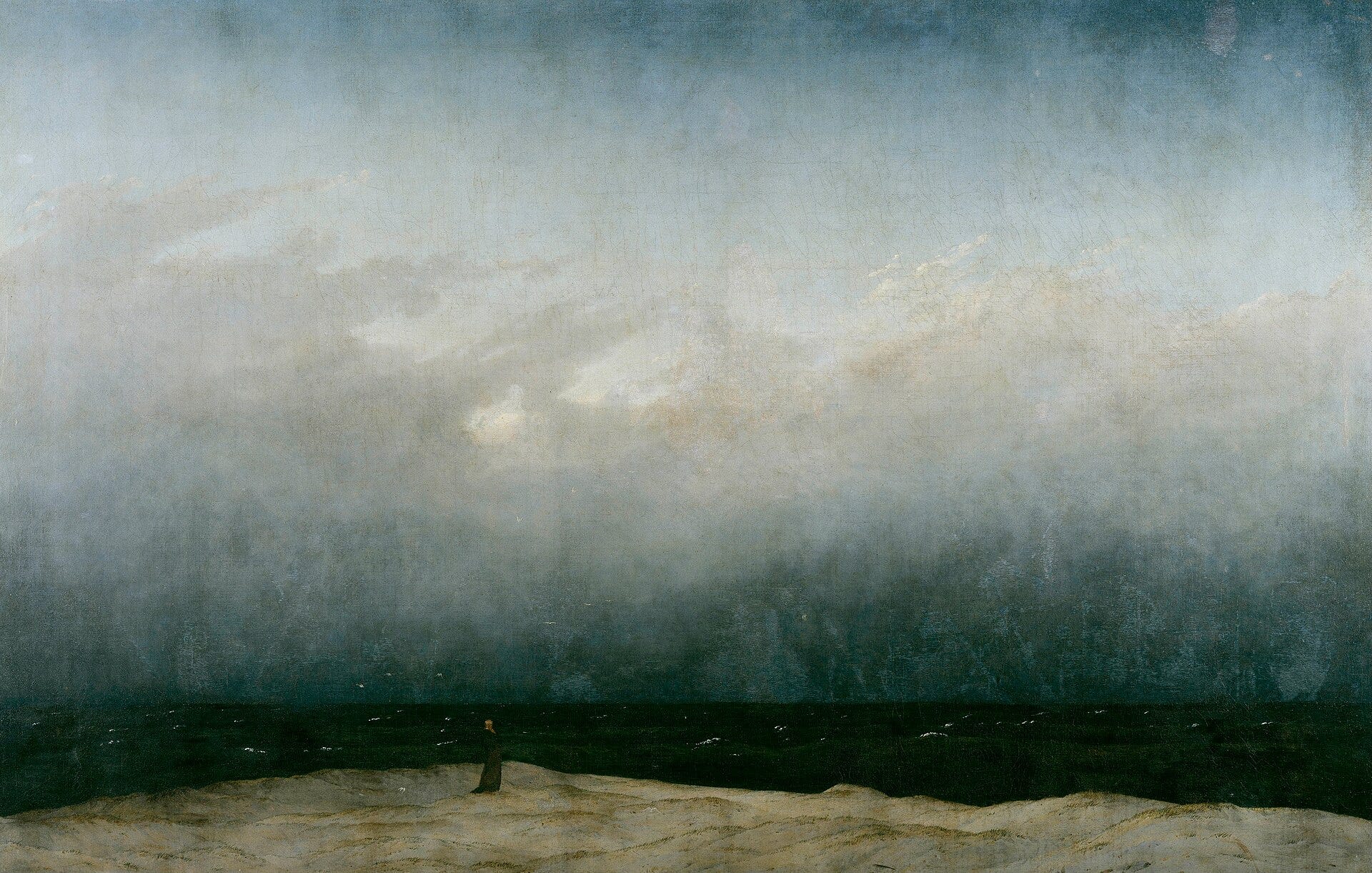
A seascape is a painting in which the sea itself is the subject: the water, the waves, the sky above them and the weather moving across both. A boat or a figure may appear, but it stays small, and the picture would still make sense without it. Famous examples include Caspar David Friedrich's The Monk by the Sea, J. M. W. Turner's Snow Storm and Gustave Courbet's waves.
The word is younger than the pictures. It was formed in English from sea and the ending -scape, which was taken from landscape, and Merriam-Webster dates its first known use to 1792. By then, painters in Holland had been making the sea their subject for almost two centuries.
Cool Stories About Art is a newsletter to learn art the fun way.
Join 200,000+ readers and get:
10 new art stories / month
The entire archive of content (1,000+ articles)
Comment, ask questions, and chat with other readers
A boat may appear, and in Friedrich's picture two ships did, until he removed them. Friedrich worked on The Monk by the Sea for about two years, between 1808 and 1810. It shows a strip of shore, a dark band of sea and an enormous sky, with one small monk standing on the shore.
At a late stage, Friedrich painted over the two ships that had been sailing on that sea. They had given the eye something to measure the distance by, and without them nothing tells the viewer how far the water goes. Their traces still show up on infrared photographs of the canvas.
When the painting was shown at the Berlin Academy in 1810, the writer Heinrich von Kleist wrote that standing in front of it felt as though his eyelids had been cut off. Friedrich was not the last painter to take the people out of a sea. Later in the century, an American painter did the same thing on the coast of Maine.
Jan Porcellis and the gray sea of Holland
The sea became a subject in its own right in the Dutch Republic, early in the seventeenth century. Before then, Dutch pictures of the sea were mostly pictures of ships: fleets, battles and named vessels, painted for the merchants and admirals who owned them. The water was there to carry the boats.
The painter who changed that was Jan Porcellis, born in Ghent around 1584 and most likely trained by Hendrick Vroom, the founder of Dutch marine painting. By around 1620, Porcellis was painting anonymous seas, stretches of water that cannot be tied to any famous port or battle.
He kept ships in his pictures, but he made them small and let the weather take over. He reduced his colors to grays and browns, and his subject became the sky, the clouds, the air and the water more than the vessels. In one of his paintings, now at the National Maritime Museum in Greenwich, the sky fills half the scene, and at the horizon only the white crests of the waves tell sea from sky.
His fellow painters understood what he had done. The Dutch painter and writer Samuel van Hoogstraten called him "the great Raphael of sea painting." Rubens and Rembrandt both owned pictures by him, a sign that a panel of gray water and weather was already worth collecting.
What You'll Discover
The storm Turner claimed to have survived.
What Courbet did with a single wave.
The figures Winslow Homer erased from his rocks.
Where a seascape ends and marine painting begins.