
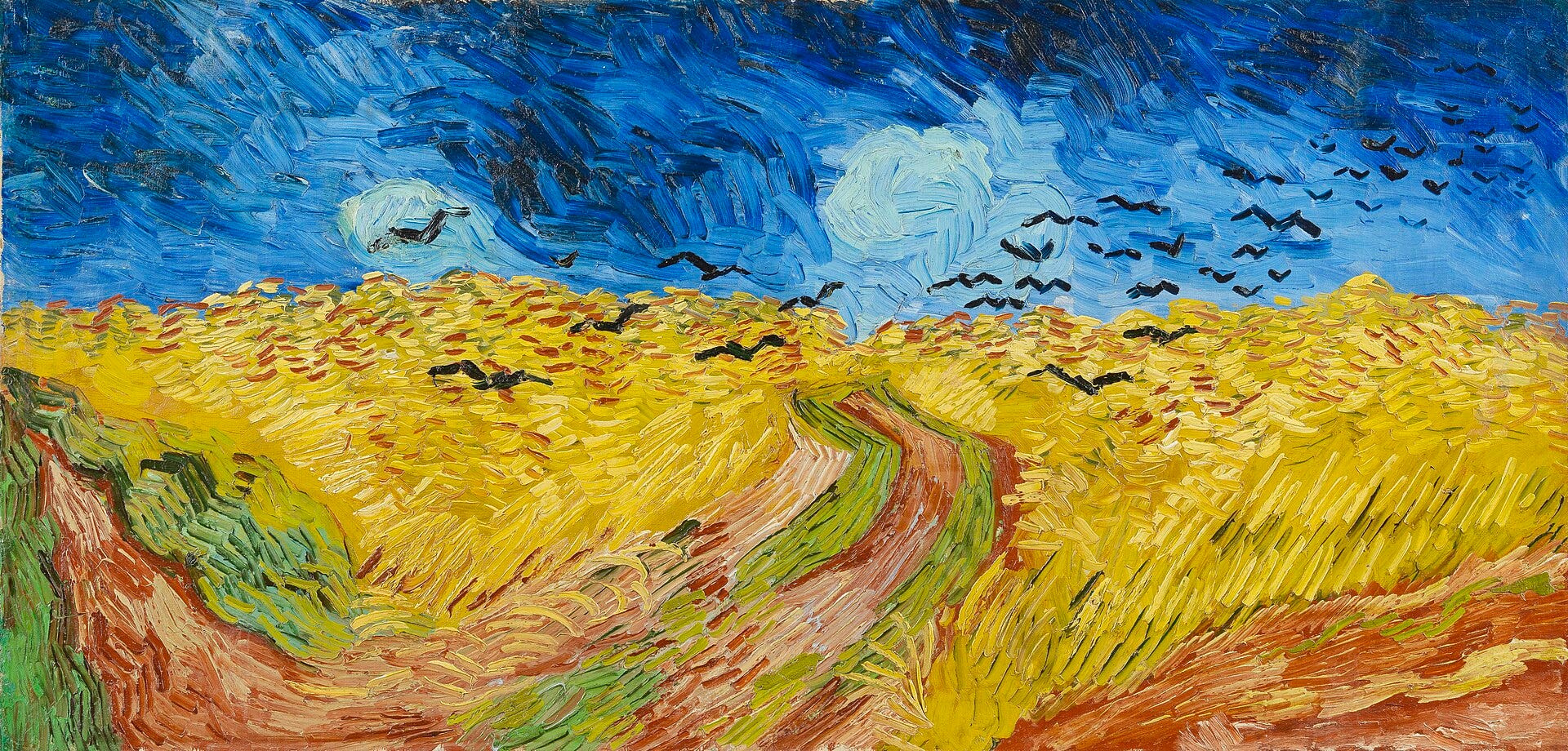
Wheatfield with Crows is an oil painting that Vincent van Gogh made in the first days of July 1890. He was living then at Auvers-sur-Oise, a French village just north of Paris. On a long, low canvas, a field of ripe wheat stretches under a dark blue sky.
Black crows fly low over the grain, and a red dirt path runs into the field and stops short. Amsterdam's Van Gogh Museum now owns the picture.
Its fame owes much to a legend. Van Gogh died at the end of that same month, and the story grew that this was his last painting. It was not, and the letters he wrote while working on it speak of loneliness, but also of calm.
Cool Stories About Art is a newsletter to learn art the fun way.
Join 200,000+ readers and get:
10 new art stories / month
The entire archive of content (140+ articles)
Comment, ask questions, and chat with other readers
What does Wheatfield with Crows show?
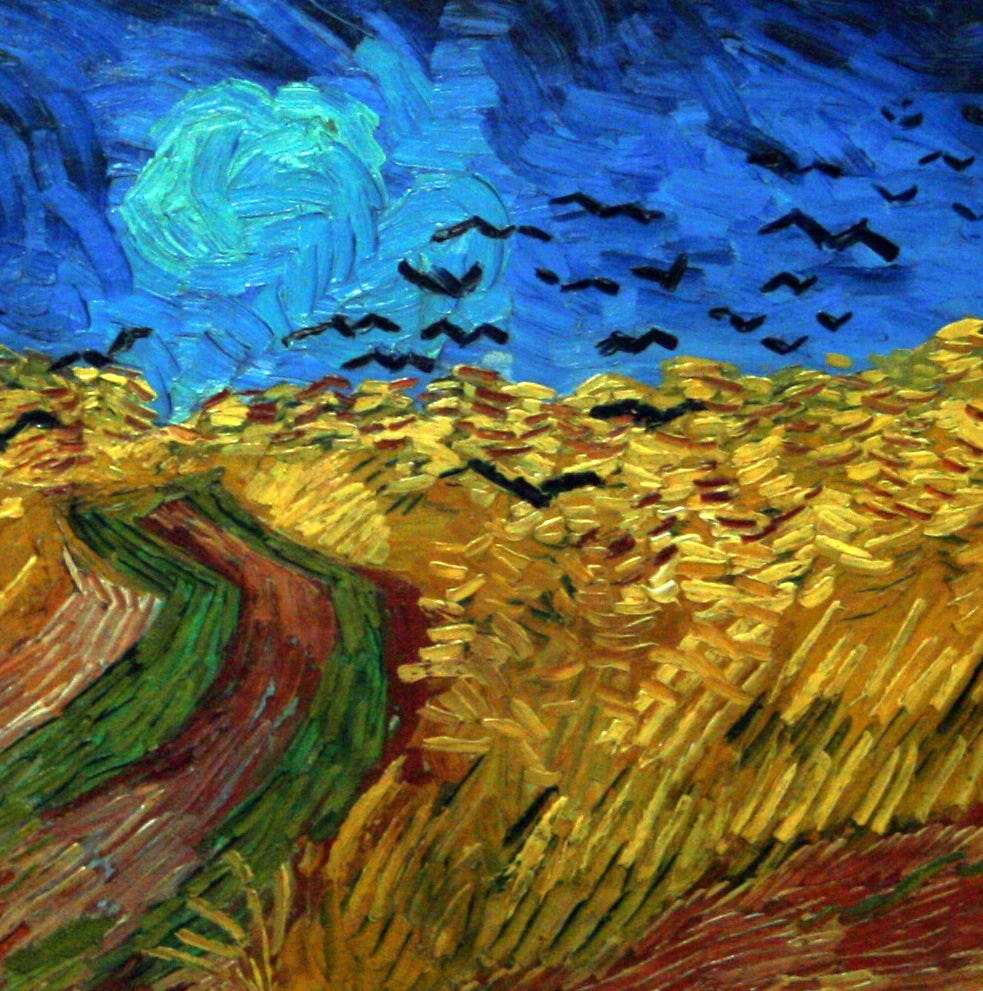
In July 1890, on the farmland above a small French village, Van Gogh planted his easel before the ripe wheat, and what he painted there would one day be read as a farewell…
What You'll Discover
What Van Gogh wrote to his mother that week
Why the crows seem to fly toward the viewer
Which novel and which film built the legend
How a single caption changed the picture in 1972
What happened to the canvas one night in 1991
Where the real field lies