Where Is The Creation of Adam?

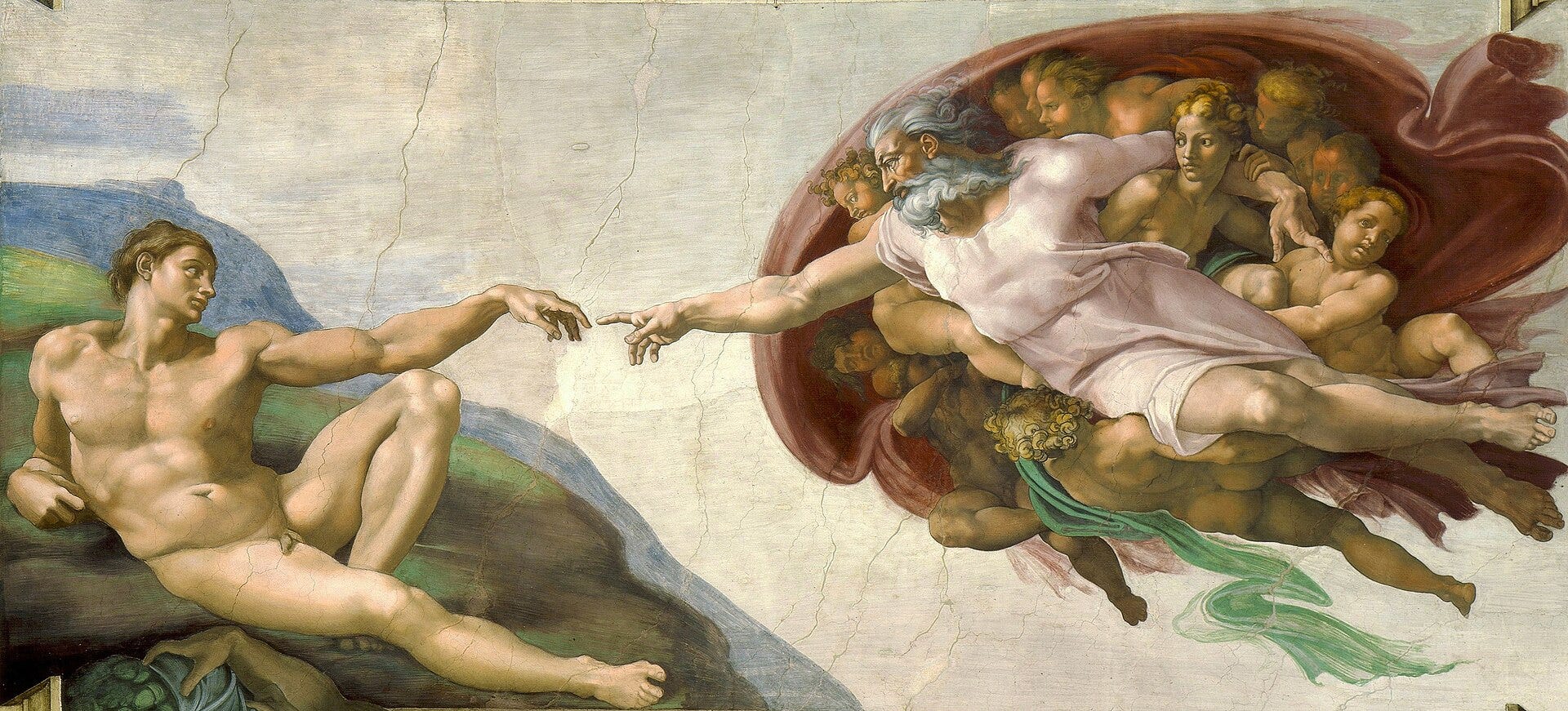
The Creation of Adam is part of the Sistine Chapel ceiling inside the Vatican Museums in Rome, not inside St Peter's Basilica next door. Michelangelo painted it as a fresco between 1508 and 1512, fused into wet plaster roughly 20 meters above the floor.

It cannot be moved.

I find it strange that the most reproduced ceiling detail in the world can only be seen by craning your neck in one crowded room in Rome. There is no closer view, no loan, no touring version. For an image printed on a million mugs, the real thing stays stubbornly fixed to a ceiling you have to travel to and look up at.

The Creation of Adam on the Sistine Chapel ceiling
The Creation of Adam, painted by Michelangelo around 1511 and 1512

Learn art the fun way. Free stories every week, no boring lectures.


One Room In The Vatican Museums

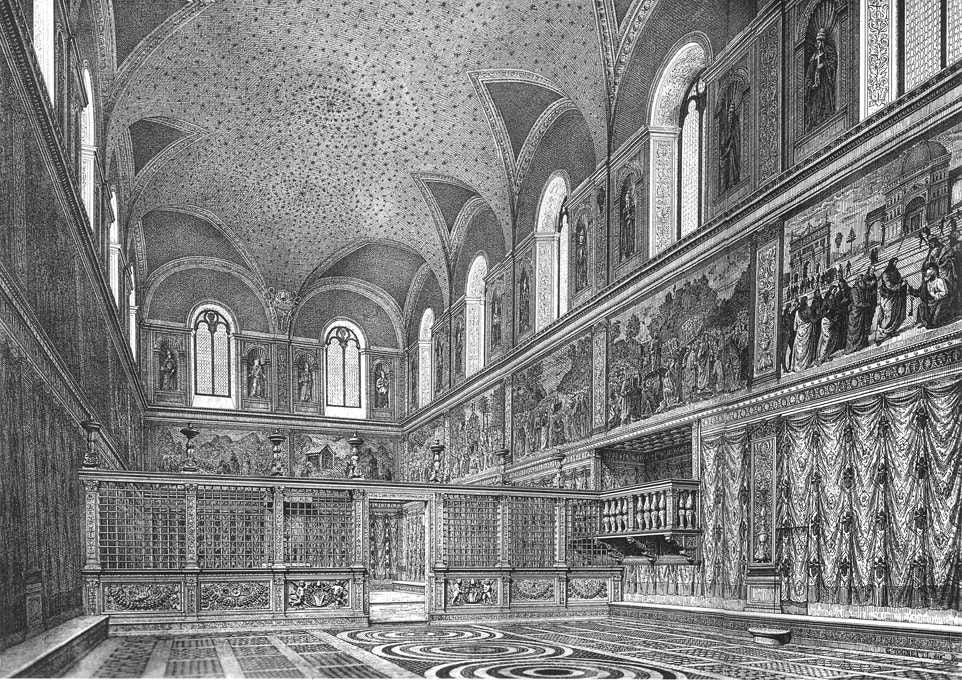
The Creation of Adam is part of the ceiling of the Sistine Chapel, inside the Vatican Museums in Rome.

Visitors move through a long sequence of galleries, the map corridor, and sculpture halls before the route finally opens into the chapel itself.

By the time you reach the room, you have already walked past most of the Vatican's collection, which makes the chapel feel like a destination rather than just another stop.

The Sistine Chapel takes its name from Pope Sixtus IV, who had it built in the 1470s, decades before Michelangelo ever touched the ceiling.

The full painted ceiling of the Sistine Chapel
The Sistine Chapel ceiling, viewed from the chapel floor

Twenty Meters Up, Craning Your Neck

The panel sits roughly 20 meters above the floor, close to 65 feet.

There is no closer viewing point, no balcony, no zoom. You look up from the same floor everyone else is standing on.

I find it strange, honestly, that the most reproduced image of the ceiling exists only as something you strain your neck to see in one room in Rome, for a few minutes, shoulder to shoulder with a crowd.

Interior of the Sistine Chapel
The Sistine Chapel, a separate building from St Peter's Basilica

It Is Not In St Peter's Basilica

People often assume the Creation of Adam is inside St Peter's Basilica, since both buildings sit inside Vatican City and get lumped together in memory after a long day of walking.

They are separate buildings with separate purposes. St Peter's is the basilica, the huge church with the dome. The Sistine Chapel is a smaller chapel used for papal ceremonies, including the election of a new pope.

The ceiling, and the Creation of Adam with it, has only ever belonged to the chapel, not the basilica next door.


More Michelangelo and the Vatican


Painted Into Wet Plaster, Not Applied Later

This is a fresco, which means Michelangelo applied pigment into fresh wet plaster, a section at a time, before it dried.

Each day's patch of plaster had to be painted before it set, so the ceiling was built up piece by piece over roughly four years, between 1508 and 1512.

Once plaster dries with pigment bonded into it, the paint becomes part of the wall itself. It is not a layer sitting on top that could be peeled away.

Why It Will Never Be Moved

Because the image is fused into the plaster of the ceiling, it cannot be removed, crated, or shipped anywhere.

There is no version of this painting that travels to another museum for a special exhibition.

Seeing a print or a screen is the only option anywhere else on earth. The actual work stays exactly where Michelangelo left it. Even minor repairs to the plaster happen in place, with conservators working from movable platforms rather than taking any section away.

Portrait of Michelangelo
Michelangelo, who spent roughly four years painting the ceiling

Standing, Not Lying Down

A popular image has Michelangelo lying flat on his back for years to paint this ceiling.

He actually designed a scaffold that let him stand upright, leaning backward with his arm raised over his head, which is still exhausting but not the same posture people picture.

He complained about it constantly in his own letters and poems, describing paint dripping onto his face and his neck locking into a permanent bend. He earned the complaints honestly, just not from lying down.


Cool Stories About Art is a free newsletter. The stories behind the paintings, straight to your inbox.


The Restoration That Shocked Everyone, 1980 to 1994

For most of the twentieth century, the ceiling looked muted, almost brown, dulled by centuries of candle soot and old varnish.

A restoration carried out by the Vatican Museums between 1980 and 1994 cleaned the surface and uncovered colors nobody alive had seen: pinks, greens, and pale purples underneath the grime.

Some critics at the time argued the cleaning went too far. Most conservators now treat the restored ceiling as closer to what Michelangelo actually painted, not further from it.

No Photographs, No Talking

Photography is banned inside the chapel, and guards enforce it, repeating instructions to stop and stay silent throughout the day.

The rule exists partly to protect the art and partly because the chapel is still an active place of worship and papal ceremony.

It is one of the few major sights left where you cannot just hold up a phone. You either look, or you do not. If hidden details in religious art interest you, we hunted for exactly that in spot the secrets in sacred art, which looks at symbols across several church commissions, this ceiling included.

A Detail Worth Noticing

The most famous part of the whole ceiling is the small gap between God's finger and Adam's finger, not quite touching.

Michelangelo left that space open on purpose. The moment shown is just before contact, not the contact itself.

For the fuller story of his career, our complete story on Michelangelo covers the Sistine ceiling alongside everything else he built and carved. We also go deeper into his rivalry with the other great name of the period in Leonardo vs Michelangelo, including where the two men actually crossed paths in Florence.


Read another story


Where the Creation of Adam is: questions people ask

  • Is the Creation of Adam in St Peter's Basilica?
    No. It is on the ceiling of the Sistine Chapel, a separate building inside the Vatican, not the basilica.

  • How far above the floor is the Creation of Adam?
    The panel sits roughly 20 meters up, close to 65 feet, and is viewed from the chapel floor with no closer vantage point.

  • Can the Creation of Adam be moved to another museum?
    No. It is a fresco fused into the ceiling's plaster, so it cannot be removed, crated, or lent out anywhere.

  • Did Michelangelo paint the ceiling lying on his back?
    No. He designed a scaffold that let him stand upright while leaning backward, though he complained about the posture in his own letters.

  • When was the Sistine Chapel ceiling restored?
    The Vatican Museums carried out a restoration between 1980 and 1994 that revealed brighter colors hidden under centuries of soot and varnish.

  • Can you take photos of the Creation of Adam inside the chapel?
    No. Photography is banned throughout the Sistine Chapel and guards actively enforce the rule.

  • How long did it take Michelangelo to paint the ceiling?
    Roughly four years, between 1508 and 1512, working in sections as fresh plaster was applied panel by panel.

  • Is the Creation of Adam a separate painting from the rest of the ceiling?
    No. It is one panel among many in a single connected fresco covering the whole ceiling, part of the larger Genesis cycle.


Join 170,000 readers learning art the fun way. Free stories every week, no boring lectures.