
The Sistine Chapel is in Vatican City, the small independent state set inside Rome on the west bank of the Tiber. It stands on the first floor of the Apostolic Palace, the pope's official residence, and visitors reach it through the Vatican Museums, whose entrance is on Viale Vaticano.
It is not part of St. Peter's Basilica, the great church a short walk away. It is the pope's own chapel, and it is the room where the cardinals meet to elect each new pope.
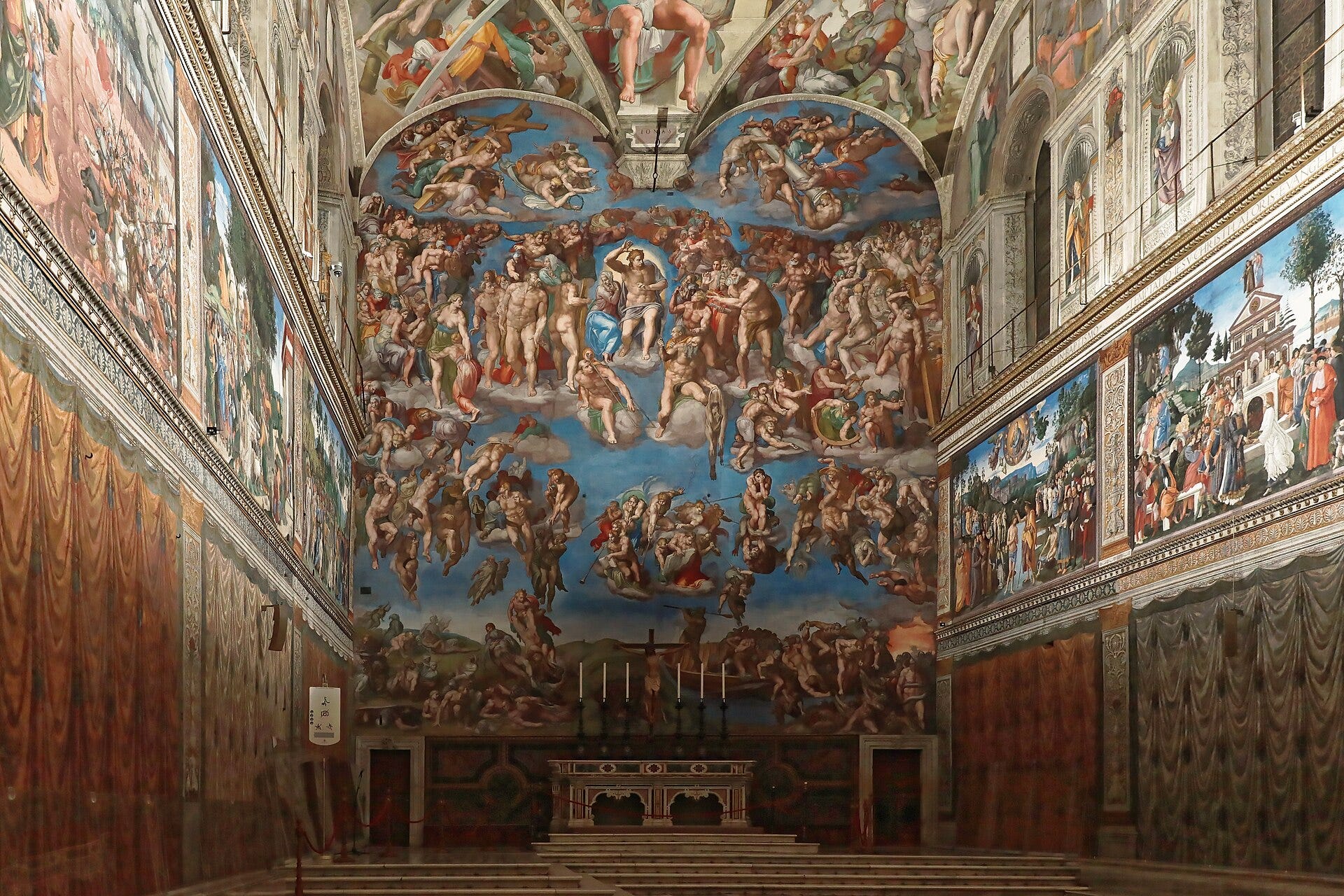
Cool Stories About Art is a newsletter to learn art the fun way.
Join 200,000+ readers and get:
10 new art stories / month
The entire archive of content (140+ articles)
Comment, ask questions, and chat with other readers
From the street, the chapel looks like a building with no front door. It is a tall, plain brick block with six arched windows and no decorated façade, and the way in leads through other rooms of the palace. Nothing outside tells a passerby that Michelangelo's painted ceiling lies under that roof.
The only outdoor sign of what the room is for is a temporary one. When the cardinals, the senior churchmen of the Catholic Church, gather to choose a pope, workers fix a metal chimney to the roof.
The chimney is connected to a stove inside, where the ballots are burned. The smoke that rises from it tells the crowd waiting outside whether the vote has produced a pope. It last went up in 2025.
The palace around the chapel
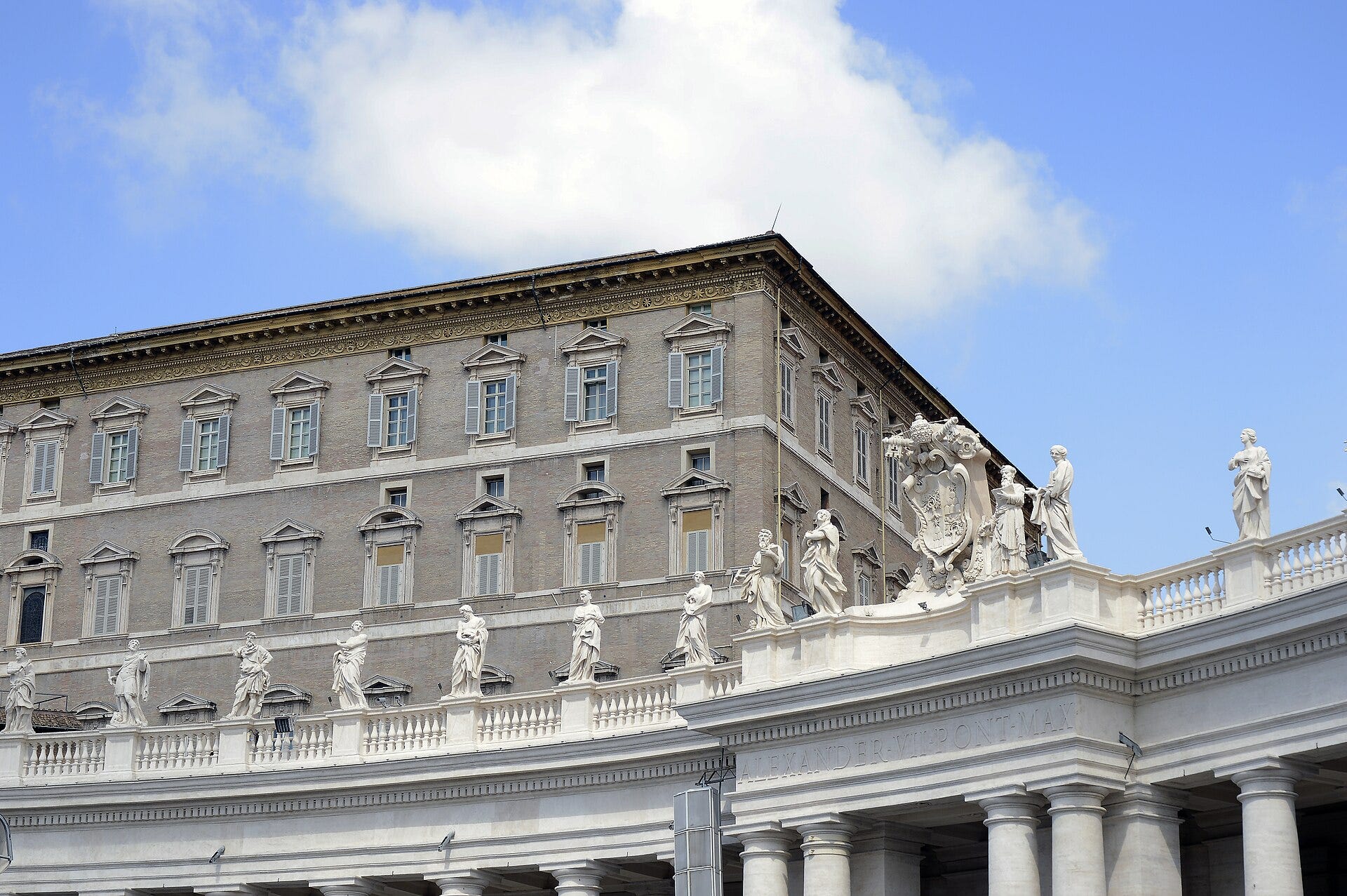
That brick block, chimney and all, is only one part of a much larger building, the Apostolic Palace…
What You'll Discover
What stood on the site first.
The route visitors follow to reach it.
Who the room belongs to today.
Why smoke rises from its roof.