

170 000+ readers. Learn art the fun way.
This is a preview. Paid subscribers get the full story.
You’ll also get:
10 new stories every month
The full archive (130+ Art stories)
Your personal art guide. Comment, ask questions, DM me anytime
iPhone user? Subscribe at coolstoriesabout.art, not via the app. Apple adds 30% to the price.
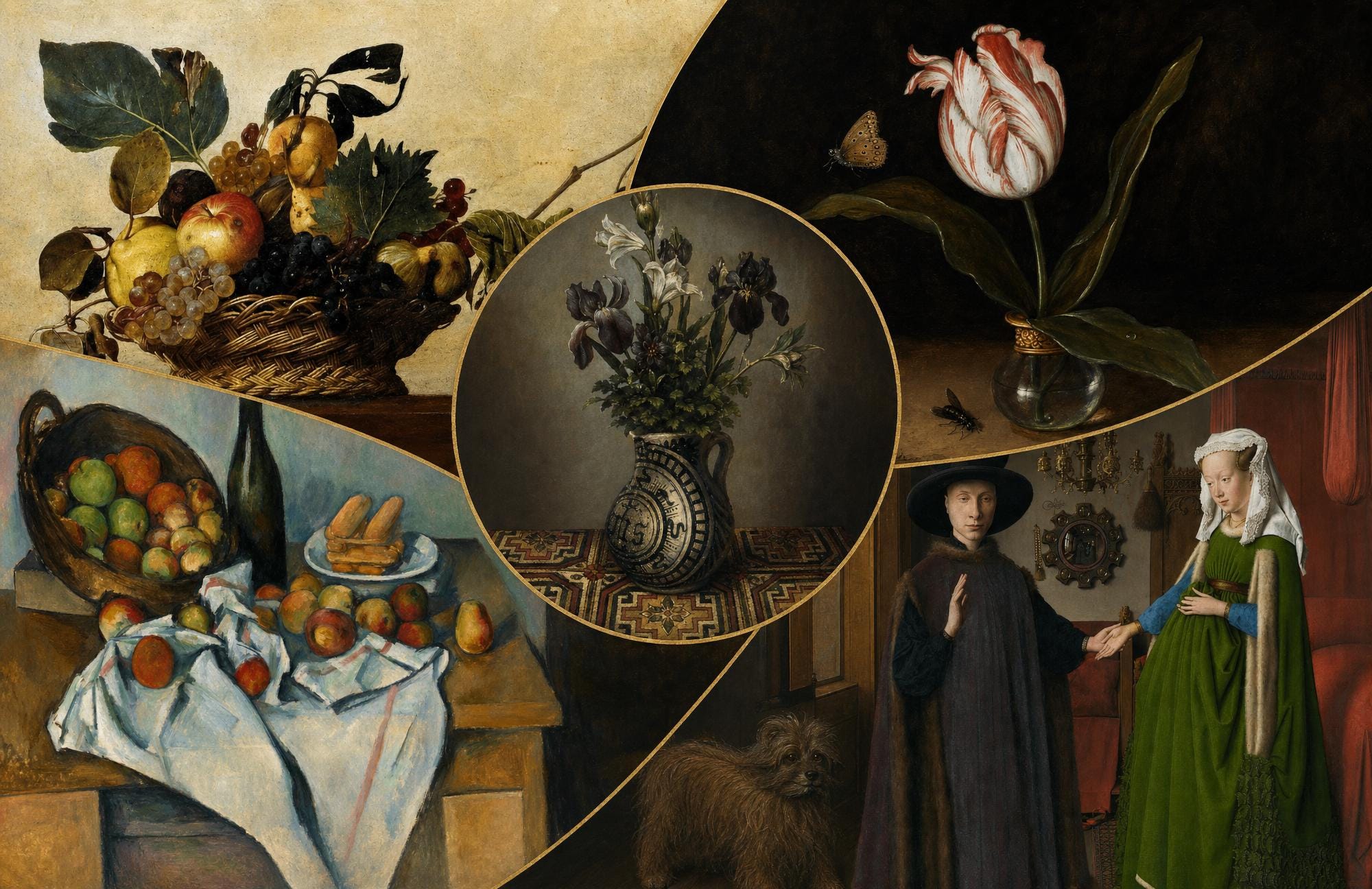
Look around a bit, and one name comes up fast. Caravaggio, his basket of fruit, around 1599. It's the painting everyone points to first. Except it shows up almost a century too late.
The real first one is much older. But before you go hunting for it, you have to know what you're looking for.
An object painted on a panel? A vase of flowers? A skull? The real question, the one that settles everything, is somewhere else. Do these objects have to be alone, or can they share the scene with a saint, a story, a symbol?
Because for more than a thousand years, the object only existed in painting to serve. It stands next to the saints. It decorates the biblical scenes. It hides a meaning. It never holds the frame on its own.
To find the first one that dared to, you have to go dig it up. We go back in time, and we rule out the false leads one by one. It starts in Pompeii, in the year 79.
Pompeii, year 79: the false lead
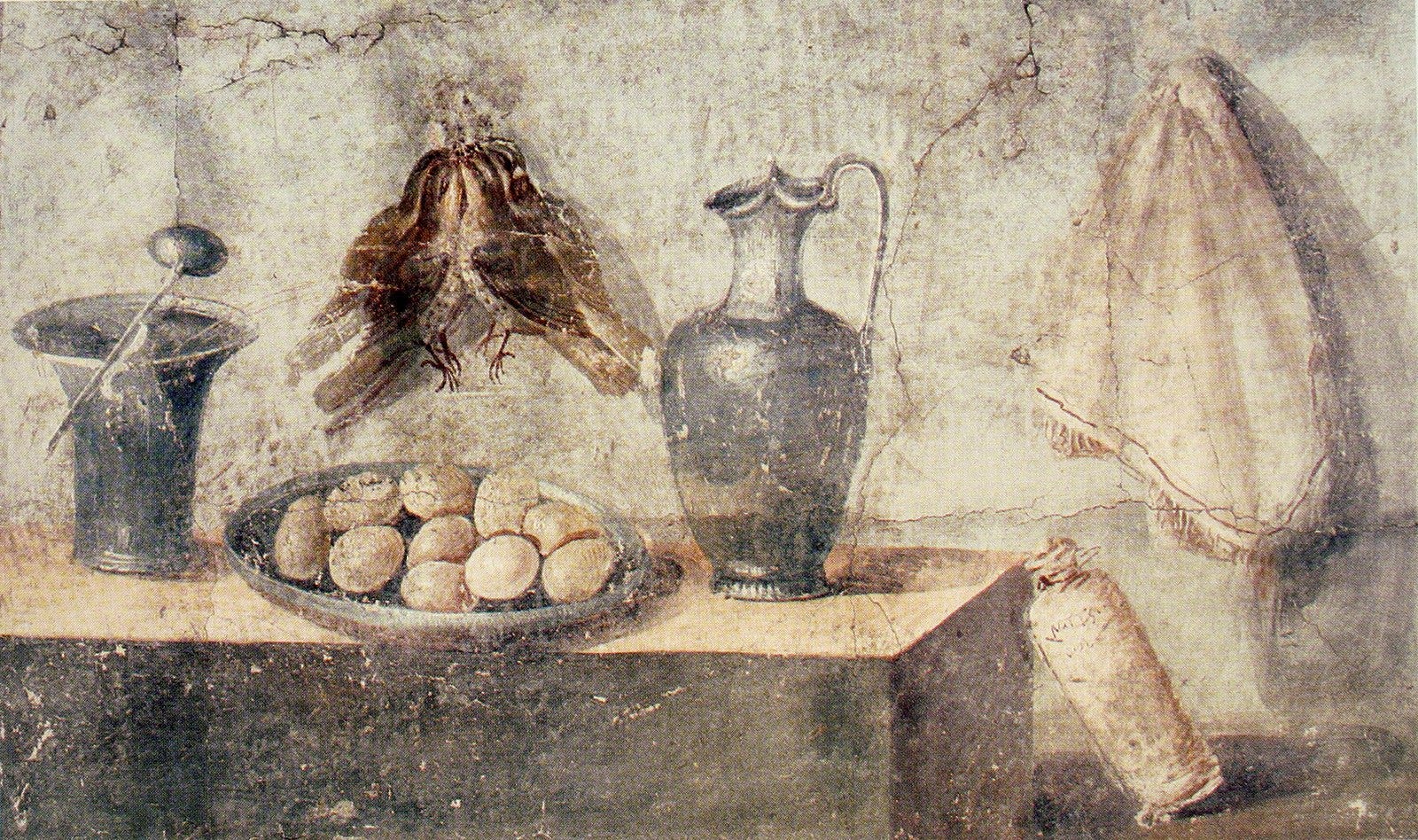
Vesuvius buries the city. On the walls of the Roman villas, frescoes show fish, poultry, eggs, fruit set out on shelves. The Romans called them xenia, gifts of hospitality rendered in paint.
We're almost there. Nothing but objects, painted for their own sake, the light catching the scales of a fish, the shadows falling exactly where they should.
But these are walls. The frescoes are part of a huge decorative scheme that runs across entire rooms and frames mythological scenes. You can't take them down. You can't carry them off. You can't own them.
And then the eruption wipes it all out. For fifteen centuries, nobody will even know Pompeii existed. No Renaissance painter will ever see these fish.
Dead end. We look elsewhere.
Discover my new newsletter !

Padua, 1305: the first clue
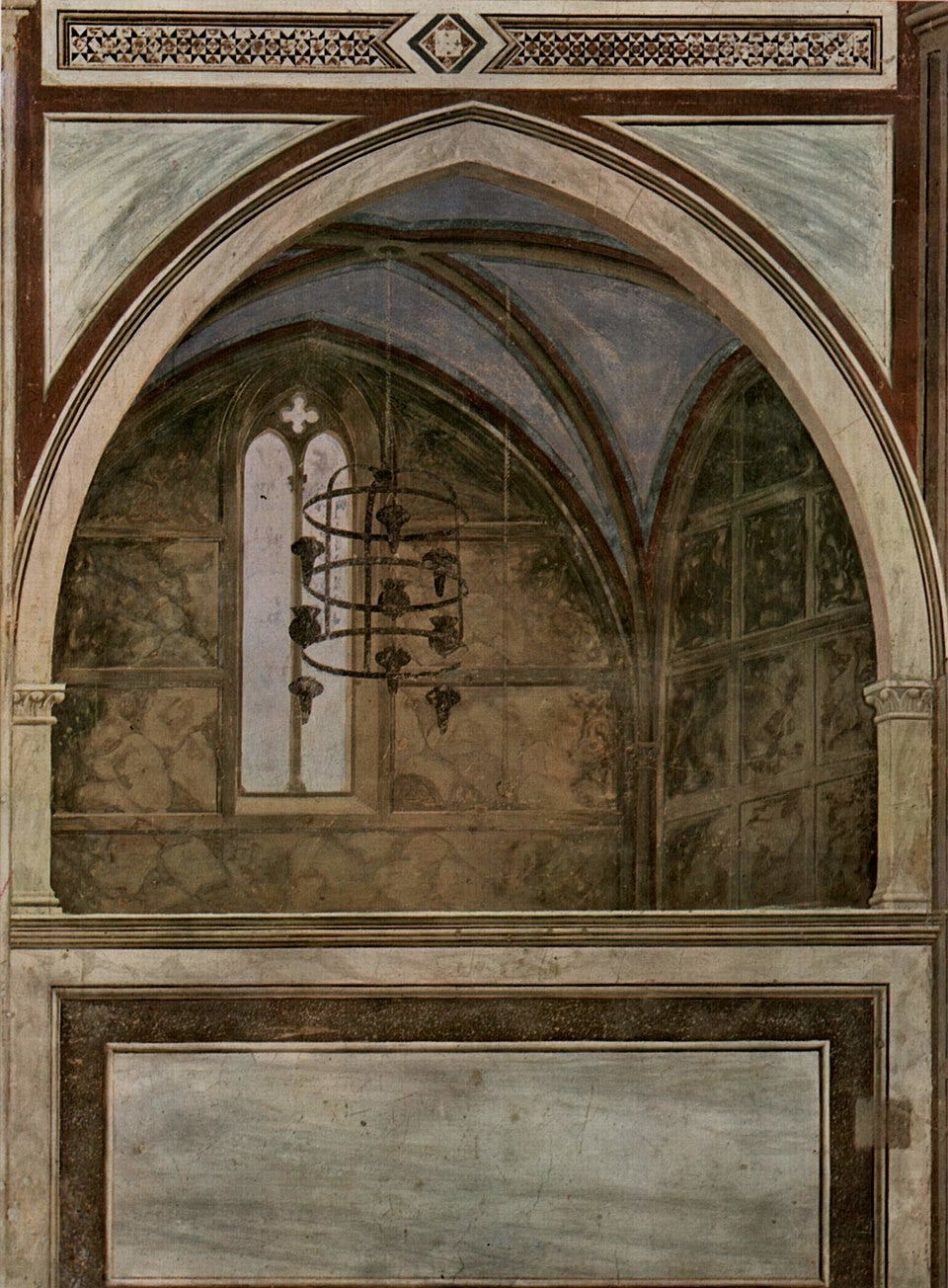
Jump a thousand years, to Padua. A rich banker, Enrico Scrovegni, buys himself a private chapel and hires the star of the moment, Giotto, to paint the life of Christ and the Virgin across the walls.
On the arch above the altar, Giotto slips in an oddity. He paints two small chapels that don't exist. Vaults in trompe l'oeil, that illusion that fakes real depth, windows opening onto a blue sky, and hanging in the center of each, an iron lantern suspended in the void.
For the first time since antiquity, a painter gives an object its own space. The lantern goes with no one. It tells no story. It's just there.
The catch is that it's still a wall, inside a church, and a lantern for worship. You don't hang it in your living room. You don't sell it.
The trail warms up. That's all.
Flanders, 1434: the object gains weight
North again, a thousand kilometers away, in the wealthy trading cities of Flanders. The painters there have just tamed a technique that changes everything: oil paint. Suddenly you can render the reflection of a window on brass, the soft wax of a candle, the grain of wood.
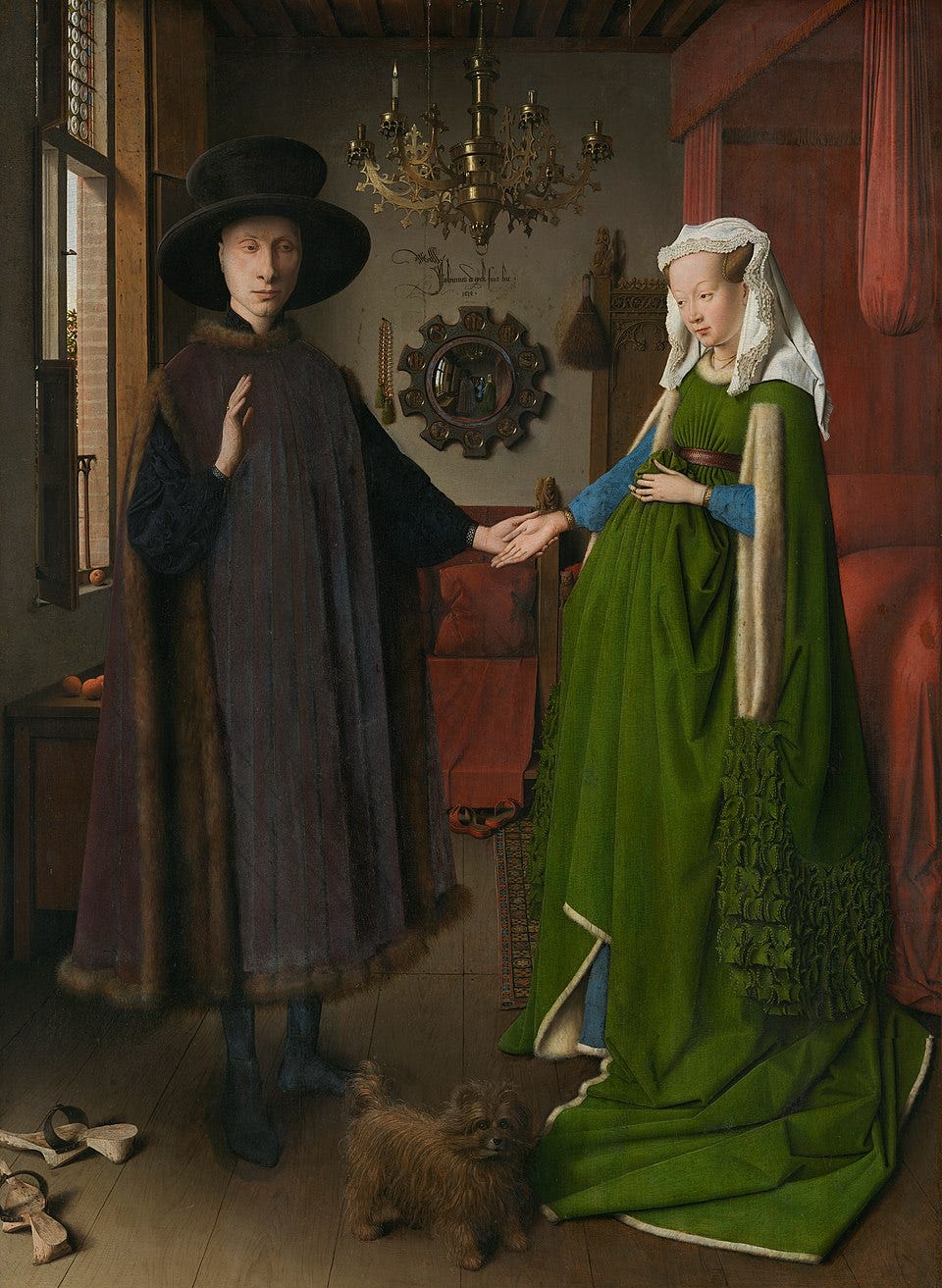
In 1434, Jan van Eyck paints The Arnolfini Portrait. A couple in a room, and all around them, objects painted with almost insane precision. Oranges on the sill, a curved mirror, a lit candle, a little dog.
Your eye stops on them, no way around it. These objects start to rival the two people.
Except they stay in their service. Each one hides a meaning. The orange stands for paradise, the mirror for the eye of God that sees everything. The object still works for something other than itself.
Still not it. We move on.
Flanders, around 1452: an object finally alone
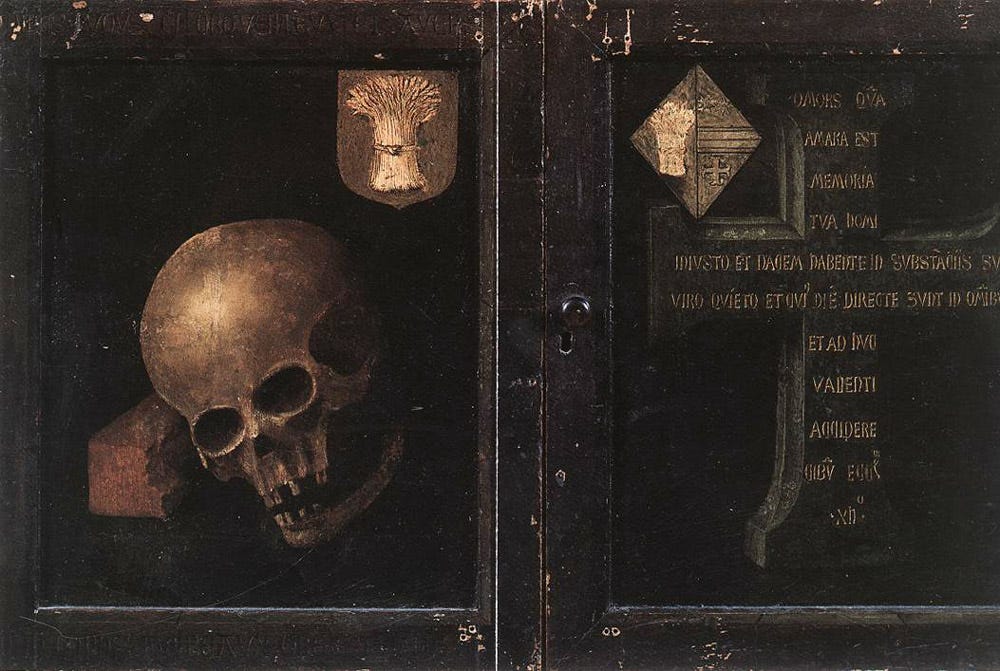
And here comes the first real jolt. Around 1452, Rogier van der Weyden takes a commission from the widow of a merchant, Jehan Braque, who has just died. A small triptych, made for a private home, not a church.
Open, it shows Christ and the saints. Closed, it shows something else.
On the outer left panel, a skull. Yellowed, empty sockets, propped on a broken brick, against a pitch black background. Above it, the family coat of arms. And along the frame, a line the skull seems to speak: my body was once beautiful, now it is food for worms.
Nothing else. The skull takes the whole panel. It's alone, it's the subject. For the first time, an object is no longer an extra at a saint's feet. It carries the scene by itself.
Only here's the thing. This skull lives on the back of a shutter, invisible as long as the triptych stays open. And it's a memento mori, a slap to remind you that you will die. Not a celebration of the world. Its opposite.
So close. And still, no.
Around 1485: flowers no one is holding
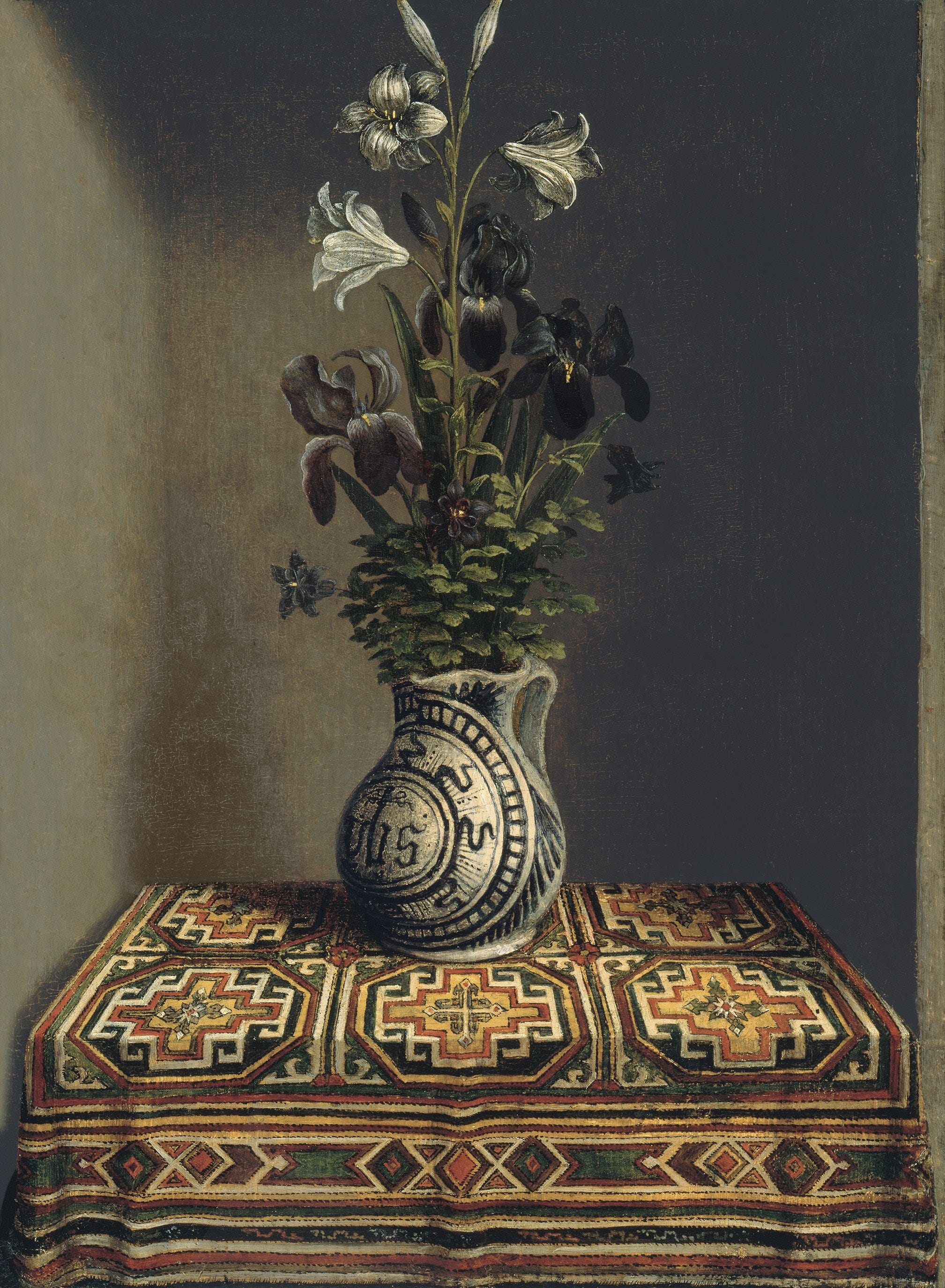
A generation later, Hans Memling paints the back of another portrait, a young man at prayer.
On the reverse, he sets down a simple vase of flowers. Irises, lilies, columbines, in an Italian majolica jug stamped with the monogram of Christ, on an Oriental rug.
Nobody around. Just these flowers, cut and arranged by a hand. A human, domestic gesture, a world away from the flowers growing in paradise in the great holy scenes.
It may be the first time a bouquet becomes a painting all on its own. Two problems, though. It still lives on the back of a panel, hidden most of the time. And it's still a prayer in disguise: the lilies for the Virgin's purity, the irises for her sorrows.
At this point, I'll admit it, I thought I had my culprit. We're one step away. This is where most people stop, satisfied. They're wrong.
Keep learning art the fun way


Urbino, 1470s: the illusion in the wood


While the Flemish paint their reverses, the Italians come at the problem from another angle. In Urbino, Federico da Montefeltro, a warlord turned scholarly duke, has a tiny study built for himself. The lower walls are covered in marquetry, wood cut and inlaid to create a perfect illusion.
You'd swear you were seeing cupboards with their doors half open. Inside: astrolabes, compasses, books, a lute, pieces of armor. The neat clutter of a learned man.
You'd reach out to grab the lute. Every object has its light, its shadow, its place. No saint, no story, just things to look at for the pleasure of it.
This time, the spirit of still life is here, fully. And the format catches one last time. It's all fixed to the wall, impossible to take down or sell. And it isn't even painting. It's wood slotted into wood.
Add it up. It's always the same problem. The object is on a wall, or on the back of a panel, or beside a saint, or there to remind you of death. Never alone. Never for itself.
And then, one day in 1504, deep in Germany, one painter dared. A century before Caravaggio. He signed the first still life in history, and the world forgot him.
His name is...