

This is a preview. Paid subscribers get the full story.
On the evening of April 25, 1876, at the Paris Opera, a sixty-five-year-old man steps up to the podium, unfolds a sheet of paper, and reads his speech to the audience. He is talking about a giant statue that France is going to give to the United States, and he describes it in a single sentence.
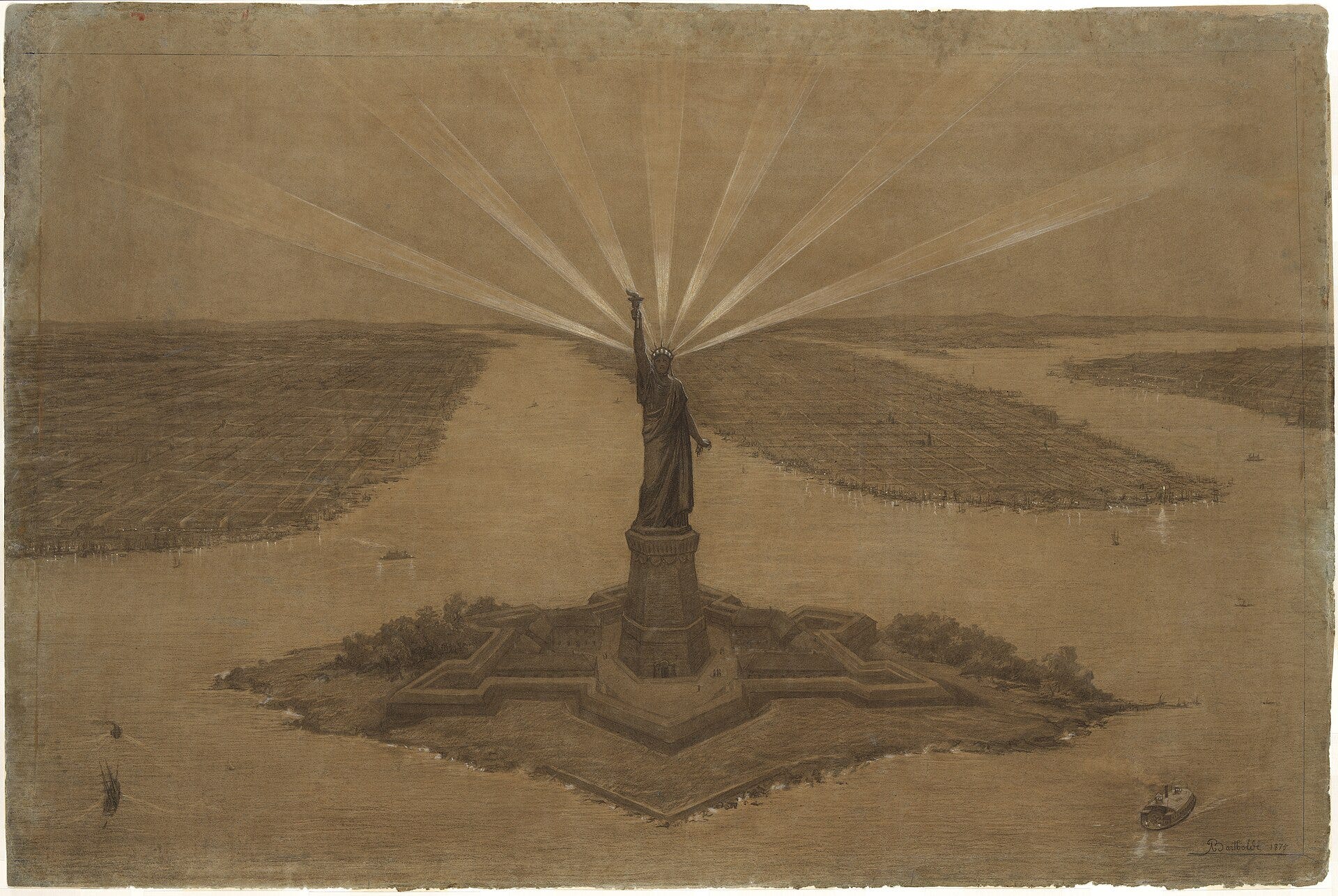
“She will be American Liberty, holding in her hand not an incendiary torch, but a beacon that lights the way.”
The man at the podium is Édouard de Laboulaye, who teaches American history at the Collège de France, one of the country’s most prestigious institutions. He admires the American republic so much that he holds it up as a model, yet he has never set foot in the United States.
The statue is his idea. This year, the United States is celebrating its centennial. During the American Revolution, France sent soldiers and ships to fight alongside the Americans. Laboulaye wants France to mark the anniversary with a gift worthy of the occasion, one that honors the friendship between the two countries: a giant statue of Liberty.
The Gala
A gift like that does not come cheap, so the two countries split the cost: the French will pay for the statue, the Americans for the pedestal. In France, donations go through a committee that Laboulaye chairs, and tonight the committee is holding a gala at the Opera to raise money.
His speech over, Laboulaye folds the sheet back up and returns to his seat to applause. Onstage, a men’s chorus rises. It is about to sing a piece that Charles Gounod, the composer of “Faust,” has written for the statue. Its title is the statue’s own name: “Liberty Enlightening the World.”
In one of the boxes, a forty-one-year-old man listens to the chorus sing his statue’s name. Auguste Bartholdi is a sculptor. He designed the statue, and he will be the one to build it.
His sketchbook rests on his lap; he plans to show it to the committee members at the end of the evening. While the chorus sings, he opens it to the page showing the statue.
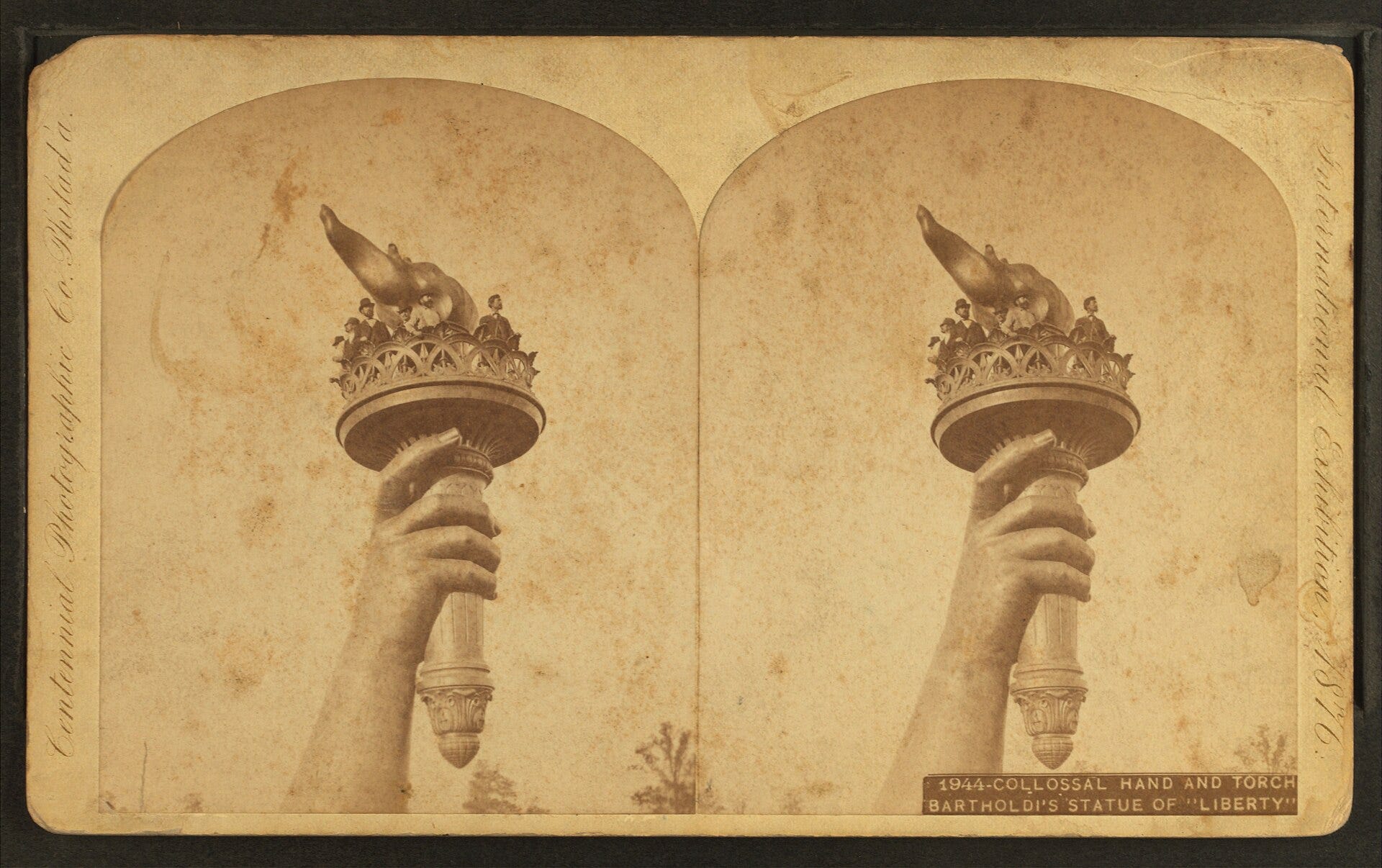
At the top of the page, a raised right arm holds a torch. That arm is already more than a drawing: in a Paris workshop, men are hammering it into shape. It is bound for Philadelphia, where the centennial celebrations will be held this summer, and it will go on display there on its own. The index finger alone is more than seven feet long.
Below the arm stands the full figure of Liberty, in a long robe that falls to the ground, her left arm bent against her body. Her left hand is barely sketched in.
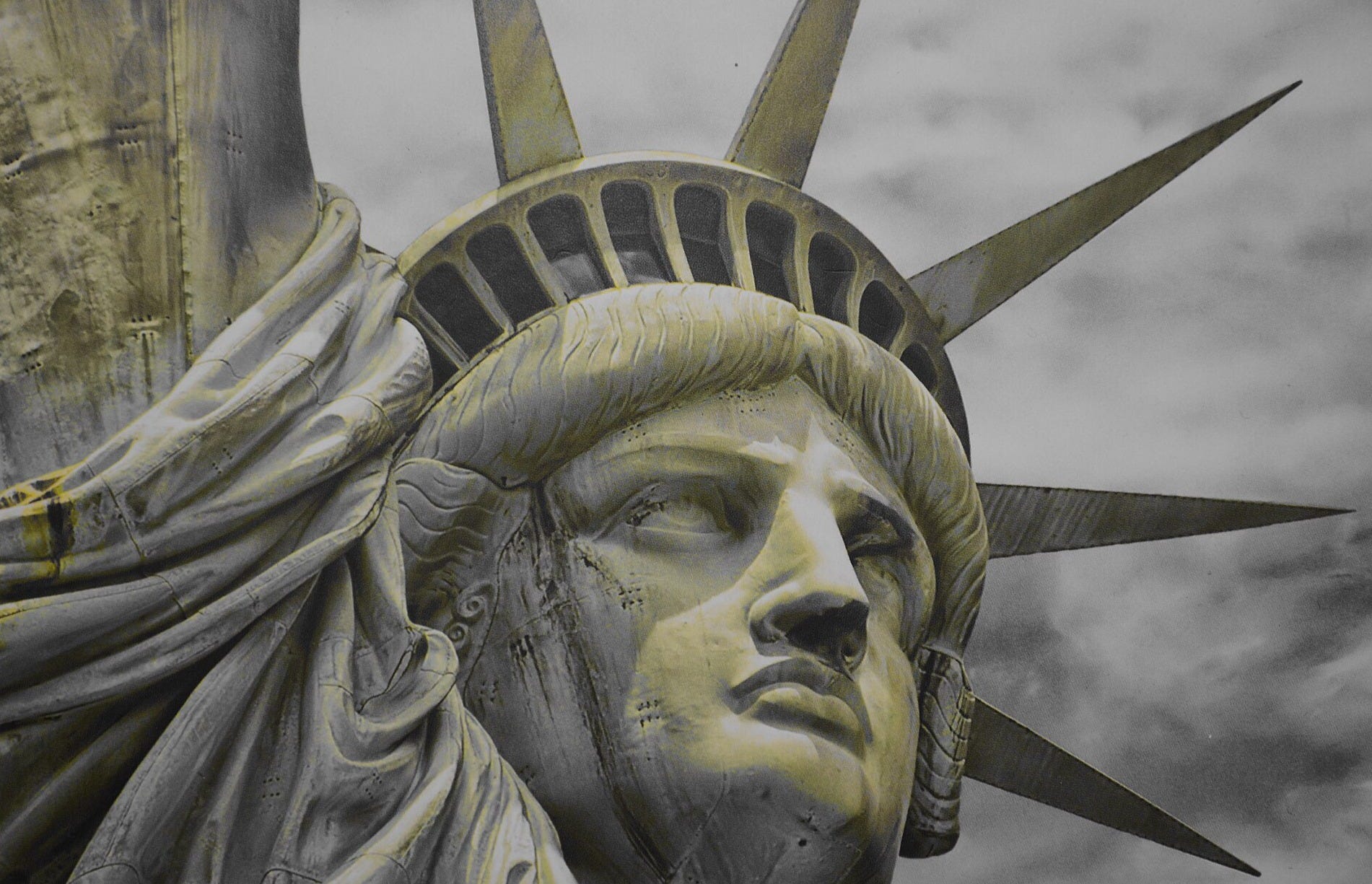
She wears a crown with seven rays. Everyone who has seen Bartholdi’s drawings assumes the face beneath it is Roman: Libertas, the goddess of liberty, whose profile the Romans stamped on their coins.
Know someone who would love these stories? Give them a month or a year, with a note from you. 🎁
151 Feet
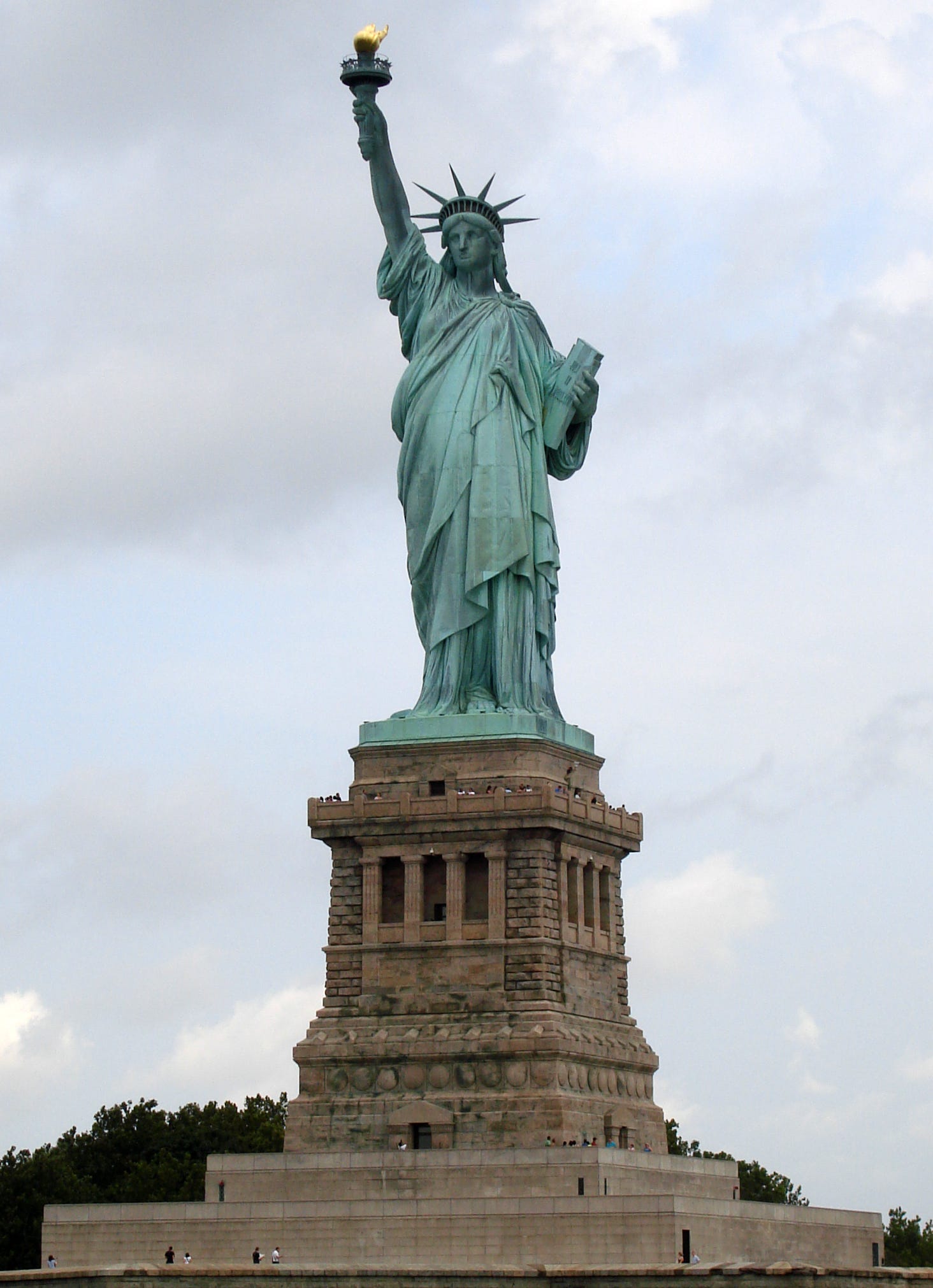
In the sketchbook, Liberty fits on a single page. Finished, she will stand 151 feet high, torch included, as tall as a fifteen-story building. Bartholdi can already see her at the entrance to New York Harbor, facing the ships that arrive from Europe.
He will not make her out of stone or bronze. He will give her a copper skin, made of sheets hammered out by hand, each no thicker than two pennies. In the sun over the harbor, she will shine a warm orange-brown, like a new copper pot.
Nine years ago, Bartholdi drew another giant woman holding up a light, this one for Egypt.
In 1867, Egypt’s ruler, Ismail, was in Paris for the World’s Fair. He was building the Suez Canal, which would link the Mediterranean to the Red Sea and spare European ships the long voyage around Africa to India and China. Bartholdi planned to offer him a statue for the entrance to the canal.
His drawings showed an Egyptian peasant woman, 86 feet tall, on a 48-foot pedestal, draped in a long robe, her arm raised, a light in her hand. She was meant to double as a lighthouse: at night, light would shine from a band around her forehead to guide the ships. Bartholdi called her “Egypt Carrying the Light to Asia,” and he traveled to Egypt twice to plead her case.
Ismail showed interest, then backed out: he did not have the money. In November 1869, the canal opened without the peasant woman. At its entrance stood a plain concrete lighthouse.
Bartholdi has put the drawings away, but not the gesture. The Liberty in his sketchbook raises the same arm and holds the same light.
Onstage, the chorus falls silent. The audience applauds, then gets up for intermission, and Bartholdi closes his sketchbook.
Someone knocks at the door of the box. Bartholdi opens it to find Jules Bozérian, a senator and one of the committee’s vice chairs, whom he has invited to join him tonight.
“Come in, Senator.”
The senator takes a step into the box. A woman is sitting in the corner, and he bows to her. She looks up at him, and the light from the hall falls on her face.
For a moment, the senator does not move. Then he turns to Bartholdi and says quietly:
“My dear Bartholdi… this lady has the face of your Liberty.”
What You’ll Discover
Who inspired the face of the Statue of Liberty.
What Bartholdi first placed in the statue’s left hand.
Which famous engineer built her skeleton.
Why the statue turned green.
What her robe hides, down at her feet.
200,000+ readers learn art the fun way.
Paid subscribers get the full story. You’ll also get:
10 new stories / month
The full archive (150+ Art stories)
Your personal art guide. Comment, ask questions, DM me anytime
There’s only one person behind Cool Stories: me. Paid subscribers make it possible.
Less than a coffee a month. Cancel anytime.
Apple user? Subscribe at coolstoriesabout.art, not via the app. Apple adds 30% to the price.