Cezanne painted Mont Sainte-Victoire, the mountain above Aix-en-Provence, more than thirty times in oil and dozens more in watercolor, across three decades. He never settled on one true version. The mountain came from three different places to stand, and his last paintings of it barely look like a mountain at all.
Cezanne was born in Aix-en-Provence in 1839, and the mountain sat on the edge of his family's own property. He returned to it more than to any other subject, right up until the year he died in 1906.
Date: Painted mainly between the early 1880s and 1906, the year Cezanne died.
Medium: Oil on canvas and watercolor on paper, in more than thirty oil versions alone.
Location: Spread across museums including the Philadelphia Museum of Art, the Museum of Modern Art, the Courtauld Gallery, the Barnes Foundation, and the Metropolitan Museum.
More Painters Who Couldn't Let a Subject Go
Cezanne is not the only artist who painted one subject until it stopped looking like anything else. These three go further into obsession, repetition, and what painters do with a single idea over years.
One Mountain, His Whole Life
Mont Sainte-Victoire stood at the edge of the Cezanne family's own estate outside Aix-en-Provence, so the artist never had to travel to find his subject. It first appears as a background shape in the 1870s, becomes a subject in its own right by the early 1880s, and stays one until his death in 1906.
The mountain first shows up in Cezanne's work in the 1870s, as a background shape behind paintings such as Bathers at Rest, now in the Barnes Foundation.
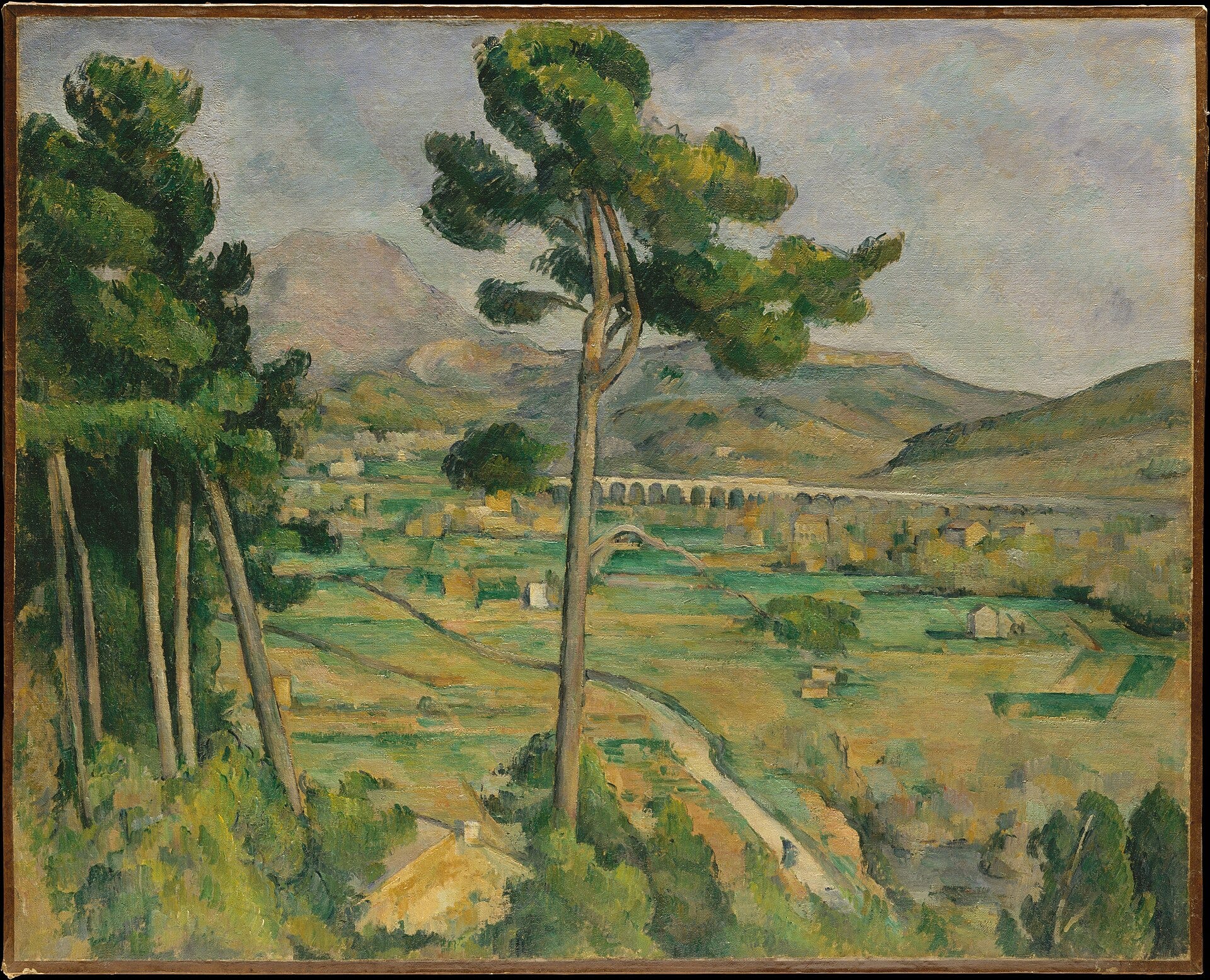
By the 1880s it had become worth a canvas of its own. Cezanne painted it from the grounds of Jas de Bouffan, his family's estate west of Aix-en-Provence, where a gap in the property wall framed the peak directly.
That version, painted from behind the estate wall, is one of only a few from that exact spot. Almost everything that followed came from somewhere else.
Three Places to Stand
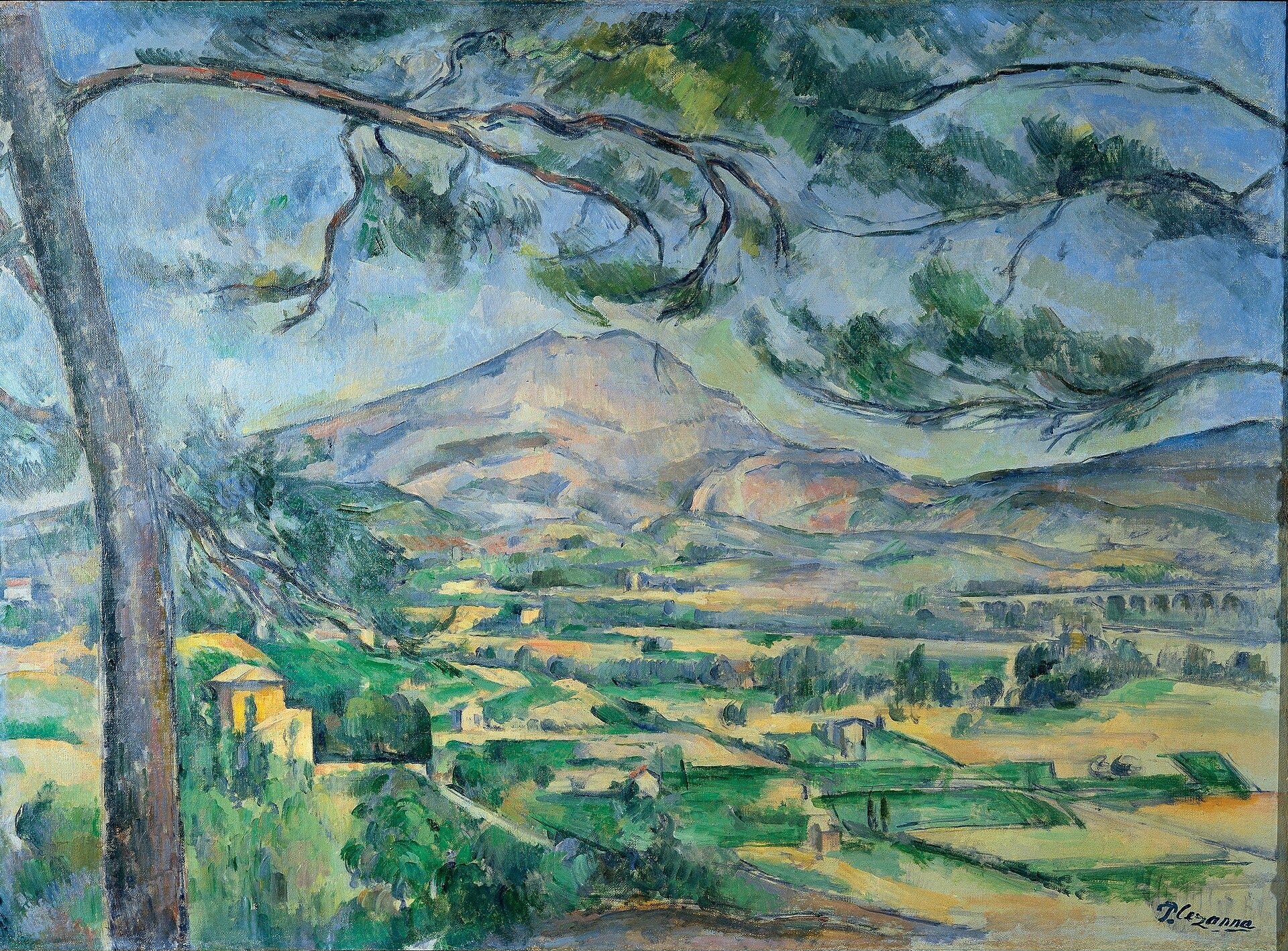
Cezanne did not paint Mont Sainte-Victoire from one spot. Across three decades he worked from the grounds of Jas de Bouffan, the ochre rock cuttings of the Bibémus quarry, and finally a studio built to face the mountain at Les Lauves in 1902, and each location gave the mountain a different shape, a different foreground, and a different mood.
The idea that there is one definitive Mont Sainte-Victoire painting, the version everyone pictures, does not hold up well. The mountain changes size, angle, and color depending on which of the three main spots Cezanne was standing in.
To me, that is the real subject of the whole series. Not the mountain itself, but how differently it can be built from three different vantage points.
From Bibémus, painted mostly through the 1890s, the mountain rises behind ochre colored quarry walls that Cezanne had also painted on their own, without the mountain in view at all.
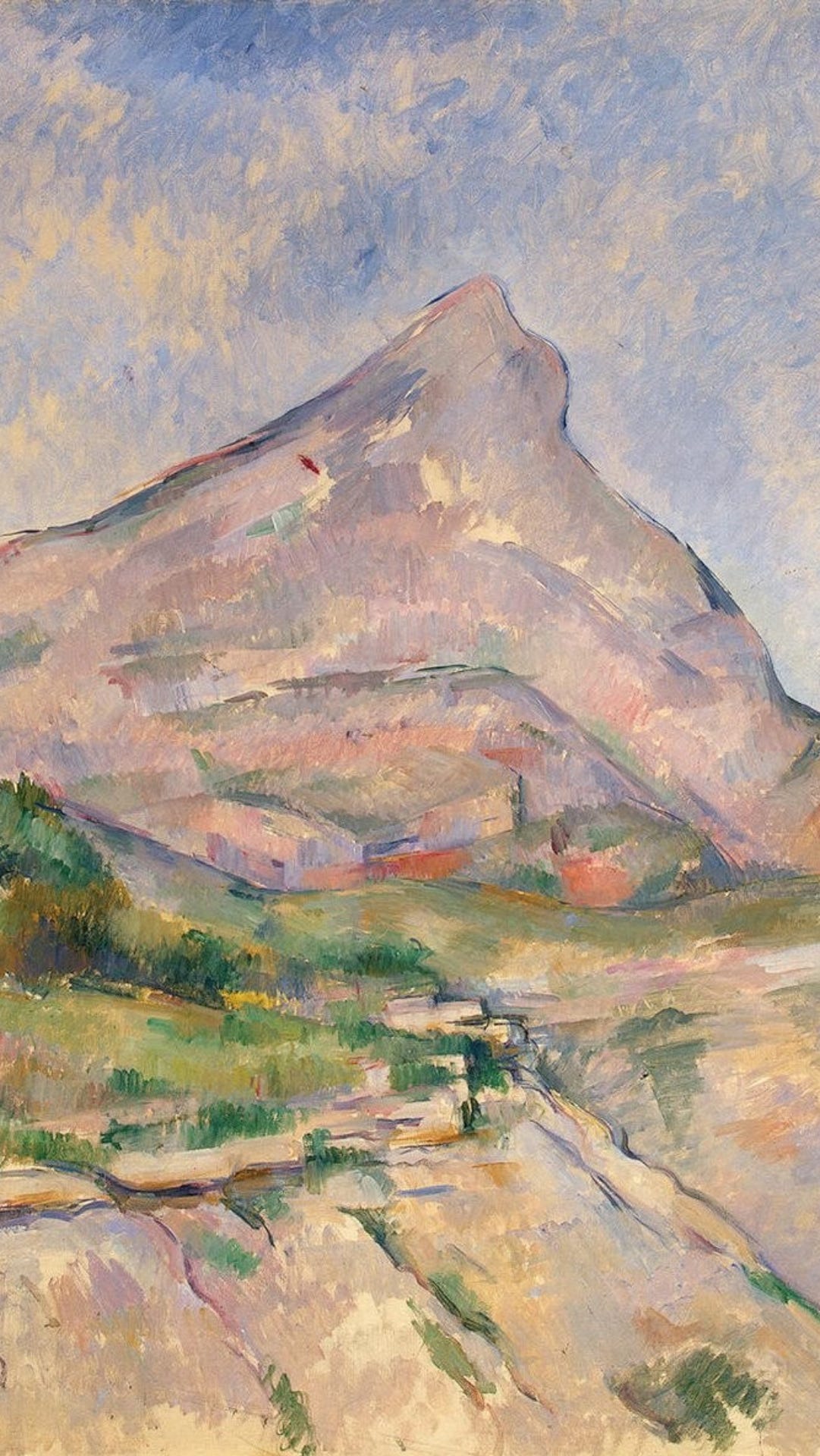
From Les Lauves, the studio he had built in 1902 north of Aix-en-Provence, the mountain sits further away and flatter, broken into small blocks of color that barely hold their edges. I find these Les Lauves versions the hardest to look away from, precisely because they stop trying to look like a specific mountain at all.
Building a Mountain Out of Color
Cezanne stopped blending his colors into smooth gradients and instead built the mountain out of small, separate patches of color, planes set against each other rather than receding into one continuous perspective. Historians trace part of this flattened viewpoint to Japanese woodblock prints his friend Camille Pissarro showed him, especially Hokusai's series of thirty six views of Mount Fuji.
Cezanne called this approach working by little sensations, small patches of tone laid one against another until the shape held together on its own.
The comparison to Hokusai's series on Mount Fuji is not incidental. Before Cezanne, no European painter had built a long series of views around a single mountain the way Hokusai had.
The result is a mountain built out of paint more than out of geography, which is exactly what painters like Picasso and Braque found useful a few years later.
Seen by Almost No One, Then by Everyone
Most of Cezanne's late Mont Sainte-Victoire paintings stayed in his studio and were rarely shown while he was alive, known mainly to the dealer Ambroise Vollard and a small circle of visitors. Wide recognition came only after a memorial retrospective at the 1907 Salon d'Automne in Paris, a year after his death, where Pablo Picasso and Georges Braque both later said their thinking about form changed.
Cezanne had been rejected from the official Salon for most of his career, and by the 1900s he had largely withdrawn from Paris, working in near isolation around Aix-en-Provence.
The 1907 retrospective changed that. Picasso and Braque both pointed to Cezanne's late landscapes, including his versions of the mountain, as the starting point for breaking a single subject into more than one viewpoint at once, the idea that grew into Cubism.
Cezanne did not live to see any of it. He died the year before the retrospective opened.
The Storm That Ended the Series
On 15 October 1906, Cezanne was working outdoors near Aix-en-Provence when a storm broke and he kept painting instead of stopping, then collapsed on the walk home and lay in the rain for hours before a passing cart driver found him. He kept working for a few more days, developed pneumonia, and died on 22 October 1906, a week after the storm.
He was 67 years old and, by his own account, still not finished with the mountain, still testing new arrangements of color on canvases left unresolved in the studio at Les Lauves.
Several of those final, unfinished paintings of Mont Sainte-Victoire are now considered among his most radical, the color blocks so loose that the mountain nearly dissolves into the sky around it.
I read those unfinished canvases as the clearest evidence of how he actually worked. He was still deciding, right up to the end.
Where to See the Mountain Today
Cezanne's Mont Sainte-Victoire paintings are spread across major museum collections rather than held in one place, including the Philadelphia Museum of Art, the Museum of Modern Art in New York, the Courtauld Gallery in London, the Barnes Foundation, and the Metropolitan Museum of Art, each holding a version from a different point in the series.
The Philadelphia Museum of Art holds one of the largest late versions, painted from Les Lauves. The Courtauld in London and the Barnes Foundation each hold earlier views, closer to the Impressionist paintings Cezanne was moving away from.
No single museum owns the whole story. Seeing the shift from a recognizable mountain to something closer to pure structure means comparing versions across several collections, which is part of why the series still gets written about more than a century later. I would start with the Philadelphia version if you can only look up one, since it holds the clearest late structure.
Portraits, Details, and What Came Next
If breaking a single subject apart interests you, these three go into faces and paintings people think they already know.
Frequently Asked Questions
How many times did Cezanne paint Mont Sainte-Victoire?
More than thirty times in oil, plus dozens of watercolors, mostly between the early 1880s and his death in 1906.
Where is Mont Sainte-Victoire?
Just east of Aix-en-Provence in the south of France, close to where Cezanne grew up and kept a studio for most of his life.
Did Cezanne paint the mountain from the same spot every time?
No. He worked mainly from three locations, the grounds of Jas de Bouffan, the Bibémus quarry, and a studio built at Les Lauves in 1902, and each gave the mountain a different shape.
Did Cezanne's mountain paintings influence Cubism?
Yes. Picasso and Braque both credited Cezanne's late landscapes, including his versions of the mountain, with showing them how to break a single subject into more than one viewpoint at once.
How did Cezanne die?
He collapsed after being caught in a storm while painting outdoors near Aix-en-Provence on 15 October 1906, and died of pneumonia a week later, on 22 October 1906.
Where can you see Cezanne's Mont Sainte-Victoire paintings today?
Versions are held across several museums, including the Philadelphia Museum of Art, the Museum of Modern Art, the Courtauld Gallery, the Barnes Foundation, and the Metropolitan Museum of Art.