
Critics hated Impressionism at first because the paintings broke what the Paris Salon had taught them to expect: a smooth finish, a clear story, a subject worth the canvas. Visible brushstrokes looked like a sketch sold as a finished picture, and the reviewers said so in print.
It happened in April 1874, at the group's first show, held for one month in the former studio of the photographer Nadar on the boulevard des Capucines. About 3,500 people came. Some of them came to laugh, and one of them wrote it down.
Cool Stories About Art is a newsletter to learn art the fun way.
Join 200,000+ readers and get:
10 new art stories / month
The entire archive of content (1,000+ articles)
Comment, ask questions, and chat with other readers
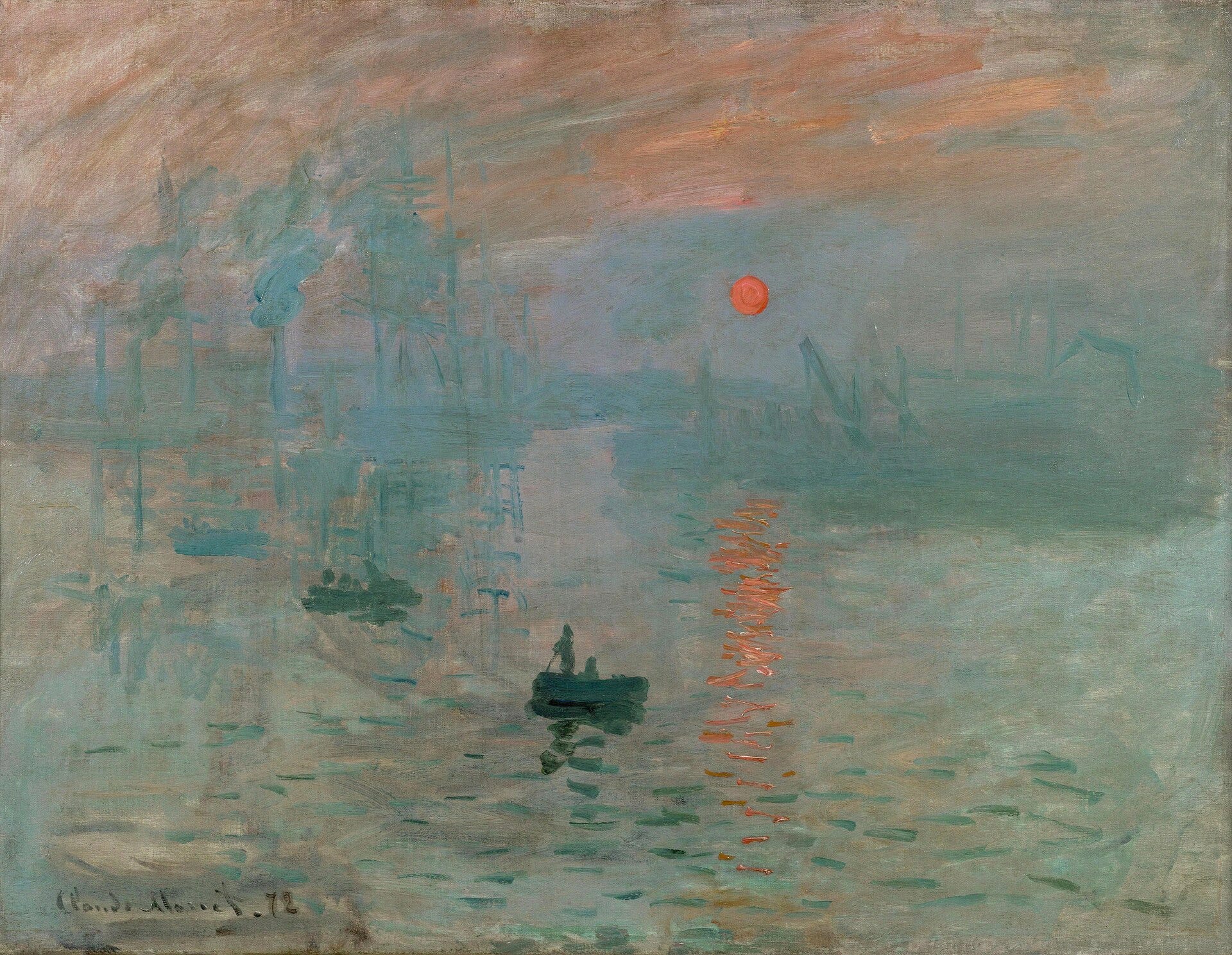
Yet the insult that named the movement was not really the critics' own. On 25 April 1874, Louis Leroy of the satirical paper Le Charivari mocked the show in a piece called "Exhibition of the Impressionists." He took the word from one canvas on the wall, Monet's Impression, Sunrise. Monet had chosen that title himself.
Years later he explained how. The catalogue needed a title, and since the picture could not decently pass for a view of Le Havre, he told them to put Impression. He wrote a word for a label, and a humorist turned it into a name.
So Paris did not invent the insult from nothing. Monet handed it the word, and Leroy made it a joke. I think that makes the story stranger than the usual one, where blind critics meet a misunderstood painter.
What You'll Discover
What kind of newspaper printed the insult.
What the black smudges really were.
Which critics sided with the painters.
What a Figaro critic wrote in 1876.
Why the painters gave up on the Salon.