Why Is Claude Monet Famous? The Real Story

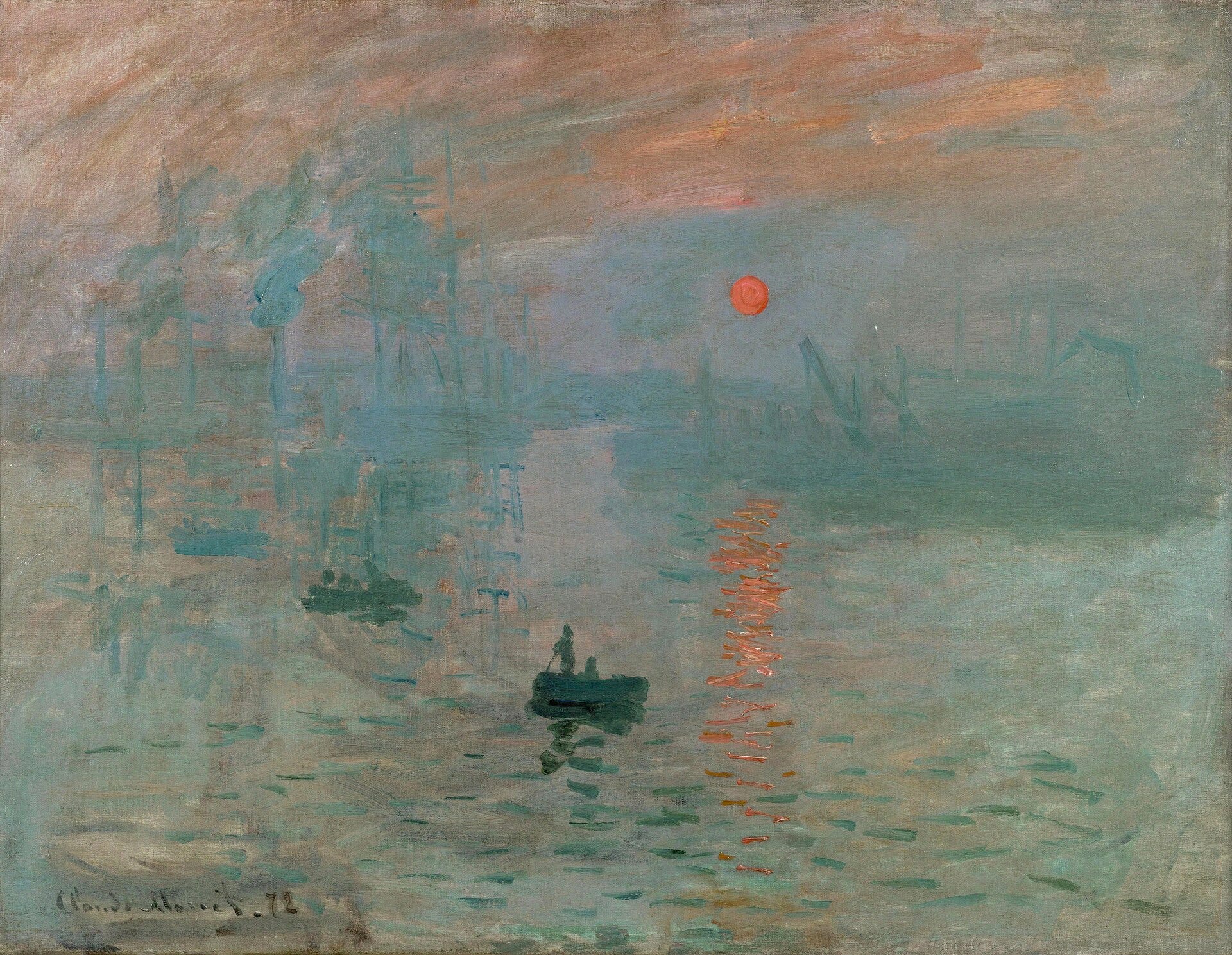
Claude Monet is famous for founding Impressionism, a movement named after his painting Impression, Sunrise, mocked by a critic in 1874.

He painted the same subjects, haystacks, Rouen Cathedral, water lilies, in series to study changing light, and kept working at Giverny even as cataracts nearly blinded him.

People assume Monet was an overnight sensation, but critics spent years mocking his work as unfinished sketches before it became the most recognizable painting style in the world. What gets me is that he did not set out to start a movement. He was trying to paint what his eyes actually saw in a fraction of a second, not what he knew a haystack was supposed to look like, and that stubborn habit is what eventually rewrote how painting worked.

Claude Monet's Impression Sunrise showing a hazy orange sun over a blue harbor at Le Havre
The 1872 painting that a critic mocked in 1874, giving Impressionism its name.

Learn art the fun way. Free stories every week, no boring lectures.


The Insult That Became a Movement's Name

In April 1874, Monet and a group of independent painters held their own exhibition in Paris because the official Salon kept rejecting their work.

Monet showed a hazy, blue and orange harbor scene titled Impression, Sunrise, painted from a hotel window in Le Havre in 1872.

A critic named Louis Leroy wrote a sarcastic review calling the whole group Impressionists, meaning their paintings looked like rough first impressions rather than finished work, and the label stuck as the name of the movement.

Painting the Same Subject Over and Over

Monet rarely painted a single version of anything he cared about.

He set up several canvases at once in front of the same haystack or building and switched between them every time the light shifted, sometimes producing more than twenty versions of one view.

The subject itself barely mattered to him. What he was really recording was how morning fog, noon glare, or winter frost changed what the eye actually registered, the same instinct that shaped his snow scene The Magpie years earlier.

One of Claude Monet's Haystacks paintings showing a grain stack glowing in soft morning light
Monet painted this same haystack in dozens of versions to study how light changed it.

Haystacks, Rouen Cathedral, and Water Lilies

His Haystacks series, painted in 1890 and 1891 near his home in Giverny, studies the same two grain stacks under dozens of different skies and seasons.

A few years later he set up in a shop window across from Rouen Cathedral and painted its west facade more than thirty times, from flat gray dawn to golden late afternoon.

The Water Lilies paintings, started in the 1890s and continued until his death in 1926, became his largest and longest running series, filling nearly 250 canvases.

Claude Monet's painting of the green Japanese style footbridge over his water lily pond at Giverny
Monet built this bridge and pond himself, then painted them for the rest of his life.

More Monet and Impressionism Stories


Giverny, the Garden He Built to Paint

In 1883, Monet rented a house in Giverny, a village northwest of Paris, and bought the property outright seven years later once his paintings started selling well.

He diverted a small stream to build a pond, planted water lilies imported from South America and Egypt, and added the Japanese style footbridge that appears in dozens of his later paintings.

The garden was not decoration for his house. It was a working outdoor studio he kept redesigning for the rest of his life.

Claude Monet self portrait
Monet kept painting at Giverny even as cataracts clouded his vision.

Going Nearly Blind and Still Painting

In his seventies, Monet developed cataracts that clouded his lenses and distorted how he perceived color.

Reds started looking muddy and brown to him, and several canvases from this period carry a noticeably yellow or reddish cast that he could not fully judge with his own eyes.

He finally agreed to surgery on one eye in 1923, and he kept painting large water lily canvases at Giverny almost until he died in December 1926.


Cool Stories About Art is a free newsletter. The stories behind the paintings, straight to your inbox.


From Mocked to Record Breaking

The same paintings critics dismissed as sloppy sketches in the 1870s now sell for tens of millions of dollars whenever they reach auction.

The Musee de l'Orangerie in Paris built two oval rooms specifically to hold his largest water lily canvases, exactly as Monet asked before he died.

That reversal took roughly fifty years, but it turned a painter once mocked in the press into one of the most collected artists in history.

How His Technique Differed From Earlier Painters

Landscape painters before Monet worked in careful, polished detail meant to look complete and correct up close.

Monet used short, visible brushstrokes and patches of pure, unmixed color placed side by side, letting the viewer's eye blend them into form from a distance.

He also insisted on working outdoors directly in front of his subject, rather than sketching outside and finishing the real painting later inside a studio.

What People Get Wrong About Monet

Monet is often pictured as comfortably wealthy his entire career, but he spent decades broke, moving his family to dodge creditors and borrowing money from friends before Impressionism finally sold.

He is sometimes credited with inventing painting outdoors, but working outside was already a known practice. His real contribution was building an entire career around series painting and shifting light.

And the name Impressionism was never his idea. He never set out to launch a movement or a label at all.


More from the collection


Frequently Asked Questions About Claude Monet

  • What is Claude Monet most famous for?
    Founding Impressionism and painting the same subject, such as haystacks or water lilies, in series to capture changing light.

  • Why is the movement called Impressionism?
    A critic named Louis Leroy mocked Monet's 1872 painting Impression, Sunrise in an 1874 review, and the insult became the movement's name.

  • Was Monet rich during his lifetime?
    No. He struggled financially for most of his early career and only became wealthy later, after Impressionism gained collectors.

  • Did Monet go blind?
    He developed cataracts in his seventies that distorted his color vision and had surgery on one eye in 1923. He was not fully blind, but his sight was badly impaired for years.

  • How many Water Lilies paintings did Monet make?
    Close to 250 canvases over roughly three decades, making it his largest series.

  • Where is Giverny and why does it matter?
    Giverny is a village northwest of Paris where Monet built the garden and pond that became the subject of his final decades of work.

  • What is Monet's most valuable painting?
    Prices vary by sale, but his Haystacks and Water Lilies canvases have both sold for well over 100 million dollars at auction.

  • Did Monet know he started a movement?
    No. He was trying to paint light and perception accurately, not launch a label. The name Impressionism came from a critic mocking his work.


Join 170,000 readers learning art the fun way. Free stories every week, no boring lectures.