Why Is Guernica So Famous?

Guernica became famous because Picasso refused to fix its meaning, because the woven copy hanging at the United Nations got covered during Colin Powell's 2003 speech on Iraq, and because Picasso kept the painting out of Spain until Franco died, forcing it to build its reputation everywhere else first.

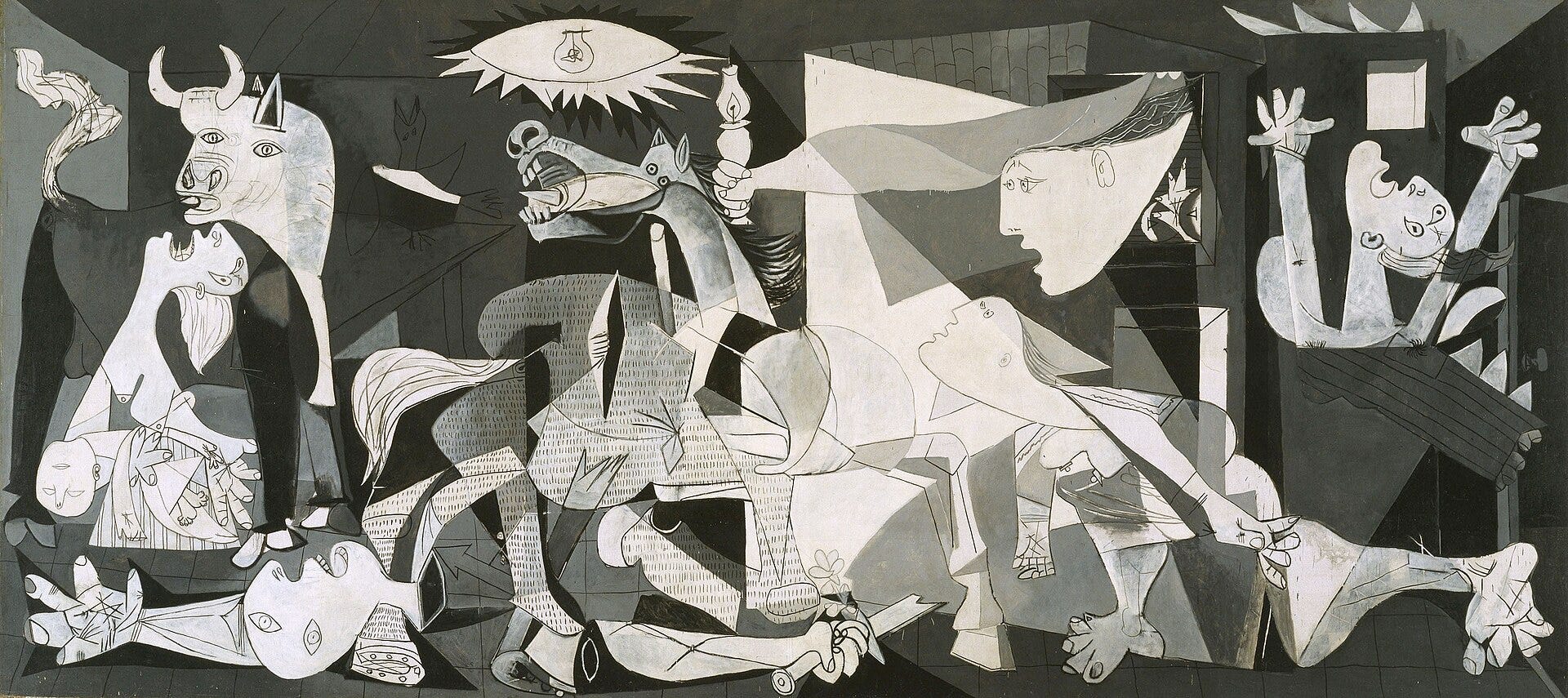
The detail people skip is that Picasso never gave the painting a fixed meaning, and I think that refusal is the smartest thing he did with it. A bull with a caption is propaganda. A bull nobody will explain stays alive for every new war that comes along, which is exactly why a government covering it up in 2003 made a kind of sense nobody wanted to admit out loud.

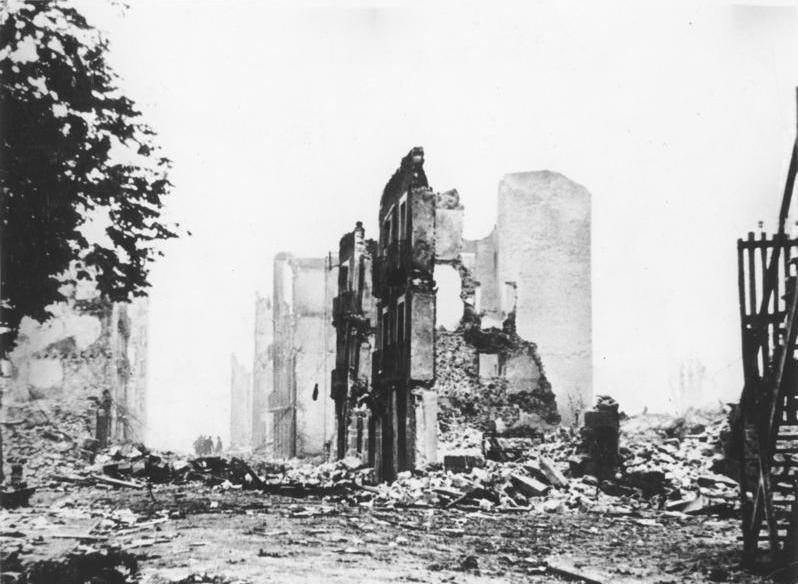
Ruins of the town of Guernica after the April 1937 bombing
This is not the painting. It shows the town of Guernica after the bombing that led Picasso to change the subject of his mural.

Learn art the fun way. Free stories every week, no boring lectures.


A Painting Ordered Before the Bombing Happened

The Spanish Republican government commissioned Pablo Picasso in January 1937 to paint a large mural for the Spanish Pavilion at that year's Paris International Exposition.

Picasso had months to work and no fixed subject yet. He was still sketching ideas when news of an attack on a small Basque town reached Paris that spring.

Guernica's fractured shapes trace straight back to the cubist language he helped invent two decades earlier, applied here to a subject with real casualties instead of a still life.

What the Bombing Actually Did

On April 26, 1937, German and Italian aircraft bombed the town of Guernica on a market day, when the streets were full of civilians rather than soldiers.

The attack was carried out in support of Francisco Franco's forces during the Spanish Civil War, and it flattened much of the town.

Picasso changed the subject of his mural within days of the news reaching Paris and finished the painting by June 4, 1937, less than six weeks after the attack.

Pablo Picasso photographed in the mid 1930s, before he began work on Guernica
Picasso photographed around the time the Spanish Republic first approached him about a mural for the Paris exposition.

Picasso Refused to Explain the Symbols

The painting is full of figures that beg for explanation: a screaming horse, a bull standing over the chaos, a woman holding a dead child, a lightbulb burning at the top.

Picasso was asked repeatedly what each figure meant, and he refused to lock any of them into a single reading. He said it was up to whoever looked at the painting to decide.

Picasso's relationships shaped plenty of his other work, but Guernica came out of politics, not romance, which is part of why he guarded its meaning so carefully.


More Picasso Reads From Cool Stories About Art


Kept Out of Spain by Picasso's Own Condition

Picasso set a condition before he would let the painting return to Spain: it had to wait until the country had public liberties and a democratic government again.

That meant Franco, who ruled Spain until his death in 1975, never saw Guernica hang in his own country.

The painting spent decades on loan to the Museum of Modern Art in New York instead, held there under Picasso's instructions rather than sold or given away.

The United Nations headquarters building in New York
A woven copy of Guernica hung outside the Security Council chamber here for decades, including during the 2003 Iraq debate.

A Woven Copy Hidden During a War Speech

In 1955, Nelson Rockefeller commissioned a woven copy of Guernica, which eventually hung outside the United Nations Security Council chamber in New York.

On February 5, 2003, United Nations staff covered that woven copy with a blue curtain and flags just before Secretary of State Colin Powell presented the American case for war in Iraq.

Officials said the curtain simply made a better television backdrop. Diplomats speaking anonymously at the time believed the real reason was that an anti war painting made an awkward background for a speech arguing for one.


Cool Stories About Art is a free newsletter. The stories behind the paintings, straight to your inbox.


Why It Toured Instead of Staying Put

After the 1937 Paris exposition closed, Picasso sent Guernica on tour rather than letting it sit in one gallery.

It traveled through Europe and then the United States for years, raising money and awareness for Spanish refugees and warning audiences about fascism while the Spanish Civil War and then the Second World War played out.

That travel schedule is a big part of why so many people outside Spain had already seen the painting in person long before it ever hung in a Spanish museum.

A Symbol With No Fixed Address

Because Picasso refused to pin the painting to a single meaning, it has been reused as a protest image for wars that have nothing to do with the Spanish Civil War.

A version of it has stood at the United Nations, appeared on protest posters, and shown up in film and television whenever a director wants a quick visual shorthand for the horror of war.

Few paintings from the 1930s still get pulled into arguments happening in the present day. Guernica gets pulled in constantly.

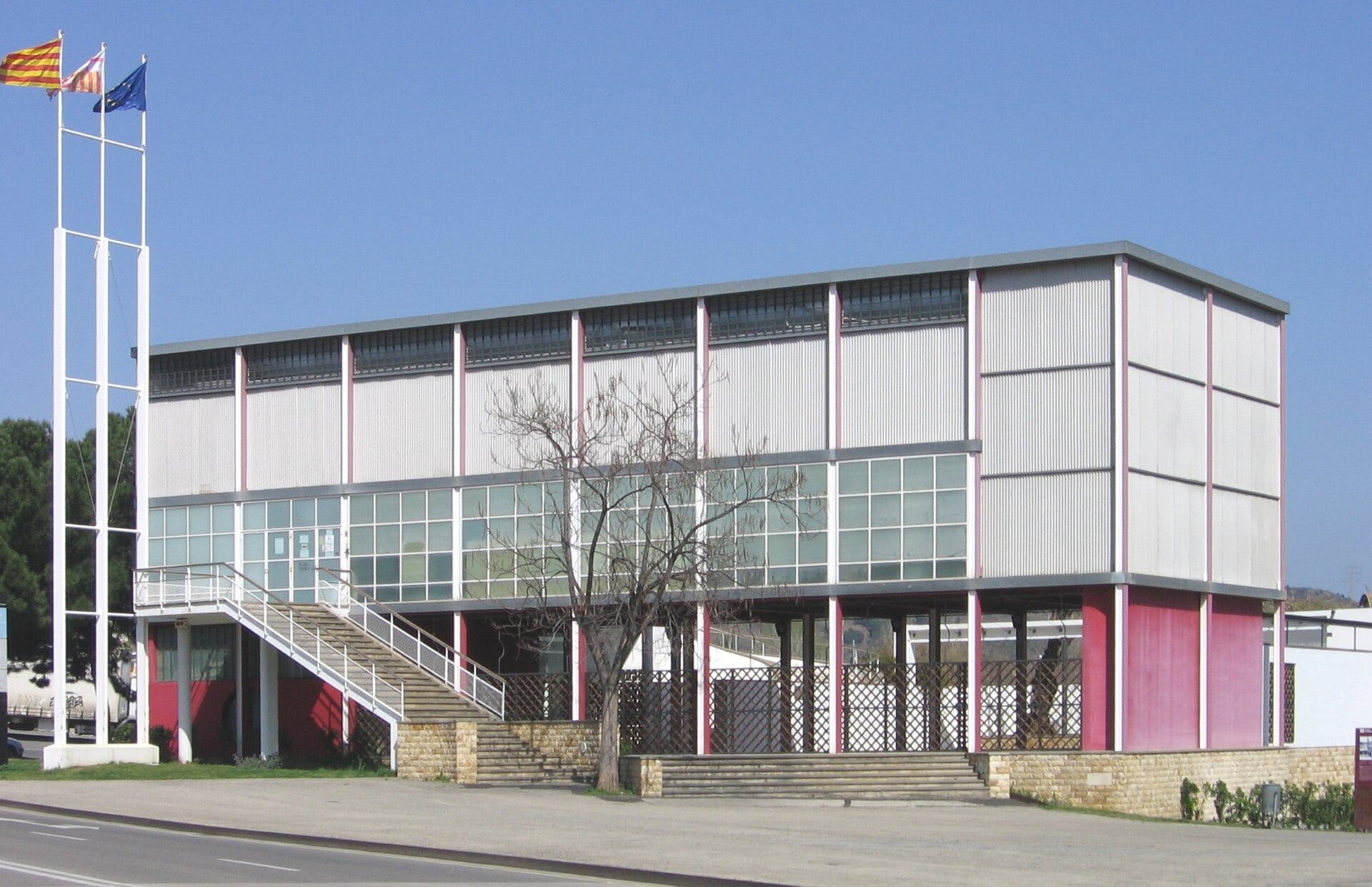
The Museo Reina Sofia in Madrid, where Guernica hangs today
Guernica has hung in this museum since 1992, after arriving in Spain in 1981, six years after Franco's death.

Where It Lives Now

Guernica finally arrived in Spain in 1981, six years after Franco's death and the country's return to democracy.

It has hung at the Museo Reina Sofia in Madrid since 1992, in a room built around its scale.

At roughly eleven feet tall and twenty five feet wide, it is still shown without glass, exactly as Picasso wanted it seen.


Carry on exploring


Straight Answers About Why Guernica Is Famous

  • What event does Guernica depict?
    The German and Italian bombing of the Basque town of Guernica on April 26, 1937, carried out in support of Franco's forces during the Spanish Civil War.

  • Did Picasso ever explain what the bull and the horse mean?
    No. He was asked many times and consistently refused to give the figures a fixed meaning, saying it was up to the viewer to decide.

  • Why was Guernica covered up at the United Nations in 2003?
    A woven copy hanging outside the Security Council chamber was covered with a blue curtain just before Colin Powell's speech making the case for war in Iraq. Officials called it a backdrop decision.

  • Why did not Guernica hang in Spain for decades?
    Picasso set a condition that the painting stay out of Spain until the country had a democratic government again, so it remained on loan to MoMA in New York until after Franco died.

  • When did Guernica finally reach Spain?
    In 1981, six years after Franco's death in 1975.

  • Where can I see Guernica today?
    At the Museo Reina Sofia in Madrid, where it has hung since 1992.

  • How large is Guernica?
    About eleven feet tall and twenty five feet wide, painted in oil on canvas.

  • Is Guernica only about the Spanish Civil War?
    It was made in direct response to one bombing, but because Picasso never fixed its meaning, it has been used as a general anti war symbol ever since.


Join 170,000 readers learning art the fun way. Free stories every week, no boring lectures.