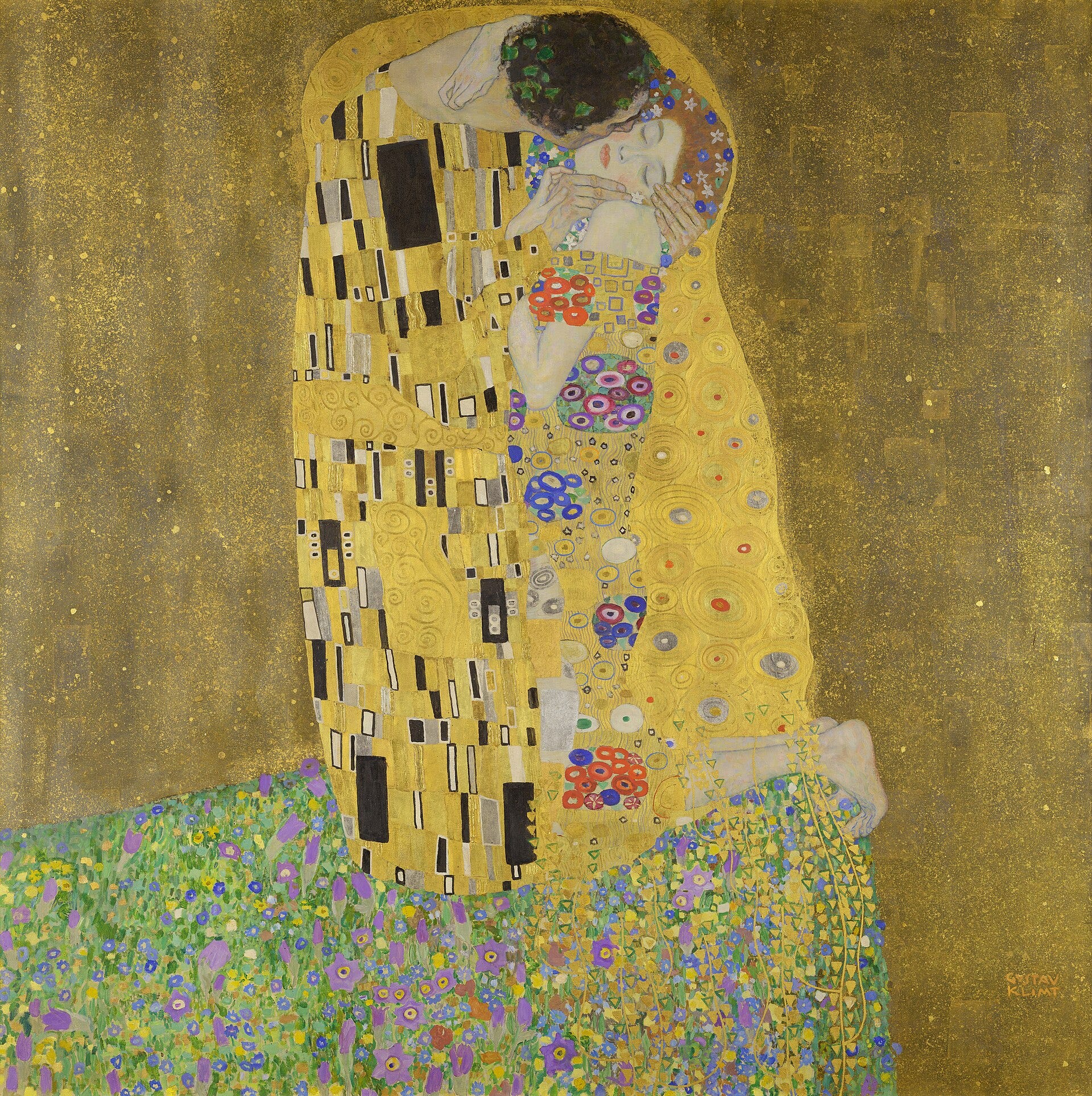
Gustav Klimt is famous for the Golden Phase paintings he made after learning gold leaf technique from his father, a gold engraver, including The Kiss and Portrait of Adele Bloch-Bauer I, later known as Woman in Gold after the Nazis stole it and it sold for 135 million dollars in 2006.
Most explanations stop at gold and call it decoration, but Klimt's gold leaf came from a real trade skill. His father engraved gold for a living, and Klimt used that training to break painting rules that had nothing to do with prettiness. The part people skip is that his most famous portrait spent decades hidden under a fake name before a courtroom fight gave it back its real one.
A Painter's Son Who Learned Gold From His Father
Klimt was born in Vienna in 1862 to a family with little money and a father, Ernst Klimt, who worked as a gold engraver, a modest start covered in full in the complete story of his life.
That trade put real gold leaf and metalworking techniques into the household long before Klimt became famous for using them on canvas.
He trained formally at the Vienna School of Arts and Crafts, then worked for years painting murals and ceiling decorations before developing his own style.
Founding the Vienna Secession
In 1897, Klimt led a group of artists who broke away from Vienna's conservative art establishment and formed the Vienna Secession.
The group rejected the strict historical styles favored by official academies and pushed for new, personal ways of painting, printing, and designing.
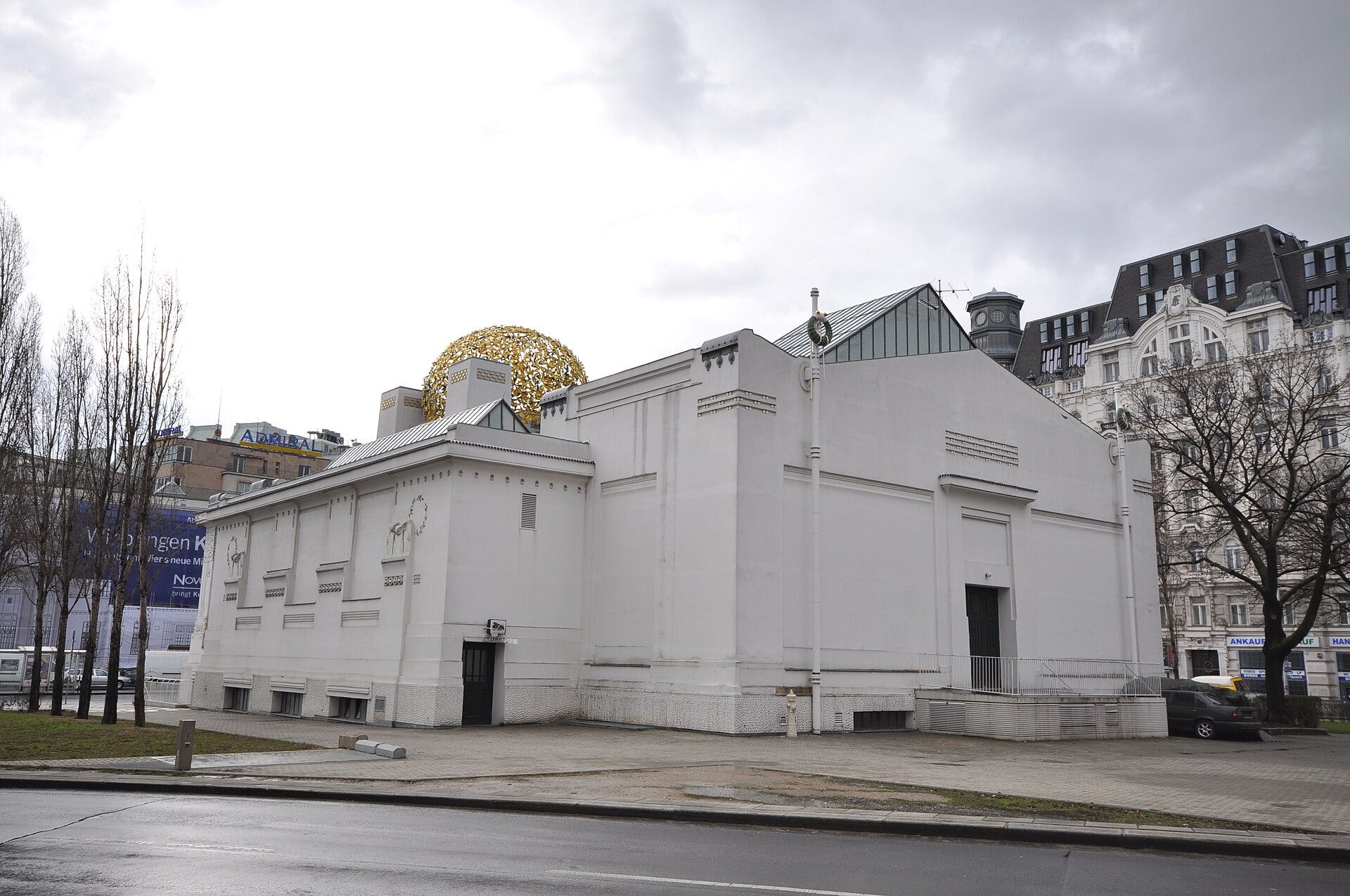
Klimt served as the Secession's first president and helped build its exhibition hall, which still stands in Vienna today.
The Golden Phase
Around 1899, Klimt began applying gold leaf and silver directly onto his canvases instead of only painting with pigment.
The technique echoed Byzantine mosaics he had studied on a trip to Ravenna, where entire walls glow with gold background tile.
This period produced his best known paintings, including The Kiss in 1908 and Portrait of Adele Bloch-Bauer I in 1907.
More Stories on Klimt and Vienna's Art World
Portrait of Adele Bloch-Bauer I and the Woman in Gold Story
Klimt painted Adele Bloch-Bauer, a Viennese socialite, wrapped almost entirely in gold pattern, with only her face, hands, and choker left fully solid.
After Nazi Germany annexed Austria in 1938, the painting was seized from the Jewish Bloch-Bauer family and renamed Woman in Gold, erasing the family name from its title.
Adele's niece, Maria Altmann, spent years fighting to recover it and won in 2006. The painting then sold privately for about 135 million dollars, a record at the time.
The Beethoven Frieze
In 1902, Klimt painted a massive frieze for a Secession exhibition honoring the composer Ludwig van Beethoven.
The work wraps around three walls and stretches over 34 meters, mixing symbolic figures of suffering, temptation, and eventual joy.
It was meant to be temporary and was nearly destroyed after the show, but it survived and now hangs permanently in Vienna's Secession building.
The Kiss and His Most Recognized Image
The Kiss, painted between 1907 and 1908, shows a couple wrapped in gold robes covered in geometric pattern, kneeling at the edge of a flowered ledge.
It became Klimt's most reproduced image, appearing on posters, mugs, and phone cases well beyond the art world, one of several famous paintings hiding real secrets behind their surface.
The Austrian Gallery Belvedere bought it directly from Klimt before the paint had even fully dried, which was unusual for the time.
Why His Style Broke From Tradition
Klimt mixed flat decorative pattern with realistic, carefully rendered faces and hands in the same painting.
That combination broke with academic painting rules, which expected consistent, illusionistic space across an entire canvas, placing him among artists who broke the rules forever.
Critics at the time called some of his work indecent, particularly his university ceiling paintings, which were criticized publicly and never installed.
What People Get Wrong About Klimt
Klimt is sometimes described purely as a decorative painter, but his gold period covers only about a decade of a much longer, changing career.
He is also often assumed to have been formally educated only as a fine artist, when his early training was in applied and decorative arts alongside his brother.
And the Woman in Gold title was never Klimt's choice. It was a name forced onto the painting during the Nazi era to hide who it really was.
Where to read next
Frequently Asked Questions About Gustav Klimt
What is Gustav Klimt most famous for?
His Golden Phase paintings, especially The Kiss and Portrait of Adele Bloch-Bauer I, later known as Woman in Gold.Why did Klimt use real gold in his paintings?
His father was a gold engraver, and Klimt applied that trade's materials and techniques directly onto canvas starting around 1899.What happened to the painting called Woman in Gold?
The Nazis seized it from the Jewish Bloch-Bauer family in 1938 and stripped the family name from the title. Maria Altmann won it back in 2006, and it sold for about 135 million dollars.Did Klimt found the Vienna Secession?
He led the group of artists who broke away from Vienna's official art academy in 1897 and served as its first president.What is the Beethoven Frieze?
A 34 meter painted frieze Klimt made in 1902 for a single exhibition honoring the composer. It survived and now hangs permanently in Vienna.Was Klimt's work considered controversial?
Yes. His university ceiling paintings were publicly criticized as indecent and were never installed in the building they were made for.Where can you see Klimt's paintings today?
The Belvedere Museum in Vienna holds the largest collection, including The Kiss. The Neue Galerie in New York holds Portrait of Adele Bloch-Bauer I.Did Klimt influence other artists?
Yes. Egon Schiele studied under him briefly and carried his expressive line work into Austrian Expressionism after Klimt's death in 1918.