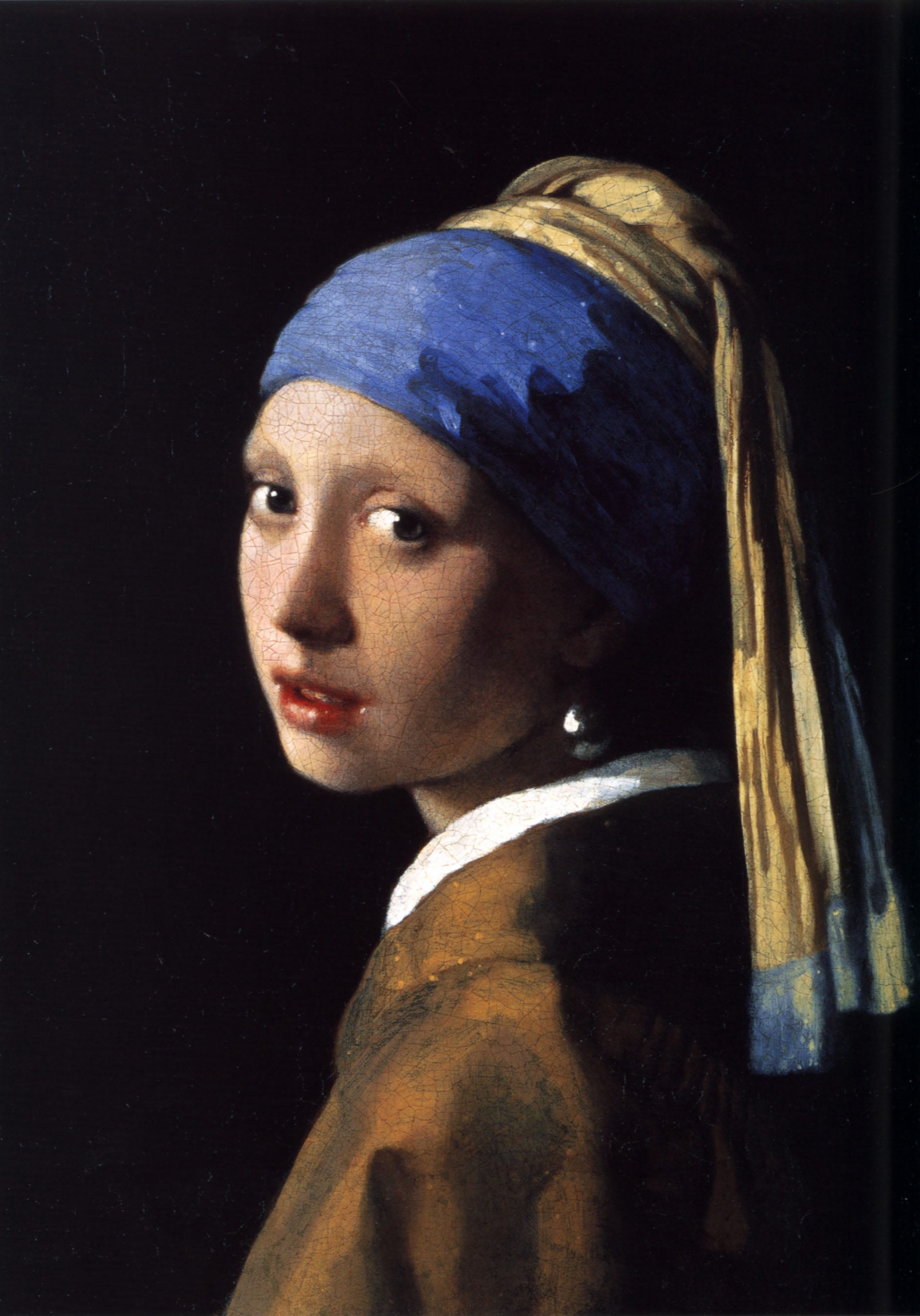
Johannes Vermeer is famous for Girl with a Pearl Earring and his extraordinary handling of light in quiet domestic scenes. Only about 34 of his paintings survive.
He likely used a camera obscura to study light and perspective, and he was largely forgotten for two centuries until critics rediscovered his work in the 1800s.
Vermeer gets treated like an obvious old master, but for roughly two hundred years almost nobody outside Delft knew his name. What changes my view of him is how few paintings he actually left behind, somewhere around 34, and how much of his reputation rests on a handful of quiet rooms with one window and one figure. That is not a small career reconstructed by accident. It took a nineteenth century critic actively digging through Dutch archives to put Vermeer back on the map at all.
A Painter Almost Nobody Remembered
Vermeer worked and died in Delft in 1675, respected locally but never achieving wide fame during his own lifetime, a rise covered in full in the complete story of his life.
After his death, his paintings were scattered among private collections and often misattributed to other Dutch painters.
For almost two centuries, his name barely appeared in serious art history writing at all.
The Rediscovery in the 1800s
In 1866, a French critic named Etienne Joseph Theophile Thore, writing under the name William Burger, published a study identifying and championing Vermeer's scattered paintings.
He tracked down works across European collections and argued that Vermeer deserved recognition alongside the biggest names in Dutch painting.
That publication is the reason Vermeer went from a forgotten Delft painter to a major figure in art history within a few decades.
Only About 34 Paintings Survive
Art historians generally agree that somewhere around 34 paintings by Vermeer still exist today, and even that number is debated.
That is a tiny output compared to prolific contemporaries, which makes each surviving painting more closely studied and more valuable.
Several works once attributed to him have since been reclassified, so the exact count keeps shifting slightly as research continues.
More Vermeer and Dutch Golden Age Stories
Girl with a Pearl Earring
Painted around 1665, Girl with a Pearl Earring is not a portrait of a specific known person but a tronie, a study of an imagined face and expression.
The painting disappeared from public view for centuries before it was bought at a Hague auction in 1881 for a small sum, a rescue detailed in the true story behind Girl with a Pearl Earring.
It now hangs in the Mauritshuis in The Hague and inspired a bestselling novel and film that introduced Vermeer to a much wider modern audience.
Did Vermeer Use a Camera Obscura?
Many historians believe Vermeer used a camera obscura, a darkened box or room that projects an image through a small lens, to study light and composition.
The soft, slightly blurred highlights in some of his paintings resemble effects that a camera obscura would produce on certain textures, an effect examined closely in the story of Vermeer's Woman Holding a Balance.
No documented proof lists the device among his belongings, so this remains a strong theory rather than a confirmed fact.
Mastering Light in Quiet Interiors
Vermeer almost always painted the same kind of scene, a single figure in a modest room lit from a window on the left.
He built up light with tiny dots and layers of paint that make surfaces like pearls, bread, and fabric look convincingly lit rather than just colored.
That narrow focus on domestic, everyday moments set him apart from painters chasing dramatic religious or historical subjects.
A Life That Ended in Debt
Vermeer supported a large family, eleven surviving children, partly by working as an art dealer alongside painting.
A war with France in 1672 crushed the Dutch art market, and Vermeer's income collapsed along with it.
He died in 1675 deeply in debt, and his widow later described him as having fallen into a frenzy from financial stress shortly before his death.
Why His Reputation Keeps Growing
Museums now treat any confirmed Vermeer loan as a major event, given how few exist and how rarely they travel.
Exhibitions such as the 2023 Rijksmuseum show, which gathered a majority of his surviving works in one place, drew record crowds.
That scarcity, combined with the technical mastery of his light, keeps pushing his reputation higher even centuries after his death.
What People Get Wrong About Vermeer
Vermeer is sometimes assumed to have been famous in his own time, but he sold most work locally and never built a wide reputation while alive.
People also assume Girl with a Pearl Earring depicts a real identified woman, when it is most likely an imagined character study rather than a portrait, of the type known as a tronie.
And the camera obscura theory is often stated as settled fact. It remains a widely supported theory, not a documented certainty.
More art, more stories
Frequently Asked Questions About Johannes Vermeer
What is Johannes Vermeer most famous for?
Girl with a Pearl Earring and his mastery of natural light in quiet domestic scenes.How many paintings did Vermeer make?
Only about 34 confirmed paintings survive today, and even that count is still debated among historians.Was Vermeer famous during his lifetime?
No. He worked mainly in Delft, sold locally, and was largely forgotten for about two centuries after his death in 1675.Who rediscovered Vermeer?
French critic Etienne Joseph Theophile Thore, writing as William Burger, published research in 1866 that brought Vermeer back into art history.Did Vermeer use a camera obscura?
Many historians believe he did, based on light effects in his paintings, but no document or object proves it directly.Is Girl with a Pearl Earring a real person?
Most historians believe it is a tronie, an imagined character study, not a portrait of a specific identified woman.Where can you see Vermeer paintings today?
The Mauritshuis in The Hague, the Rijksmuseum in Amsterdam, and museums including the National Gallery of Art hold his surviving works.How did Vermeer die?
He died in Delft in 1675, deeply in debt after a market collapse tied to a war with France, leaving behind a large family.