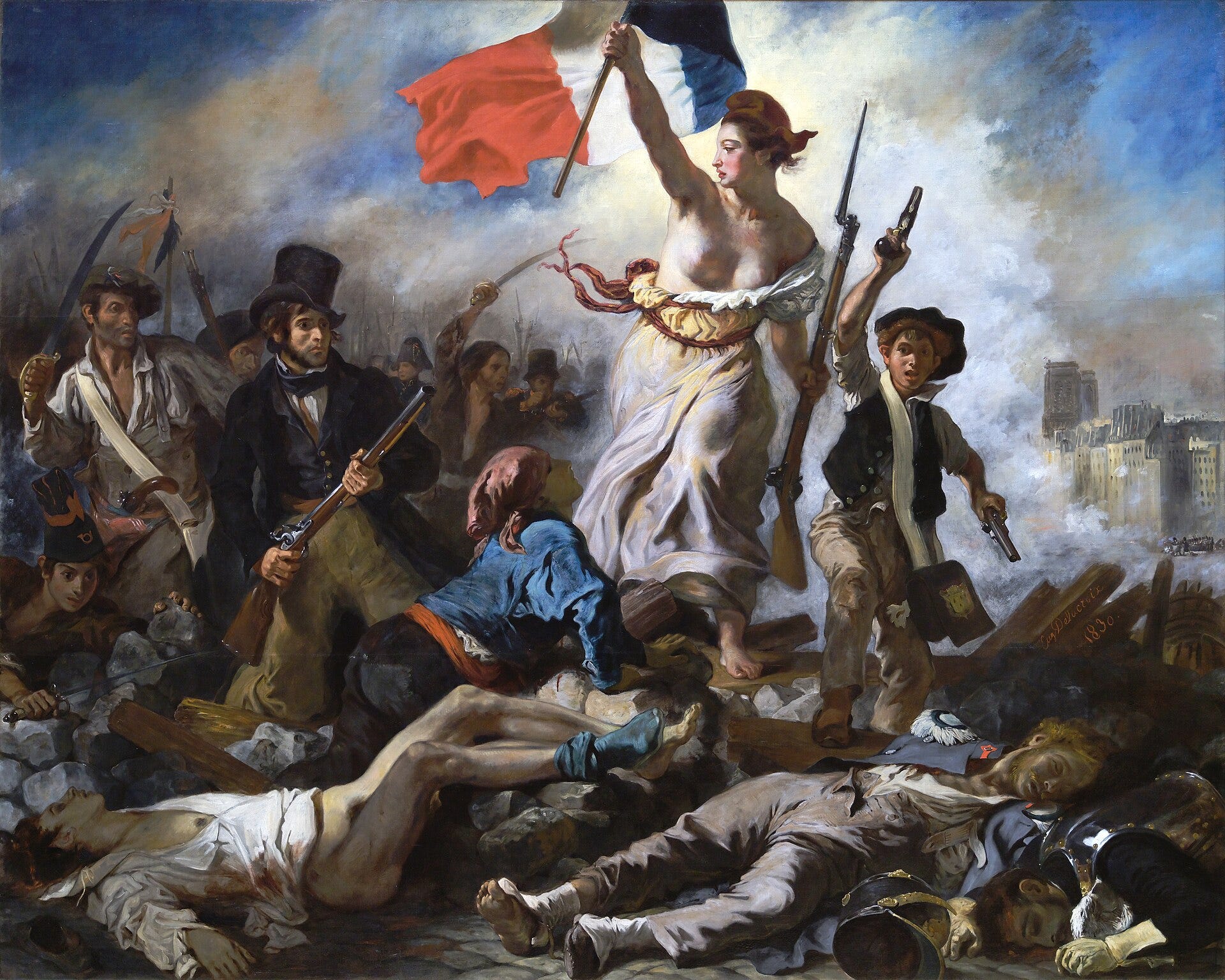
Liberty Leading the People is famous because Delacroix turned a three day Paris uprising into a lasting symbol of freedom. It shows the July Revolution of 1830, not the French Revolution of 1789.
The bare chested woman is Marianne, an allegory of the Republic, not a real fighter, and the painting later ended up on French money, an album cover, and a national museum wall.
I get why people mix up the date. Delacroix painted this in the heat of 1830, and the tricolor flag makes everyone think of 1789 by reflex. That confusion undersells the picture. What Delacroix actually painted was a raw, three day uprising against a king who had just torn up the constitution, and he started the canvas within weeks of living through it himself. That immediacy is the real reason it still lands the way it does.
A Revolution, Not The Revolution
Liberty Leading the People often gets filed under the French Revolution of 1789, and that mix up undersells what Delacroix actually painted.
The scene shows the July Revolution of 1830, a three day uprising in Paris known as the Trois Glorieuses, when citizens forced King Charles X off the throne after he suspended the constitution.
Delacroix was not painting a distant memory. He started the canvas within weeks of the fighting he had watched from his own window.
Charles X had just issued ordinances that dissolved the legislature, muzzled the press, and gutted the right to vote, and Parisians answered within seventy two hours.
Who Is the Woman With the Flag
The woman striding over the barricade is not a real fighter with a name and a biography.
She is Marianne, the allegorical figure who personifies the French Republic and the idea of liberty itself.
Delacroix gave her a Phrygian cap, the same red cap worn by freed slaves in ancient Rome and later adopted across Europe as a mark of revolt.
Her bare chest follows a much older convention. Classical and neoclassical art used an exposed torso to mark a figure as an idea rather than an individual, the same shorthand used for goddesses and virtues.
No single sitter posed for her. Art historians describe Marianne as a composite figure, built from Delacroix's imagination and classical sculpture rather than one live model.
Painters before Delacroix used the same allegorical trick for centuries, from Roman coins to earlier French Revolution prints, so audiences in 1831 immediately understood who she stood for even without a caption.
The Man in the Top Hat
Just behind Marianne stands a man in a dark coat and a tall top hat, holding a rifle.
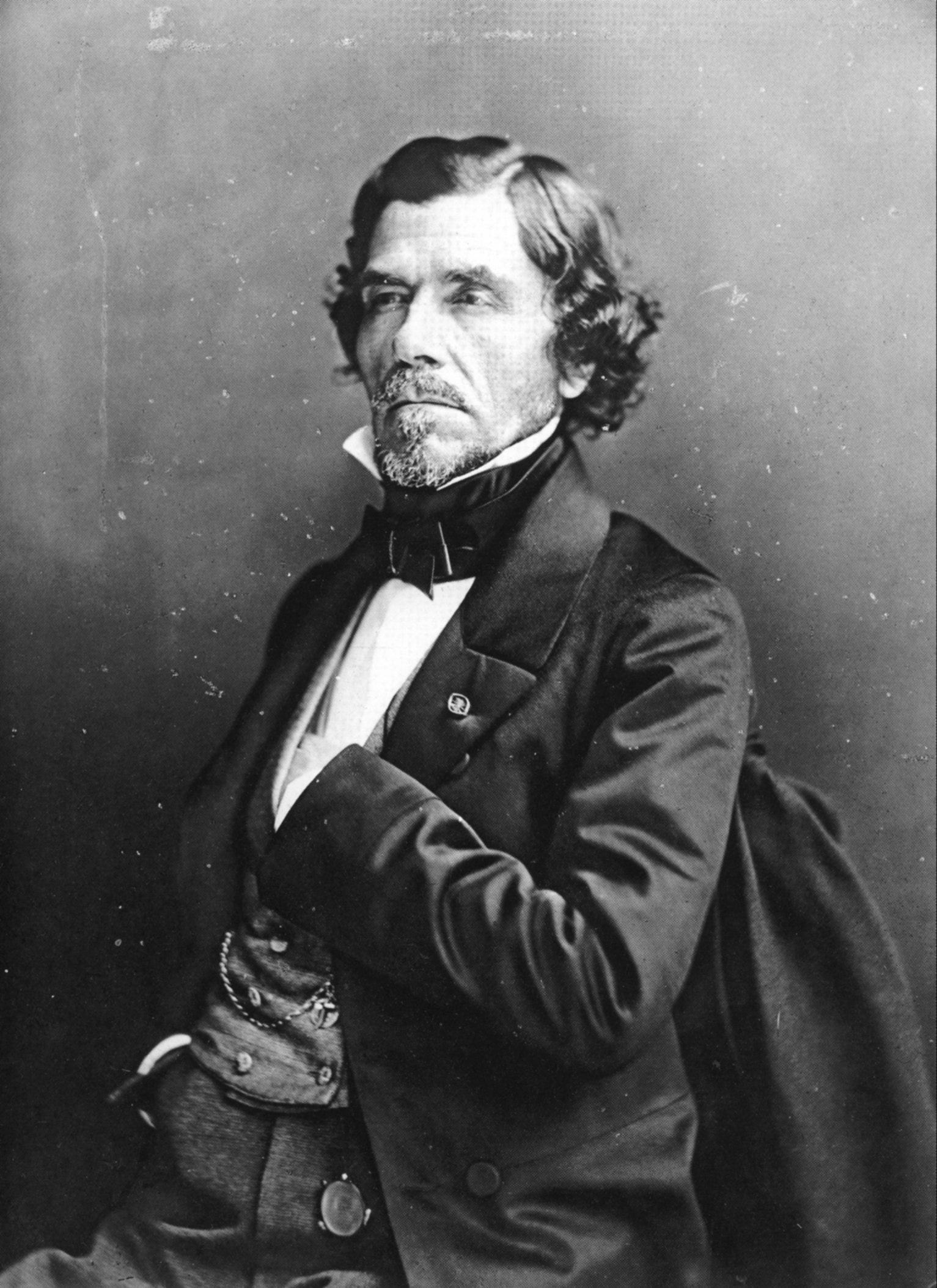
Some historians read him as a stand in for Delacroix, who did not fight on the barricades but said he wanted to serve his country with a brush.
The identification is disputed. Delacroix never confirmed it in writing, and no contemporary source names the figure with certainty.
Bourgeois top hats next to workers in shirtsleeves is part of the point. Delacroix wanted the picture to show every class of Parisian fighting side by side, not just the poor.
More Revolutionaries and Rule Breakers in Art History
A Painter Who Chose His Moment
Delacroix was the leading figure of the French Romantic movement, and this painting is the clearest statement of what that movement wanted from art.
In a letter to his brother, he wrote that if he had not fought for his country, he could at least paint for it.
He mixed reportage with allegory in one canvas, a dead body in the foreground next to a symbolic goddess, and that combination is part of why the image still feels alive.
Delacroix was in his early thirties when he painted this, already known for dramatic scenes drawn from literature and current events rather than mythology alone.
He had already caused a stir two years earlier with The Death of Sardanapalus, a violent, colorful scene that critics called excessive, so this painting continued a pattern of pushing the Salon toward rawer subjects.
From Salon Scandal to National Purchase
The painting was shown at the Paris Salon of 1831 and split opinion immediately.
Critics found the lower class figures on the barricade too rough for a subject that was supposed to be heroic.
The French state bought the painting, then kept it out of public view for years because officials worried the image itself could inspire more uprisings.
It did not go on regular public display again until 1848, after another revolution put a new government in power that was comfortable showing it.
Some visitors at the time also objected to a bare chested woman standing among corpses, calling the mix of allegory and violence in poor taste for a public exhibition.
The Woman Who Ended Up on the Money
Marianne's image from this painting later appeared on the French 100 franc note, which circulated until France adopted the euro.
That detail says a lot about how far the figure traveled, from a single 1830 canvas to a stand in for the French Republic itself.
France also issued postage stamps using details from the painting, another sign of how thoroughly the image became shorthand for the Republic itself.
A Painting Other Artists Keep Borrowing
The image has been recycled far outside museum walls.
Coldplay put a cropped version of Marianne on the cover of their 2008 album Viva la Vida, one of many album covers inspired by famous paintings.
Victor Hugo's Les Miserables grew out of the same era of Paris uprisings, though the barricade scenes in his novel are set during a separate 1832 revolt, not the 1830 revolution Delacroix painted.
Museums, textbooks, and protest posters all reach for the same image whenever they need a quick visual shorthand for people rising up against power.
Political cartoonists still reach for the same pose and flag whenever they want to depict a modern uprising, decades after the original event it commemorates.
Where To See It Today
Liberty Leading the People hangs in the Louvre in Paris, in a gallery devoted to large scale nineteenth century French painting.
The canvas is large, close to two and a half meters wide, which is part of why it overwhelms viewers who see it in person rather than in reproduction.
The Louvre restored the canvas in 2024, cleaning decades of grime and varnish so visitors now see colors closer to what Delacroix originally painted.
A faded copy of the painting once hung in French classrooms for generations, which is part of why so many French adults recognize it instantly even without an art history background.
More from Cool Stories About Art
Common Questions About Liberty Leading the People
What event does Liberty Leading the People show?
The July Revolution of 1830, when Parisians overthrew King Charles X, not the French Revolution of 1789.Is Marianne a real person?
No. She is an allegorical figure representing the French Republic and liberty itself, not a portrait of a real woman.Why is Marianne bare chested?
Delacroix followed a classical convention that used a bare chested female figure to personify an abstract idea, in this case liberty, the same way Roman art personified virtues.Is the man in the top hat Delacroix himself?
Some historians read him as a self portrait, but the identification is disputed and not confirmed by Delacroix's own writing.Where does the painting hang now?
In the Louvre in Paris.Was the painting once on French money?
Yes, an image of Marianne from the painting appeared on the old 100 franc note.Did the painting inspire Coldplay?
Yes, the band used it for the cover of the 2008 album Viva la Vida.Does the painting connect to Les Miserables?
Both works grew out of the same period of Paris uprisings, though Delacroix's painting shows the 1830 revolution while Victor Hugo's barricade scenes are set around a separate 1832 uprising.