Why Is The Birth of Venus So Famous? Full Story

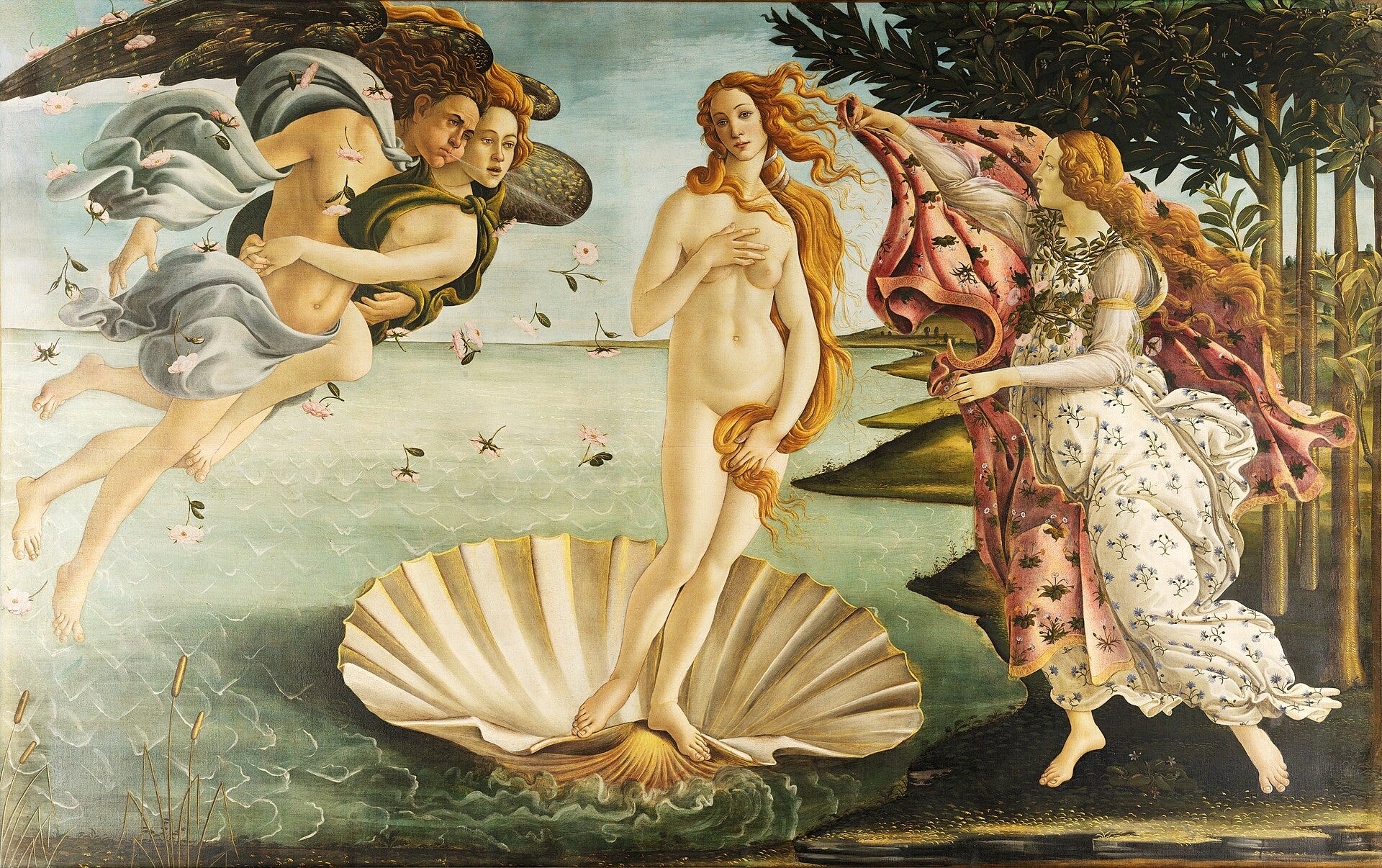
The Birth of Venus is famous because Botticelli broke two rules at once. He painted a nude goddess in a mythological scene, not a religious one, and used canvas instead of the usual wood panel.

Venus stands on a scallop shell in the pose of an ancient statue, likely modeled on Simonetta Vespucci.

What gets me about the Birth of Venus is how many rules it breaks quietly. Everyone remembers the nude, but the real risk was the canvas and the subject: a pagan goddess, painted at life size, for a private villa, decades before anyone else dared put a myth on that scale. Botticelli got away with it because the Medici wanted it, and that patronage is half the story people skip.

The Birth of Venus by Sandro Botticelli showing the goddess standing on a scallop shell
The Birth of Venus, circa 1485, tempera on canvas, Uffizi Gallery, Florence.

Learn art the fun way. Free stories every week, no boring lectures.


A Goddess Nobody Was Supposed to Paint Like This

Around 1485, Sandro Botticelli painted a fully nude woman at nearly life size, standing alone as the center of the composition.

The result unsettled contemporaries who expected a myth to stay modest in scale, tucked into a manuscript margin, not stretched across a wall.

That alone was unusual. Painters of the period reserved large scale nudity for religious scenes, usually Adam and Eve or the damned in hell, not a pagan goddess presented as an object of beauty.

Botticelli painted Venus anyway, and the painting became one of the first works since antiquity to put a nude female body at the center of a secular subject.

Detail of Venus standing in the classical Venus Pudica pose on the scallop shell
Venus stands in the Venus Pudica pose, borrowed directly from ancient statues.

Born From a Shell, Standing Like a Statue

The scene shows Venus arriving on the shore of Cyprus after her birth from the sea, standing on a giant scallop shell blown in by the wind god Zephyrus.

Her pose is not invented. It follows the Venus Pudica, a standing pose used in ancient Roman and Greek statues, one hand covering the chest, the other reaching toward her hip.

Botticelli had almost certainly studied ancient sculpture in Florence and Rome, and copying that pose was a deliberate signal that he was reviving a classical tradition, not inventing an obscene image.

The First Tuscan Painting on Canvas

The Birth of Venus is painted on canvas, not the wood panel that Tuscan painters almost always used for major works at the time.

Canvas was cheaper and lighter, better suited to decorative works for a country villa than a formal altarpiece, and historians take that as a clue about where the painting originally hung.

It is often cited as the first known Tuscan painting on canvas, a small technical fact that turned out to matter, since canvas eventually replaced panel across most of European painting.


If Botticelli's Venus Pulled You In, Try These


Who Is the Model? The Simonetta Vespucci Theory

For centuries, viewers have wanted to put a name to Venus's face.

The most repeated theory names Simonetta Vespucci, a Florentine noblewoman celebrated as the great beauty of her generation, who died young in 1476, about a decade before the painting was made.

There is no signed record proving it. Botticelli painted similar faces in several works, and historians treat the identification as a persistent legend rather than a documented fact.

Botticelli's Primavera, the mythological painting that hung alongside the Birth of Venus
Primavera, Botticelli's other mythological painting for the Medici, hung near the Birth of Venus.

A Private Commission for the Medici

The painting was made for a member of the Medici family, most likely Lorenzo di Pierfrancesco de Medici, a cousin of the ruling branch.

It was not commissioned for a church or a public hall. It hung in a private villa, alongside Botticelli's other mythological painting, Primavera, for an audience of educated guests rather than the general public.

That private setting is part of why Botticelli could risk a nude goddess at all. Public commissions had far stricter expectations than a villa built for the Medici's own circle.


Cool Stories About Art is a free newsletter. The stories behind the paintings, straight to your inbox.


Surviving Savonarola's Bonfire of the Vanities

In 1497, the friar Girolamo Savonarola led bonfires in Florence where residents burned books, mirrors, and paintings judged immoral, an event now known as the Bonfire of the Vanities.

Some accounts claim Botticelli himself, shaken by Savonarola's preaching, threw his own earlier work onto the flames.

The Birth of Venus was not among the losses. It stayed in Medici hands, away from the public bonfires, which is one reason a painting this exposed survived a period openly hostile to nude art.

Exterior of the Uffizi Gallery in Florence
The Birth of Venus hangs in its own room at the Uffizi Gallery in Florence.

From a Medici Villa to the Uffizi

The painting remained in Medici collections for centuries after it was made, moving between family residences in and around Florence.

It entered the Uffizi Gallery's collection in the 18th century, as the Medici holdings were consolidated into what became one of Europe's first public museums.

Today it hangs in its own room in the Uffizi, one of the most visited paintings in Italy, still drawing crowds to the exact pose Botticelli borrowed from antiquity.

Why It Still Defines the Renaissance

The Birth of Venus is famous because it marks a specific turn: classical beauty, once confined to broken statues, back in full color and full scale.

It proved a Renaissance painter could take a myth as seriously as a Bible story, on a support as ordinary as canvas, for an audience willing to look.

That combination, classical pose, private patron, new material, and a subject nobody had painted at that size in a thousand years, is why art historians keep returning to this one panel, even though it is not a panel at all.


More stories to fall into


Birth of Venus Questions People Also Ask

  • Is the woman in the Birth of Venus really Simonetta Vespucci?
    It is a popular theory but not a proven one. Simonetta Vespucci was a celebrated Florentine beauty who died in 1476, years before the painting was made, and Botticelli used similar facial features in several other works, so most historians treat the identification as tradition rather than documented fact.

  • Why is the Birth of Venus painted on canvas?
    Canvas was unusual for a major Tuscan painting in the 1480s, when wood panel was standard for important commissions. Historians believe the choice points to a decorative work meant for a country villa rather than a church or formal hall, since canvas was cheaper, lighter, and easier to transport.

  • Who commissioned the Birth of Venus?
    It was almost certainly commissioned by a member of the Medici family, most likely Lorenzo di Pierfrancesco de Medici, a cousin of the main ruling branch. It hung in a private villa alongside Botticelli's Primavera, meant for an educated household audience rather than public display.

  • Where is the Birth of Venus today?
    The painting hangs in the Uffizi Gallery in Florence, where it has been part of the collection since the Medici holdings were consolidated into a public museum in the 18th century. It remains one of the most visited paintings in Italy.

  • Did The Birth of Venus survive Savonarola's bonfires?
    Yes. The painting stayed in Medici private collections during Girolamo Savonarola's Bonfire of the Vanities in 1497, when other paintings and objects judged immoral were publicly burned in Florence. Its private ownership likely kept it out of reach of the bonfires entirely.

  • What pose is Venus standing in?
    She stands in the Venus Pudica pose, a standing position used in ancient Greek and Roman statues, with one hand covering her chest and the other reaching toward her hip. Botticelli almost certainly studied classical sculpture before borrowing the pose for his own composition.

  • How big is the Birth of Venus?
    The painting measures roughly 1.72 meters by 2.78 meters, close to life size for the figure of Venus herself. That scale was unusual for a mythological scene at the time, which typically appeared much smaller inside manuscripts or decorative panels.

  • Why does the Birth of Venus matter to art history?
    It marks one of the first times since antiquity that a large scale nude appeared as the subject of a secular painting rather than a religious one. That shift, combined with the classical pose and the unusual canvas support, is why the painting is treated as a turning point for the Renaissance.


Join 170,000 readers learning art the fun way. Free stories every week, no boring lectures.