Why Is The Kiss by Klimt So Famous?

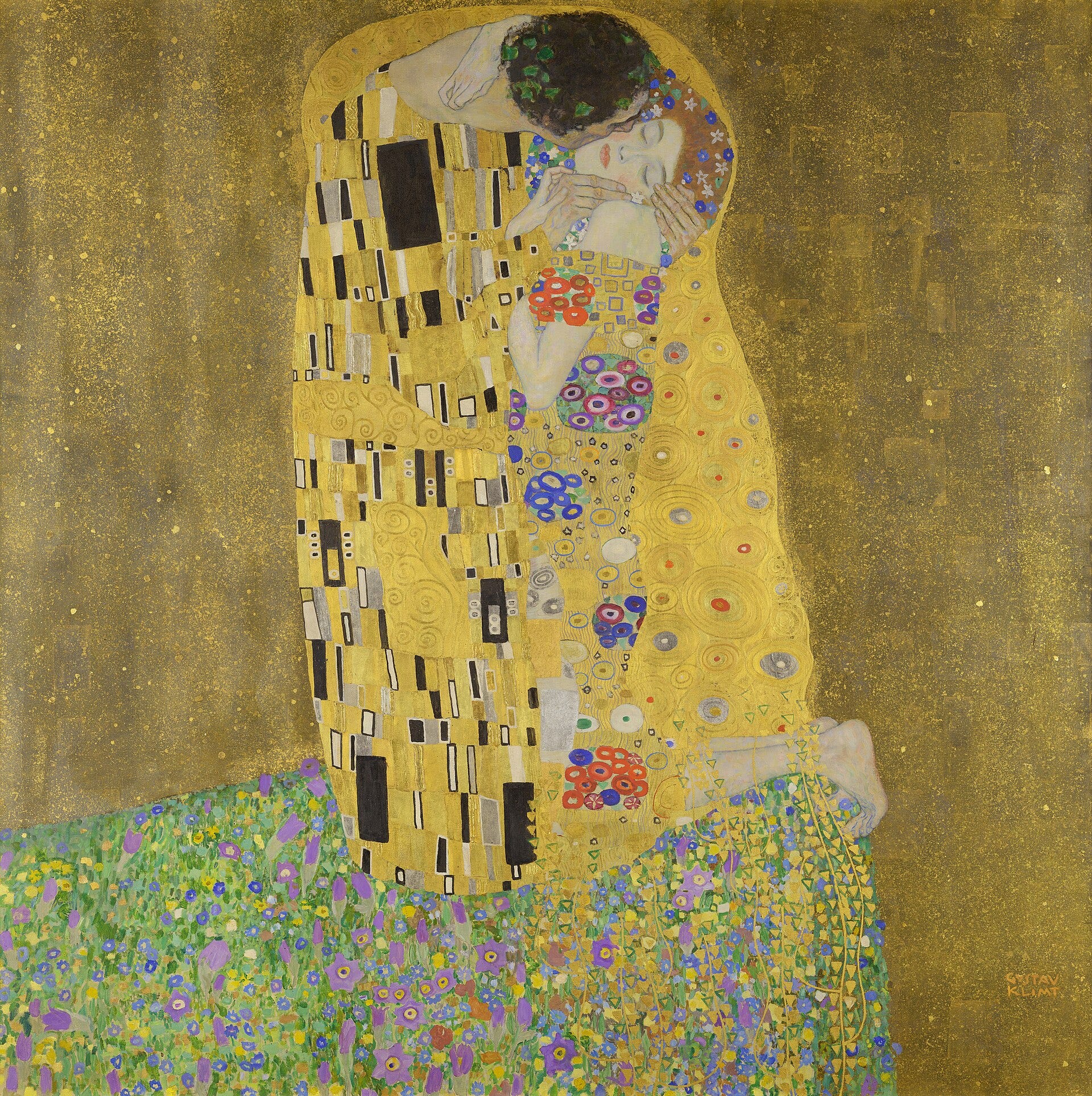
The Kiss is covered in real gold leaf, not paint, a technique Klimt borrowed from Byzantine mosaics he saw in Ravenna. The couple kneels at the edge of a cliff, and the man's face is turned away and never identified.

The Austrian state bought it in 1908, before it was even finished, and it has stayed in Vienna ever since.

My favorite detail in this painting is not the gold, it is the ground the couple is kneeling on, or rather the lack of it. They are perched at the very edge of a cliff, wrapped in a robe made of real gold leaf, and the man's face is turned away so completely that nobody has ever confirmed who he is. That mix of tenderness and risk is why this canvas has outlasted every trend since 1908.

Gustav Klimt's The Kiss showing a couple embracing in gold leaf
The Kiss, painted by Gustav Klimt between 1907 and 1908, hangs at the Belvedere in Vienna.

Learn art the fun way. Free stories every week, no boring lectures.


A Couple Wrapped in Gold

Gustav Klimt finished this painting in 1908, at the height of what is now called his Golden Phase.

A man and woman kneel together, wrapped in a single robe made of gold leaf patterned with rectangles for him and circles for her.

It is a small detail that carries the whole idea of the painting, two people merging into one shape.

Gold Byzantine mosaics inside the Basilica of San Vitale in Ravenna
The gold mosaics Klimt saw in Ravenna in 1903 shaped the flat gold backgrounds of his Golden Phase.

Real Gold, Borrowed from Byzantium

The gold is not paint. Klimt applied actual gold leaf, along with silver and platinum, directly onto the canvas.

He picked up the technique after a 1903 trip to Ravenna, where he saw the Byzantine mosaics inside the Church of San Vitale.

Those mosaics use flat gold backgrounds to remove any sense of ordinary space, and Klimt borrowed that exact effect for his own couple.

Kneeling at the Edge of a Cliff

Look past the gold and the setting gets less comfortable.

The couple kneels on a narrow bed of flowers at the very edge of a cliff, with nothing but a drop behind them.

Klimt never explained that choice directly, but it turns a scene of pure tenderness into something with real risk built into it.


More Klimt Stories Worth Your Time


The Man Whose Face You Never See

The woman's face is fully visible, eyes closed, head tilted into the man's hand.

His face is not. It is turned away and partly covered, so the man kissing her stays anonymous.

Art historians have guessed at his identity for over a century, and no answer has ever been confirmed.

Bought Before the Paint Was Even Dry

The painting had not even been fully finished when the Austrian state bought it in 1908, straight out of the exhibition where it first went on display.

The government paid 25,000 crowns, a record sum at the time for a living Austrian artist.

It has never left Austrian ownership since. That single unbroken chain of custody is rare among paintings this famous.

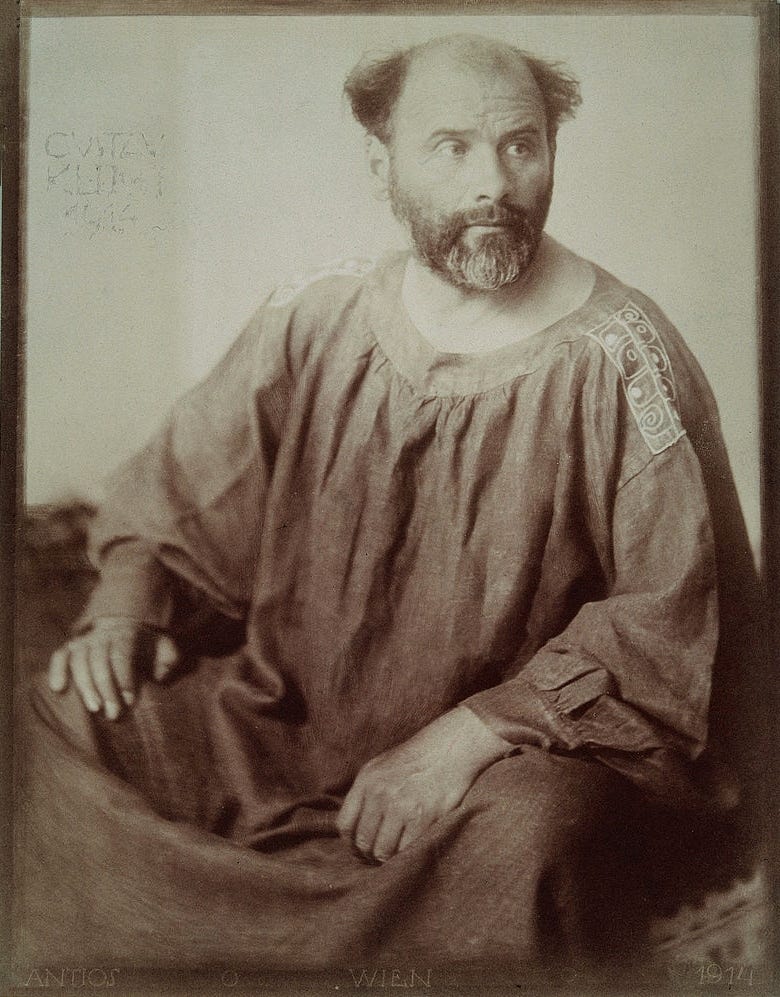
Gustav Klimt, the Austrian painter behind The Kiss
Gustav Klimt, photographed during the years of his Golden Phase.

Cool Stories About Art is a free newsletter. The stories behind the paintings, straight to your inbox.


Klimt's Golden Phase and Why It Ended

The Kiss sits at the peak of a run of paintings where Klimt covered his canvases in gold leaf, a period that ran roughly from 1899 to 1910.

Critics loved some of these works and were furious about others, particularly a set of university ceiling paintings Klimt made around the same years.

By the early 1910s he had mostly dropped the gold and moved toward flatter, more colorful work, and never returned to this style at that scale again.

The Vienna Secession Behind the Scandal

Klimt built his career partly by rejecting Vienna's official art establishment. He helped found the Vienna Secession in 1897, a group of artists who wanted to break away from the conservative academy.

The Kiss carries that history even though it looks nothing like a protest painting. It arrived a decade into Klimt's fight with traditional Austrian taste, and it won over the very institutions that had once resisted him.

He was one of several painters from that era who broke the rules to get noticed, and that wider list is worth a look on its own.

The Belvedere Palace in Vienna, where The Kiss is on permanent display
The Belvedere Palace in Vienna has held The Kiss since the Austrian state bought it in 1908.

Ninety Years Later, Still in Vienna

The Kiss hangs today in the Belvedere Palace in Vienna, where it draws some of the largest crowds of any painting in the country.

It has become the most reproduced image in Klimt's catalog, printed on everything from posters to phone cases.

For the rest of Klimt's career, including the fight over those university paintings and the years before his Golden Phase, his complete story fills in what came before and after this single canvas.


A few more stories for you


The Kiss Questions People Actually Ask

  • Is the gold in The Kiss real gold?
    Yes. Klimt used actual gold leaf, along with silver and platinum, applied straight onto the canvas.

  • Where are the couple in The Kiss standing?
    On a narrow bed of flowers at the edge of a cliff, not on solid ground.

  • Why can't you see the man's face in The Kiss?
    Klimt turned it away and partly hid it, and his identity has never been confirmed.

  • Who bought The Kiss?
    The Austrian state, in 1908, for 25,000 crowns, before the painting was even fully finished.

  • Has The Kiss ever left Austria?
    No. It has stayed in Austrian ownership since 1908, at the Belvedere in Vienna.

  • What is Klimt's Golden Phase?
    A period from roughly 1899 to 1910 when he covered many of his paintings in gold leaf. The Kiss is its best known work.

  • Why did Klimt start using gold leaf?
    A 1903 trip to Ravenna, where he saw Byzantine mosaics in the Church of San Vitale, inspired the technique.

  • Where can you see The Kiss today?
    At the Belvedere Palace in Vienna, Austria.


Join 170,000 readers learning art the fun way. Free stories every week, no boring lectures.