Why Was Hitler Rejected from Art School?

He applied to the Academy of Fine Arts in Vienna twice, in 1907 and again in 1908, and was refused both times. The reason written on his file was that his drawing test was not good enough. He was eighteen, then nineteen.

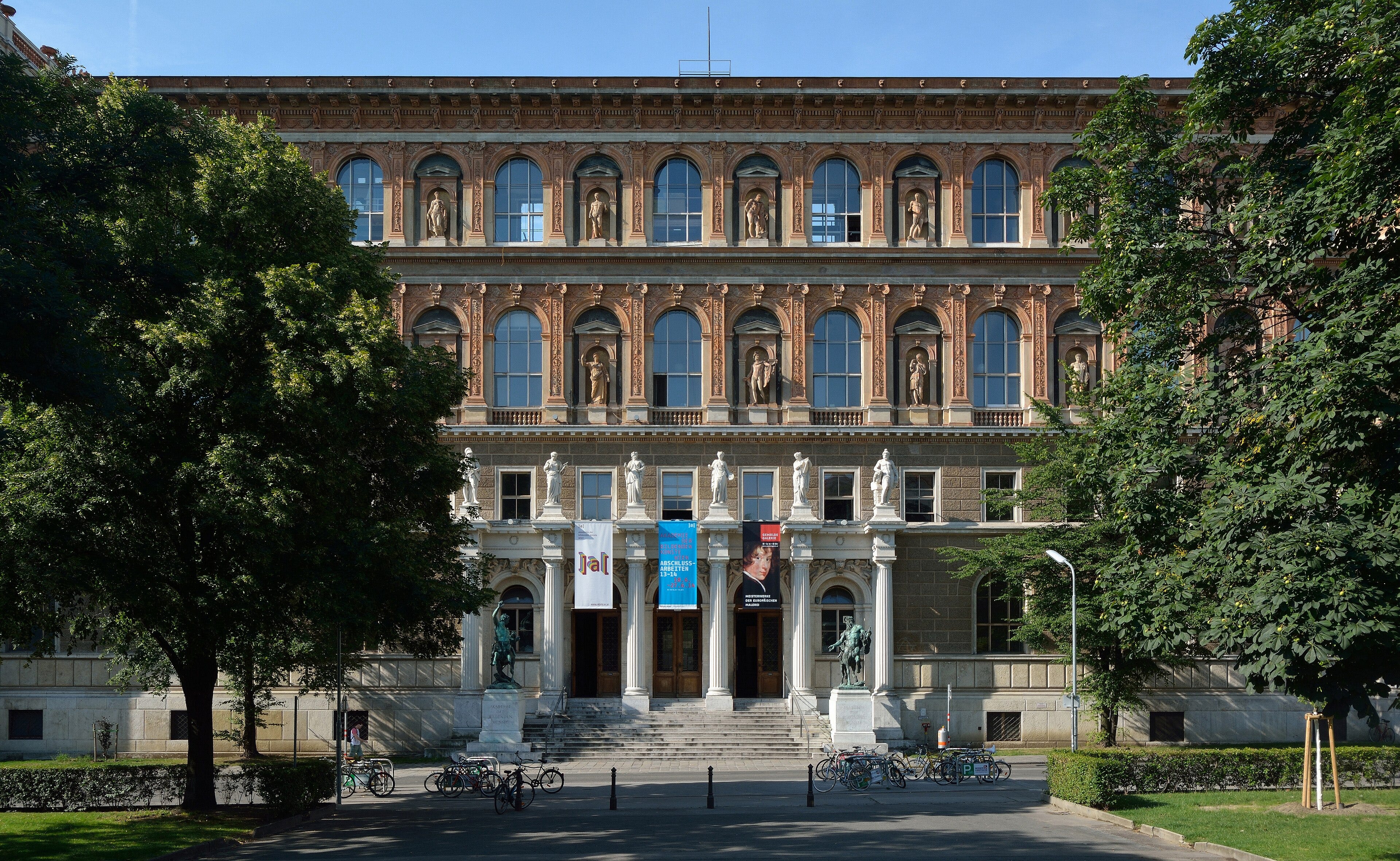
Vienna Academy of Fine Arts building
The Academy of Fine Arts on Schillerplatz in Vienna, where the entrance exam was held.

That is the short version, and it is true. But the file says something more precise than "not good enough", and the detail is the interesting part.


Learn art the fun way. Free stories every week, no boring lectures.


Three stories, one click away

Three that take a single painting apart, properly:


The exam he actually sat

In September 1907 he travelled from Linz to Vienna to sit the entrance examination. He was one of roughly 112 candidates.

Thirty three of them, him included, got through the first round. From that group, twenty eight were admitted. He was not among them.

The second round asked for a set of drawings on imposed themes. He produced six sketches. They were judged insufficient.

The line written on his file

Three words carry the whole verdict, and I think they are the most revealing thing in the entire file: too few heads.

The assessment recorded against his name reads, in translation, that the sample drawing was unsatisfactory, with too few heads.

Those last three words are the whole verdict. He could draw a building. He could set a street in perspective and get the roofline right. What he could not do was people.

Look at any of the works he sold later and the pattern holds. The architecture is competent and dull. The figures, when there are any, are small, turned away, or absent entirely.

The door that was offered and that he could not walk through

The rector did not simply dismiss him. He pointed out that the drawings showed a feeling for buildings, and suggested he apply to the School of Architecture instead.

He could not. Entry required a secondary school leaving certificate, and he had left school at sixteen without one. The one path his ability actually fitted was closed by a piece of paper.

The second refusal, and what changed

His mother Klara died in December 1907. He returned to Vienna and applied again in 1908.

This time he was not even admitted to the drawing test. The verdict on the second file is two words: not admitted.


Join 130,000 readers who get the secrets behind the paintings. Free.


What he did for the next five years

Vienna street about 1900
Vienna around 1900, the city whose landmarks he copied from postcards and sold to tourists.

He worked in watercolour, which suits a copyist. It dries fast, it forgives nothing, and it rewards someone who is tracing a shape rather than inventing one.

He stayed in Vienna. He moved through rented rooms, then a homeless shelter, then a men's home. From 1909 he made small watercolours of Viennese landmarks, most of them copied from postcards, and sold them to tourists and to shops that framed them.

One of his steadiest buyers was Samuel Morgenstern, a Jewish shopkeeper who dealt in frames.

He moved to Munich in May 1913 and went on selling the same kind of view. It ended in August 1914 when he enlisted.

The version he told later

In his own account he described the first rejection as arriving like a bolt from a clear sky, and made much of having been certain of success.

Historians treat that framing with caution. It was written twenty years afterwards by someone with an obvious interest in presenting his early life as a series of injustices.

Where the drawings are now

Several hundred works attributed to him survive. Four watercolours were seized by the American army in 1945 and are held on a military base in Virginia. A sketchbook sits in the former KGB archives in Moscow.

Sales are legal in Germany when no Nazi symbol appears, and they are a mess. In 2015 a Nuremberg auction took about 450,000 dollars for fourteen items.

In 2019 police seized three watercolours from a Berlin auction house on suspicion of forgery, and five more failed to sell in Nuremberg for the same reason.

The problem is that the work is too ordinary to authenticate. One specialist put it plainly: the style is that of a moderately ambitious amateur, indistinguishable from hundreds of thousands of similar pictures made at the same time.

I have written the longer version of his years as a would be painter, the pictures he actually produced and what the men who marked him were looking at, in Adolf, the failed artist. This page is only the record of the exam itself.

Questions people ask about the rejection

  • How old was he when he was rejected? Eighteen at the first attempt in 1907, nineteen at the second in 1908. He was born in April 1889.

  • Which school turned him down? The Academy of Fine Arts in Vienna, on Schillerplatz. It still teaches there today.

  • Was he rejected once or twice? Twice. The second time he was refused before the drawing test, not after it.

  • Was he any good? At buildings, adequate. At people, poor, which is exactly what the examiners wrote.

  • Who signed the rejection? The professor Christian Griepenkerl. What became of him is a story in itself.

  • Did he ever try again? No. After 1908 he never applied to an art school anywhere.

One last thing about that file

The Academy kept its records. The two entries are still there, a few words each, filed among thousands of other refusals from the same years, written by a man who had no reason to think twice about either of them and who died before the name meant anything.

If you want the professor's side, this is what happened to him.

And if you want the painting he later hung in the Reich Chancellery, that story is here.