Zdzislaw Beksinski: The Complete Story
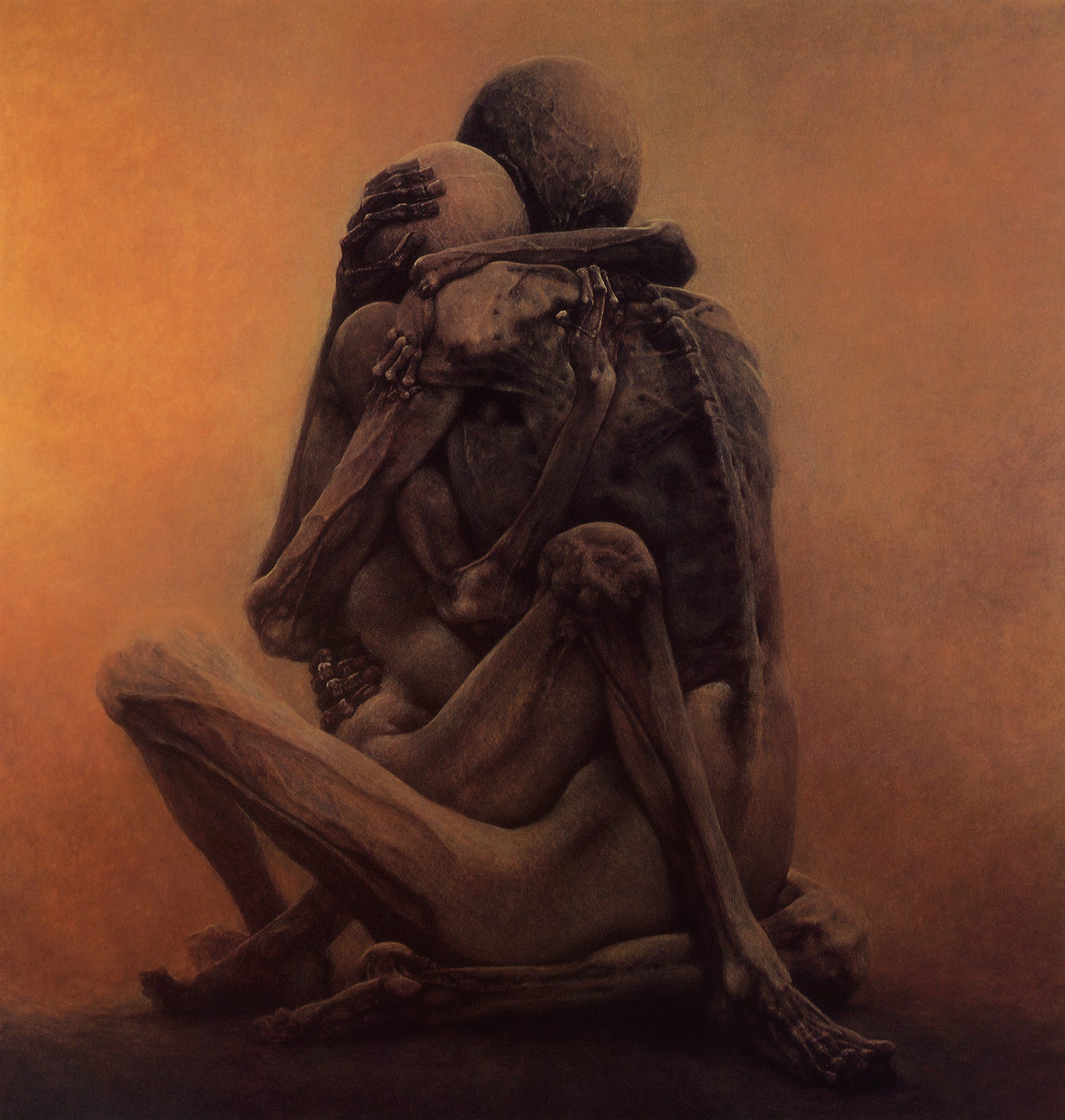
Vast ruined landscapes under blood coloured skies, where skeletal figures drift through cathedrals of bone. The paintings of Zdzislaw Beksinski look like postcards from the end of the world, and yet the artist himself refused to explain a single one of them.
He was a Polish painter famous for haunting, dystopian scenes of decay and dread, which he called his fantastic period, and for a life marked by tragedy.
Where this gets properly interesting
The ones I would send you to next:
The Ambassadors, detail by detail, the object at the bottom that only works from one side
Luncheon of the Boating Party, detail by detail, who everybody at that table actually was
Ten women artists you need to know, the names the textbooks skipped
Beauty in dread
Beksinski painted detailed, dreamlike worlds of ruin: rotting figures, endless deserts, burning skies, all rendered with care and a strange beauty.
The work sits in the nightmare tradition of Surrealism, picturing horror with such craft that the result is closer to awe than disgust.
No titles, no meanings
Beksinski refused to title or explain his pictures, insisting that meaning was for the viewer to find or not find.
He said he wanted to paint as if photographing dreams, working in oil painting with the precision of a camera so the impossible looked solid and real.
Music and the brush
He painted to loud classical music for hours on end, treating the studio as a sealed world where his visions could take shape.
A trained architect, he brought a builder eye to his ruins, so the crumbling structures in his work feel like real buildings that have outlived their world.
A life of loss
Beksinski life ended in horror as dark as his art. His wife died, then his son took his own life, and years later the painter himself was murdered by a young acquaintance over money.
The string of tragedies has shadowed how his work is read, though he made the paintings long before the worst of it came.
Questions readers ask about Beksinski
What is he known for?
Detailed, dystopian paintings of ruin and dread.
Why no titles?
He left meaning entirely to the viewer.
Was his life tragic?
Yes, his wife and son died, and he was later murdered.
Where was he from?
Sanok, in southern Poland.
Why his ruins haunt
Beksinski made dread beautiful, and his refusal to explain only deepens the spell, leaving each viewer alone with the image. A museum in his Polish home town now holds the largest collection of his work, where crowds come to stand inside the worlds he never named.
He was also an early experimenter with photography and, late in life, with computer manipulated images, restless to the end in his search for new ways to picture the unsettling.
He kept meticulous records and filmed himself constantly, leaving an enormous personal archive that has helped turn the private painter of nightmares into a lasting cult figure far beyond Poland.
His paintings were collected by admirers across Europe long before the wider art world took notice, spreading first through reproductions and word of mouth.
Today his images circulate endlessly online, where his ruined cathedrals and red skies have found a vast new audience among people drawn to the beautiful and the strange, far from the Polish galleries that first showed him.
A feature film about his life and death brought his story to a wider public, deepening the cult around the painter who let his images speak entirely for themselves.
His meticulous archive of photographs and recordings has since become a study in its own right, a portrait of a private man who documented almost everything except the meaning of his art.