
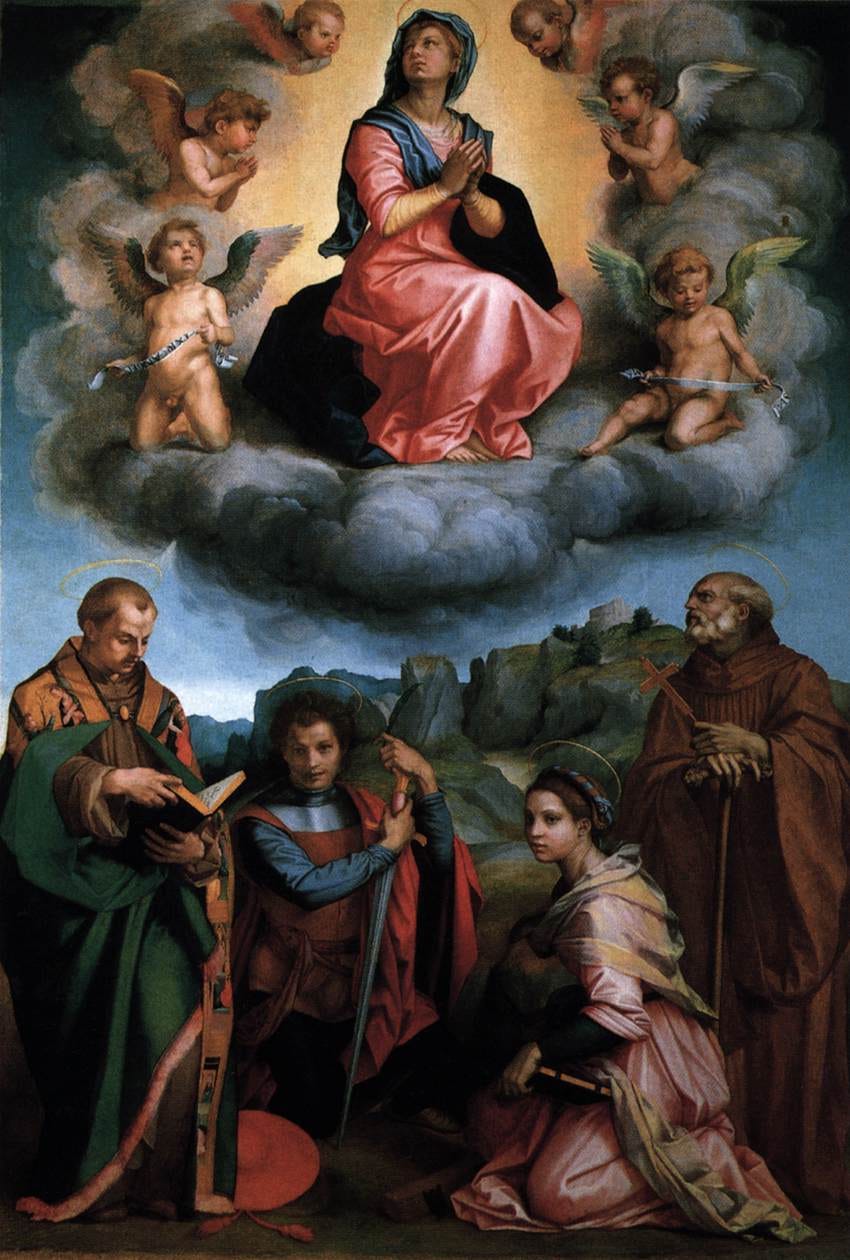
Andrea del Sarto was a Florentine painter, born in 1486 and dead in 1530, the son of a tailor. He ran one of the busiest workshops in Florence during the High Renaissance, trained Pontormo and Rosso Fiorentino, and painted the Madonna of the Harpies, now in the Uffizi. He is remembered under a nickname, "the faultless painter," that began as praise and ended as a verdict: too perfect to be great.
The nickname goes back to his own lifetime. Critics admired the correctness of his outlines so much that they called him Andrea senza errori, Andrea without errors. In 1855 the poet Robert Browning gave the phrase a title and a bitter speaker, and the faultless painter became a man who had every gift except daring.
Cool Stories About Art is a newsletter to learn art the fun way.
Join 200,000+ readers and get:
10 new art stories / month
The entire archive of content (1,000+ articles)
Comment, ask questions, and chat with other readers
Almost everything said about his character comes from one book. Giorgio Vasari, the painter who wrote the first great history of Italian artists, had studied in del Sarto's workshop, and he wrote his teacher's life. He praised the drawing. Then he described a man with a certain timidity of mind, and a wife, Lucrezia, who was faithless and jealous.
Then came the story that sealed it. According to Vasari, the king of France trusted del Sarto with money to buy art, and the painter spent it on building and never went back. Some historians now call that tale apocryphal, but it has hung over his name ever since.
So the question is which parts of the faultless painter belong to him and which belong to the man who wrote him down. The paintings are the place to start.
What You'll Discover
How a tailor's son got ahead.
What the harpies are doing there.
Whom he fooled with a copy.
What happened to the king's money.
What a poet made of him.