
Rubens used the same grey stage for his own modelli, small grisaille sketches sent to workshop assistants and engravers as a blueprint before a single color was mixed.
Grisaille is painting made almost entirely in shades of grey. Painters used it to imitate carved stone, to block in a composition before adding color, and sometimes as the finished picture itself, when grey alone had to carry the whole scene.
Take the color out of a painting and only light, shadow and form are left. That is either a limitation or the purest test of a painter's skill.
I think of grisaille as the X ray of painting: the part that is usually hidden underneath, occasionally left in plain view on purpose.
Grisaille, at a glance:
The word comes from the French gris, meaning grey.
It is painting done in grey, or very close to it, with color stripped out.
Job one: making flat paint look like carved stone statues.
Job two: the grey layer built beneath a finished colored painting.
Job three: a finished picture left in grey on purpose, for a somber mood.
More tricks of light and shadow
A few more paintings built on the same Northern habit of hiding a second picture inside the first.


How to recognize grisaille
Grisaille paintings read as monochrome, built from a single family of greys running from near black to near white. There is no local color anywhere, so a figure's whole sense of weight and roundness has to come from light and shadow alone.
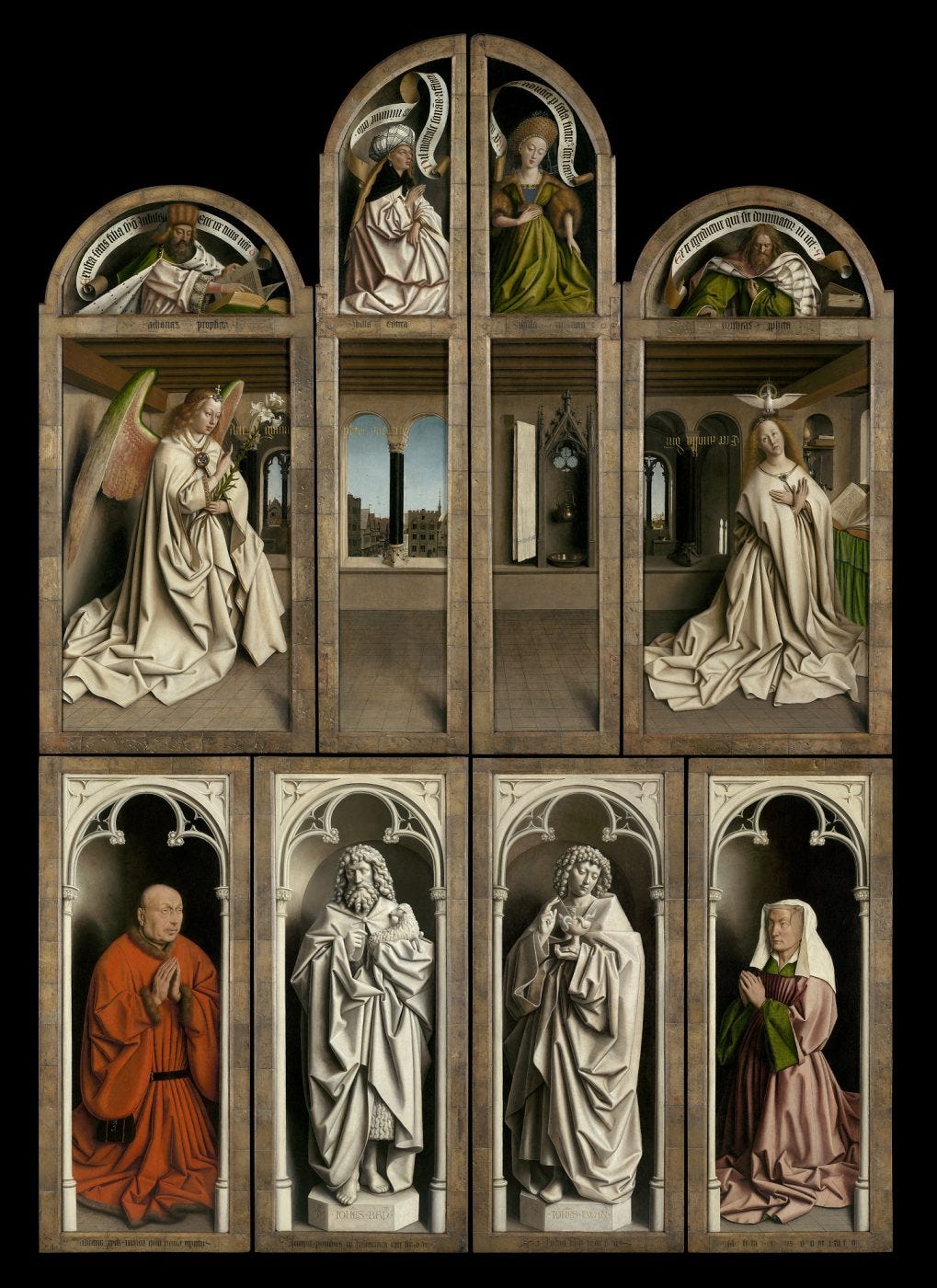
Painters rendered figures in flat grey so convincingly that they read as carved marble statues standing in a niche, not as paint on a flat panel.
The trick only works if the grey is pushed hard enough: too light and the figure looks flat, too dark and it disappears into the shadow around it.
The most famous case sits on the closed exterior of a triptych, where the shut wings show grey, stone colored saints standing in painted niches.
Where grisaille comes from
Northern European workshops developed grisaille through the 1400s as a way to decorate the outside of folding altarpieces cheaply and reverently, saving the expensive blue and gold pigments for the moment the wings actually opened. Van Eyck's Ghent Altarpiece is the clearest surviving example of the practice.
On ordinary days, the closed wings of the Ghent Altarpiece looked like a wall of carved stone donors and saints, painted by Jan van Eyck, whose own diplomatic travels are covered in Van Eyck The Mission That Changed Europe.
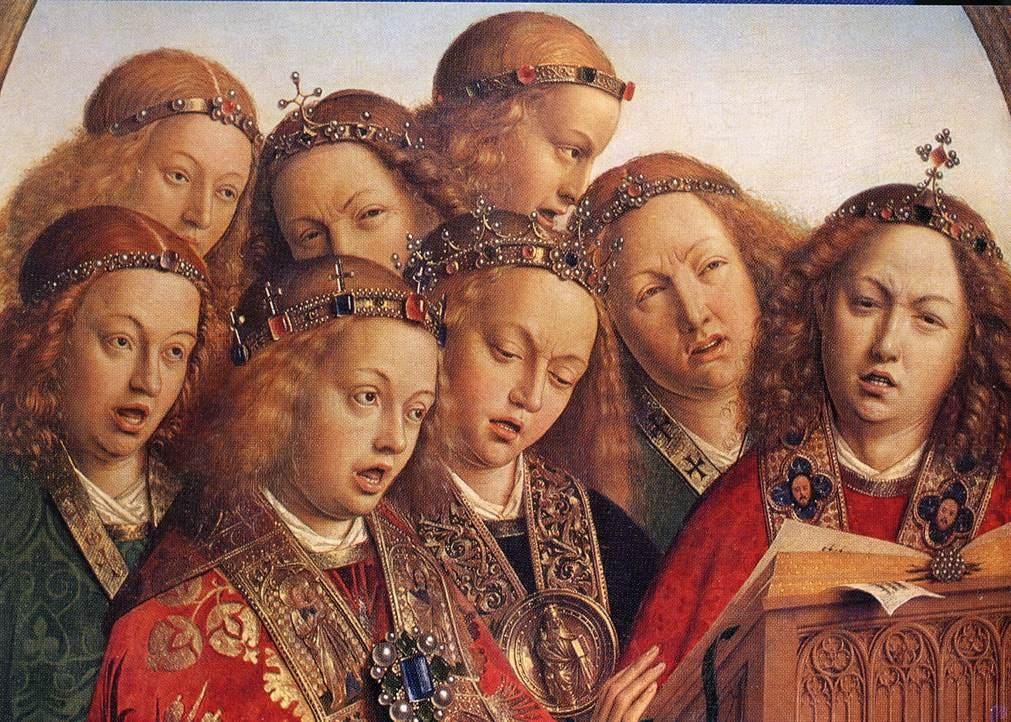
Open the same altarpiece on a feast day and the grey stone gives way to gold halos and blue robes, one of the most dramatic before and after moments in Northern painting.
Restorers who cleaned the altarpiece in the 2010s confirmed the closed wings were meant to look convincingly like stone from the start, not faded color that time had drained away.
Three jobs grisaille does
Grisaille earns its place in art history by doing three separate jobs: imitating sculpture on the outside of an altarpiece, laying down the tonal skeleton beneath a colored oil painting, and standing alone as a finished, deliberately somber picture.
Fake stone: flat grey paint standing in for carved marble or bronze relief.
The grey skeleton: an underpainting, sometimes called dead colour, that fixes light and shade before any hue is added.
The finished mood piece: color withheld on purpose, closer to carved memory than to a sunny afternoon.
Mantegna's stone that breathes
Andrea Mantegna painted Samson and Delilah around 1500 to look like a carved stone or bronze relief, using grisaille to give a Biblical warning about betrayal the weight of ancient sculpture. The illusion works so well that visitors often need a museum label to be told it is paint.
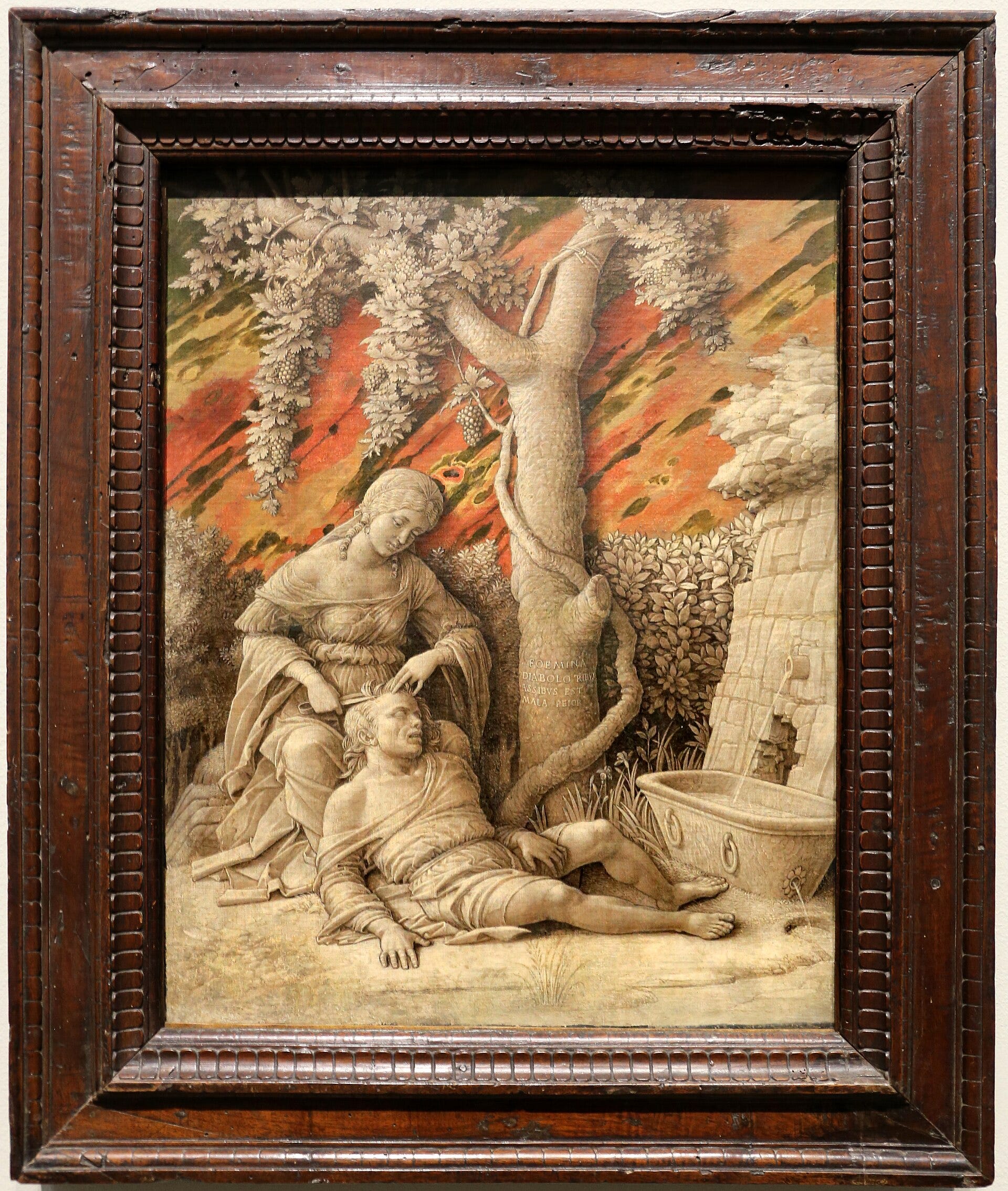
The picture hangs today in the National Gallery in London, where the swirling grey and orange background still reads as polished stone rather than paint.
Mantegna painted several of these stone colored scenes for patrons who collected ancient Roman reliefs, so the illusion doubled as a compliment to their taste in antiquities.
Rembrandt's grey sermon
Rembrandt painted Saint John the Baptist Preaching around 1634 using a near monochrome grey palette instead of his usual warm color range. Grey let him crowd the composition with dozens of figures without the picture turning into visual noise.
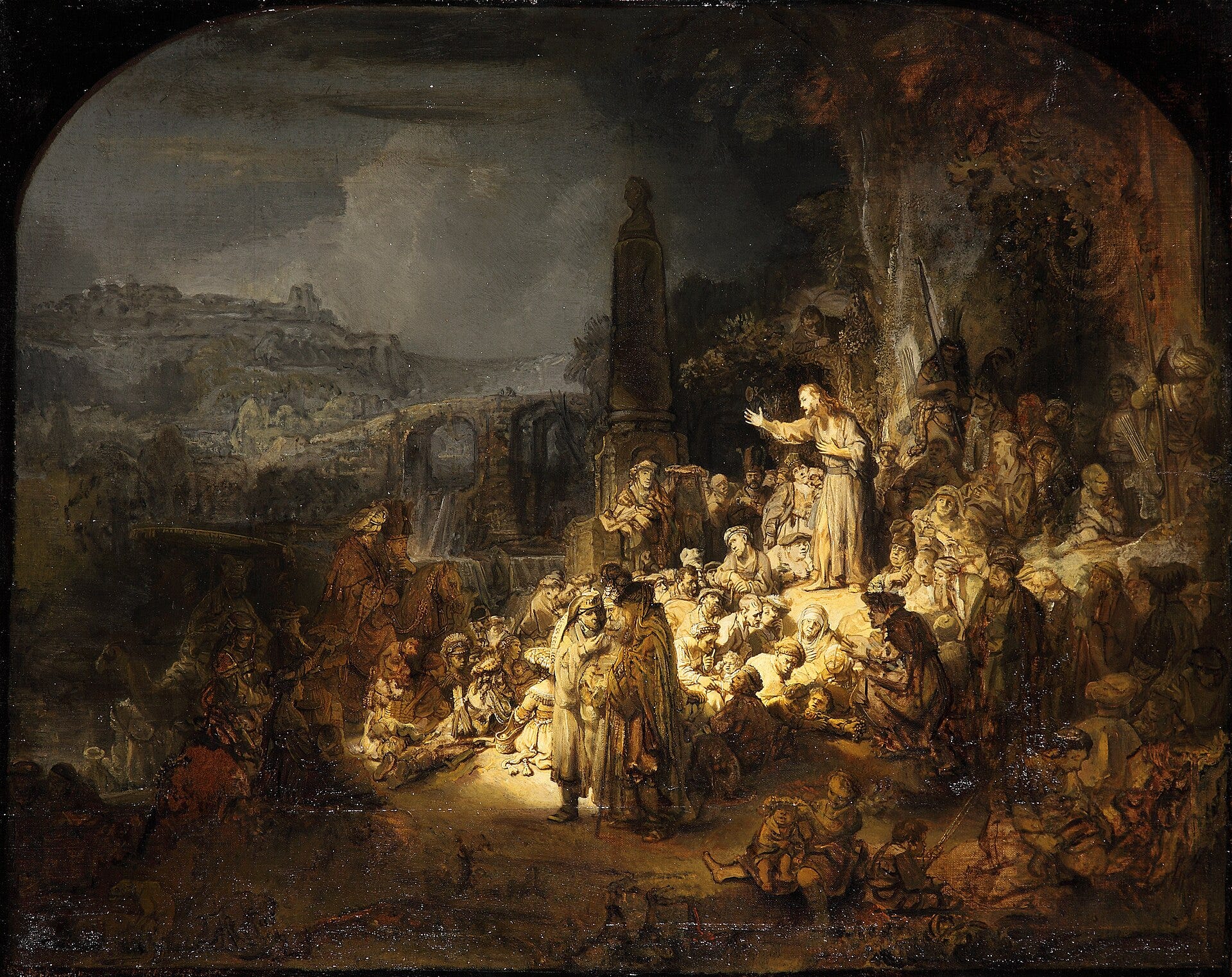
The same control of light and dark behind his later mastery of chiaroscuro is already visible here, just without a single degree of color to lean on.
Keep unlocking Northern secrets
A few more paintings from the same tradition of hiding a second layer of meaning in plain sight.


Grisaille questions, answered
What is grisaille? Painting done almost entirely in shades of grey, with little or no color.
Where does the word come from? From the French gris, meaning grey.
Why did painters use grisaille? To imitate carved stone, to underpaint a colored picture, and for somber finished works.
What is dead colour? The grey underpainting laid down before the colored layers in many oil paintings.
Is grisaille always pure grey? Mostly, though some versions lean on a narrow range of browns instead.
Where can I see grisaille in person? The closed Ghent Altarpiece in Ghent and Mantegna's Samson and Delilah in London are two of the clearest examples.
Van Eyck's closed Ghent Altarpiece stayed grey stone on ordinary days and opened into full color only on major feast days, a scheduled switch from monochrome to gold that predates any mechanical special effect by five centuries.