
Underpainting is the first layer of a painting, laid down before the real colors, to work out the composition, the light and the shadows. It is usually a single muted color, grey, brown or green, and it ends up hidden under everything that follows.
Think of it as the skeleton under the skin of a painting.
Renaissance painters often laid flesh tones over a green earth base, which is why some old faces now show a faint greenish cast where the top layer has thinned.
The layer you never see
What it is: a hidden first layer that maps light and shade.
The color: usually one muted tone, grey, brown or green.
The job: settle the composition and values before adding color.
The reveal: visible in unfinished works and under X ray.
The relatives: grisaille and verdaccio.
Keep learning art the fun way


Build the structure first
Painting in full color from the start is like building a house with no frame.
So many painters begin in one color. They block in the whole scene as a map of light and dark, getting the shapes, the balance and the shadows right before a single bright color appears.
Once that structure is solid, color is laid over it, often in thin transparent layers that let the underpainting glow through.
Fix the bones first, then add the skin.
Grey, brown and a strange green
The hidden layer has its own traditions.
A grey underpainting is a grisaille, and it lets a painter solve the entire drama of light and shadow, the chiaroscuro, in pure tone. Some painters kept that single tone as the finished picture rather than a hidden step, the idea behind monochromatic paintings.
That green has a name, verdaccio, and the painter Cennino Cennini wrote down the recipe around 1400.
The color you never see was chosen to flatter the colors you do.
Ways to underpaint
Grisaille: a grey monochrome that settles all the light and shade first.
Verdaccio: the Renaissance green laid under skin tones.
Imprimatura: a thin transparent wash of color over the white ground, to kill the glare and set a key.
Dead coloring: the old Dutch term for blocking the whole scene in muted tone before any color.
Caught in the act
The best way to understand underpainting, I think, is to find one unfinished.
When a master died or abandoned a panel midway, the underpainting is left exposed.
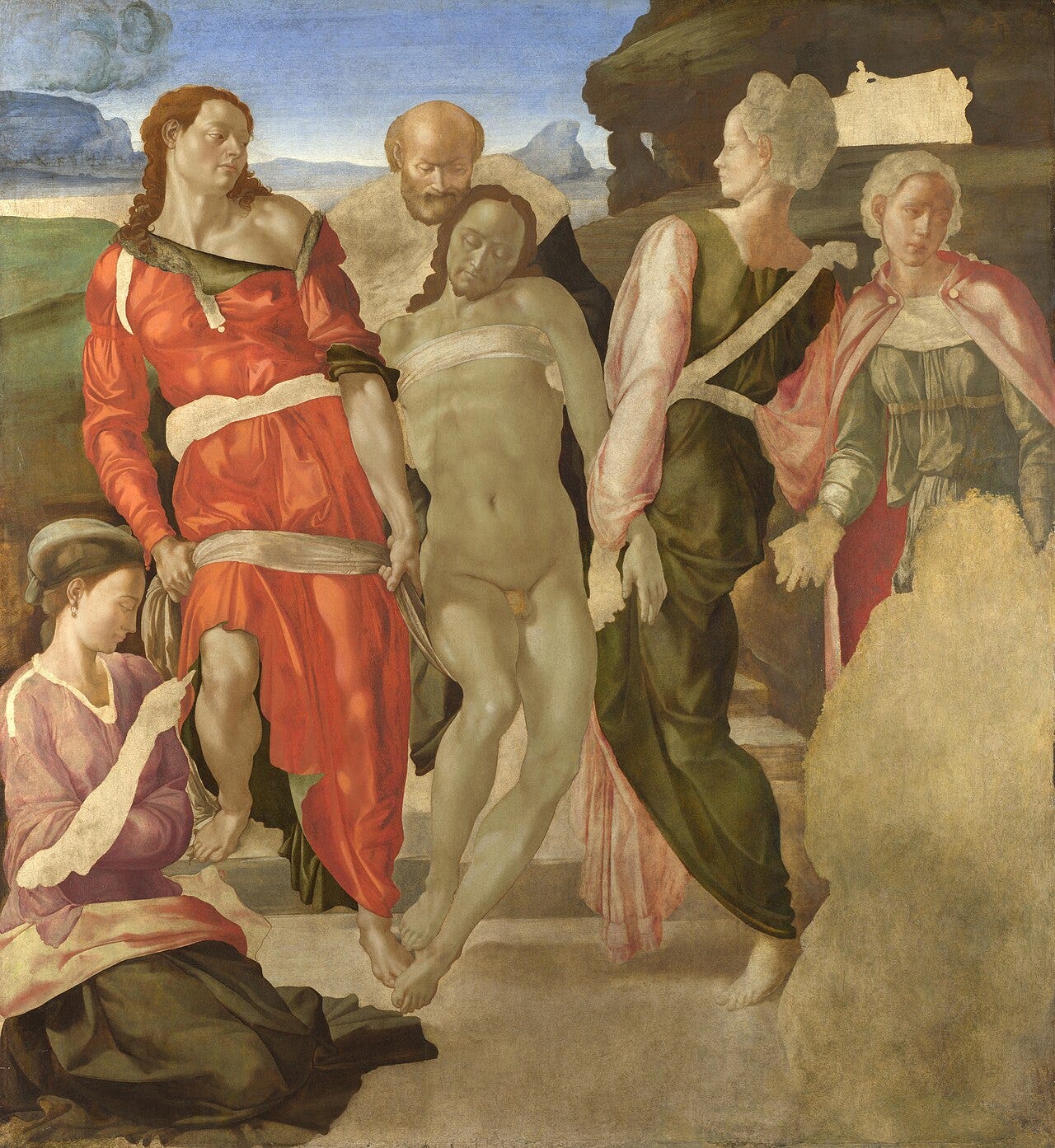
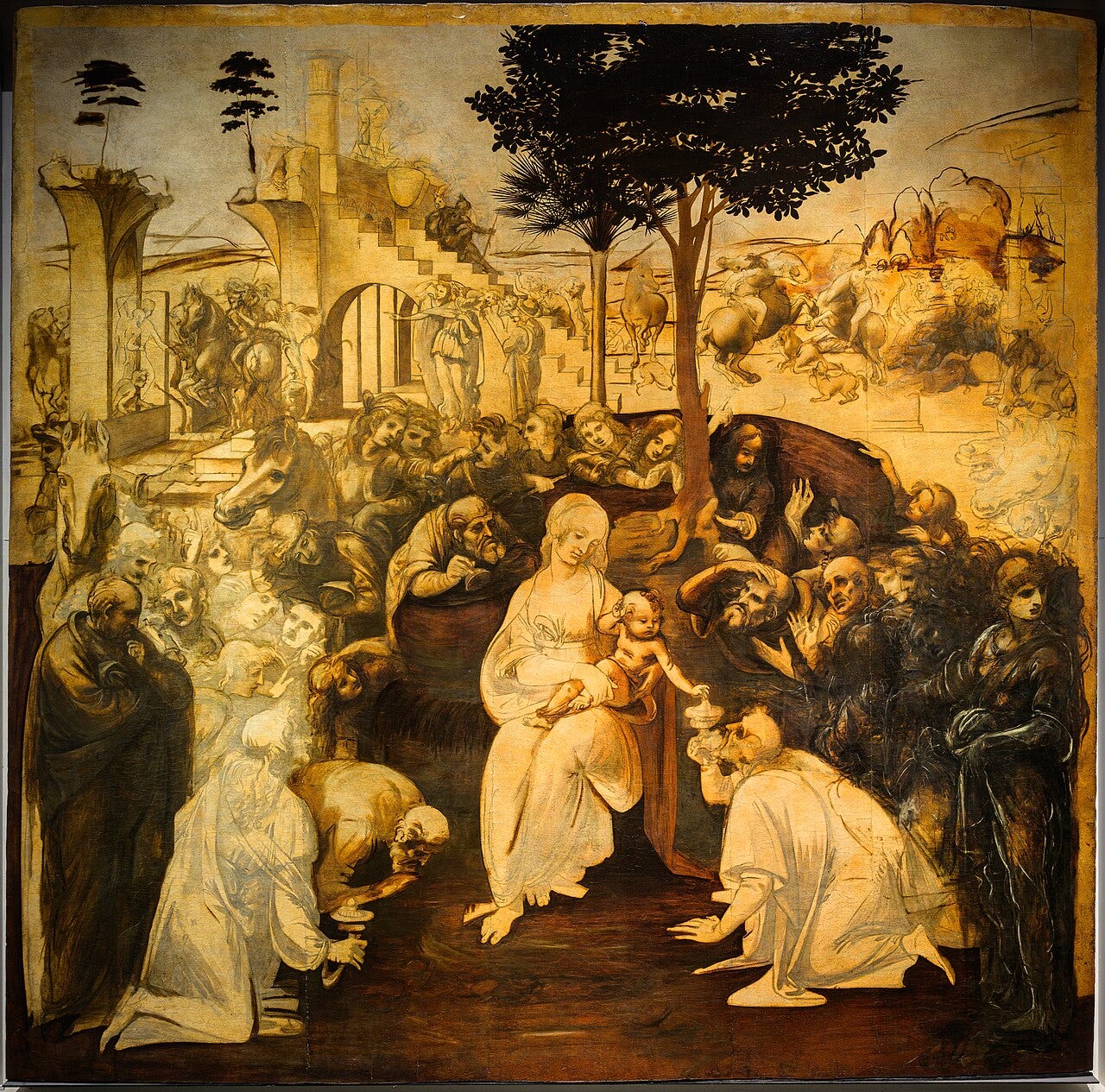
Michelangelo's unfinished Entombment shows whole figures still in their pale ghostly first state, color never added. Leonardo's Adoration of the Magi is a vast brown map of light and shade, frozen before the color arrived.
These exposed layers are the clearest window onto how a picture was built, one of the secrets hidden in famous paintings. Even a finished picture can let an earlier layer show through with age, which conservators call a pentimento.
The order of the layers
Underpainting sits in a clear order.
First comes the gesso ground that prepares the surface. Then the drawing. Then the underpainting that turns that drawing into light and shadow.
Only after all of that does the color arrive.
Each layer exists to serve the next, which is why a sound old painting is really a stack of careful decisions, most of them invisible.
To me, a finished painting is the last layer of a long argument the artist had with themselves.
Underpainting, the questions underneath
What is underpainting? The hidden first layer of a painting that maps composition, light and shadow before color is added.
What color is it? Usually a single muted tone, grey, brown or green.
Why do artists use it? To settle the structure and the values before committing to color.
What is grisaille? A grey underpainting, used to work out light and shade in pure tone.
What is verdaccio? A greenish underlayer the Renaissance laid under skin, so the flesh painted on top looks warm by contrast.
Can you see the underpainting? Sometimes, in unfinished paintings, in thin worn passages, and with X ray or infrared imaging.
More secrets to unlock


The painting beneath the painting
Every finished painting sits on a ghost. Under the glowing color is a quiet grey or brown world where the artist first decided where the light would fall, a layer no one is meant to see and, I think, the most honest part of the picture.
X rays now read it through the paint, and sometimes find a completely different picture underneath. In 2008 a peasant woman surfaced beneath Van Gogh's Patch of Grass; in 2014 a bearded man was found hiding under Picasso's Blue Room.
