

170 000+ readers. Learn art the fun way.
This is a preview. Paid subscribers get the full story.
You’ll also get:
10 new stories every month
The full archive (130+ Art stories)
Your personal art guide. Comment, ask questions, DM me anytime
iPhone user? Subscribe at coolstoriesabout.art, not via the app. Apple adds 30% to the price.
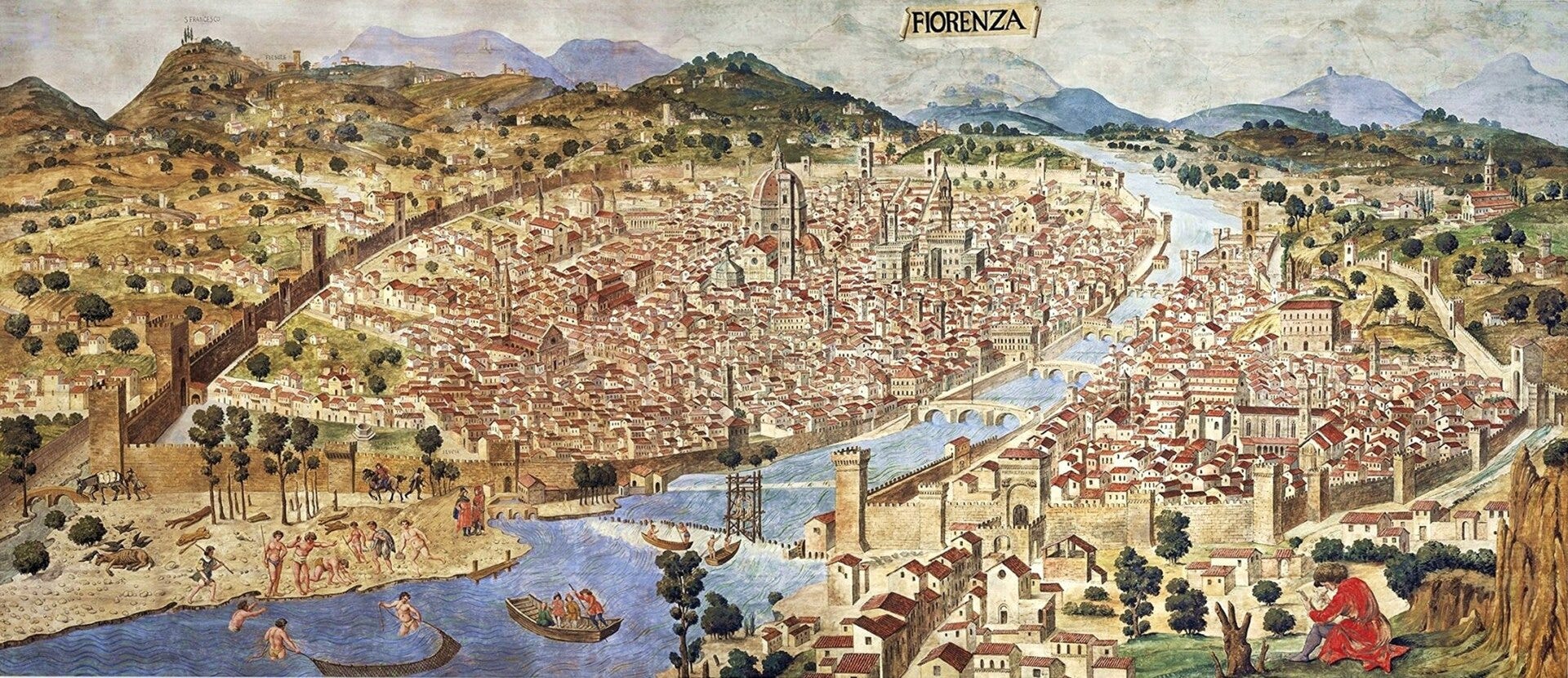
Florence, Piazza Santa Trinita, a morning in 1503.
Six or seven men sit in the sun on the stone bench of the Spini palace. They have been arguing for a while over three lines of Dante that no one can untangle.
A man crosses the square. Fifty one years old, a long, neat beard, a short cloak the color of rose. Everyone in Florence knows him. Leonardo da Vinci.
They call out to him. They ask him to settle it.
At that same moment, another man comes around the corner. Short, stocky, his nose broken crooked, quick on his feet, his face closed. Michelangelo Buonarroti, 28.
Leonardo nods toward him.
“Michelangelo will explain it to you.”
Michelangelo stops. He hears a taunt.
“Explain it yourself, you who drew a horse to cast in bronze, who never knew how to cast it, and left it there out of shame.”
Leonardo says nothing. The blood rises to his face.
Michelangelo, before turning on his heel, drives it home.
“And those Milanese who believed you could.”
Two men who hate each other


Only the horse could reach him.
Leonardo spent seventeen years in Milan, in the service of Duke Ludovico Sforza, and everything there had turned around a horse. A bronze statue to the glory of the duke’s father, larger than any ever cast.
But no one had ever cast a bronze that size. For years, Leonardo looks for a way to pour seven meters of metal in a single go. He fills notebooks with calculations, tries, starts over. He never manages it.
What is left is a giant of clay, raised before the court in 1493. The war takes care of the rest. The bronze meant for the casting goes into cannons, the French seize Milan, and Gascon archers riddle the model with arrows, for sport.
Leonardo returns to Florence in 1500. A reputation follows him, a stubborn one, that of a man who begins everything and finishes nothing. Michelangelo has just pressed on it, in public, in a few words.
Between them it is a deep, bitter hatred, and all Florence knows it. Everything sets them apart. Leonardo is 51, finely dressed, fond of bright colors, a charm that fills the conversations. Michelangelo is 28. He lives alone, speaks little, bites when he speaks, and comes home white with marble dust.
His own blows, Leonardo keeps for his notebooks. There he settles his score with sculpture as a whole. The sculptor toils in noise and grime, his face caked with powder, his house full of chips, as if it had snowed indoors. The painter sits, well turned out, running a light brush over his canvas, music sometimes in the room.
The portrait aims at one man only, the short, stocky figure with the broken nose from Santa Trinita.
The giant
The sculptor he despises is the one all Florence is talking about. Because of a block of marble.
For almost 40 years, a colossal block has lain in the cathedral yard. Five meters tall, but thin, split by a flaw down the middle. Two sculptors went at it, then left it there for lost. They call it the Giant, and no one in Florence believes anything can still be made of it.
In 1501, the city takes the gamble and hands it to Michelangelo. He is 26, and already has a masterpiece behind him.
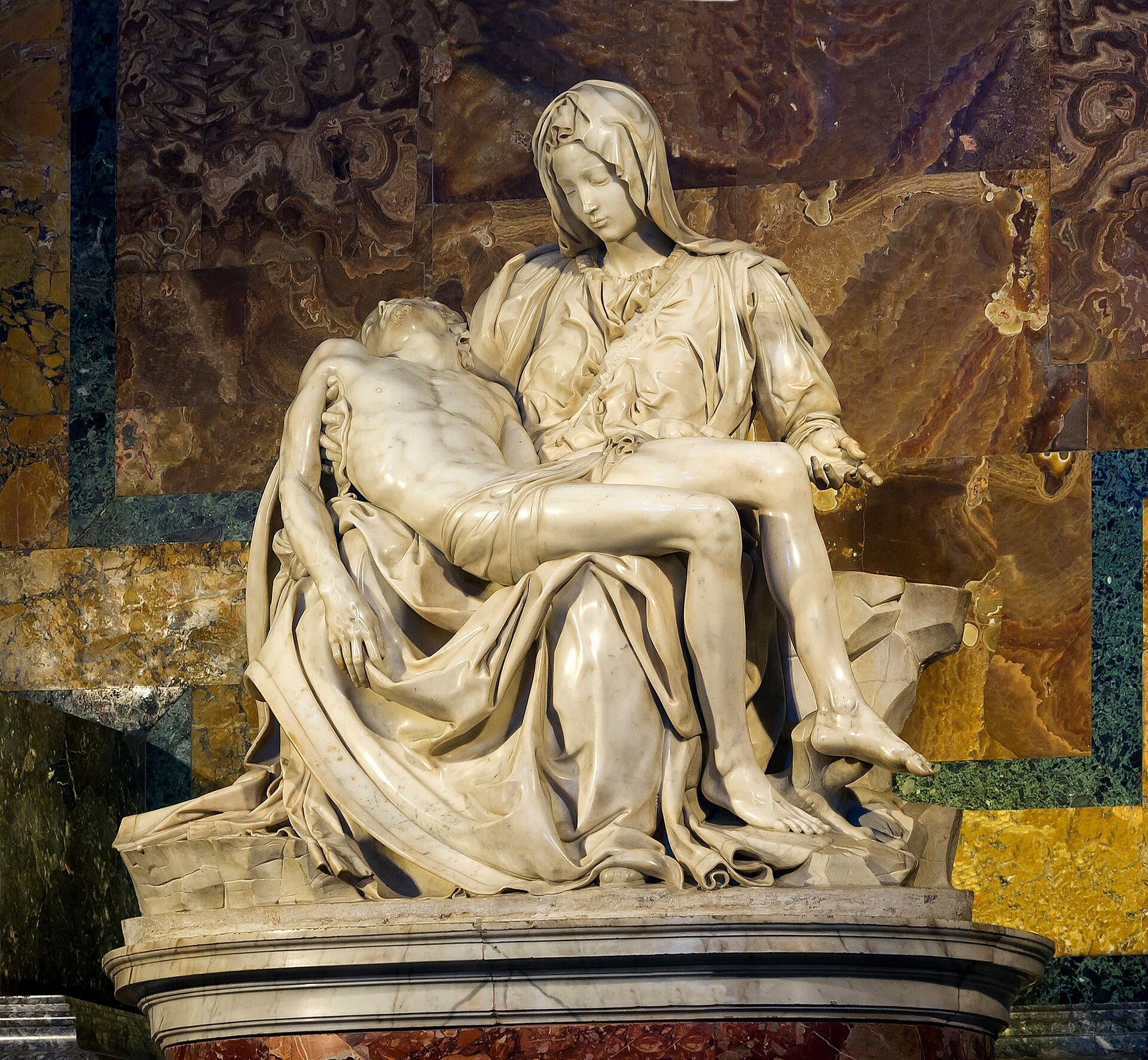
Two years earlier, in Rome, he carved a Pieta from the marble, a Virgin holding across her knees the body of her son, taken down from the cross. No one believes an unknown of that age could be its maker. One night, he slips back into the basilica and cuts his name across the Virgin’s sash. He will never sign anything again.
Then he goes at the Giant. Three years behind a fence. When the David finally emerges, Florence sees itself in him, a naked young man, sling over his shoulder, his eye fixed on an enemy no one can see.
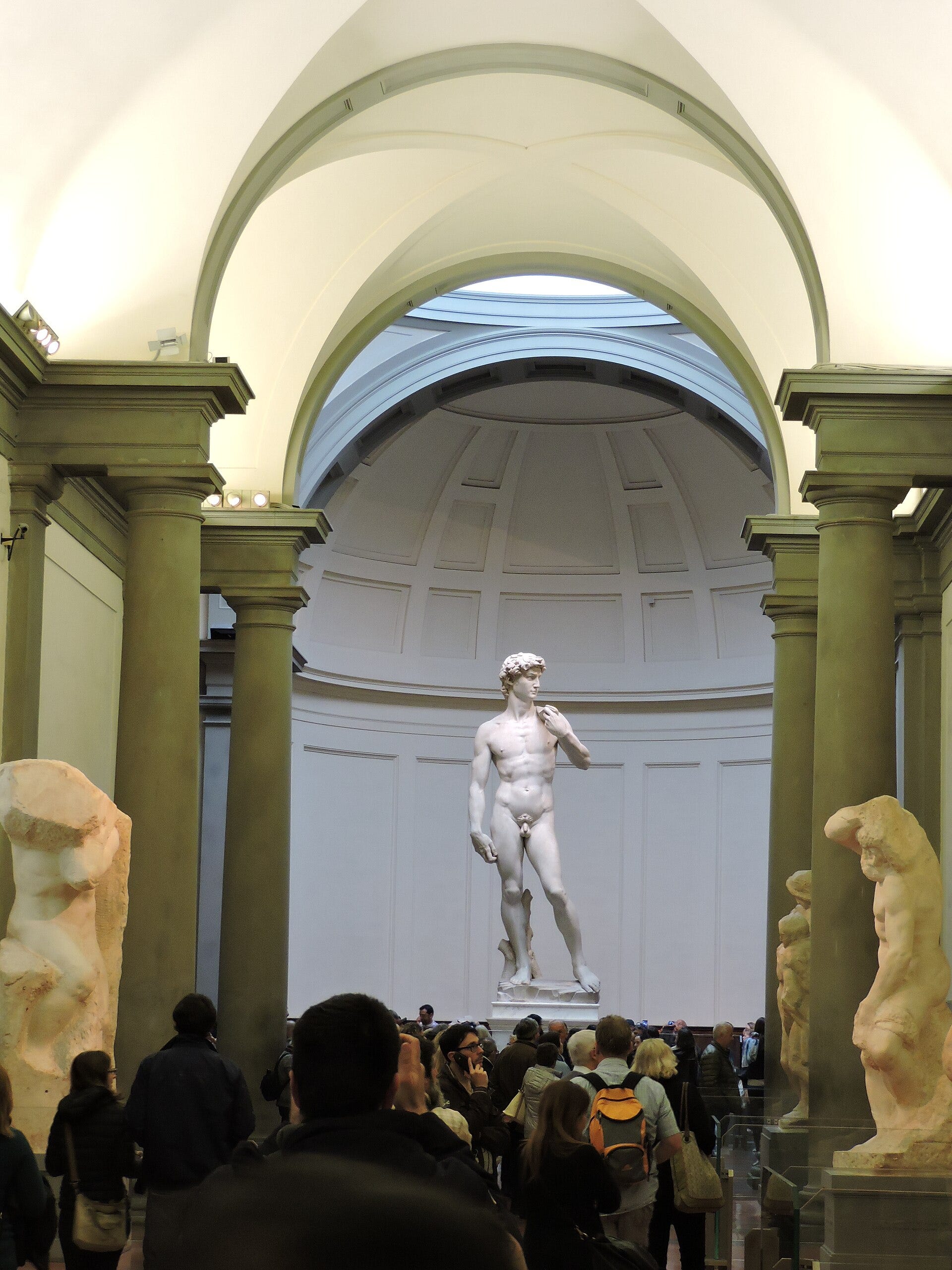
Leonardo is not won over. He likes supple bodies, grace, muscle sensed beneath the skin. All that straining flesh leaves him cold.
In his notebooks, he writes that a figure loaded with muscle ends up looking like a sack of nuts, or a bunch of radishes.
On January 25, 1504, about thirty men gather to decide where to raise the David. Botticelli is there. So is Leonardo.
Most want it at the heart of the city, in front of the palace, where everyone passes. Leonardo pulls the other way. He argues for the Loggia dei Lanzi, the covered gallery on the side of the square. A fine spot, he says, sheltered from the weather.
Sheltered, and so out of the way. Under the vault, in the shade.
The city does not follow him. The colossus will stand outside, in full light, at the palace door. 40 men and four days to haul it there.
Discover my new newsletter !

Keep learning art the fun way


The same room
Two enemies in one city. And Florence has an idea.
On the top floor of the palace sleeps an immense hall, built ten years earlier for the five hundred citizens of the Grand Council. The wall to cover runs almost 50 meters, nearly half a football field. Room enough for two battles.
Half the wall to each of them. Side by side, close enough to touch elbows, before the eyes of the whole city. And from their hatred, two masterpieces will be made.
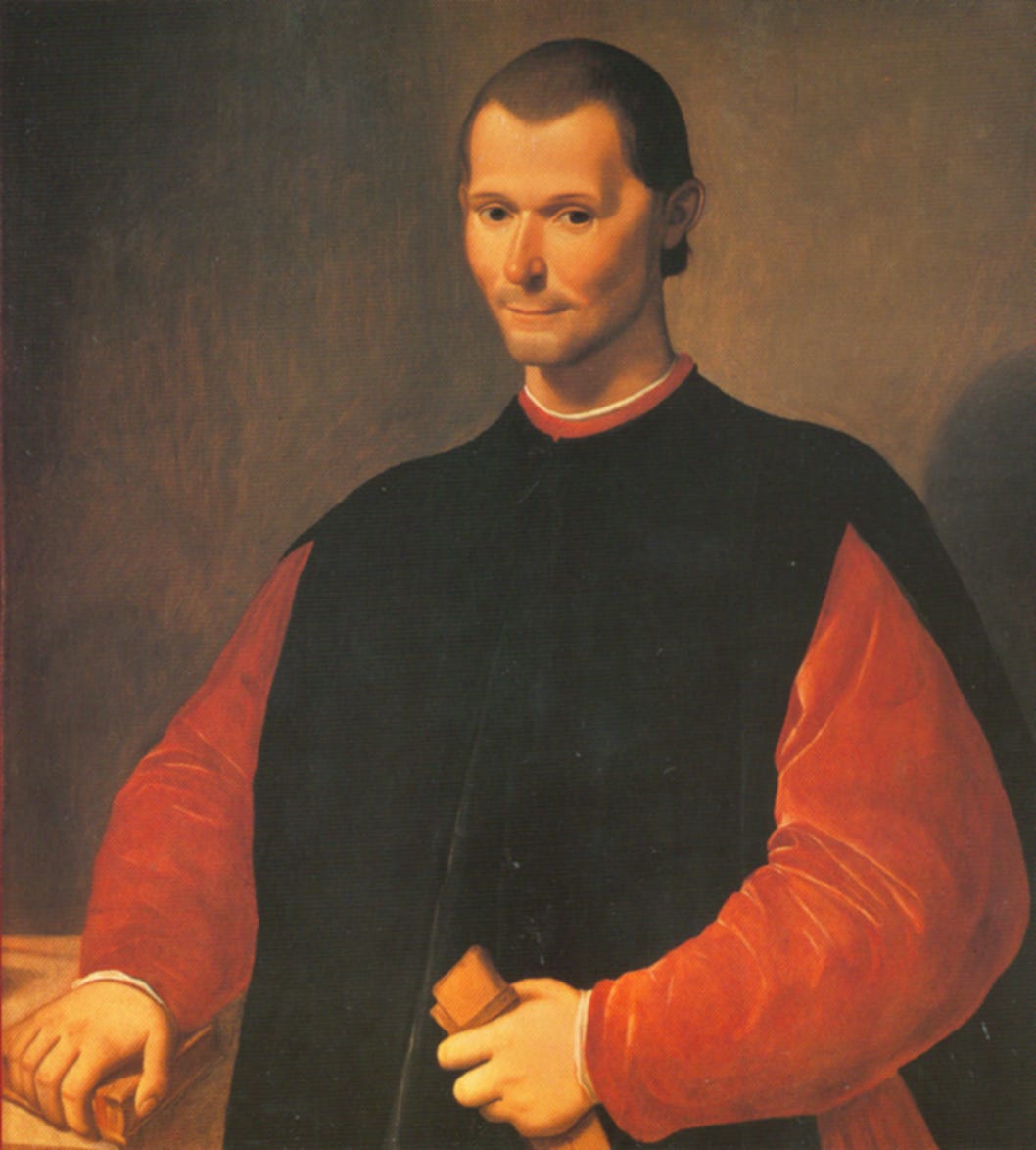
Soderini, head of the republic, signs the commission. His secretary follows the affair, a certain Machiavelli, who knows better than anyone what can be drawn from two men who hate each other.
They are free to choose the subject, so long as Florence comes out ahead. Leonardo takes Anghiari, a victory of 1440 over Milan. Michelangelo takes Cascina, a victory of 1364 over Pisa.
Then they disappear. The city lends each of them a great room, at opposite ends of Florence, and they shut themselves in with their cartoon, the full scale drawing that will later be traced onto the wall.
For months, no one sees what is taking shape behind the doors.
Outside, they are all anyone talks about. People pick a side, the old man or the young one. They place bets.
It remains to be seen which of the two will win on the wall…