
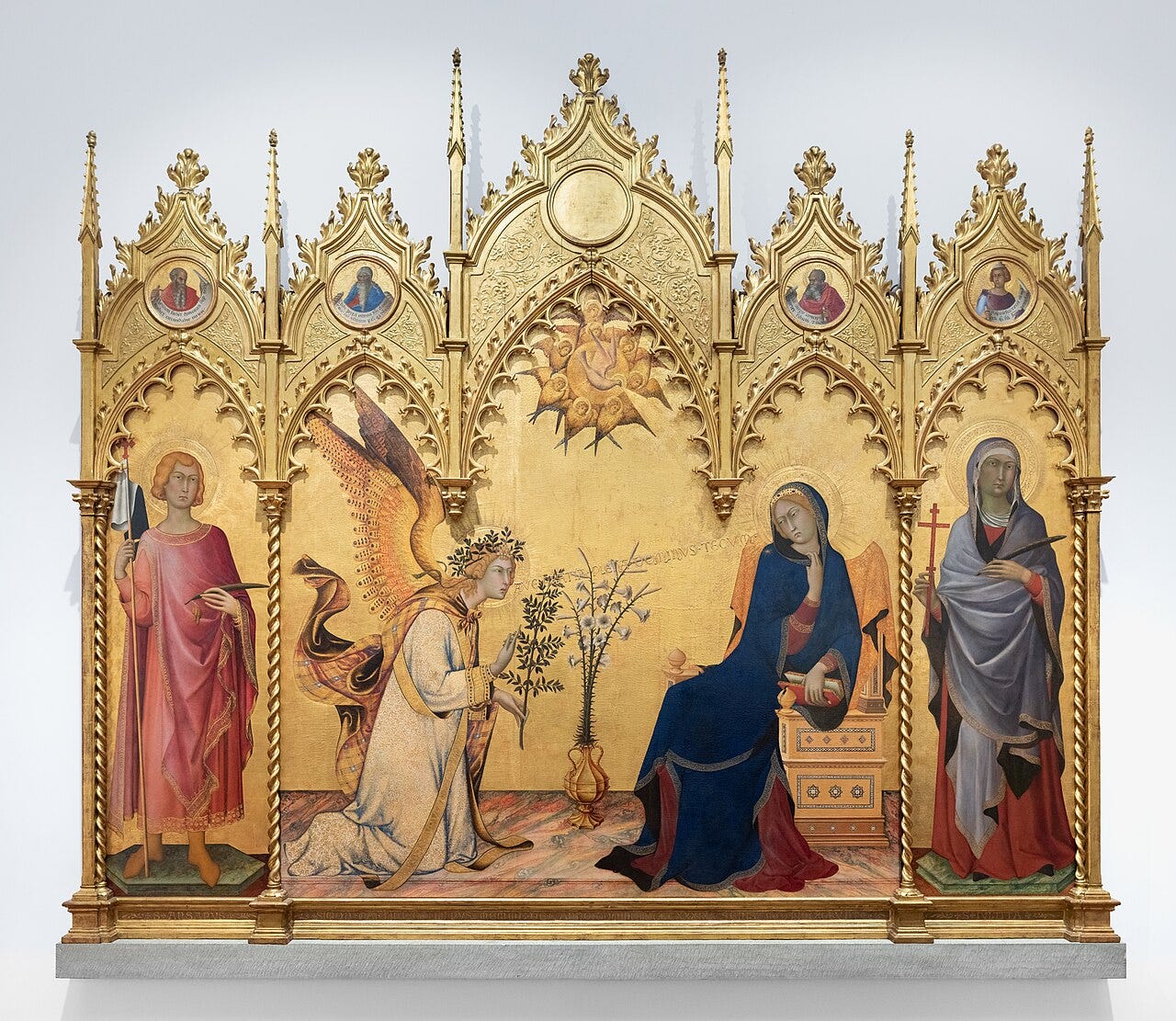
Gesso is a white, chalky coating brushed onto a wooden panel or canvas to prepare it for painting. It seals the surface, makes it smooth and bright, and gives the paint something to grip.
You almost never see it in a finished picture, but it is the foundation under nearly every old master painting and most paintings made today.
Every gold ground altarpiece and tempera panel of the Middle Ages began here, on a chalk skin smoothed to eggshell.
Gesso is the layer nobody looks at, and the one that lets everything painted on top survive.
Gesso up close
What it is: a white ground that prepares a surface for paint.
The recipe: chalk or plaster mixed with glue, in many thin coats.
The job: smooth, seal, brighten and grip.
The home: wooden panels, later canvas.
The word: Italian for chalk or gypsum.
Keep learning art the fun way


The foundation you never see
Every good painting starts before the painting.
Bare wood or raw canvas is rough, thirsty and uneven. Paint laid straight onto it sinks in, dulls and cracks. So the artist first builds a ground.
Traditional gesso is chalk or gypsum bound with animal glue, brushed on in many thin layers and sanded between them until the panel is as smooth and white as an eggshell.
Only then does the real work begin, on a surface built to last.
Why white, and why so smooth
The color and the polish both have a purpose.
A brilliant white ground bounces light back up through the paint, so colors laid over it glow rather than sink into a dull base. The glassy smoothness lets a fine brush move freely, which is exactly what the crisp detail of tempera and early panel painting needed.
Many artists then drew their design onto the gesso, sometimes in a grey grisaille, before adding color.
To me the ground is never neutral. It is the first decision a painter makes.
The bed for gold
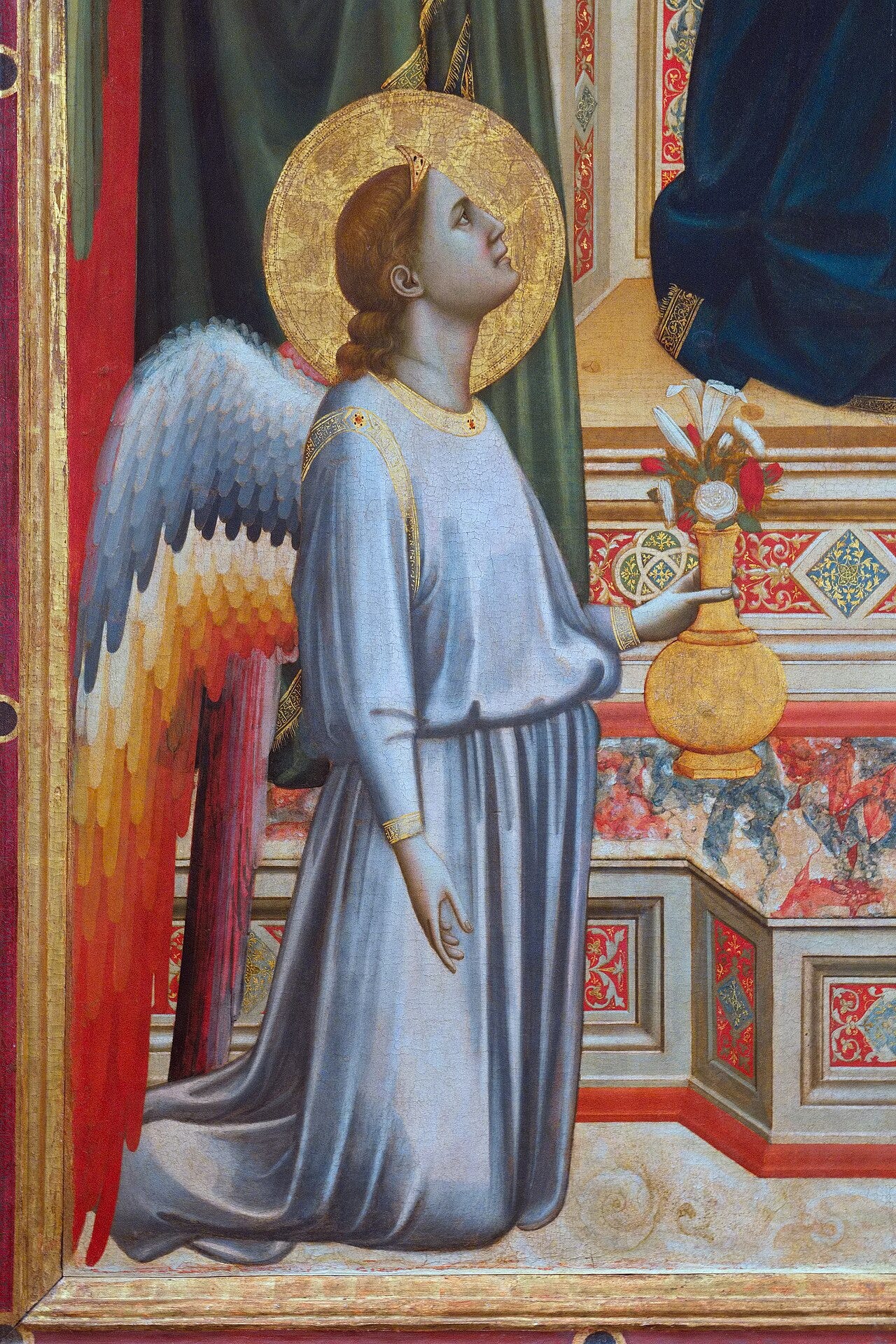
In the age of gold ground painting, gesso did extra duty.
Before the gold went on, medieval and early Renaissance painters built up the gesso, then carved and stamped patterns into it. A softer red clay layer called bole went on top, and then the gold leaf, burnished to a mirror.
Every halo and glowing background in those altarpieces sits on a sculpted bed of gesso. The gold gets the glory. The gesso did the shaping.
Scratch the surface of a glowing medieval saint and you find chalk and glue.
From panel to canvas to tube
Gesso changed as painting changed.
When artists moved from rigid panels to flexible canvas, the brittle old chalk and glue ground had to be made more elastic, often with added oil.
Today most people buy gesso in a tube or tub, an acrylic version that primes a canvas in a couple of coats. It even works as a ground for materials it shares a history with, like encaustic The chemistry has shifted, but the job has not changed in six hundred years.
Prepare the surface, then paint. Always in that order.
The proof is in the gold. Simone Martini’s Annunciation glows in the Uffizi, and the Wilton Diptych in the National Gallery, both gold leaf laid over gesso.
Gesso, the questions about the ground
What is gesso? A white ground of chalk or plaster and glue, used to prepare a surface for painting.
What does it do? It seals and smooths the surface, brightens the colors, and gives the paint something to grip.
What is it made of? Traditionally chalk or gypsum with animal glue. Modern gesso is usually acrylic.
Why is the ground white? A white base reflects light back through the paint so colors look brighter.
Do I need gesso to paint? For lasting work, yes. Painting straight onto raw wood or canvas tends to dull and crack.
More secrets to unlock


The part of a painting you will never admire
Nobody stands in a gallery admiring the gesso. Yet without it the panel warps, the colors sink and the paint flakes away. The smooth glow of a Renaissance saint rests on a hidden bed of chalk and glue, laid down first and then covered forever, the quiet promise that the picture will still be here in five hundred years.
