

170 000+ readers. Learn art the fun way.
This is a preview. Paid subscribers get the full story.
You’ll also get:
10 new stories every month
The full archive (130+ Art stories)
Your personal art guide. Comment, ask questions, DM me anytime
iPhone user? Subscribe at coolstoriesabout.art, not via the app. Apple adds 30% to the price.
My first book is out (in French only)

1. Edvard Munch, The Scream (1893)
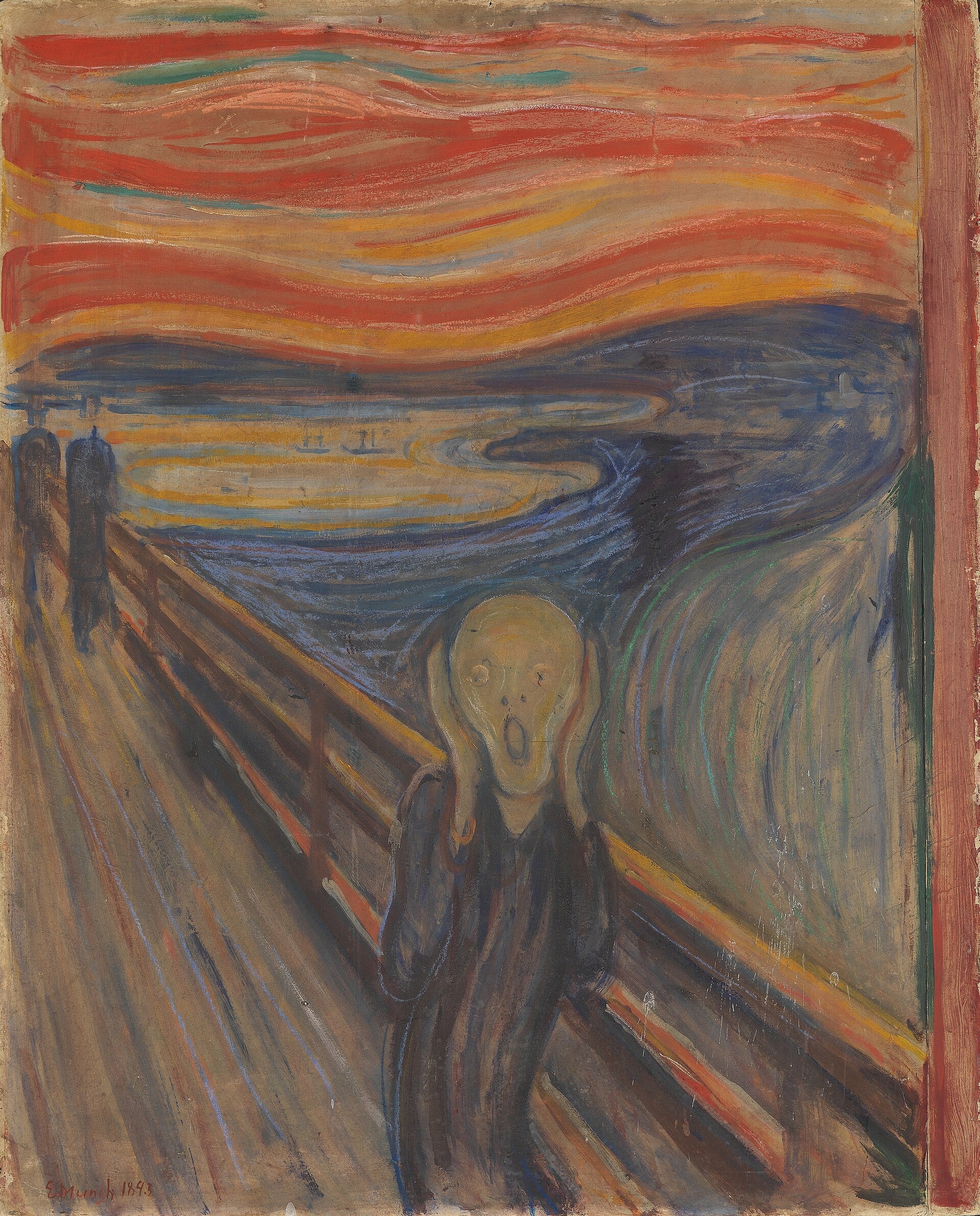
No one is screaming in The Scream.
Look at the figure’s hands. They do not open around a scream. They cover his ears. He is not screaming. He is trying not to hear.
So who is screaming?
Munch wrote the scene down in his diary. One evening, he is walking home along the fjord near Kristiania, today Oslo. Two friends walk ahead of him. The sun drops, the sky turns blood red. He stops, drained, and feels “a great, infinite scream pass through nature.”
The scream does not come from the man. It comes from the sky and the water. The two friends, for their part, heard nothing and keep walking.
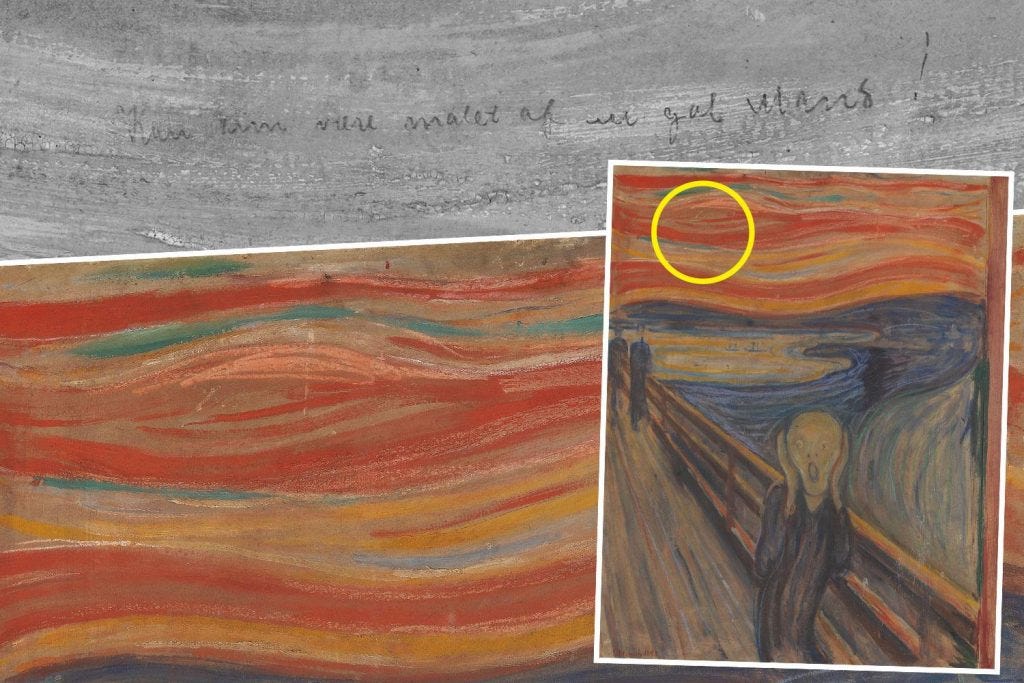
One last detail remains, top left, in the red of the sky. A line in pencil, tiny: “Can only have been painted by a madman.”
For a century it was blamed on a vandal. In 2021, the National Museum of Norway compared the handwriting. It is Munch’s. He wrote it after a stranger, standing in front of the canvas, publicly declared him insane.
2. Johannes Vermeer, Girl Reading a Letter at an Open Window (around 1658)
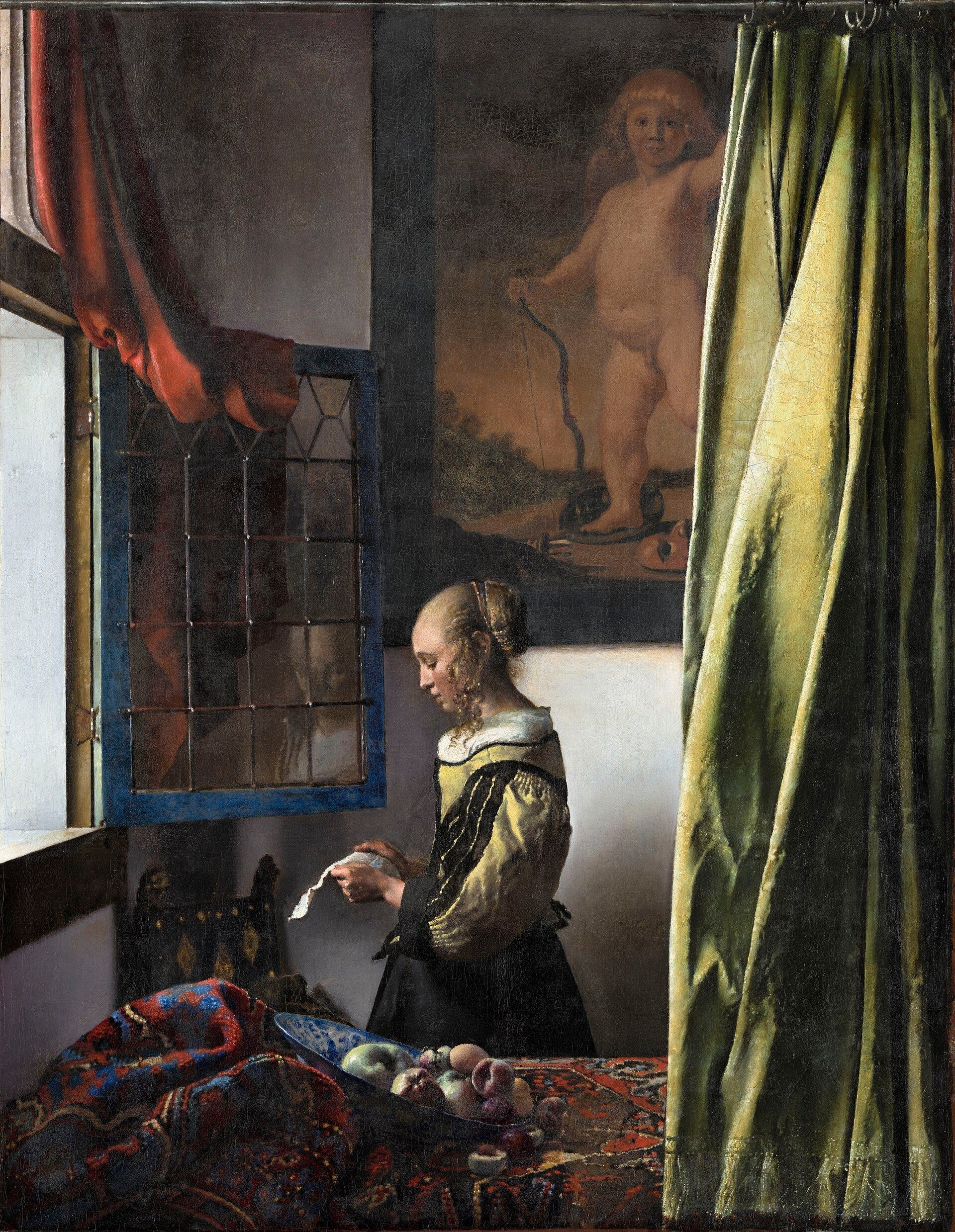
What is this woman reading?
For centuries, no one could say. A letter, her face lowered, absorbed. A love note? Bad news? Vermeer had left no clue.
Or rather, he had left one. And it had been painted over.
In 2017, in Dresden, a restoration strips away a layer of paint spread across the back wall, behind her. A figure reappears. A large Cupid, the god of love, hidden after Vermeer’s death by a hand other than his own.
The Cupid gives the answer the painting had kept to itself. It is a love letter.
Discover my new newsletter !

Learn art the fun way


3. Caravaggio, David with the Head of Goliath
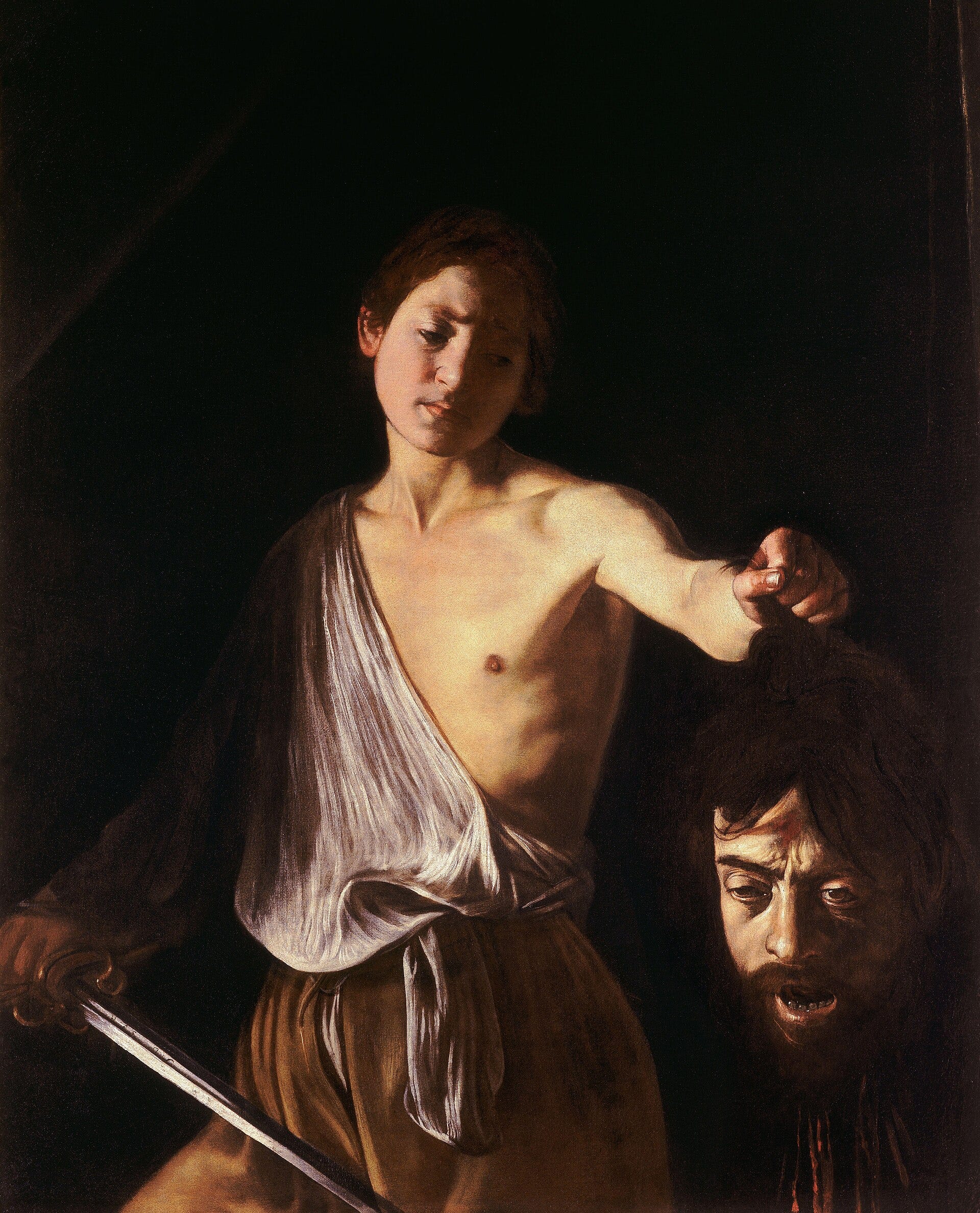
David holds the severed head of Goliath. A thousand painters have taken on this subject. Only one gave the dead giant his own face.
It is Caravaggio. That severed head is him.
And he has a terrible reason to paint himself defeated. In 1606, in Rome, he killed a man, Ranuccio Tomassoni, in a brawl. Since then he has been on the run, a death sentence on his head. Anyone can legally kill him, anywhere.
This painting, he sends to Cardinal Scipione Borghese, the one man able to win him a pardon. On the canvas, David does not gloat. He looks at the head with a kind of pity.
Caravaggio holds out his own severed face to the man who can save him. He dies in 1610, before the pardon arrives.
4. Francisco Goya, The Third of May 1808 (1814)
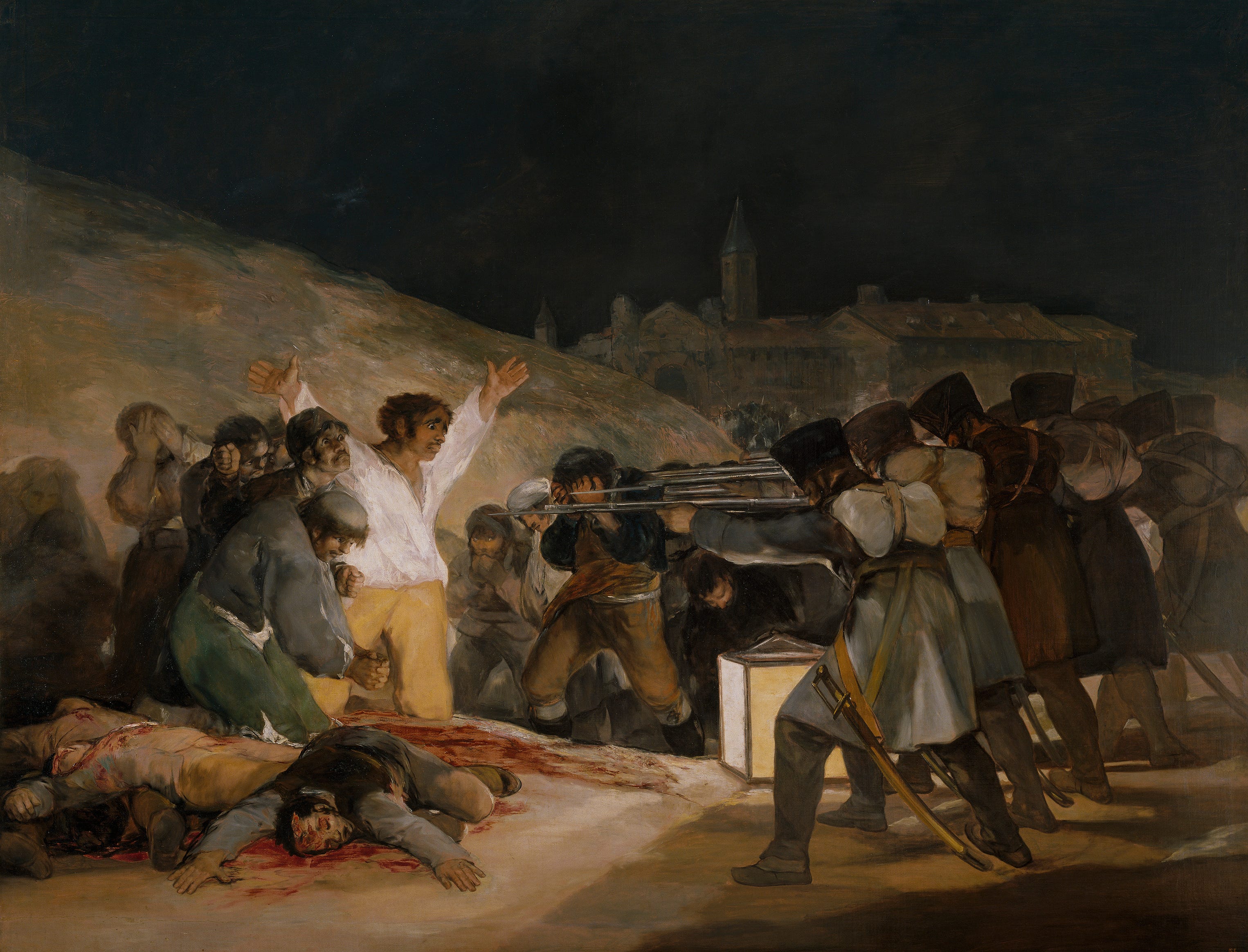
Night. A wall, a firing squad, the rifles already raised. At the center, a man in a white shirt, on his knees, arms thrown toward the sky. The second before the volley.
Goya is painting what Napoleon’s troops did in Madrid in 1808. They are shooting civilians.
Everything plays out in his right hand, open, raised in the full light of a lantern.
In the hollow of the palm, there is a mark…