

170 000+ readers. Learn art the fun way.
This is a preview. Paid subscribers get the full story.
You’ll also get:
10 new stories every month
The full archive (130+ Art stories)
Your personal art guide. Comment, ask questions, DM me anytime
iPhone user? Subscribe at coolstoriesabout.art, not via the app. Apple adds 30% to the price.
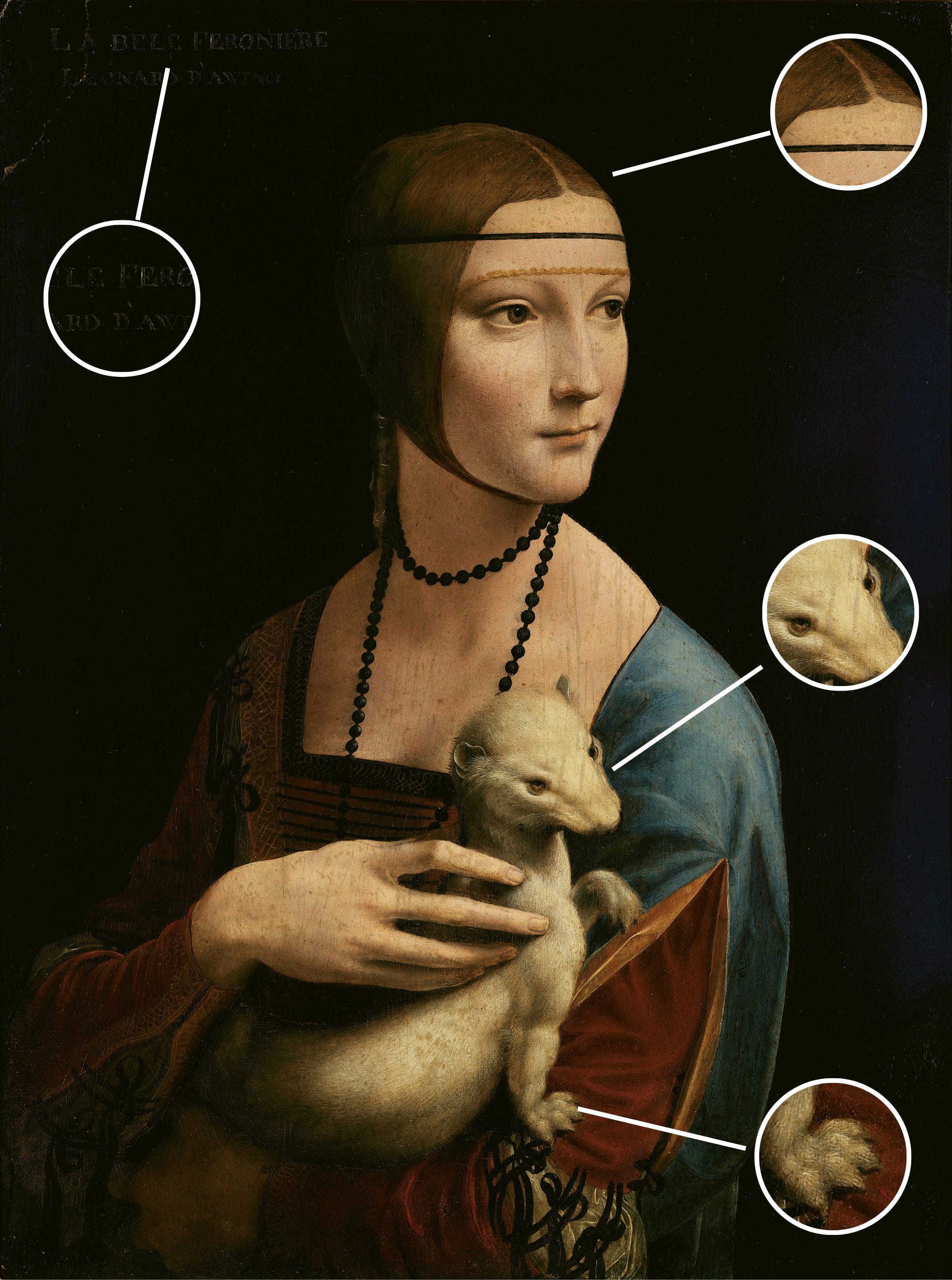
Leonardo da Vinci painted very little.
Barely fifteen paintings in the whole world are his, and only four of them are portraits of women.
This is the only one you can see in Poland, in a museum in Kraków.
In it, a young woman holds a small white animal against her body.
The panel is 54 centimeters by 40. Leonardo painted it in Milan, around 1489, when he was in his late thirties and had spent a few years working for the man who ran the city.
A pretty court portrait, at first glance. Elegant, calm, with nothing to tell.
Except that everything here was built to say something else. And the animal she is holding will turn out to be the last thing you would guess.
Let’s look at this painting, detail by detail.
Who She Is
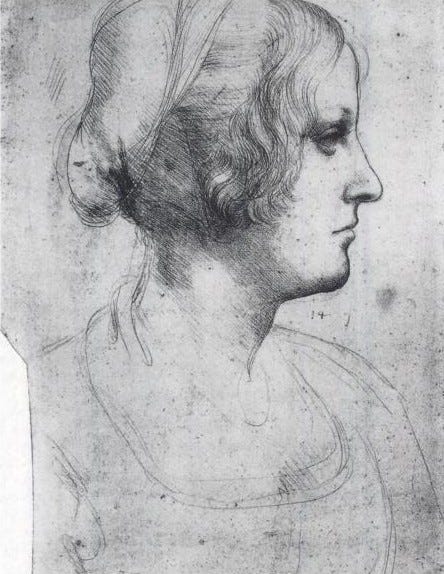
Her name is Cecilia Gallerani.
She was born in Milan in early 1473, into a family from Siena.
By 16, she is already at the center of the richest court in Italy.
She is no ordinary girl. She speaks Latin, writes verse, gives speeches. She hosts a circle of scholars in her own rooms, one that some call the first literary salon in Europe.
The writer Matteo Bandello is a guest in her house and sets one of his stories there, the one that will later give Shakespeare part of Much Ado About Nothing.


Look at what she is wearing. A mantle thrown over one shoulder. Her hair smoothed into two bands, drawn back into a long braid, a thin black ribbon across her forehead, a veil of gauze so fine you can barely see it.
And around her neck, a single strand of dark pearls. Nothing else. No ring, no jewel, no gold.
For a court portrait, that plainness is a choice. To anyone who knows how to read it, it says she was not born into the high nobility.
And yet here she is, painted by Leonardo himself, at the heart of Milanese power. Someone powerful wanted this face kept. Hold on to that.
The Five Golden Words
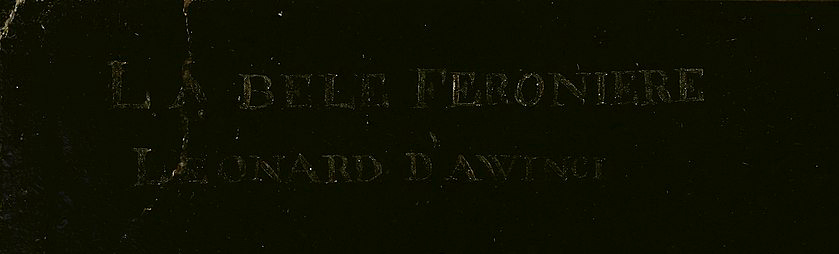
Lift your eyes to the upper left corner. Four words are painted there in gold capitals, on the dark background: LA BELE FERONIERE, LEONARD D’AWINCI.
Both are wrong.
They were added around 1800 by a Polish princess who had just bought the panel. She thought she recognized the mistress of a king of France, a woman known as La Belle Ferronnière. Wrong woman, wrong country, wrong century. As for D’AWINCI, that is simply da Vinci spelled the way a Polish ear heard it.
For more than a hundred years, no one knew who the young woman in the painting was. Her real name had vanished under someone else’s.
Discover my new newsletter !

Keep learning art the fun way


Who Is She Looking At?

Come back to her face. She turns her head to the side, away from you, toward something outside the frame.
A court poet, soon after the painting, wrote a line about her: she seems to be listening, and not speaking.
She is not posing for you. She is turned toward someone, and you cannot see who.
The gesture looks ordinary. It is not. In those years, a woman’s portrait was painted in strict profile, motionless, almost like a medallion. Leonardo does the opposite.
He turns her body one way and her head the other, as if a movement had just crossed the room.
And here is a detail you barely notice: the animal is looking the same way she is. Its eyes are fixed on the same point, outside the frame. The woman and the animal are staring together at someone we cannot see.
The result is a woman caught mid-gesture, alive in a way no portrait of a woman of her time had ever been.
The Animal That Is Too Big
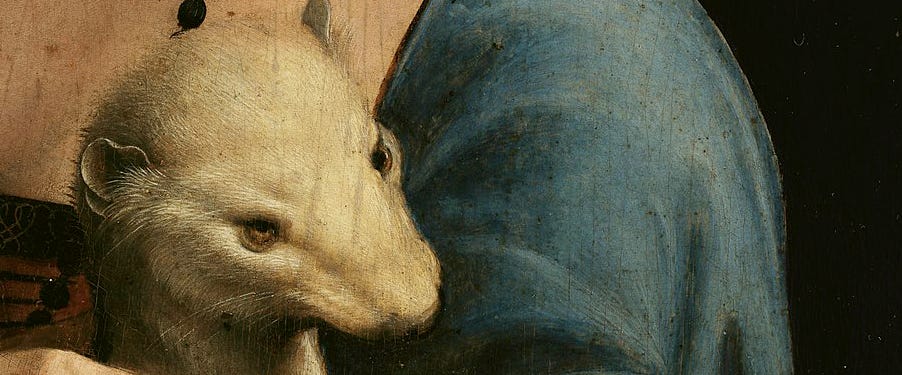
Now the animal she holds against her. White, long-bodied, its eyes alert.
Look closely: it is too big. A real ermine fits in one hand, barely larger than a weasel. This one is the size of a small cat, with a muscular front leg and the look of a predator.
Leonardo, who spent his life drawing animals from life, did not get an ermine wrong. If he paints it this way, it is because it is not there as an animal. It is there as a sign.
One meaning gives itself away at once. The Greek word for this kind of creature, galê, sounds like the first part of her name: Gallerani.
Leonardo liked to hide his sitters’ names in his paintings. A few years earlier, he had painted a young Florentine woman, Ginevra de’ Benci, against a juniper bush, ginepro in Italian, for Ginevra.
So the animal spells out her name. That is the easy part.
What is left is to find out what other sign it carries.
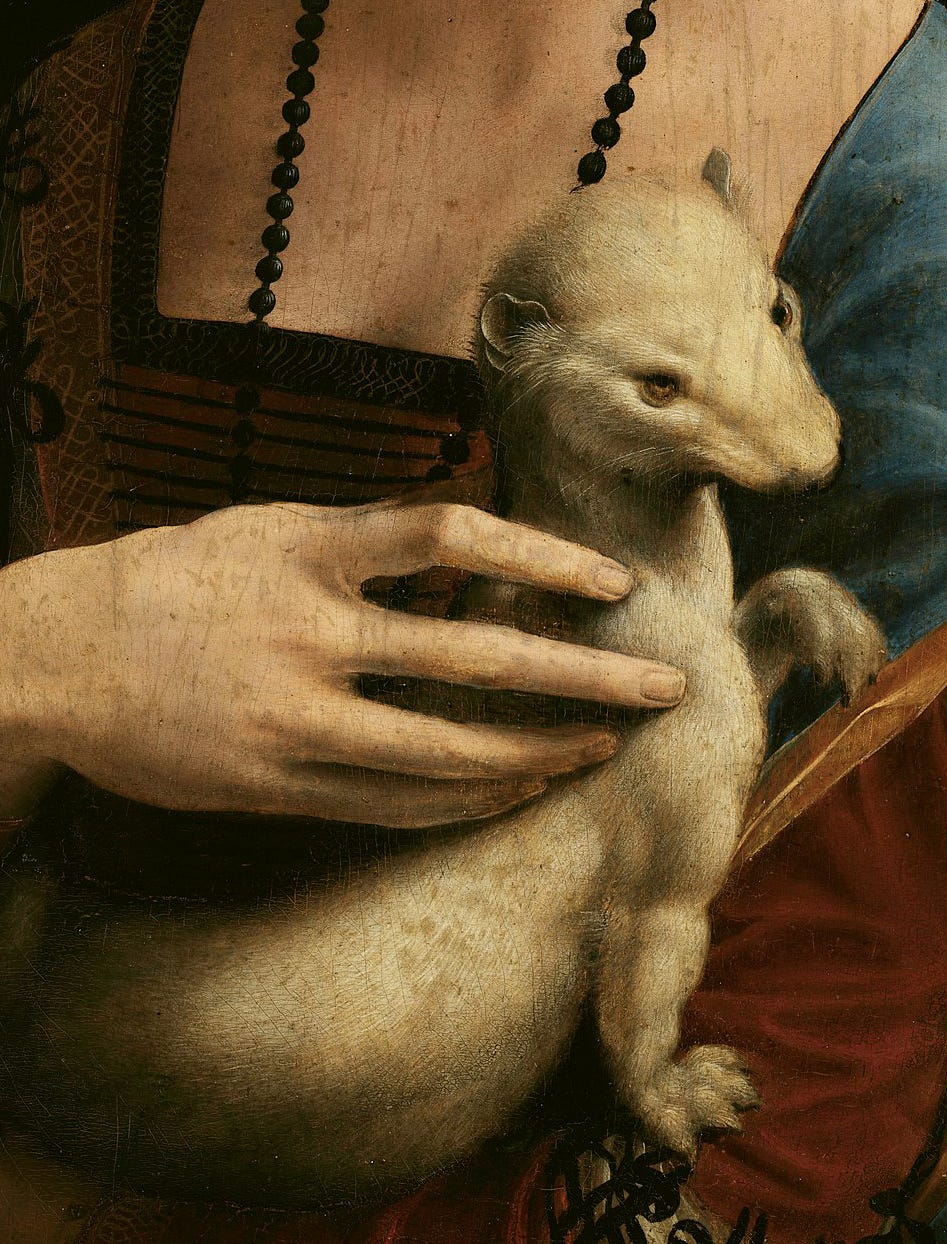
The Claws


Look at her hand on the animal. Leonardo paints every knuckle, every tendon, down to the way the joint of a finger hollows as it folds. The precision is such that the hand seems alive.
Now come closer, to the place where the animal meets her arm.
The claws are out. Spread, dug into the red fabric of her sleeve.
She holds it gently, and it grips her hard. Whatever this animal is, it is powerful, and it is not entirely tame.
And look at where she holds it. Not against her chest, not on her lap. Low, against her belly, clasped in both arms.
This is the key to the painting. This animal is not an animal. And what it really is changes everything you have just seen…