
Bartolomé Esteban Murillo was a Spanish Baroque painter from Seville, baptised there on 1 January 1618 and dead in the same city in 1682. He is remembered for soft, glowing Virgins and for ragged street children painted as if each one mattered. For almost two centuries Europe ranked him among its greatest painters. Then taste turned on him, and the sweetness became the charge against him.
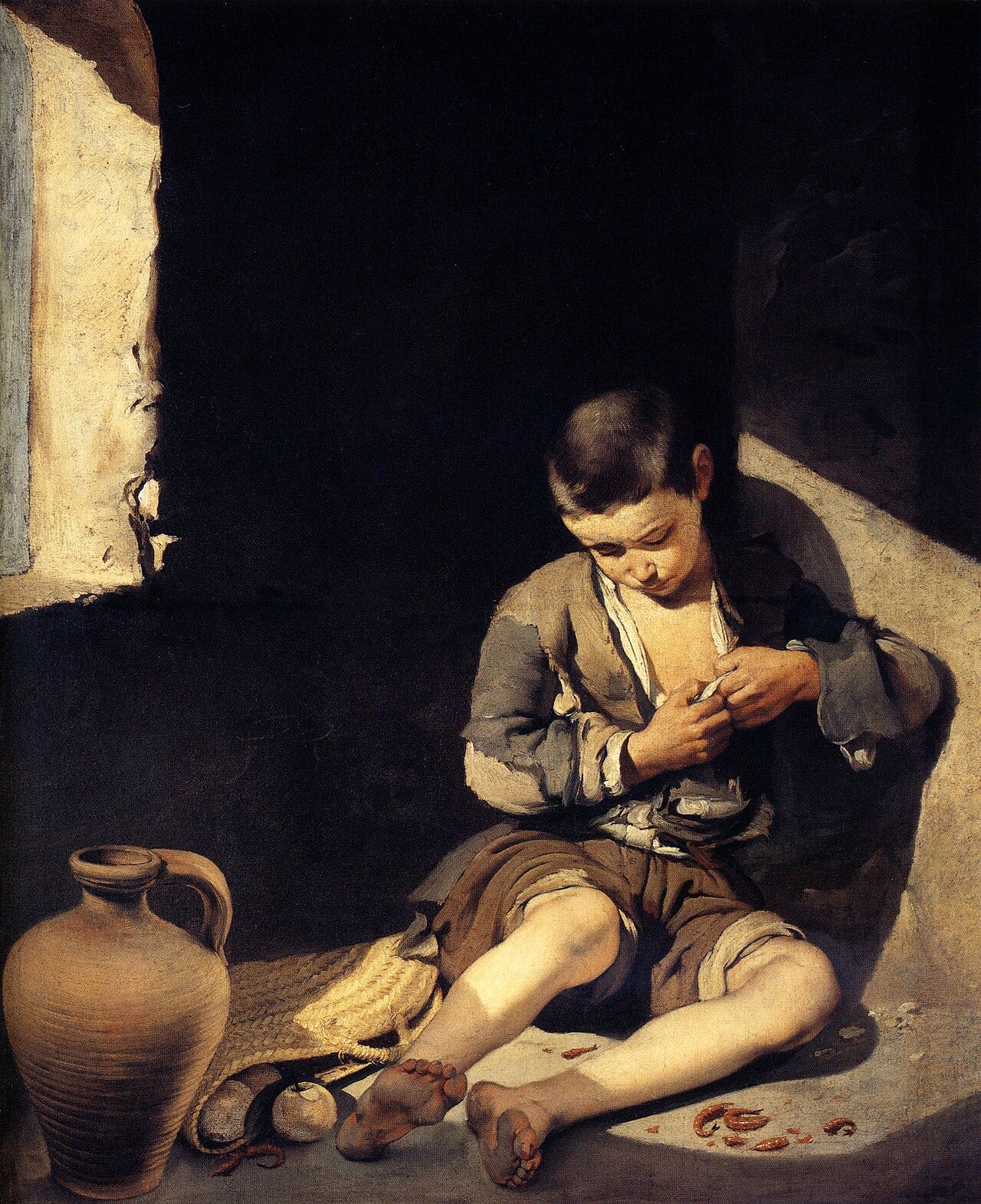
The picture most people want to see is a boy in the Louvre. He sits in a dim room picking lice from his clothes, and the Spanish title is El piojoso, the lousy one. Murillo lit him with the care he gave his saints.
Cool Stories About Art is a newsletter to learn art the fun way.
Join 200,000+ readers and get:
10 new art stories / month
The entire archive of content (1,000+ articles)
Comment, ask questions, and chat with other readers
The same man painted a Virgin that the Louvre bought in 1852 at the sale of Marshal Soult's collection. According to Apollo magazine, it held the record as the most expensive painting in the world for much of the nineteenth century. Spain did not get it back until 1941.
Murillo's fame then collapsed. By the twentieth century, above all in Britain, where the Victorians had loved him most, critics found his altarpieces formulaic and gave him a mocking nickname, the Master of the Upturned Eyeball. Roughly nine in ten of his paintings had left Seville, and the city that made him has spent recent years borrowing him back.
It begins with an orphaned boy in Seville, and with what he chose to paint.
What You'll Discover
Who taught him to paint.
Why he painted the street boys.
Who bid against the Louvre.
Who he painted himself for.
Why the sweetness became a charge.
What happened on a scaffold in Cádiz.