
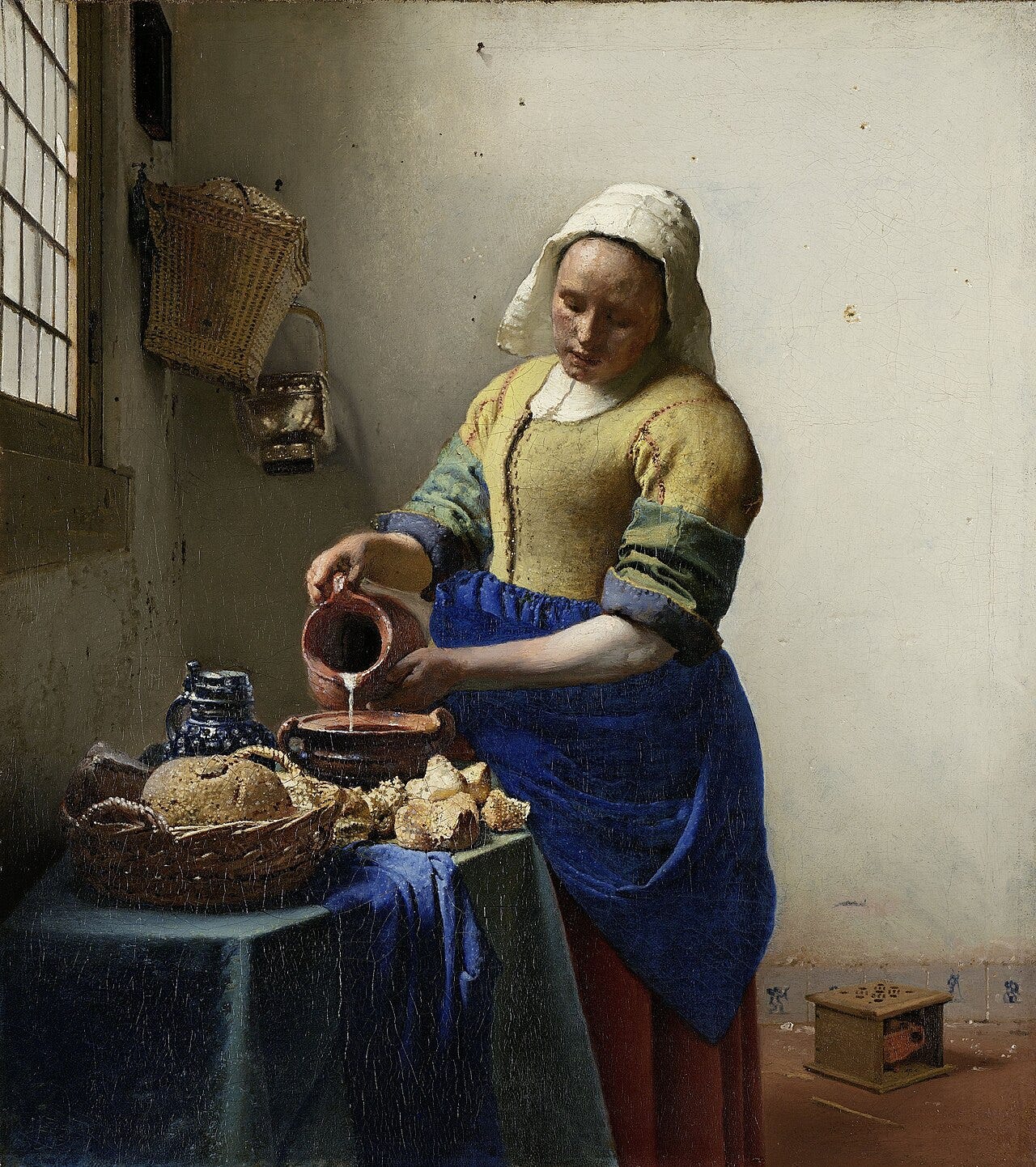
Genre painting shows scenes of ordinary daily life: people cooking, drinking, sweeping, playing cards or making music. No gods, no saints, no kings, just regular people doing regular things, painted for their own sake.
A maid pouring milk, a family at cards, a tavern in full swing.
Genre painting is the art of ordinary life, and the academies once ranked it near the bottom, which is part of why it feels so free.
Genre painting at a glance
What it is: scenes of everyday life and ordinary people.
The word: genre is French for kind or type.
The peak: the Dutch Golden Age of the 1600s.
The hierarchy: academies ranked it low, the public adored it.
The twist: many of these scenes hide a moral lesson.
Keep learning art the fun way


The art of everyday life
For most of history, serious painting meant grand subjects: the Bible, mythology, history, the powerful.
Genre painting turned away from all of that to look at normal life. A maid pouring milk. A family at dinner. Card players, music lessons, drinkers in a tavern. The subject is simply people, caught in an ordinary moment.
It sounds modest. In the right hands it became, to my mind, some of the most beloved painting ever made.
The label came later. The Dutch did not say genre painting. Critics pinned the French word on it generations afterward, once everyday life had earned its place on the wall.
The Dutch made it a national art
No one did genre like the Dutch in the 1600s.
A new middle class wanted pictures for the home, not the church, and painters gave them daily life raised to perfection. Vermeer's Milkmaid turns a servant pouring milk into something close to sacred.
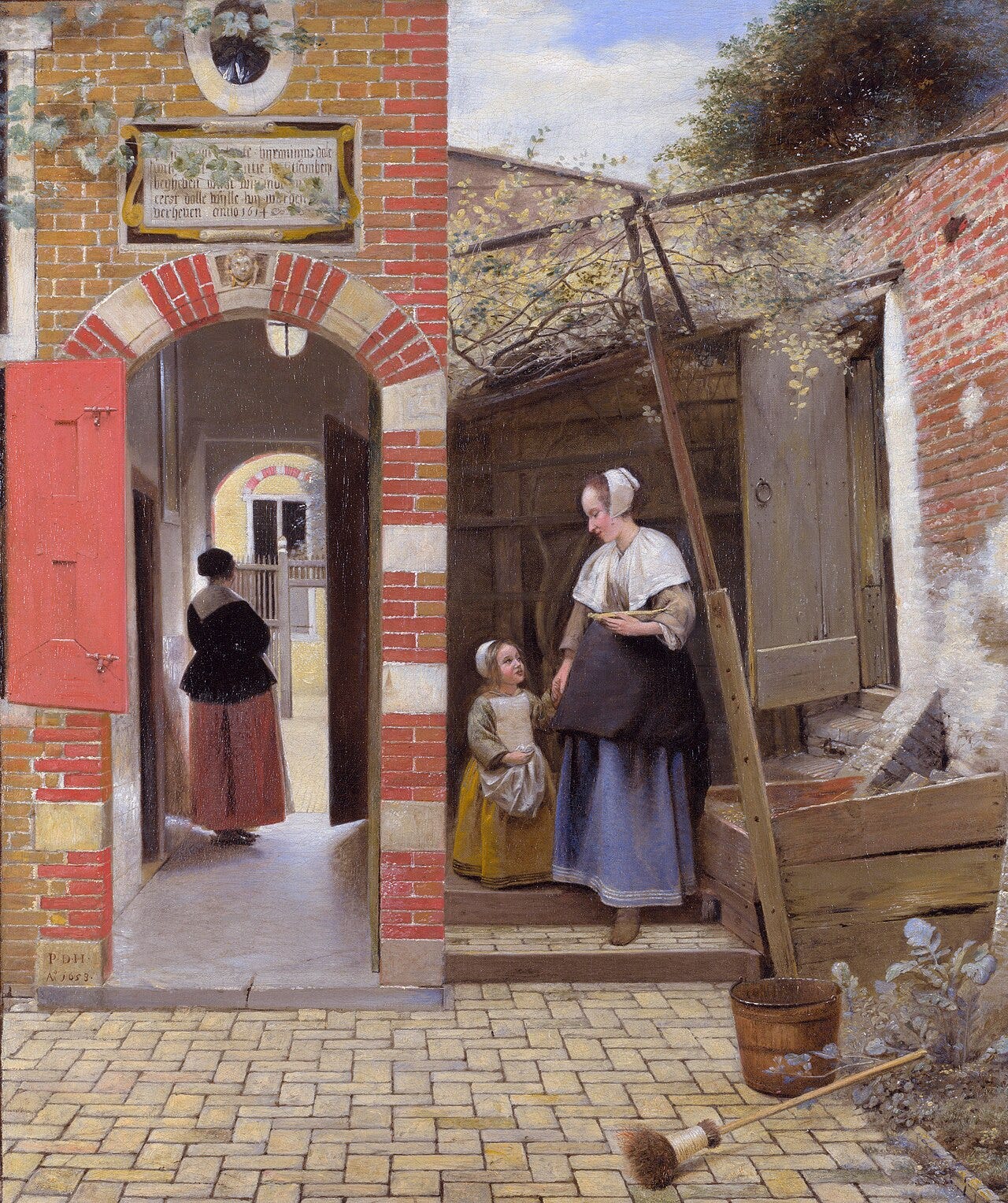
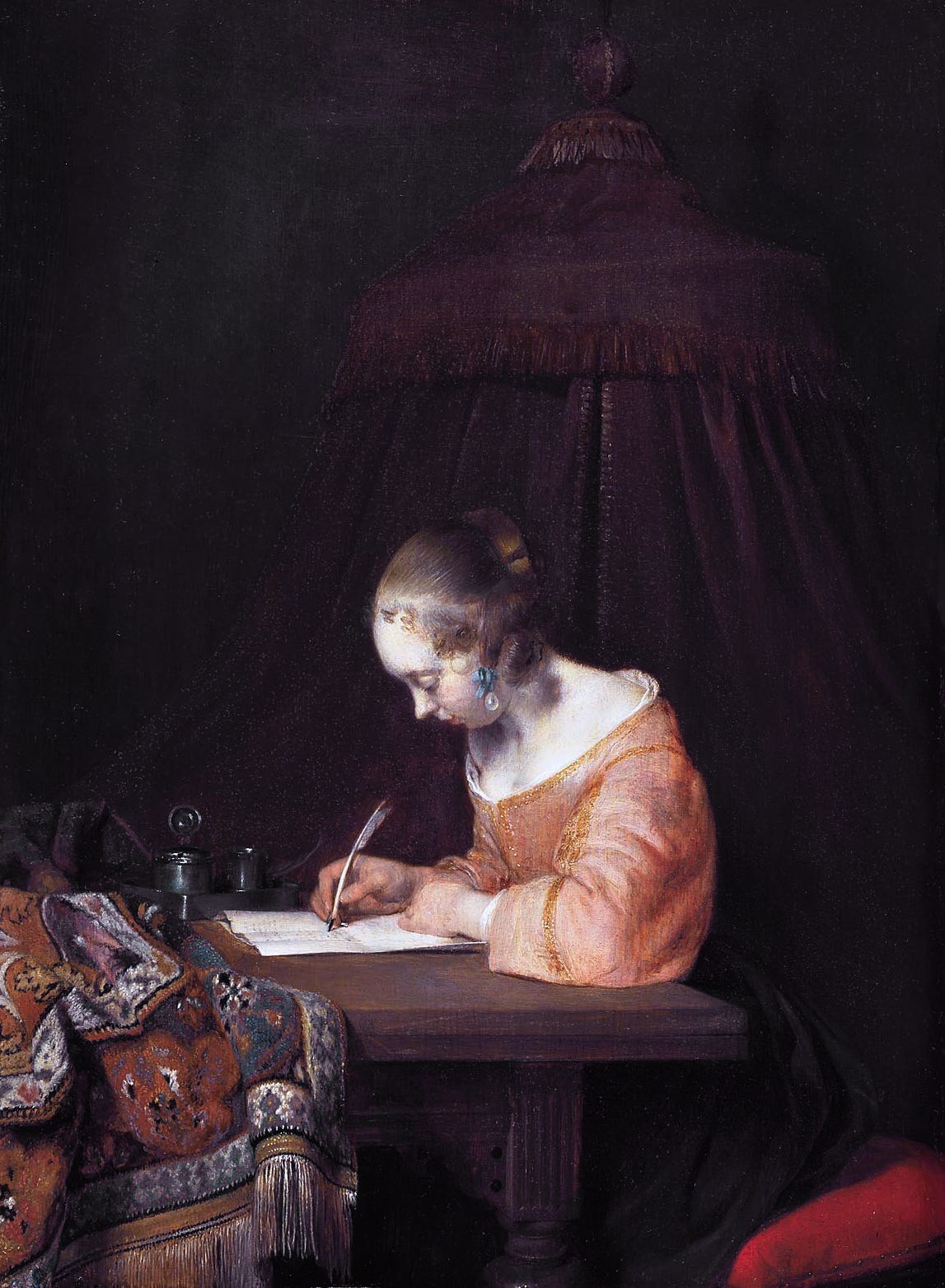
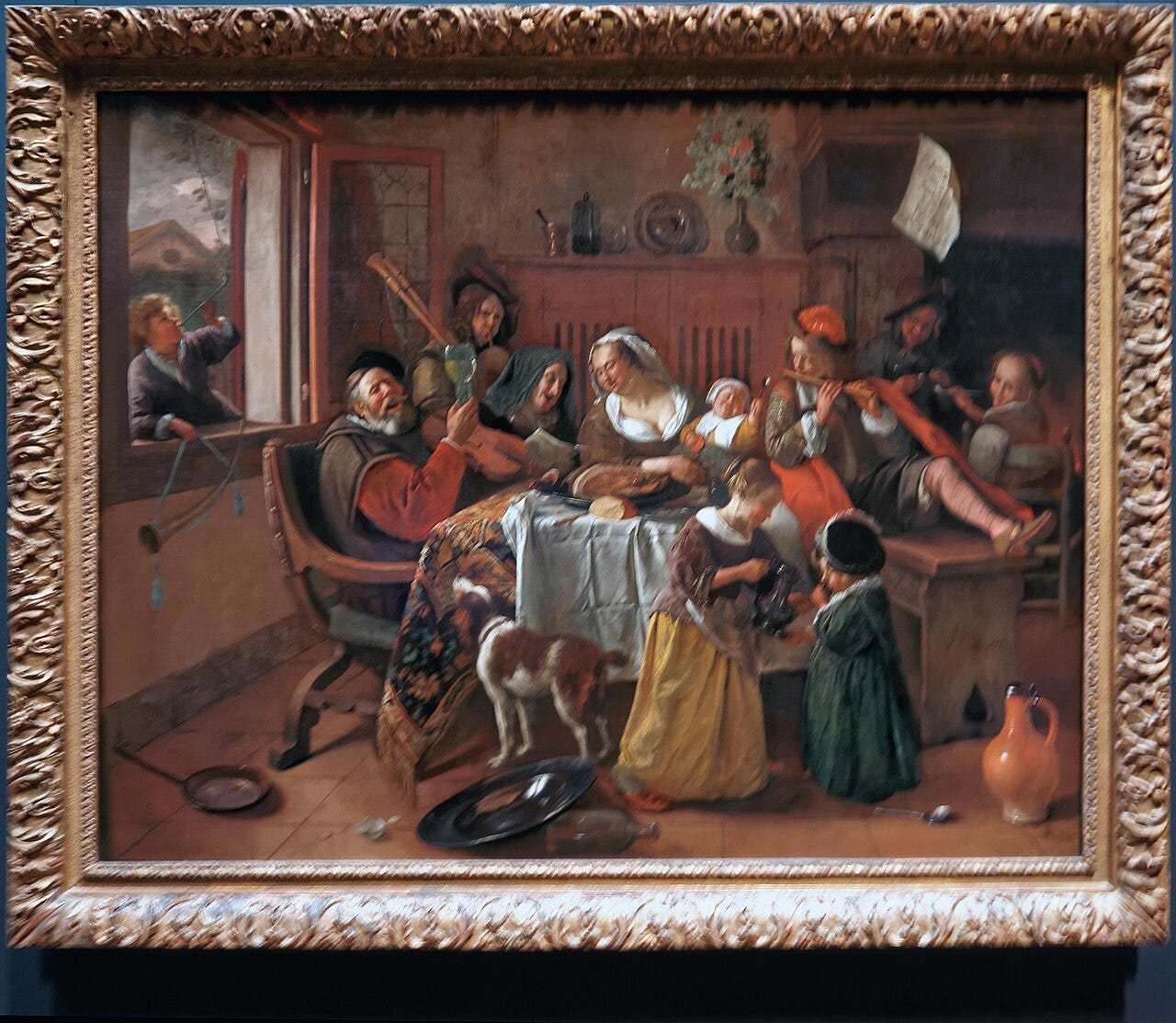
Pieter de Hooch painted sunlit courtyards, Gerard ter Borch painted silk and silence, Jan Steen painted glorious chaos.
These painters found a lifetime of subjects in a single doorway or kitchen.
The scale is hard to believe. Historians estimate the small Dutch Republic produced roughly five million paintings across the 1600s, sold to bakers and brewers off open market stalls rather than to popes or kings.
Beyond the Dutch: Hogarth, Chardin and the rest
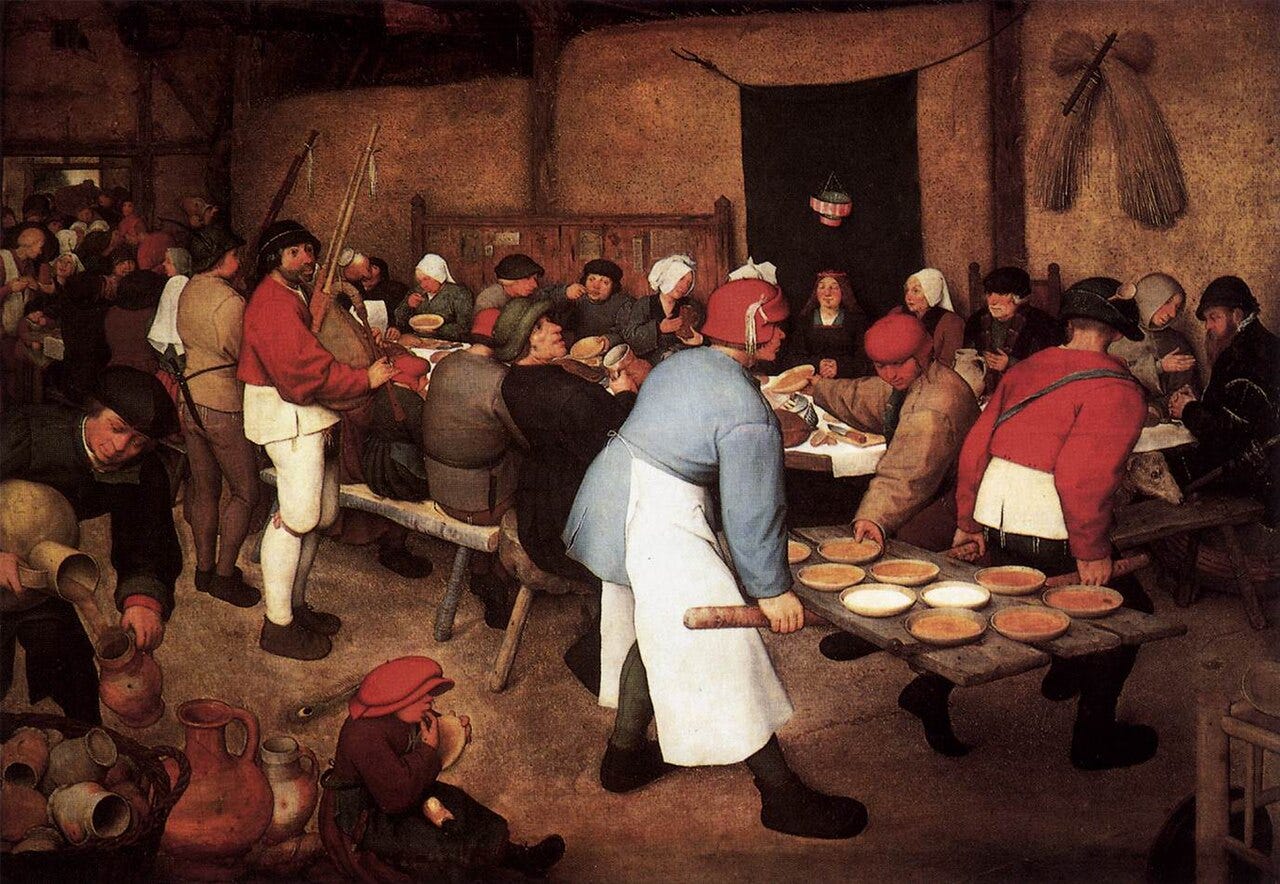
Genre did not begin or end in Holland. Pieter Bruegel the Elder painted peasants dancing a century earlier, and in France the Le Nain brothers gave peasants a grave dignity.
Later Chardin made a copper pot and a glass of water feel eternal, while in England William Hogarth turned genre into biting comic strips like A Rake's Progress, a moral tale told across several paintings.
The tradition kept traveling well into the 20th century. In America, Norman Rockwell filled hundreds of Saturday Evening Post covers with the same instinct, small, ordinary moments told with a wink and a lesson underneath.
Snapshots that preach
Here is the part I love about genre painting. Many of these everyday scenes are moral lessons in disguise.
A tidy, calm household stood for virtue. A messy, drunken one stood for vice. A woman at a mirror might hint at vanity, a coin changing hands at greed or worse. The viewer was meant to read the scene and quietly take the lesson.
Jan Steen painted so many noisy, disorderly families that the phrase a Jan Steen household became Dutch for a chaotic home, a saying still used today.
How to read the hidden lesson
A dog at the feet usually means loyalty, often in a marriage scene.
Spilled wine, scattered cards or a snuffed pipe point to idleness and vice.
A woman at a mirror hints at vanity, the shortness of beauty.
A tidy, sunlit room stands for virtue and a well run household.
Reading these props is the everyday cousin of iconography, the study of hidden meaning in pictures.
Ranked low, loved widely
The art establishment looked down on all of this.
In 1667 Andre Felibien, secretary of the French Academy, wrote down the famous hierarchy of genres. He ranked scenes of daily life near the bottom, above only landscape and still life, far beneath grand history painting.
The public disagreed completely. These were the pictures people actually wanted on their walls, then and now. Prestige went to history painting. Love went to the milkmaid.
Genre had its revenge in the 1800s. When Gustave Courbet and Jean Francois Millet painted laborers and gleaners at the huge scale once kept for kings and saints, they fused ordinary life with history painting's ambition, and the old ladder began to fall.
The quiet domestic interior reaches its peak in Vermeer’s Woman Holding a Balance.
The everyday questions about everyday painting
What is genre painting? Painting that shows ordinary everyday life rather than religious, mythological or historical subjects.
Where does the term come from? From the French genre, meaning kind or type. Critics applied it long after the Dutch made the pictures.
Who is the most famous genre painter? Johannes Vermeer, though Jan Steen, Pieter de Hooch and Gerard ter Borch are close behind.
How is it different from history painting? History painting shows grand events from myth, the Bible or the past. Genre shows anonymous people in daily life.
When did it peak? In the Dutch Golden Age of the 1600s.
Are genre scenes just snapshots? Often no. Many hide a moral about virtue and vice.
More secrets to unlock


The low subject that aged best
The academies put grand history at the top of the ladder and daily life near the foot. Yet it is the quiet Dutch kitchens and noisy taverns that crowds now press in to see.
The humble subject outlived the grand one, and that reversal is what I read art history for. Vermeer left only about 35 paintings, most of them these quiet domestic scenes, and each one still stops a gallery in its tracks.

This subject is one thread in a wider theme. See how it fits into Work and Everyday Life in Painting.