
A landscape painting makes the natural world the subject: land, sky, water, mountains, trees and weather. The people, if there are any, stay tiny.
For centuries it ranked near the bottom of art, then became one of the most loved kinds of painting on earth.
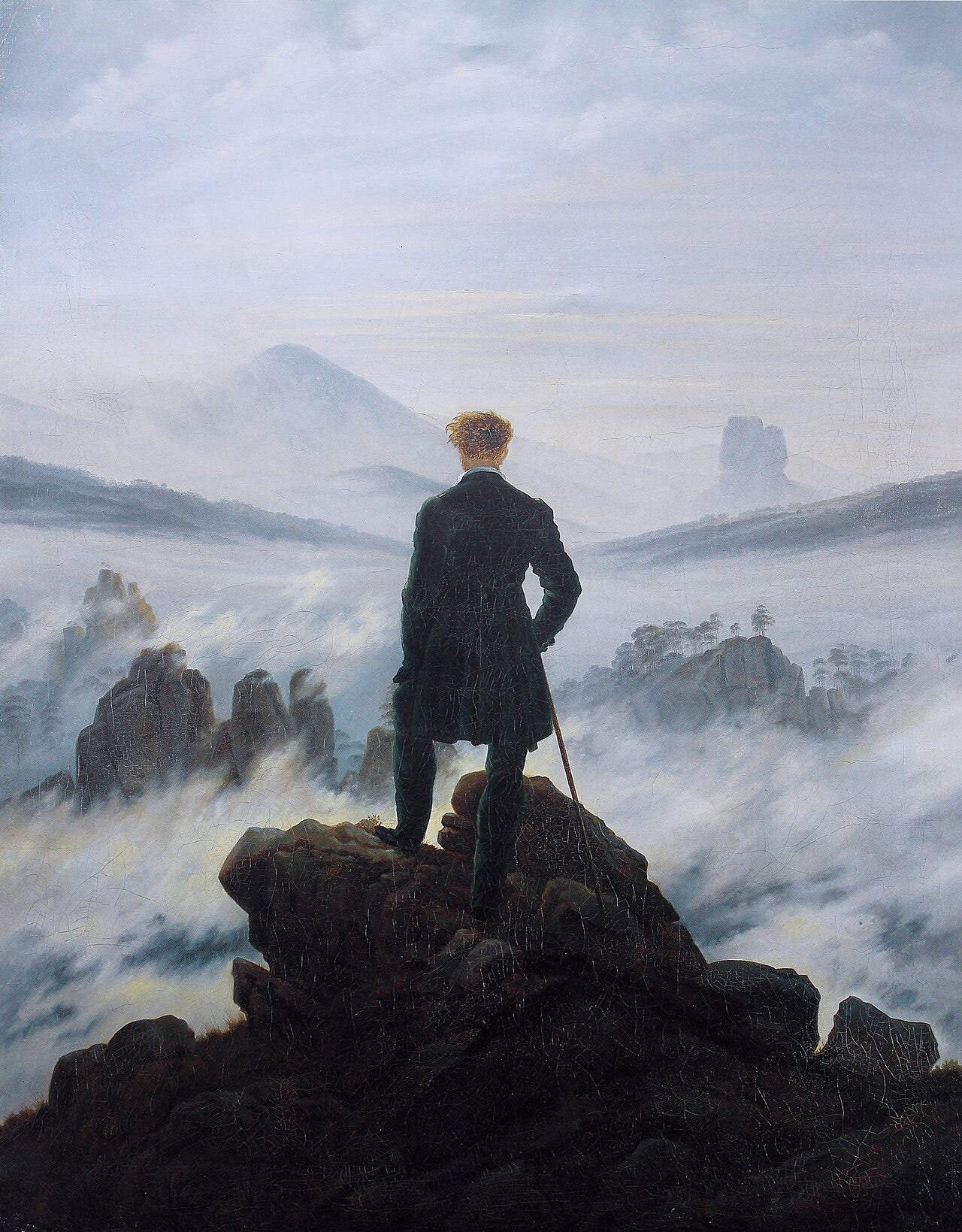
Around 1818 Caspar David Friedrich painted his Wanderer above the Sea of Fog, a lone figure on a foggy peak, back turned, letting the land itself carry the whole picture.
It sounds obvious now, yet to me it is one of the great reversals in art: the kind of picture critics once dismissed became the one crowds line up to see.
Nature as the main event
What it is: a painting whose real subject is the scenery itself.
The word: from the Dutch landschap.
The rank: academies placed it near the bottom, just above still life.
The turning point: Dutch painters in the 1600s made it a subject in its own right.
Why it matters: it carried the sublime, plein air and the road to Impressionism.
Keep learning art the fun way


For centuries, just a backdrop
Early European painting kept nature in the background. Hills and rivers sat behind a saint or a myth, never the point.
The academies agreed. Their hierarchy of genres put history painting at the top and landscape near the bottom, a notch above still life. Scenery, they thought, asked for copying, not invention.
That snobbery held for a long time. The genre had to fight its way to the front of the canvas.
The man who made the land the subject
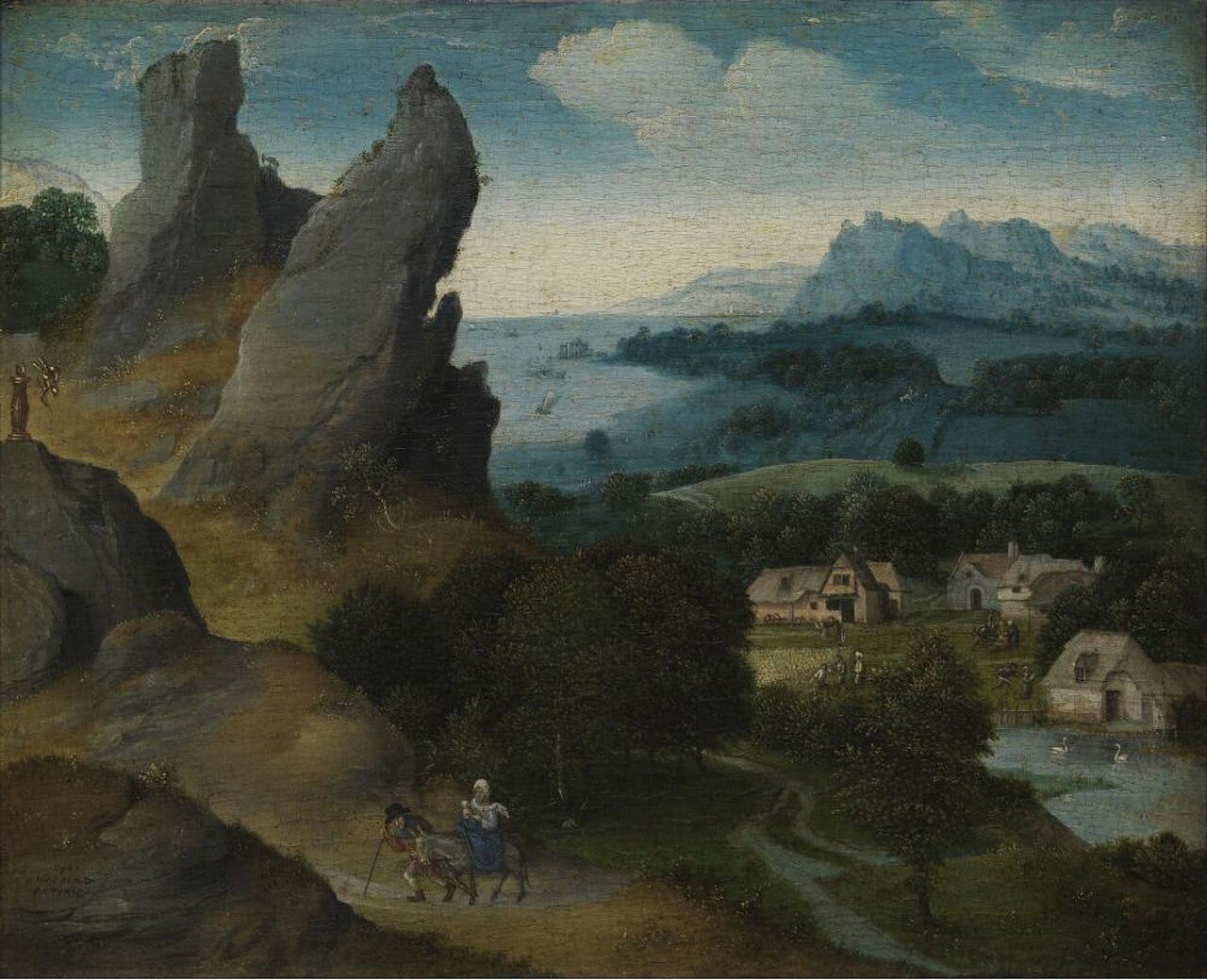
The shift has a name. Joachim Patinir, working in the early 1500s, is often called the first European to make landscape the real subject and shrink the holy story to a few small figures.
His world stretches back to a high blue horizon, with tiny saints lost in huge country. The background had quietly become the picture.
The Dutch made the sky the star
A hundred years on, the Dutch turned landscape into a national specialty.
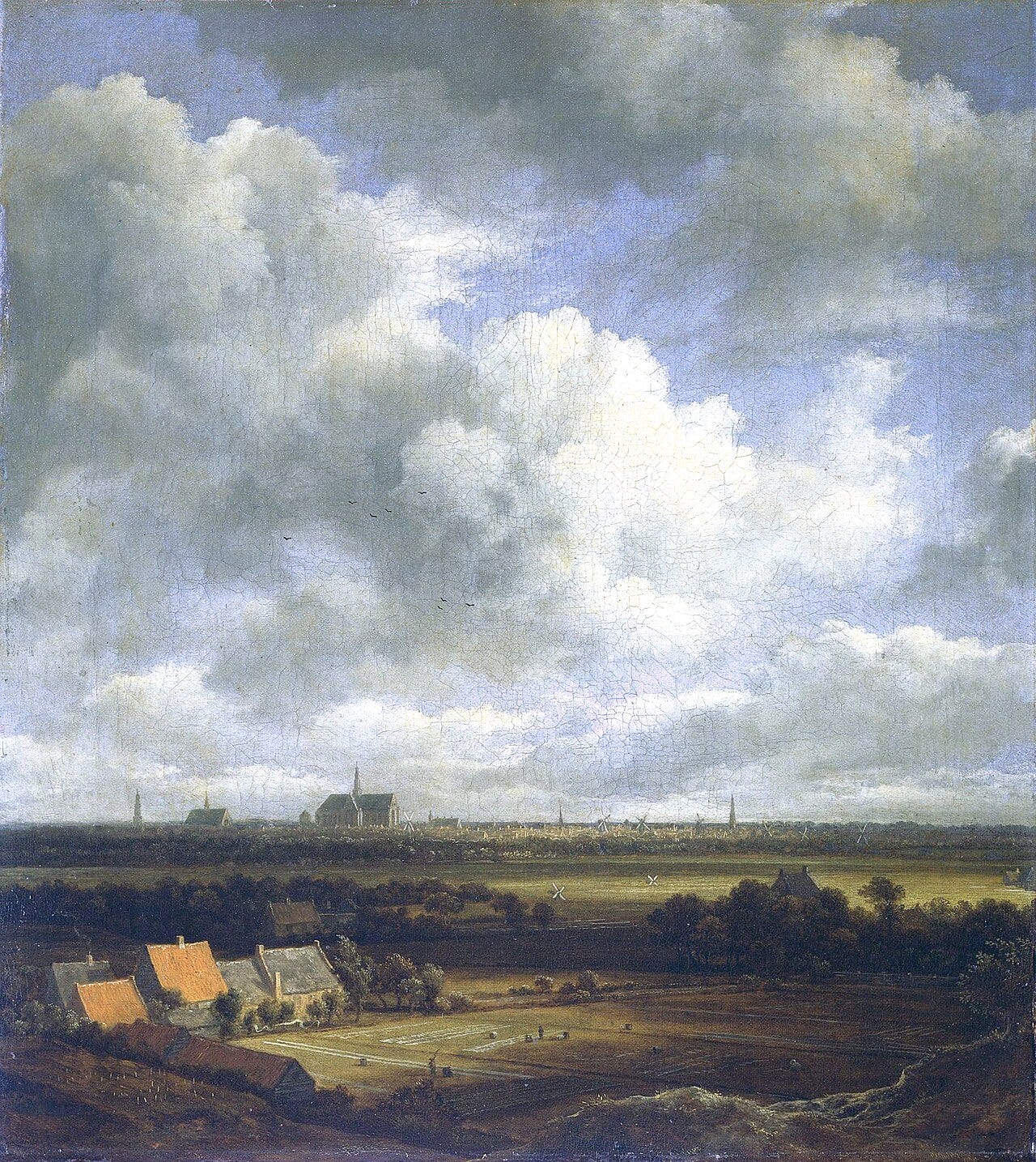
In the flat Netherlands there were no mountains to lean on, so painters dropped the horizon low and gave two thirds of the canvas to sky. Jacob van Ruisdael could make a grey bank of cloud feel like high drama.
This was real country: windmills, dunes and church towers, painted for ordinary homes. Landscape had found its first mass audience.
The ideal versus the real
Two roads opened from there.
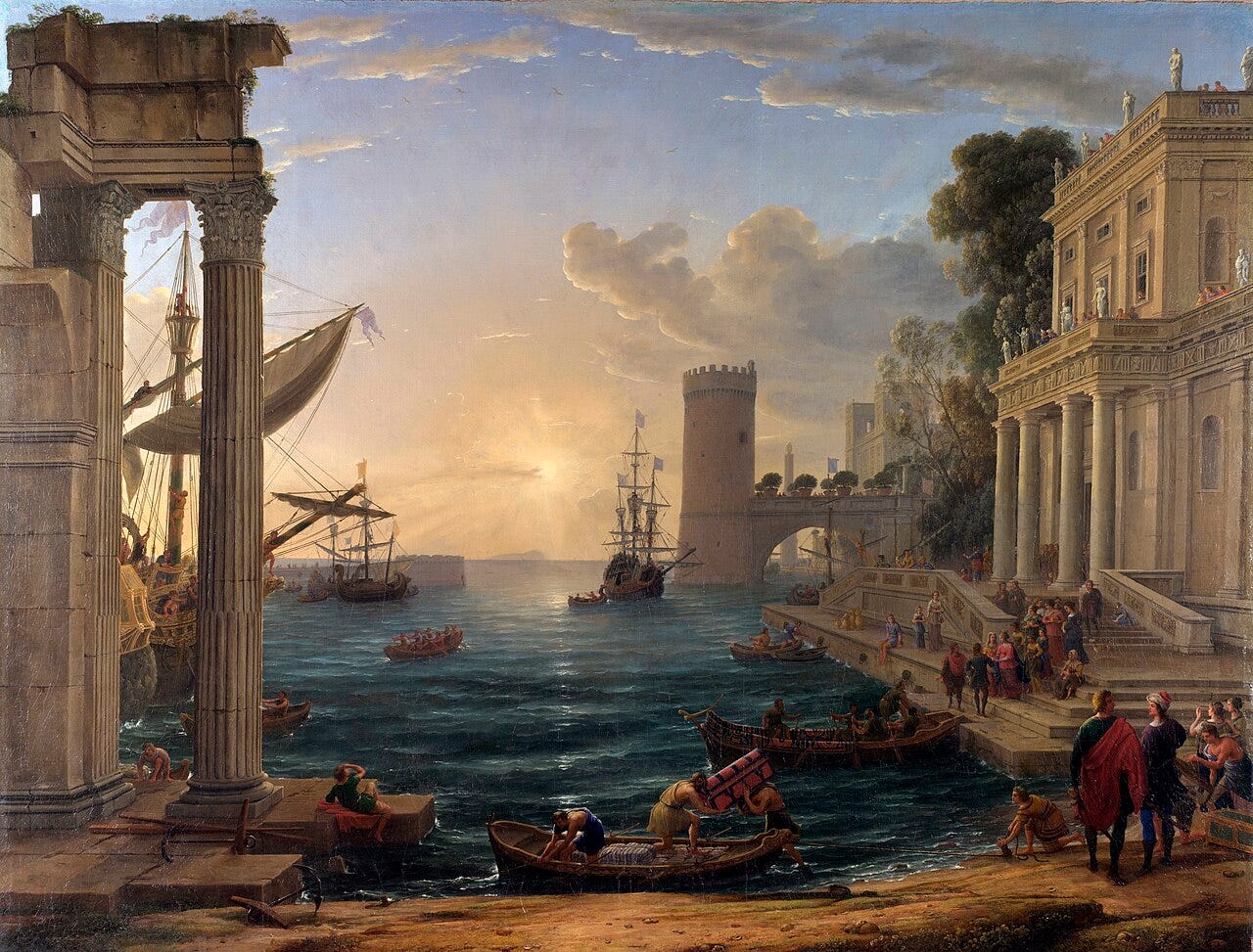
One was the ideal landscape of Claude Lorrain: golden light, calm ruins, a tidy vision of an Italy that never quite existed. The other was the plain truth of the Dutch flatlands.
Claude's vision was so admired that travelers carried a Claude glass, a small tinted mirror. They turned their back on the view and looked at its reflection, so real scenery would frame up like one of his paintings.
People wanted nature to imitate art, which I still find a little mad.
Venice took the opposite approach a little later. Canaletto's vedute recorded the city with such precision that Bernardo Bellotto's views of Warsaw helped rebuild it after the Second World War.
The tube of paint that freed the painter
For all this, landscape was still mostly painted indoors, from sketches and quick studies, often in gouache or chalk.
That changed with a small invention. In 1841 the collapsible metal paint tube arrived, and for the first time a painter could carry ready oil color into a field and work in front of the scene.
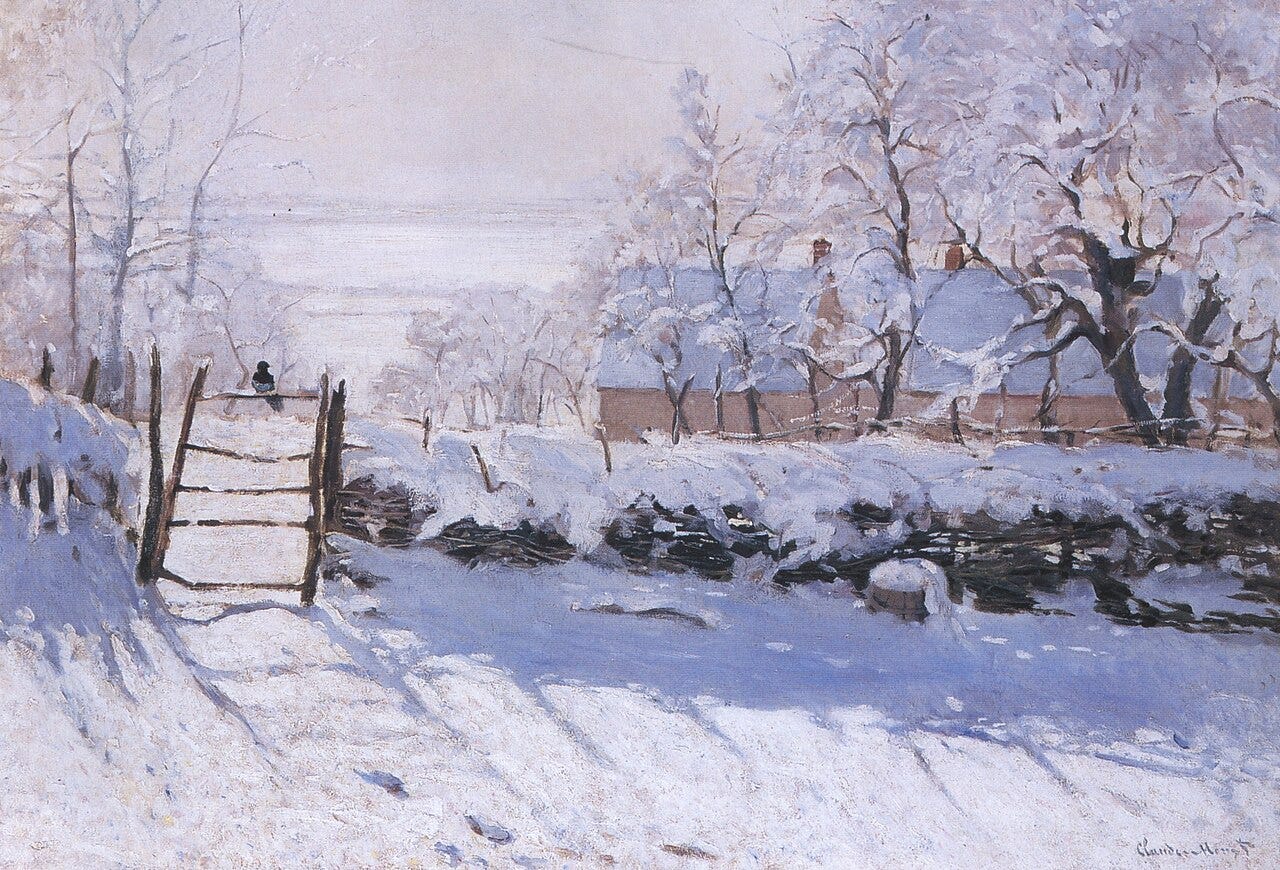
Renoir is quoted as saying it plainly: without paint in tubes there would have been no Impressionism. Monet and his circle walked out of the studio and stayed out.
The East got there first
Long before Europe took it seriously, landscape was already the summit of art in China.
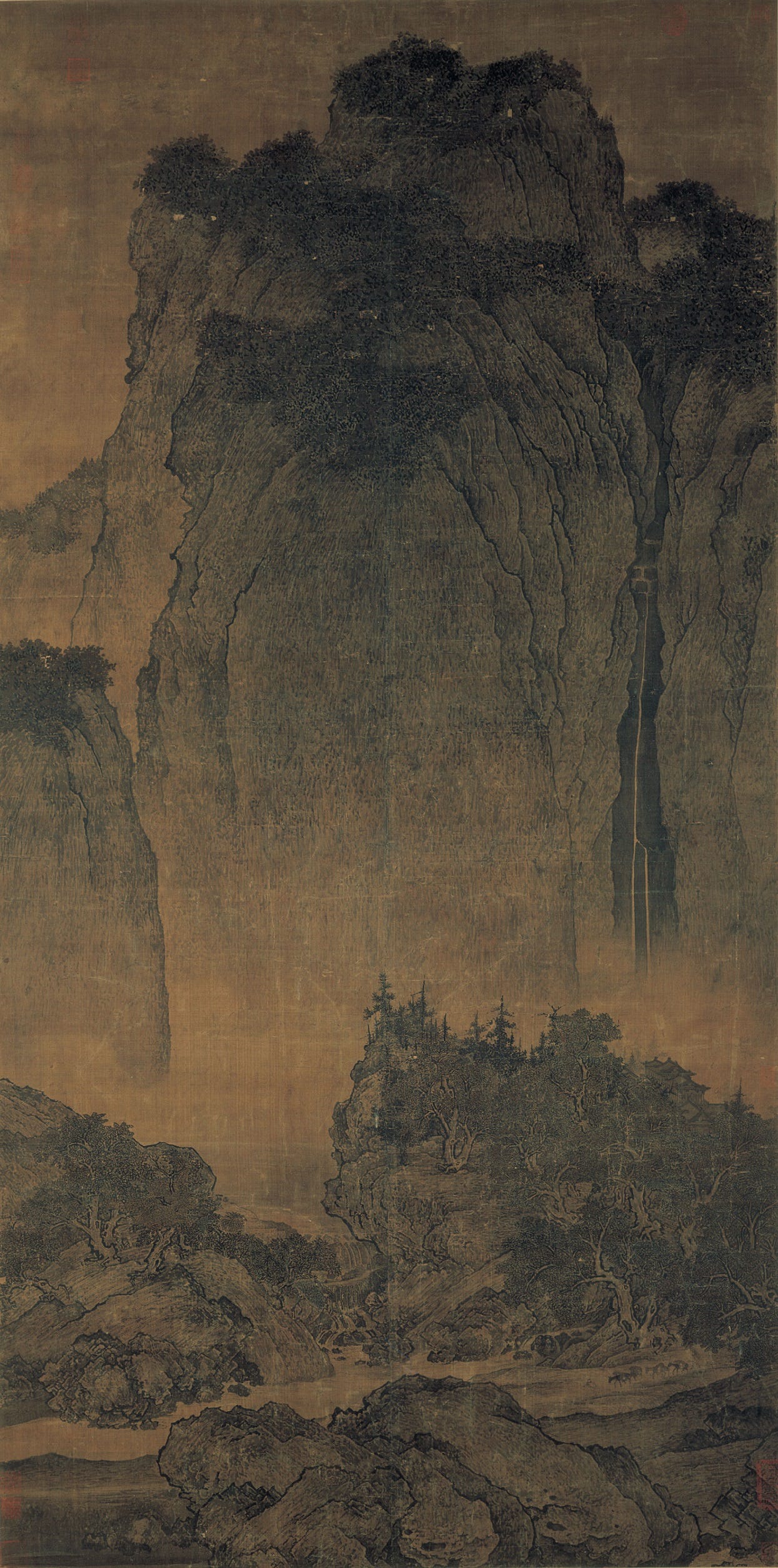
Song dynasty masters were painting vast mountains and rivers around the year 1000, in a tradition called shan shui, meaning mountain water.
While European landscape was still a backdrop for saints, Chinese artists treated a single misty peak as a subject worthy of a lifetime.
How a landscape pulls you in
Painters fake distance with a few tricks. Far hills turn pale blue and lose their edges, an effect called atmospheric perspective.
The eye travels from a sharp foreground, across a middle ground, to a hazy horizon. Get those three depths right and a flat panel opens into miles of air.
Four landscapes that changed everything
Joachim Patinir, early 1500s: tiny saints lost in vast country, the first true landscapes.
Jacob van Ruisdael, 1600s: a low horizon and a towering sky over the Dutch flatlands.
Caspar David Friedrich, around 1818: a lone figure facing the infinite. Alongside Hokusai's Great Wave and Van Gogh's Starry Night, that foggy wanderer takes its place in twelve landscape views worth the full tour.
Claude Monet, 1890s: the same haystack painted at every hour of the day.
When those painters carried their tubes into the open air, they lit the fuse of Impressionism, the whole story behind who painted the first Impressionist picture.
How landscape became art, and other questions
What is a landscape painting? A painting whose main subject is natural scenery: land, sky, water, mountains and trees.
Who painted the first landscape? In Europe, Joachim Patinir around 1515. China got there centuries earlier with shan shui.
When did landscape become its own genre? In Europe around the early 1500s with Patinir, then fully with the Dutch in the 1600s.
Why was landscape ranked so low? Academies thought it copied nature without the invention they prized in history painting.
Who is the most famous landscape painter? Names like Turner, Constable, Friedrich and Monet, each in a different key.
Is landscape painting only Western? No. Chinese shan shui landscape predates the European tradition by centuries.
More secrets to unlock


The background that took over
For ages, scenery was only the setting behind saints and kings. Then the Dutch made it a subject in its own right, and the Impressionists made it the main event.
Today it is the most painted subject on earth, from Bob Ross's happy little trees to the photo on your phone.
In 2019 one of Monet's Meules, a haystack at dawn, sold at Sotheby's for 110.7 million dollars. I love that the part of the picture nobody used to value became the part the whole world travels to see.
