

170 000+ readers. Learn art the fun way.
This is a preview. Paid subscribers get the full story.
You’ll also get:
10 new stories every month
The full archive (130+ Art stories)
Your personal art guide. Comment, ask questions, DM me anytime
iPhone user? Subscribe at coolstoriesabout.art, not via the app. Apple adds 30% to the price.
In the former studios of the photographer Nadar, an exhibition has just opened. Thirty-one painters are showing their work together. Some of their names still mean almost nothing to the Paris public.
Monet, 33. Renoir, 33. Pissarro, 43. Degas, 39. Sisley, 34. Morisot, 33. Cézanne, 35.
They are young. They are poor. Almost all have been rejected or ignored by the official Salon, the only exhibition that opens the door to galleries, buyers, and a real career. Tired of waiting, they have decided to organize their own event. They call themselves the Anonymous Society of Painters, Sculptors and Engravers.
Ten days after the opening, a critic named Louis Leroy publishes his review in Le Charivari, the satirical newspaper of the day. He came as a visitor. He leaves as a mocker.
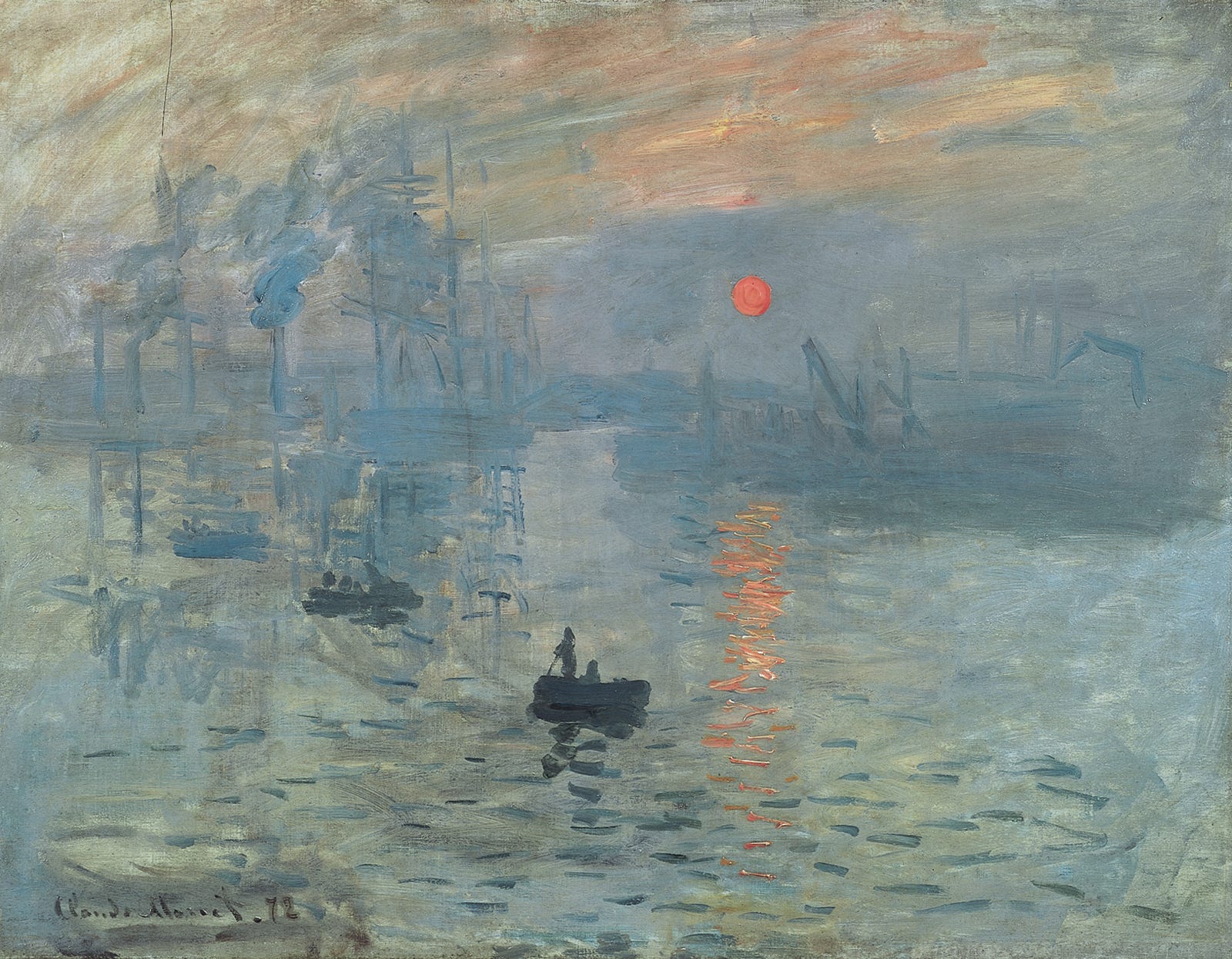
Standing in front of a painting by Monet titled Impression, Sunrise, an orange sun drowning in a harbor fog, he writes these lines:
“Impression. I knew it. I told myself, since I am impressed, there must be some impression in it. And what freedom, what softness of execution. Wallpaper in its embryonic state is more finished than this seascape.”
The word is launched as an insult.
It has just named a movement.
Impressionism.
Case closed?
Not so fast.
Before searching for the first Impressionist, we need to know what we are looking for. And that is where the trails multiply. Impressionist painting is not one single thing. It is an assembly.
To find the first Impressionist, we have to trace each thread. One trail at a time.
Let us start with the most visible one.
First trail: painting your own time
Paris, May 15, 1863. Palais de l’Industrie. Emperor Napoleon III has ordered a separate exhibition to be opened alongside the official Salon, to display the works rejected by the jury. He wants to calm the anger of the refused artists. The public nicknames this annex the Salon des Refusés.
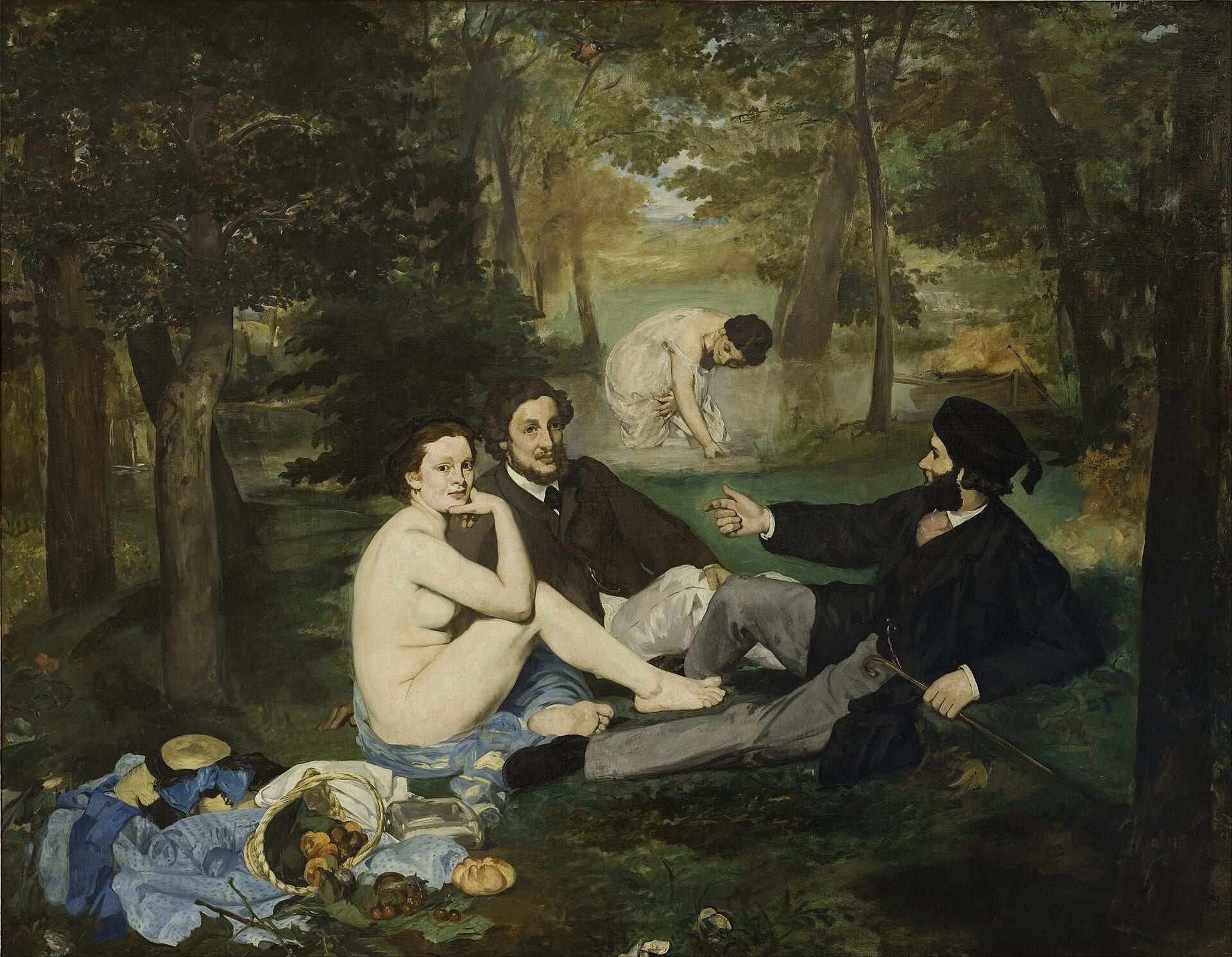
One painting draws the crowds. Luncheon on the Grass. A naked woman, two men in modern dress, a picnic in the woods.
No mythological title. No Venus. No Diana. Just a scene that could happen next Sunday in the Bois de Boulogne.
The painter is Édouard Manet. He is 31. The public cries scandal.
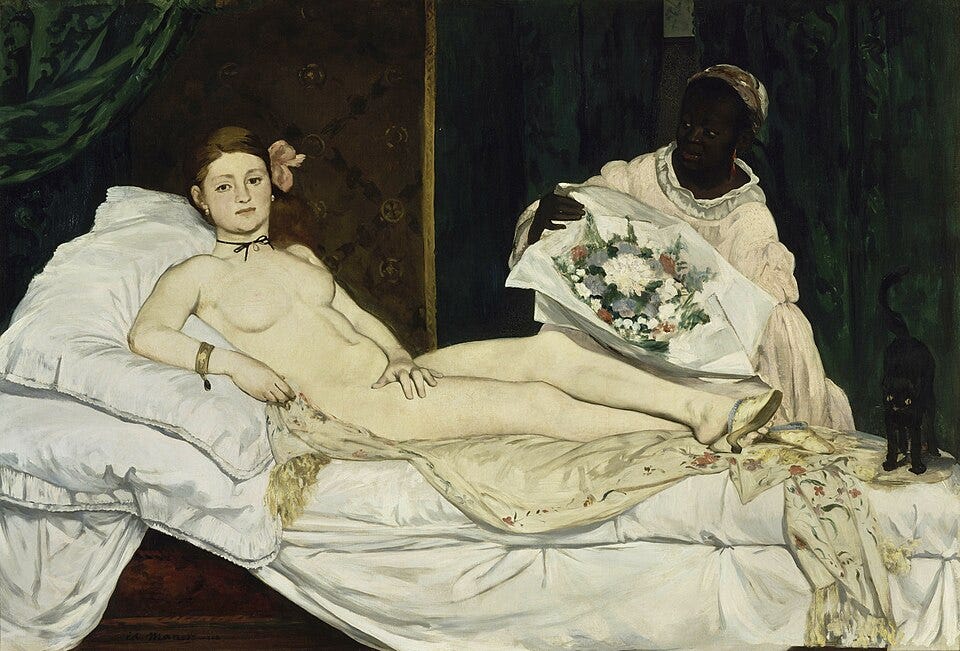
Two years later, Manet does it again with Olympia. Another naked woman. Not a goddess. A Parisian prostitute who stares the viewer straight in the eyes.
Manet has just set a new rule. A painter can paint his own time. No ancient costume. No biblical mask. Just what is happening right now, outside, in the street.
Without that permission, no Gare Saint-Lazare. No Bal du moulin de la Galette. No Boulevard des Capucines. All of Impressionist painting takes its subjects from the Paris of 1870. Manet opened that door.
First trail laid down. But the subject is only the start. We still need to know how to paint it.
Discover my new newsletter !

Keep learning art the fun way


Second trail: painting outdoors
Before the middle of the 19th century, painting was always done in the studio. Even landscapes were assembled from sketches brought back from the field, then composed indoors.
The reason was material. Oil paint had to be ground by hand, mixed, and stored in pig bladders that dried out within hours.
That changes in 1841. An American painter living in London, John Goffe Rand, files a patent. A tin tube, sealed at one end, screw-capped at the other. Paint stays fresh inside for weeks. The same design will be used for industrial toothpaste fifty years later.
Renoir would later sum it up: “Without the tin tubes of paint, there would have been no Cézanne, no Monet, no Sisley, no Pissarro.”
The invention that freed painting was as ordinary as a toothpaste tube.
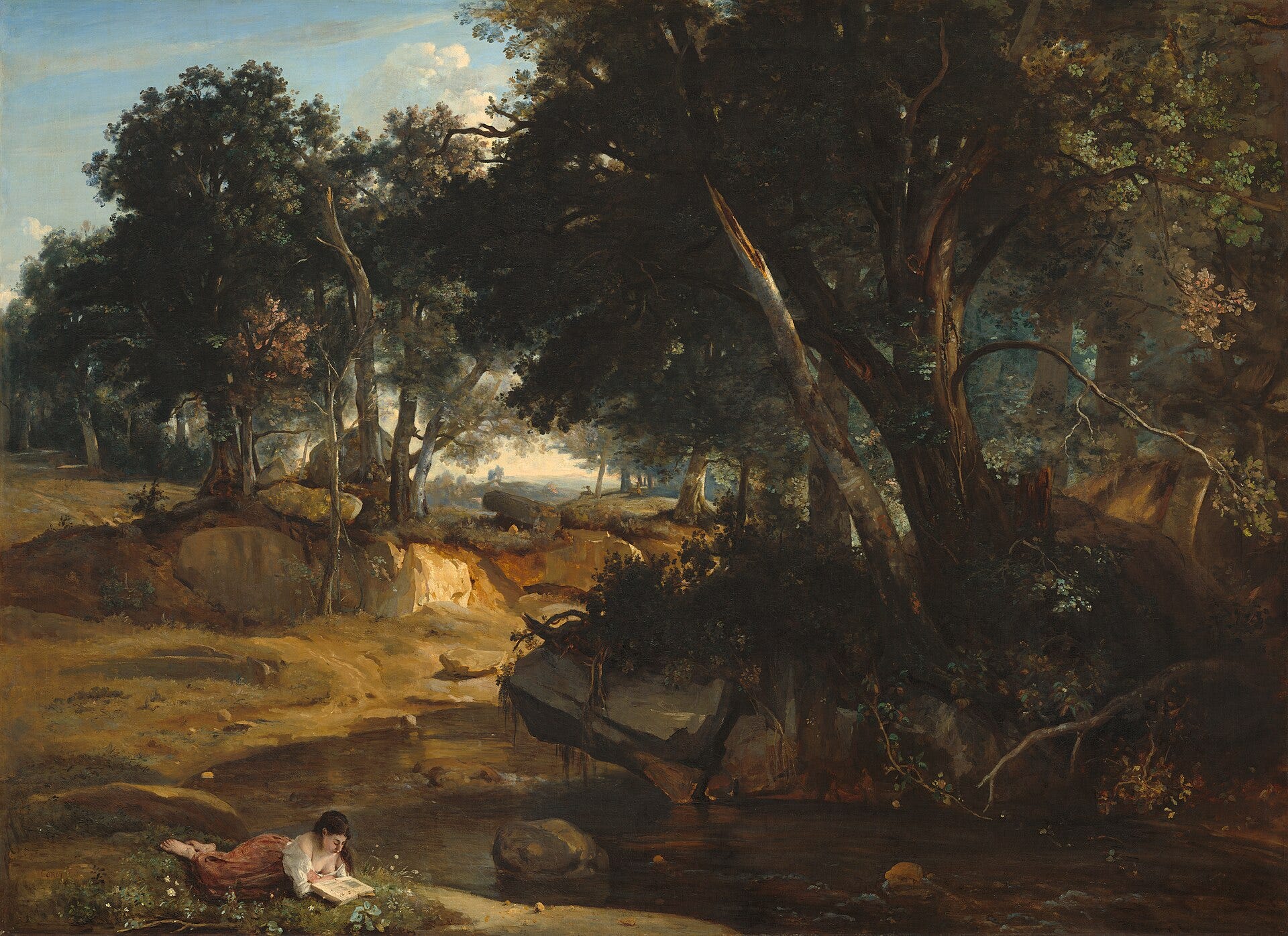
Once the equipment is available, a small group of French painters takes the leap. They settle on the edge of the Fontainebleau forest, south of Paris. The village is called Barbizon. Among them: Rousseau, Millet, Corot, Daubigny.
They paint the trees, the peasants, the skies of the French countryside. On site. Not in the studio. For the first time, a whole group turns leaving the studio into a program.
Daubigny pushes it even further. In 1857, he has a barge built. He calls it Le Botin. He turns it into a floating studio and drifts down the Oise and the Seine. He paints from the water.
Case settled?
Not quite. A careful reader might object. What about the Dutch? In the 17th century, Ruisdael, Hobbema, Van Goyen had already invented landscape as an independent genre. Wasn’t that already plein air?
Not really. The Dutch took sketches outdoors, then composed their finished oil paintings back in the studio, often blending elements from several locations. They invented landscape as a noble subject. Not the finished painting made in front of nature.
One isolated exception cuts across the centuries. Rome, 1630. The Spaniard Diego Velázquez, 31 years old, is on a diplomatic mission to the papal court. He sets up his easel in the gardens of the Villa Medici.
He paints two small landscapes in oil, outdoors, with no preparatory sketches. Historians treat it as a unique case in 17th-century European painting. Velázquez never repeats the experiment.
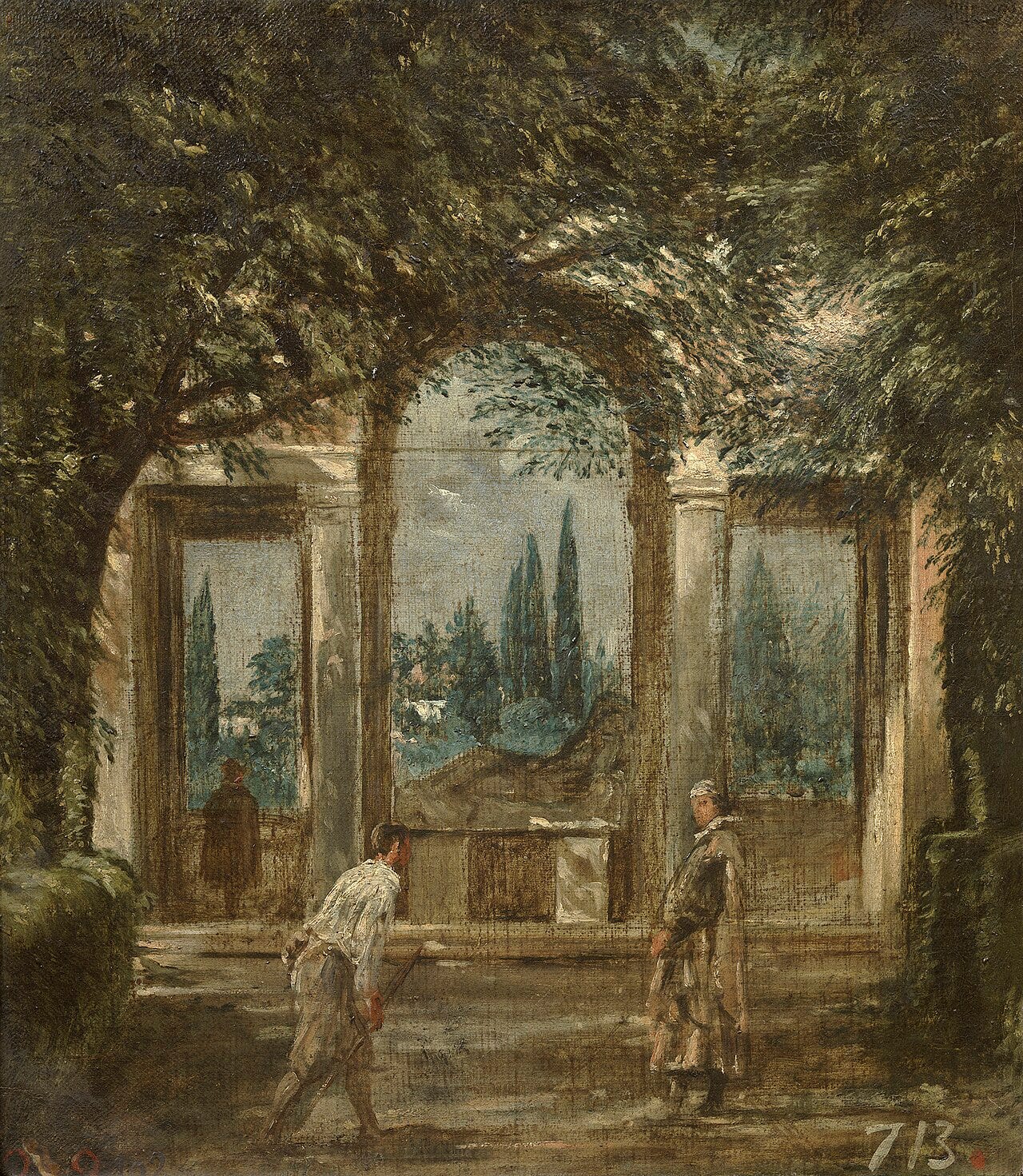
It will take two centuries, the invention of the paint tube, and the Barbizon rebellion for that isolated intuition to become a movement.
Second trail laid down. But painting outdoors is not enough. We still need to know how to paint the light.
Third trail: light eating form
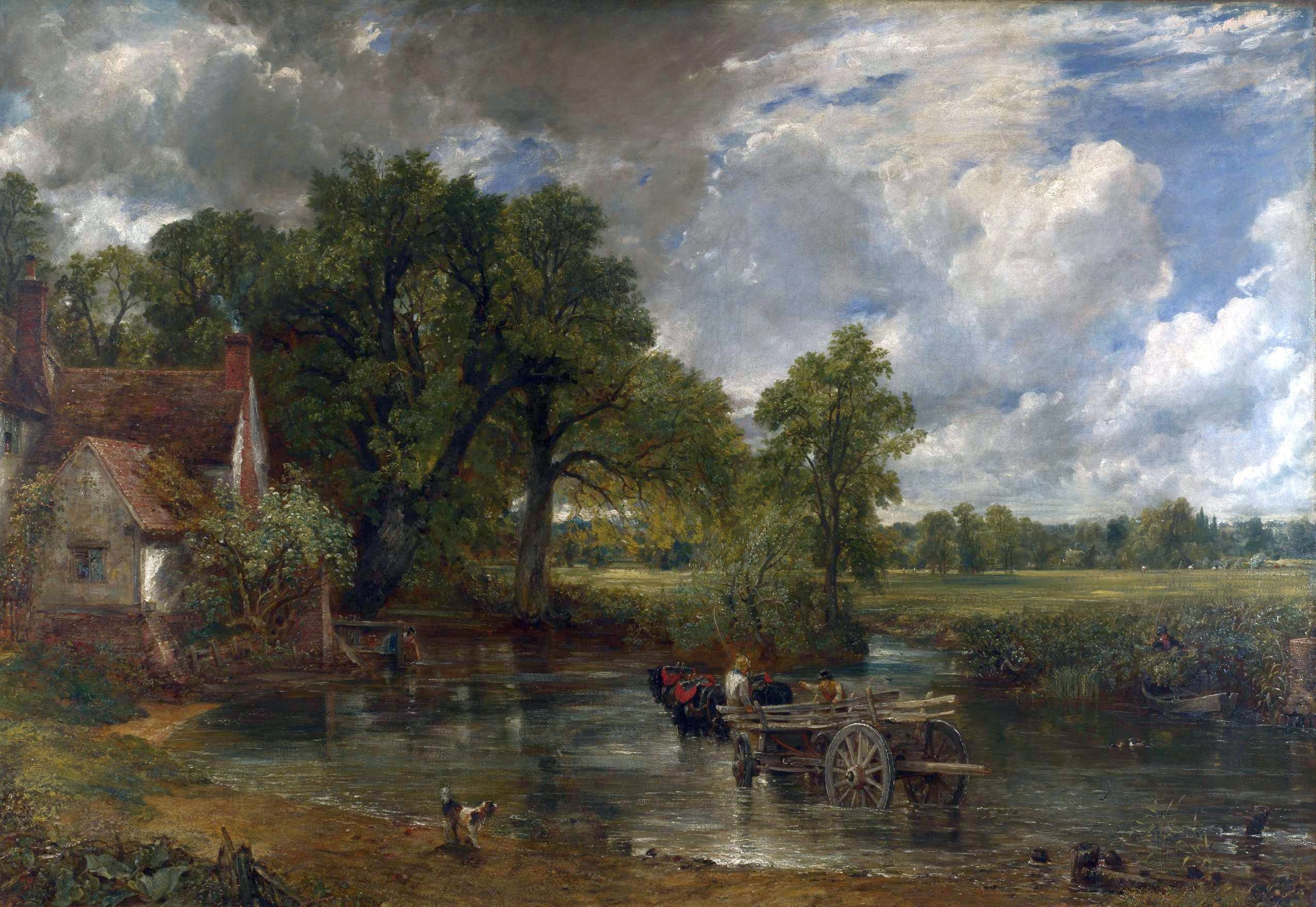
Paris, August 1824. Official Salon. An English painting is on display. The Hay Wain by John Constable, a painter from Suffolk.
The sky takes up half the canvas. Loose white touches sparkle. The rain seems suspended in the air. Constable is not describing a cart in a landscape anymore. He is describing the wet light of a summer morning, with a cart sitting inside it by chance.
Form is no longer the subject. Atmosphere is the subject.
Charles X, then King of France, personally awards Constable the gold medal. A royal seal on the crack that has just opened.
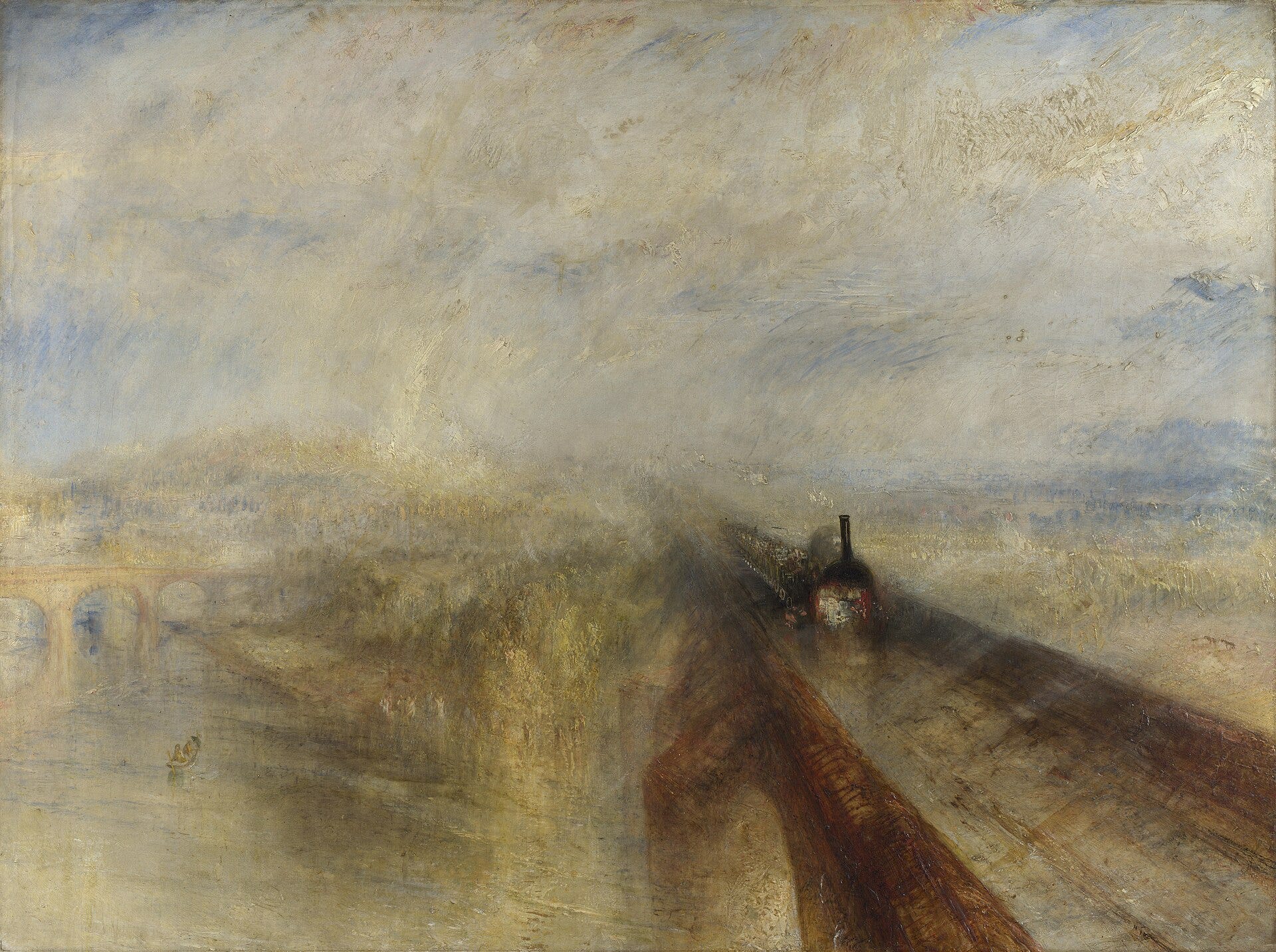
Twenty years later, in London, another Englishman pushes the idea to its limit. Joseph Mallord William Turner. In 1844, he paints Rain, Steam and Speed. A train surges out of a swirl of golden mist. You can barely make out the engine. Light has eaten everything. All that remains is colored vibration.
For the first time, a painter treats movement, speed, and weather as pure phenomena of light, with no sharp edges.
That is exactly what Monet will do fifty years later on the Rouen Cathedrals, painted at every hour of the day.
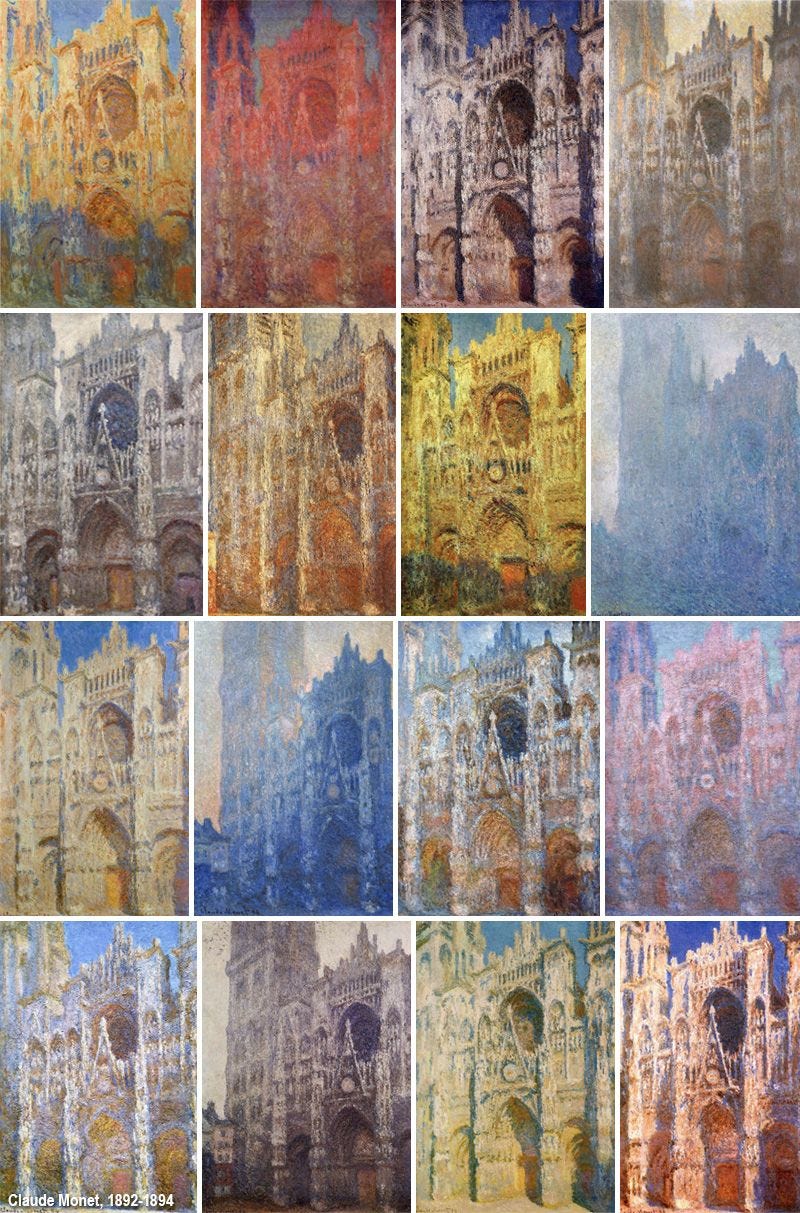
The idea that painting can give up on sharp form to capture only light was born in England. Constable opened it. Turner pushed it to its limit.
Third trail laid down. We still need to know what colors that light is painted with.
Fourth trail: color
In the early 19th century, painting a shadow meant putting down black. Ivory black, lamp black, bitumen. That is how it was taught in every European academy for three centuries.
A French painter is going to blow that dogma apart. His name is Eugène Delacroix.
In 1832, Delacroix joins a diplomatic mission to Morocco. He spends six months there. And he sees something that changes him completely. Under the intense sun, shadows are not black. They are colored. A shadow on a white wall pulls toward blue. A shadow on a red cloth pulls toward green.
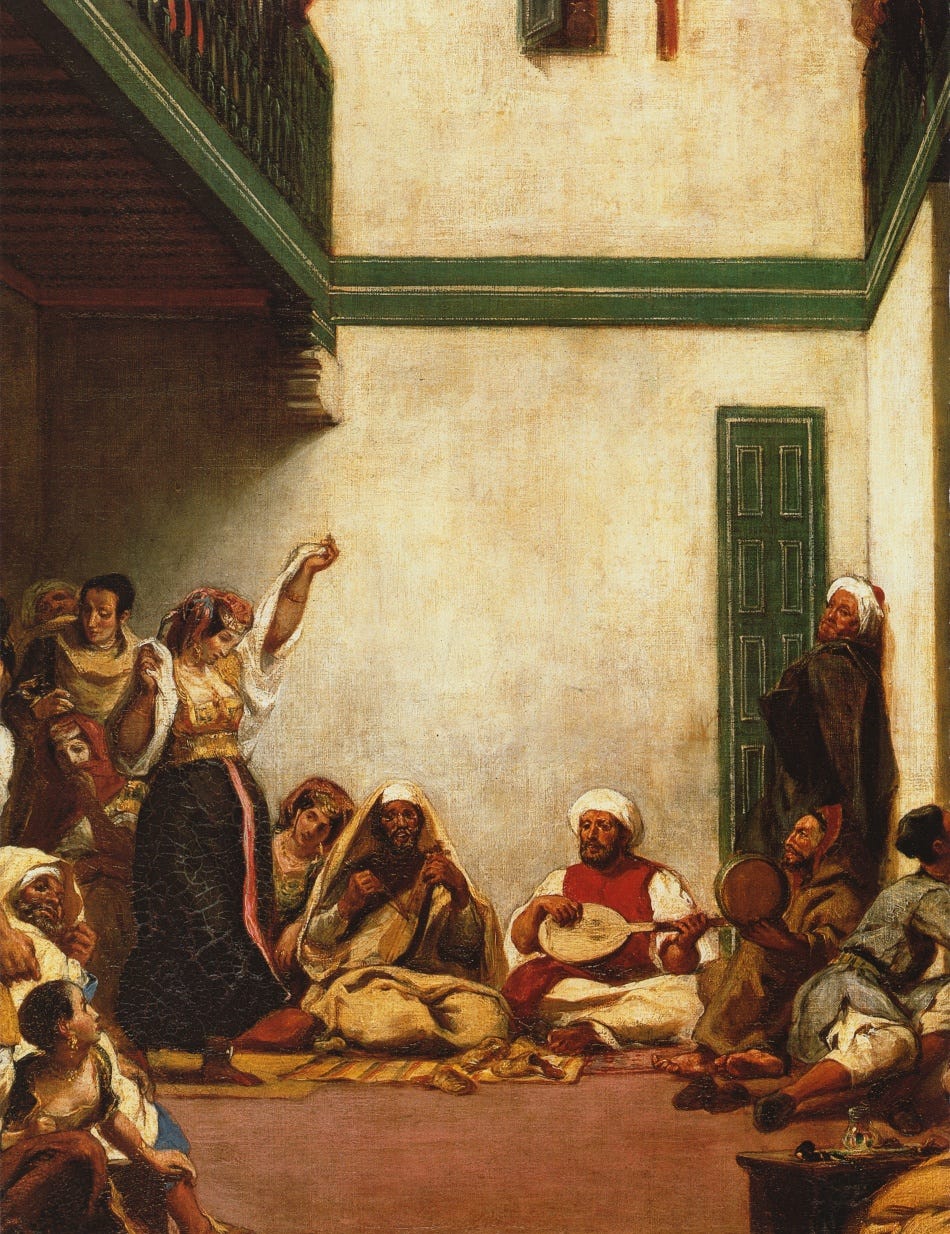
Back in Paris, Delacroix changes his palette. He banishes earthy blacks. He paints shadows with real colors, in tune with the light that throws them. An orange sky calls for blue shadows. A yellow wall calls for purple shadows.
Without Delacroix, the world would have kept painting shadows in black. He is the one who opens the bright palette that the Impressionists will use fifty years later on poppies, gardens, and the banks of the Seine.
One piece is still missing. The most visible piece on any Impressionist canvas. The simplest one too. And it reaches much further back in time.