170 000+ readers. Learn art the fun way.
This is a preview. Paid subscribers get the full story.
You’ll also get:
10 new stories every month
The full archive (130+ Art stories)
Your personal art guide. Comment, ask questions, DM me anytime
iPhone user? Subscribe at coolstoriesabout.art, not via the app. Apple adds 30% to the price.
Étretat, late December 1868.
Before dawn, a 28 year old man steps out of a small cottage at the edge of the village, on the road to Le Havre.
Three overcoats layered on top of each other, thick gloves, a copper foot warmer under his arm.
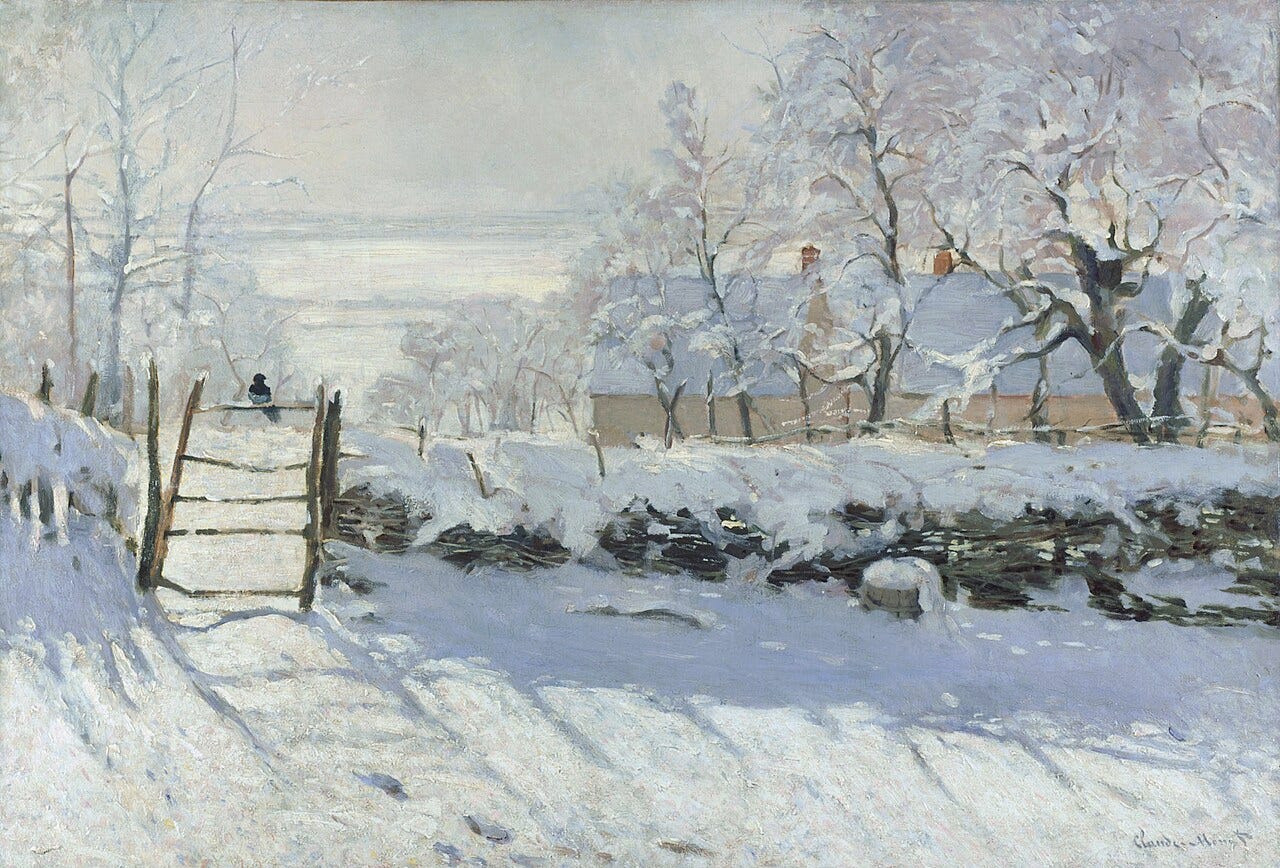
He walks down a country path and sets up his easel in front of a fence of hand woven hazel branches, covered with fresh snow that fell during the night.
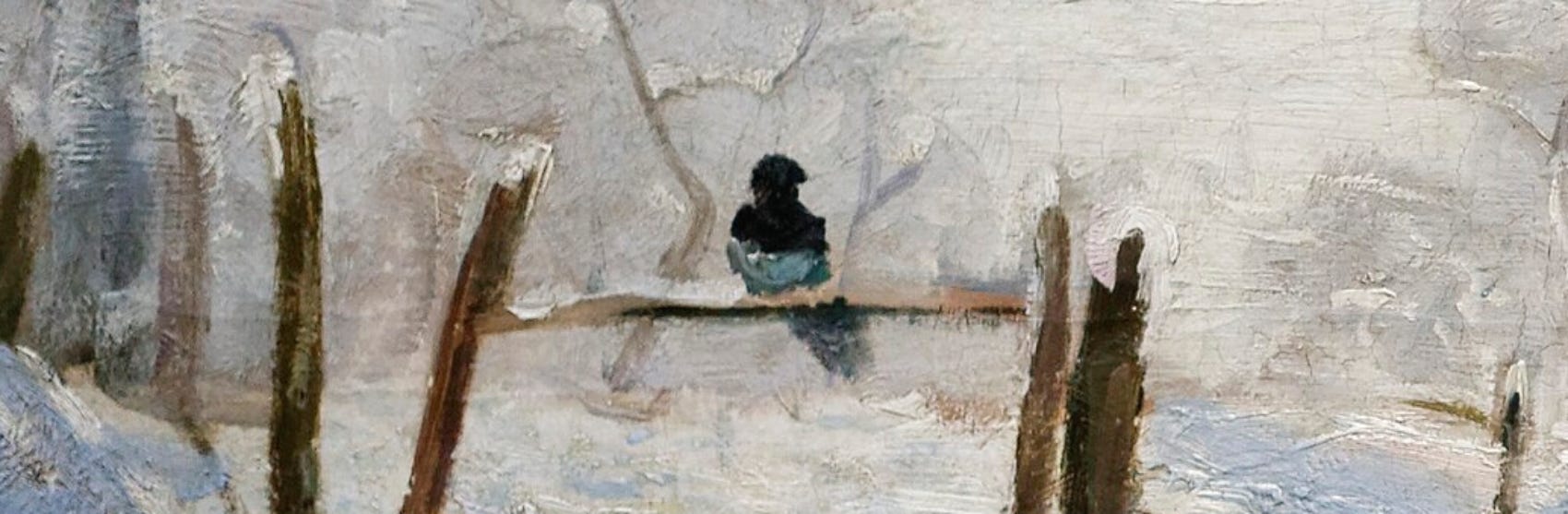
On the central gate, perched as if by chance, a black magpie.
The foot warmer drops at his feet. The gloves come off. The brush goes to the canvas.
His name is Claude Monet.
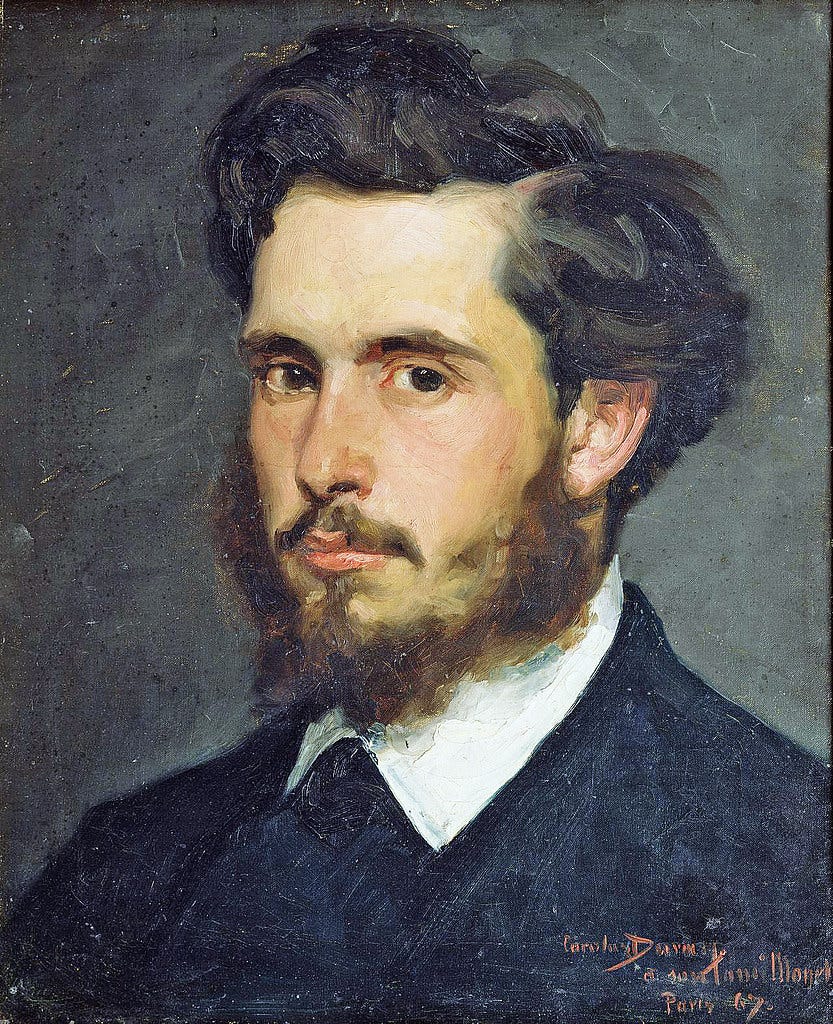
No Paris dealer has bought from him yet, and his father, back in Le Havre, hasn't spoken to him in eighteen months.
Adolphe Monet, a prosperous merchant from Le Havre, has cut off his son's allowance.
The reason fits in one sentence. Claude refuses to leave a young woman who poses for the painters of Montmartre.
Three francs per sitting, eighteen the day they met, daughter of a Lyon commerce clerk, no dowry, no respectable family.
Her name is Camille Doncieux.
Discover my new newsletter !

Keep learning art the fun way


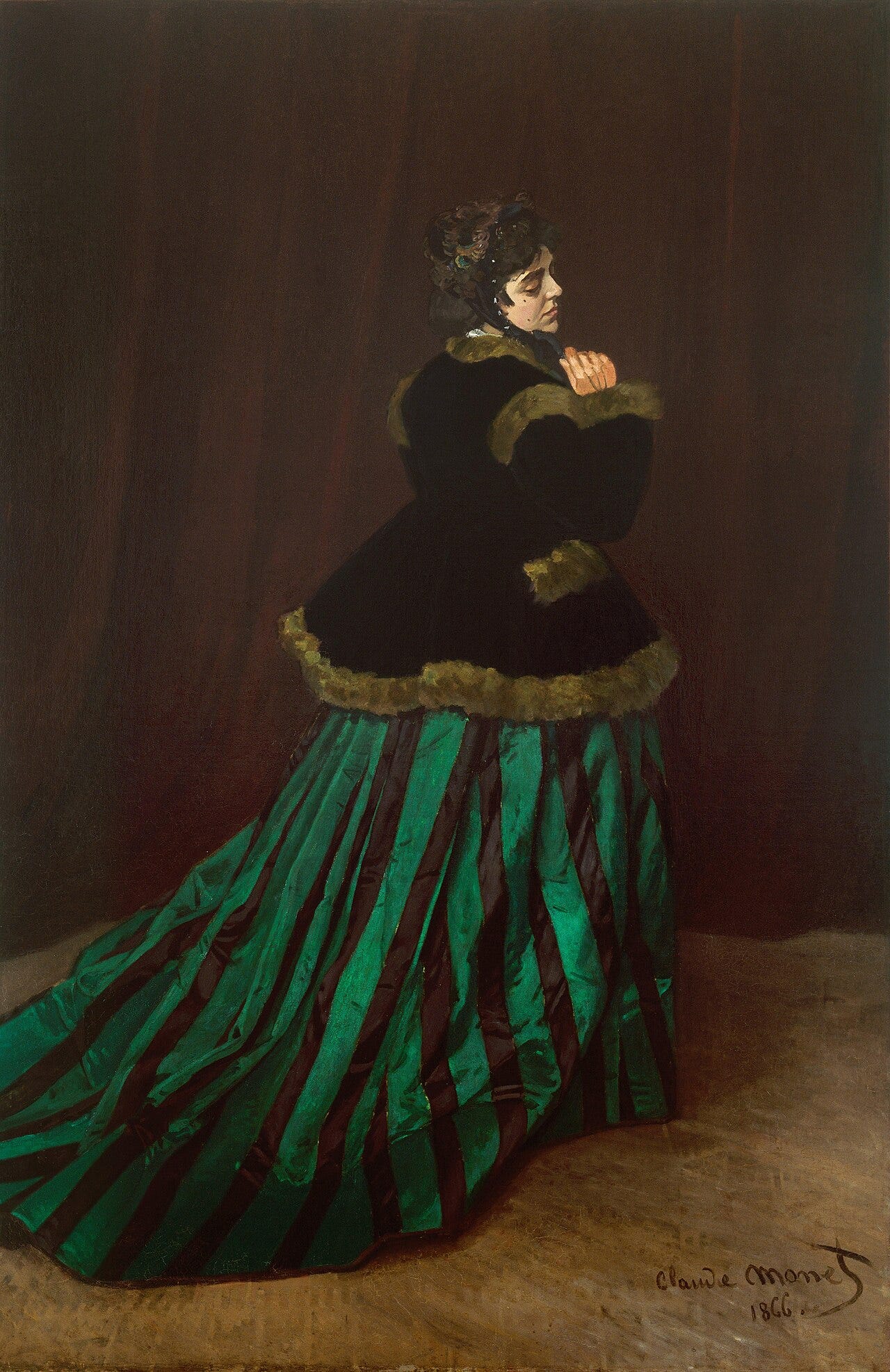
A few months before the allowance was cut off, in an unheated apartment on impasse Saint Louis near Place Pigalle, she gives birth to a boy whom Monet names Jean.
On the official birth registry, Monet is named as the father. To his own father, he says nothing.
The father, meanwhile, is in Sainte Adresse, at his aunt's, pretending he has broken things off so as not to lose the paternal allowance.
When the father realizes nothing has been broken off at all, the money stops.
Since then, Monet has been getting by thanks to his friend Frédéric Bazille, a young painter, son of wealthy vintners from the Languedoc, who sends him fifty francs a month.
The following spring, no more money for the Paris rent.
Camille, Jean and Monet drift down the Seine, vagabonds, broke, all the way to a village inn where room and board cost three francs a day. The price of a hot meal in a cheap Paris eatery.
Bennecourt, sixty kilometers downstream from Paris.
Three weeks at the inn. Not a penny paid. One morning in late June, the innkeeper throws them out.
Monet finds shelter for Camille and the child with peasants in the village, in a barn a quarter hour's walk from the inn.
The last coins from his pocket, set down on a wooden table. A kiss to Camille. One last sentence: he says he'll be back.
At dawn, he walks down to the bank of the Seine. For a long time, he watches the water flow beneath him.
And then he steps in, fully clothed.
The cold water rises to his legs, his waist, his shoulders. The current tips him over. A first gulp, then a second. He sinks without struggling.
The sky disappears behind the water closing over him.
And then Camille and Jean come back to him.
His body reacts before he does. A big, sharp intake of breath. Another. His eyes open again.
The snow. The magpie, on the gate, hasn't moved.
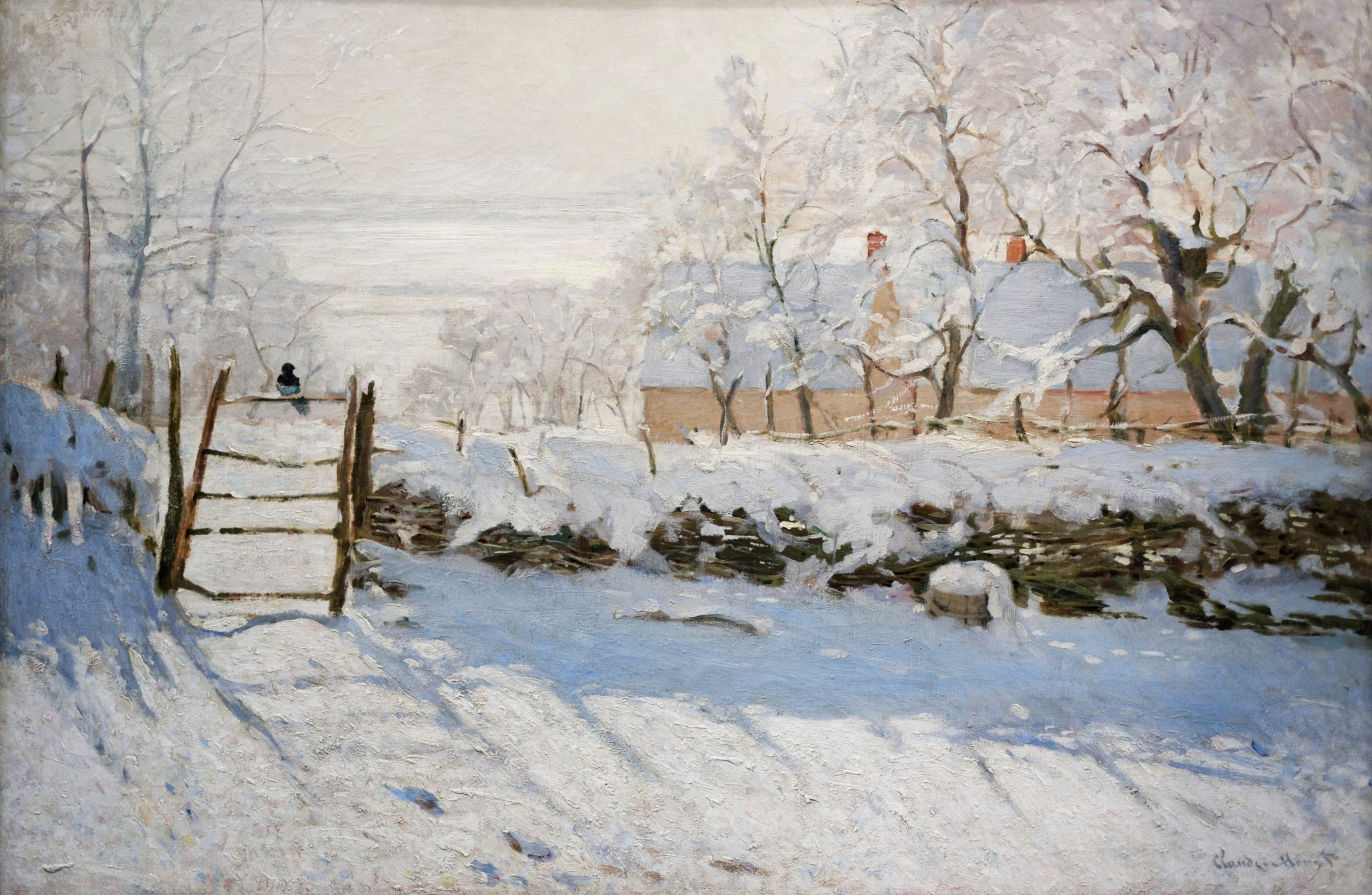
Since the summer, this scene comes back without warning.
Bazille alone knows something about it. A letter in which Monet, out of shame, had referred to his act of despair with a child's word: a slip up. As if it were just a clumsy mistake.
Monet gathers himself.
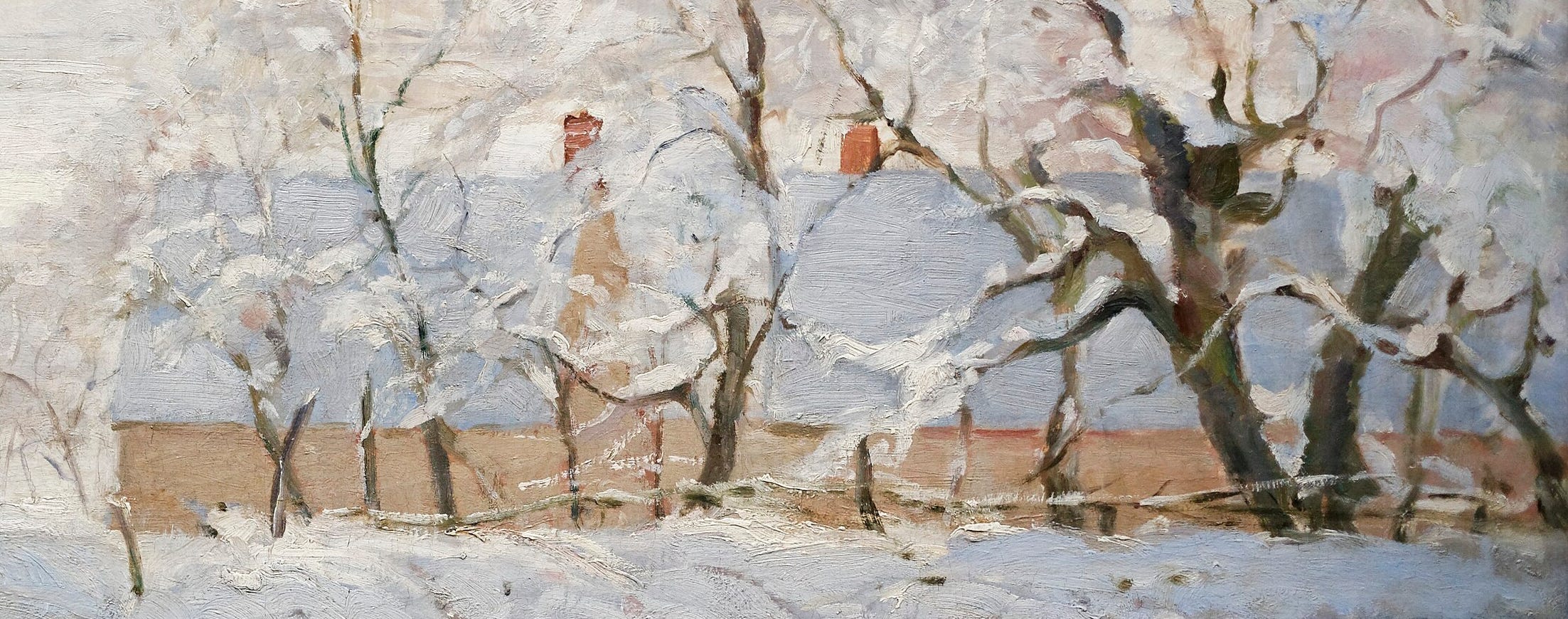
Pink gray on the palette. Out across the snow, the long, low Norman farmhouse stands in the distance.
The house where Camille and Jean are still sleeping this morning. The brush lays the first touches on the roof.
This house, he owes to a man.
Louis Joachim Gaudibert. A Le Havre merchant, thirty years old, already a collector.
In the spring of 1868, at the Maritime Exhibition in Le Havre, the merchant stops in front of seascapes shown by a still unknown painter.
A few months later, in the commercial circles of the port, word reaches him that those paintings are about to be seized by the creditors of one Claude Monet.
He buys everything from the bailiff. Three portraits are commissioned from the painter, including a large full length portrait of his young wife Marguerite.
And at the edge of a Norman village he knows well, the merchant rents, in his own name, a small cottage.
Étretat.
What saves Monet in the autumn of 1868 is not so much the roof Gaudibert offers him.
It's the gesture. A man who believes in his work at a moment when no one else dares to defend it.
Monet goes back to his canvas. The gaze lifts to the sky.
The sky isn't white. It's cream, streaked with pale pinks and yellows diffused by the mist.
The roof takes on, in the angled light, gray pinks and yellow touches. The snow in the foreground, which you'd take for white, is in fact a patchwork of small touches.
Creams, ivories, pale ochres, mauves, violets, blue grays.
No area of the painting is really white. No area is really gray.
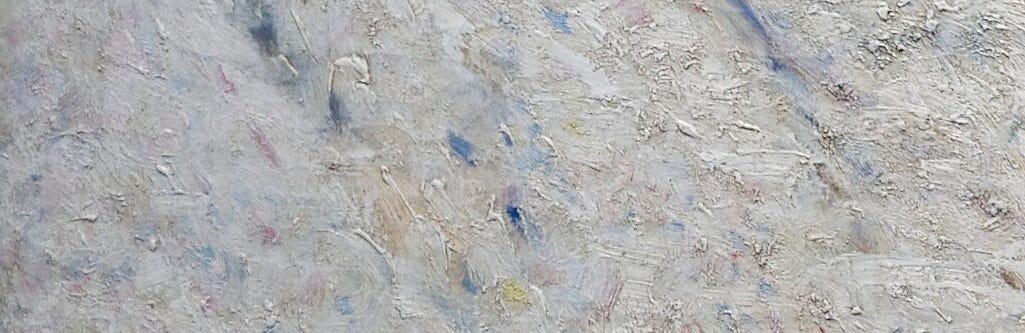
Monet works the snow with small touches placed side by side, in colors so close that from a yard away you'd think it's white, and from four inches in, you'd see all the colors hidden beneath the apparent white.
In the lower left corner, a few footprints in the snow.
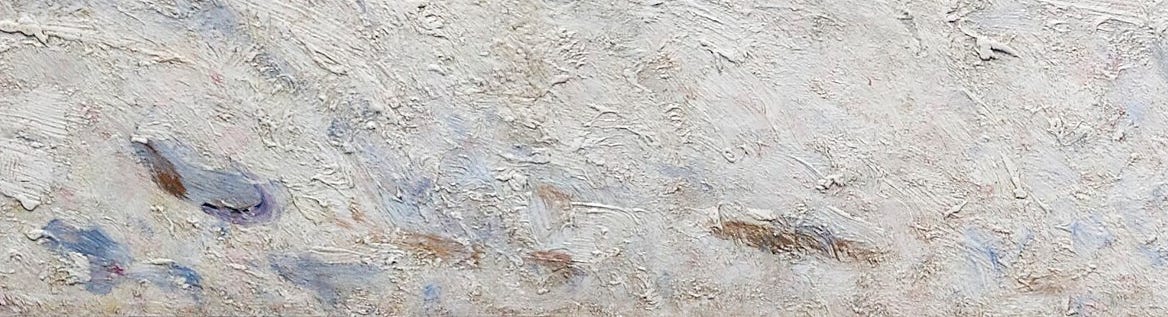
The only sign of a human presence. Someone walked there, or he himself walked there setting up his easel, and left the traces.
A fresh brush, dipped in pure black.
The real ivory black that Monet hasn't used all morning. The brush takes aim at the central gate, where the bird is perched.
The magpie is tiny. A black dot, isolated on a long line, like a single musical note.
The only element of the painting in true black and white.
Beneath the magpie, in the snow, he lays one last detail. Something that changes everything you thought you knew about this painting…