
A still life is a painting of objects that do not move: fruit, flowers, dishes, books, dead game, a skull on a table. The artist picks the things, arranges them, and makes them the whole subject.
For three centuries the academies ranked it the lowest kind of art.
Caravaggio is said to have claimed it took as much skill to paint a good picture of flowers as one of figures.
In the Dutch Golden Age it became big business, with painters who spent whole careers on nothing but lemons, or oysters, or blooms. Twelve standout examples from that tradition are ranked in famous still life paintings.
Still life, the quick read
What it is: a painting whose subject is arranged, inanimate objects.
Peak era: the Dutch Golden Age, the 1600s.
The word: from the Dutch stilleven, coined around the 1650s.
The rank: academies placed it last, under history, portrait and landscape.
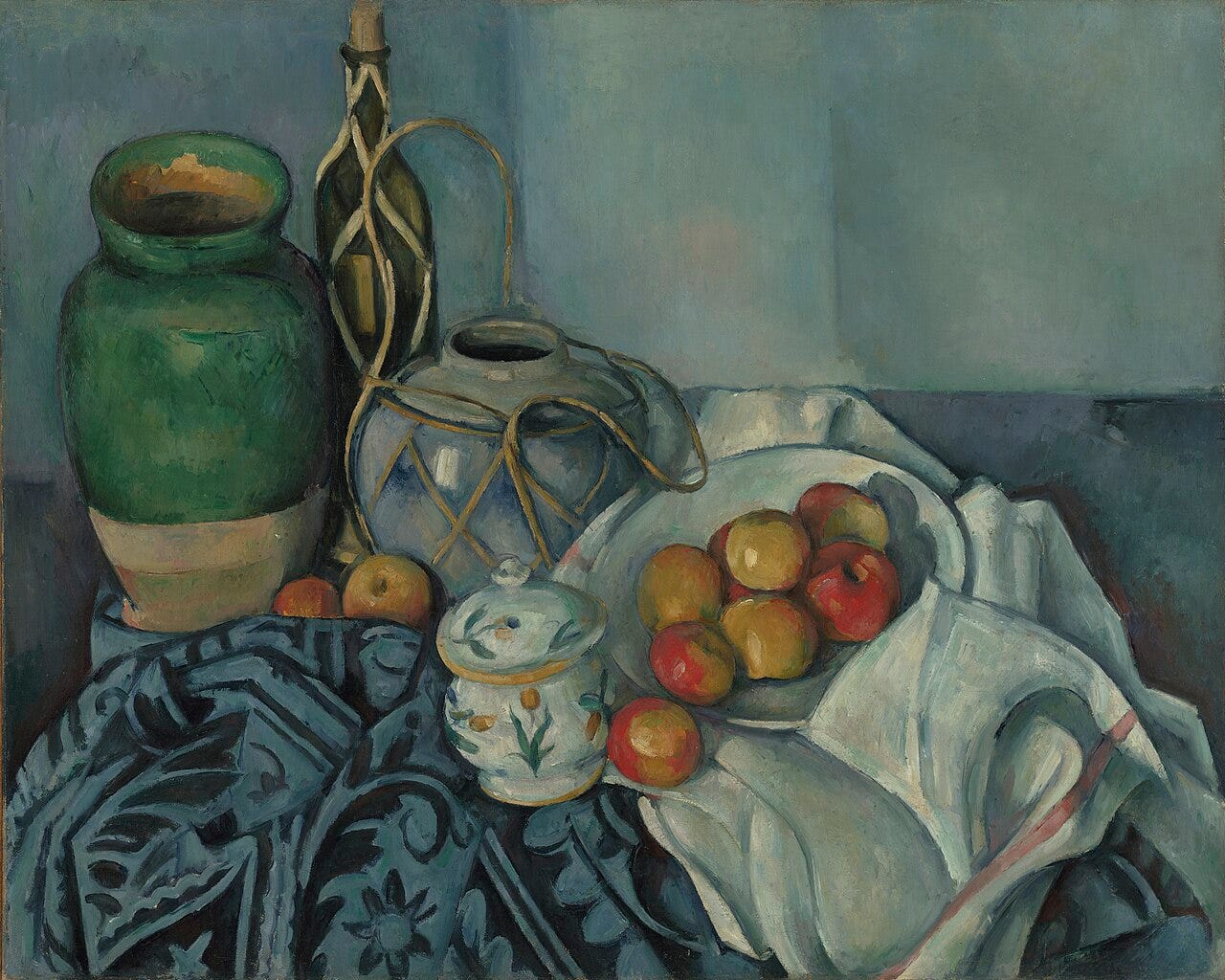
Why it matters: Cezanne rebuilt modern painting on a plate of apples.
Keep learning art the fun way


The objects are the whole story
In most paintings, objects are extras. A jug in the corner, a book on a saint’s desk.
In a still life, they take the lead. A lemon, half peeled, becomes the main event. The skill sits in the looking: the weight of pewter, the fog on a grape, the wet shine of an oyster.
To me, a real still life is a test of pure observation. There is no face to carry it, no drama to hide behind. Either the painter makes you believe in that glass of wine, or they do not.
Ranked last, and the painters knew it
Here is the part I find most telling.
In 1667 the scholar Andre Felibien set out the French Academy's hierarchy of genres. History painting sat at the top, then portraits, then scenes of daily life, then landscape. Still life came dead last.
The reasoning was snobbish. Anyone could copy a bowl of fruit, the thinking went, while only a great mind could stage a battle or a Bible scene. Still life asked for skill, not invention, so it earned the least respect and the smallest fees.
The painters answered by turning the despised genre into a showcase of everything paint could do.
A skull on the table: the vanitas
Some still lifes carry a warning.
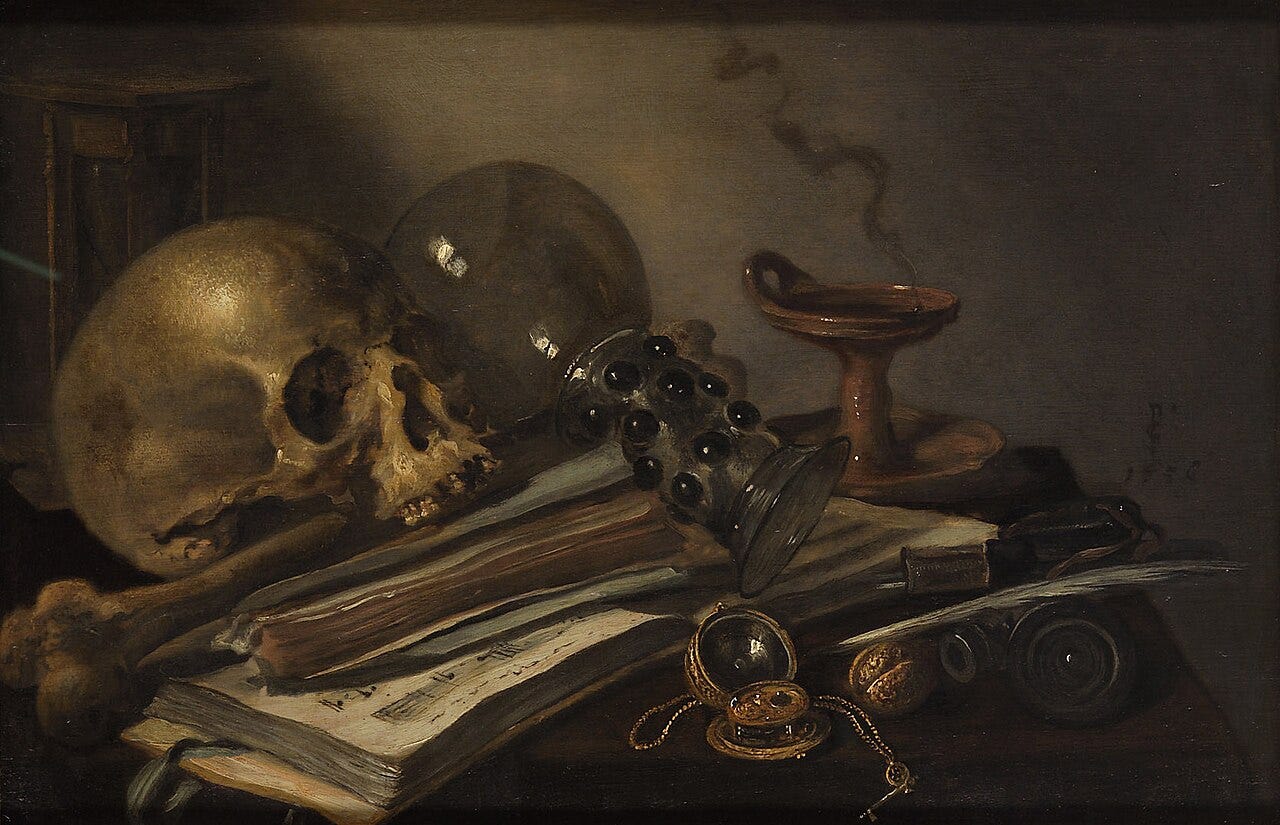
A vanitas is a still life built around death and time. A skull, a snuffed candle, a watch, a few wilting flowers, a soap bubble about to pop. The message is old and blunt: everything you own will rot, and so will you.
Dutch painters loved this in the 1600s, a society that was deeply religious and very rich at the same time. The vanitas let them paint luxury and moralize about it in one frame. You get to enjoy the silver and feel holy about its emptiness.
Caravaggio’s blemished fruit
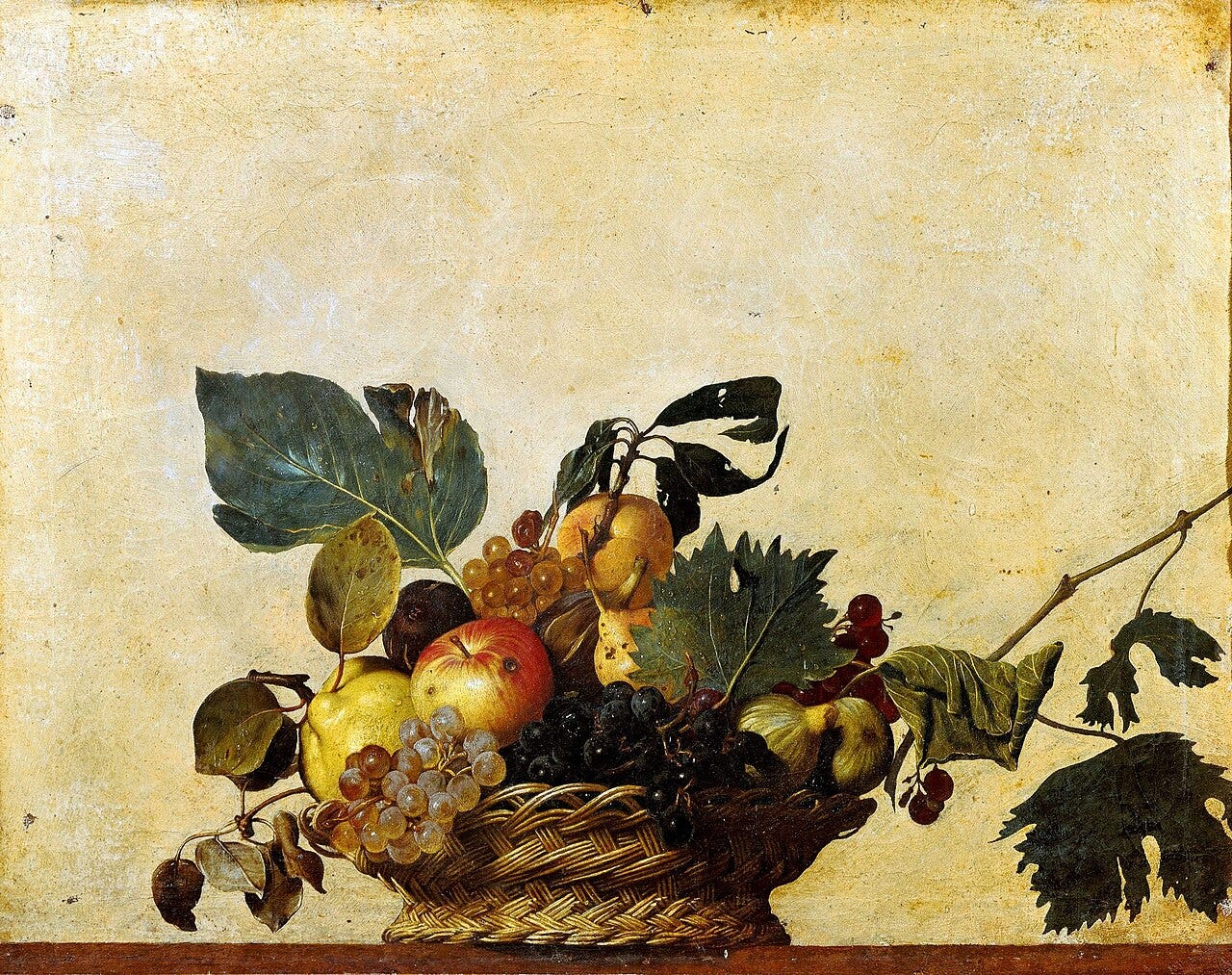
Around 1599, Caravaggio painted a plain wicker basket of fruit against a bare background.
Look closely and the fruit is not perfect. There are bruises, a wormhole in a leaf, edges going brown. He painted decay into a luxury object, on purpose.
It is often called the first independent still life in Italian art, a picture of nothing but fruit, treated as seriously as any altarpiece.
The man who changed European painting with Caravaggio and his shadows thought a basket of fruit deserved the full force of his eye.
The Dutch turned it into a flex
No one pushed still life further than the Dutch in the 1600s.
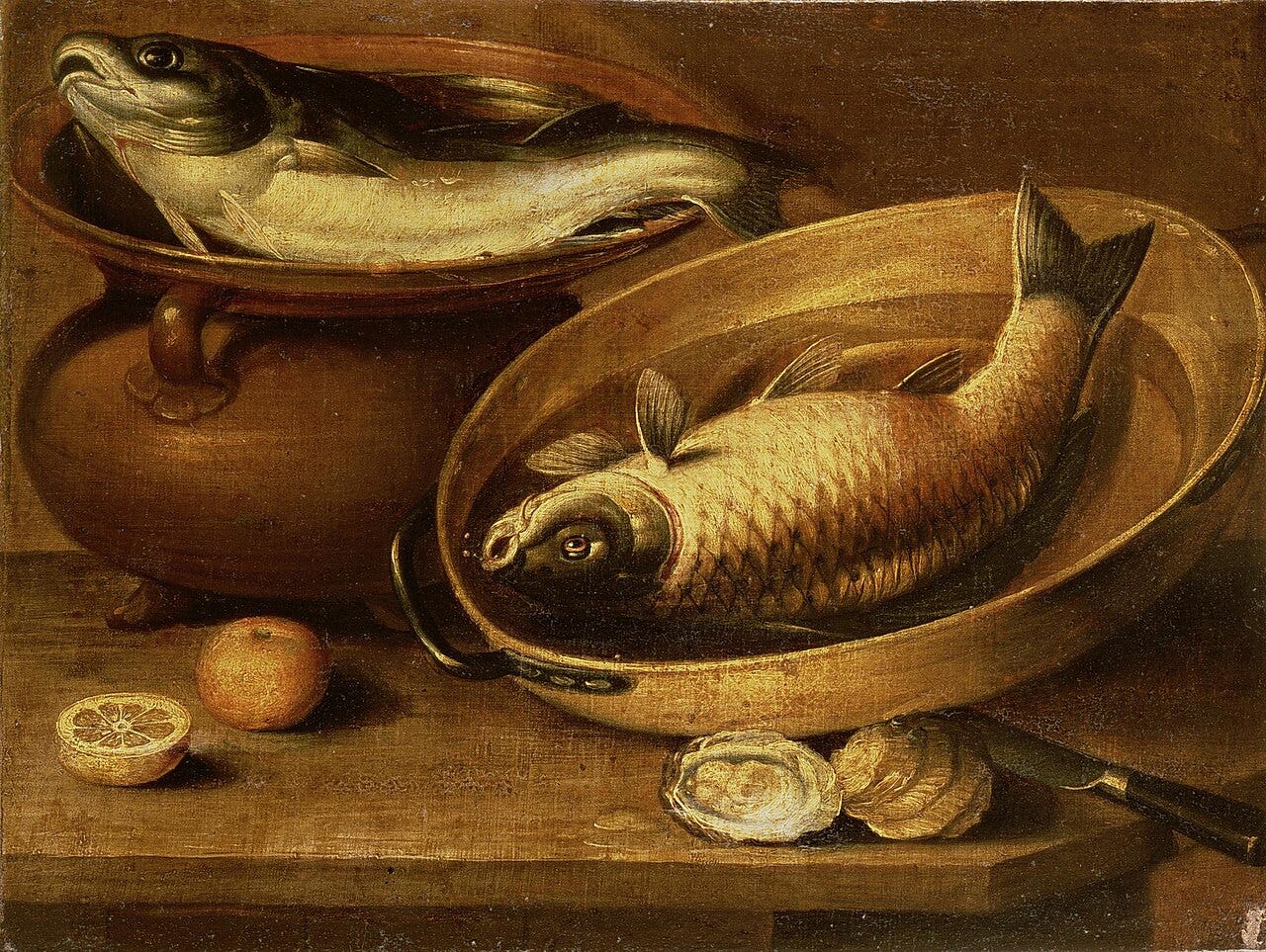
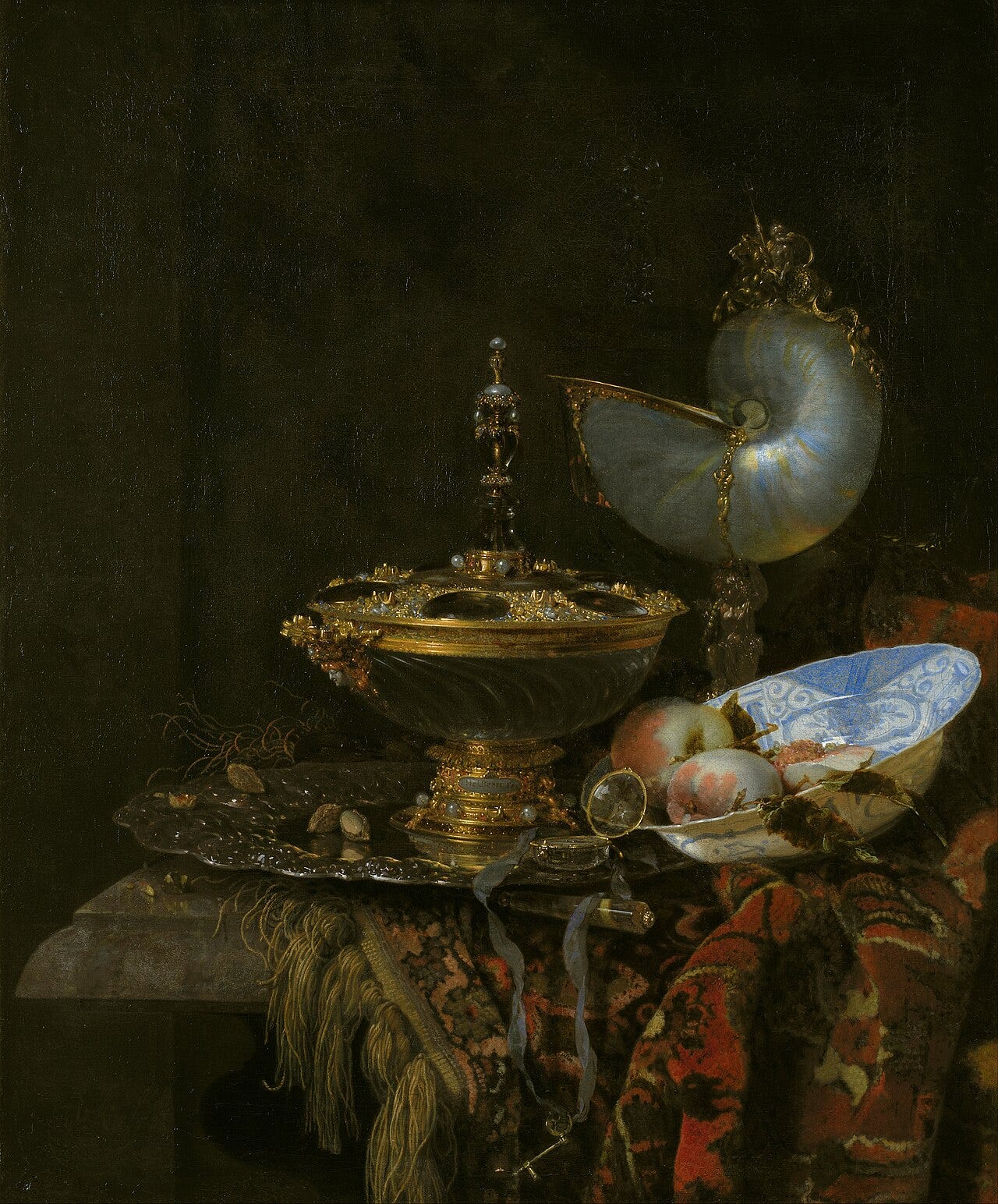
They split it into types. The ontbijtje, or breakfast piece, showed a half eaten meal. The pronkstilleven, or ostentatious still life, piled up gold cups, lobsters and peeled lemons to flaunt both wealth and technique.
They used dramatic light to do it, the same control of dark and bright you see in chiaroscuro, pushed even harder toward shadow in tenebrism.
One name worth knowing: Clara Peeters, one of the few documented women painters of the era. She signed her banquet pieces, and in some of them she hid a tiny reflection of herself in the polished metal.
The lowest genre was where she put her face and her name.
What the objects are really saying
A Dutch still life works like a code. A few of the regulars:
Lemon, half peeled: lovely outside, sour inside. Pleasure with a catch.
Skull or snuffed candle: death, time running out.
Tulip: status and folly, in the country that crashed its economy on tulip bulbs.
Oysters: luxury and sex, never innocent.
A single fly or a beetle: decay has already arrived, even in the feast.
Once you read the symbols, a quiet table of food turns into a sermon about greed, lust and death, the same buried messages decoded in 7 secrets hidden in famous paintings.
Cezanne’s apples and the road to modern art
Two hundred years later, still life did something no one expected. It cracked painting open.
Paul Cezanne spent the late 1800s painting apples again and again. He was chasing structure: the way round forms sit in space, the way a tilted plate refuses the old rules of perspective.
He reportedly said he would astonish Paris with an apple. He did better than that. Picasso and Braque studied those still lifes closely and built Cubism partly on them. The genre the academies ranked last became the laboratory of the modern.
Still life is older than the Dutch
One myth worth killing: that still life began in Holland.
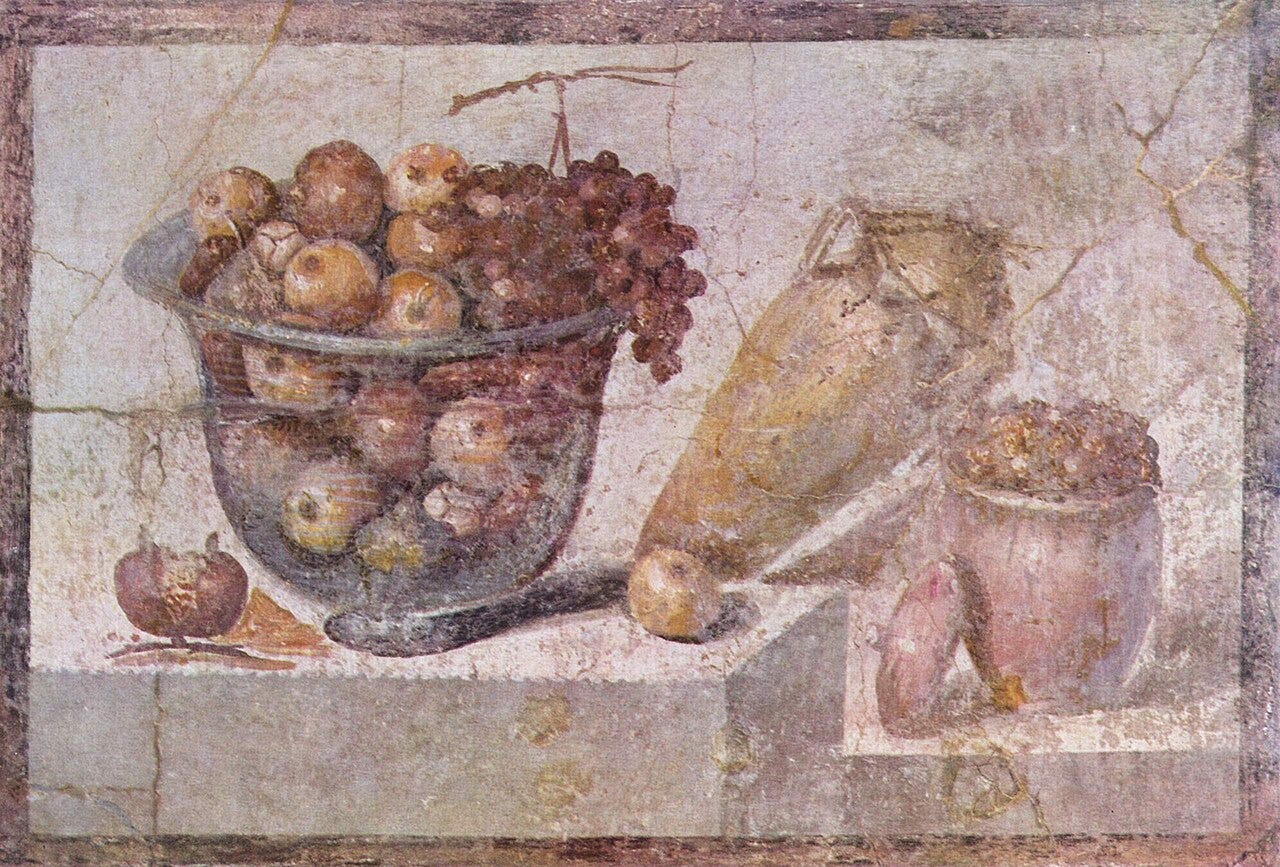
It is far older. Roman painters were doing it two thousand years ago. On the walls of Pompeii you can still see xenia, painted offerings of fruit, eggs, fish and game, frozen on plaster since before the volcano.
The genre went quiet for centuries, folded into religious scenes, then broke free again around 1600. The Dutch did not invent the still life. They perfected it. Centuries before Rome, the Greek painter Zeuxis was already fooling birds with painted grapes, a story told in full in Zeuxis: The Complete Story. That painted deception has a name: trompe l'oeil.
Still life, your quiet questions
What counts as a still life? Any painting whose main subject is arranged, inanimate objects: food, flowers, tableware, books, dead game, everyday things.
Why was still life considered the lowest genre? Academies believed it copied objects without invention, unlike history painting, so it earned the least prestige.
What does a skull mean in a still life? It is a vanitas symbol, a reminder that life is short and wealth does not last.
Who painted the first still life? Romans painted them in antiquity. In Western art, Caravaggio’s Basket of Fruit, around 1599, is often called the first independent example.
Why are there so many Dutch still lifes? A rich merchant society wanted art for the home, and still life suited private walls and private morals.
More secrets to unlock


The lowest subject, the highest skill
Ranked at the foot of the academic ladder, still life had nothing to prove and everything to try, which made it a laboratory for pure looking: light on glass, the bloom on a grape, the weight of silver.
Cezanne reshaped modern art with little more than apples on a cloth. One of those still lifes, Rideau Cruchon et Compotier, sold for 60.5 million dollars in 1999, a record for the genre at the time.
