
Tenebrism is a painting style built on extreme contrast between light and dark, where shadow covers most of the canvas and a single shaft of light reveals only what matters.
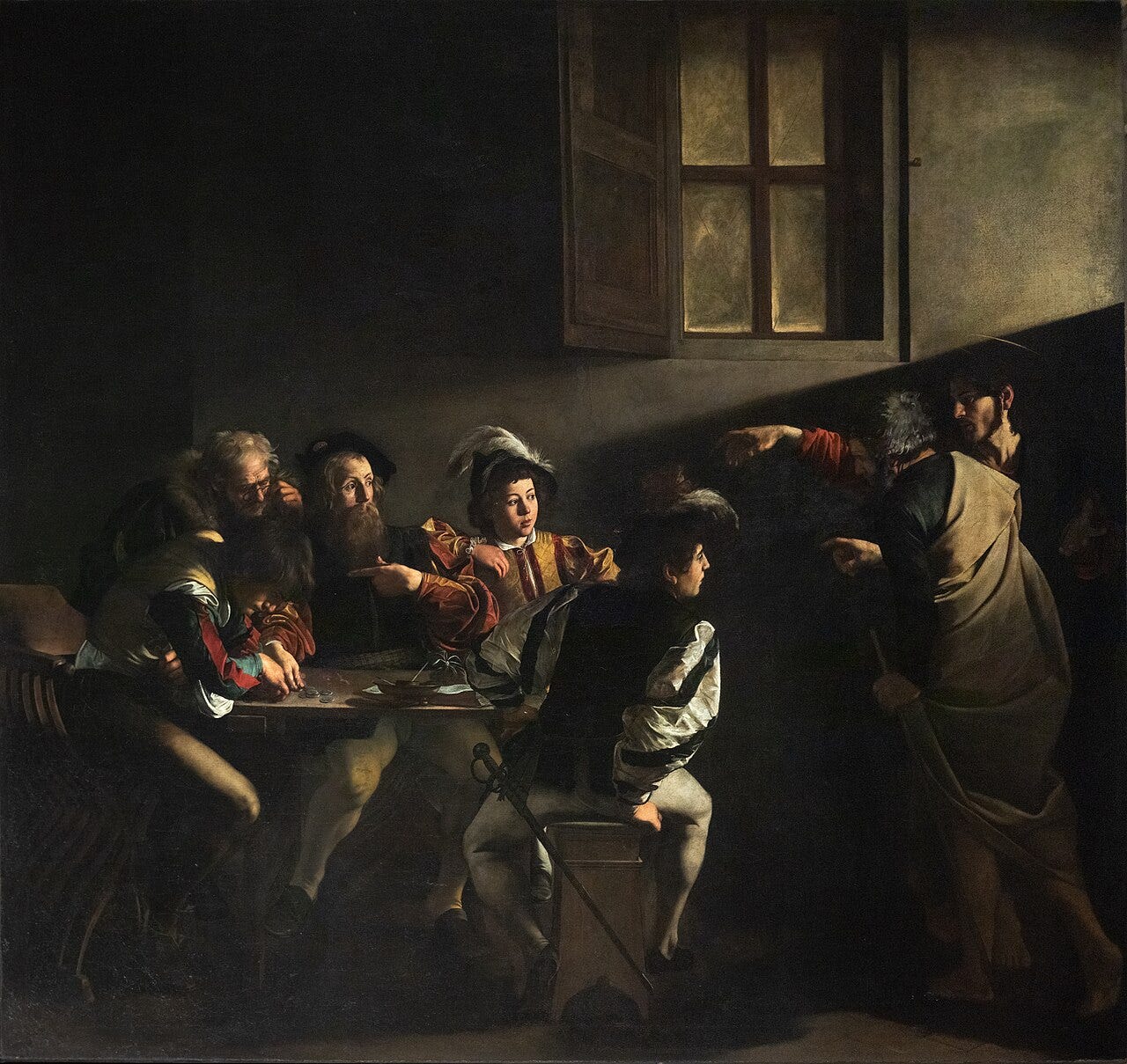
Caravaggio made it famous in Rome around 1600. Within a generation it had spread across Europe.
In a tenebrist painting, the figure is not the subject. The subject is the darkness.
The black is not a backdrop you ignore. It is doing the work: hiding the room, and forcing your eye exactly where the painter wants it.
Once you see that, you cannot unsee it. I never can.
Tenebrism in one minute:
The word comes from the Italian tenebroso, “dark, gloomy,” from the Latin tenebrae, “darkness.”
The look: deep shadow over most of the canvas, one harsh light, high drama.
Made famous by Caravaggio, Rome, around 1600.
Its calmer cousin is chiaroscuro. Its opposite is sfumato.
It went viral across Europe, and it still rules cinema today.
Keep learning art the fun way


What does tenebrism actually mean?
Open the word and the whole idea falls out.
Tenebrism comes from the Italian tenebroso: dark, murky, gloomy. The root is the Latin tenebrae, the word for the darkness of a tomb.
So the style is named after its black, not its light.
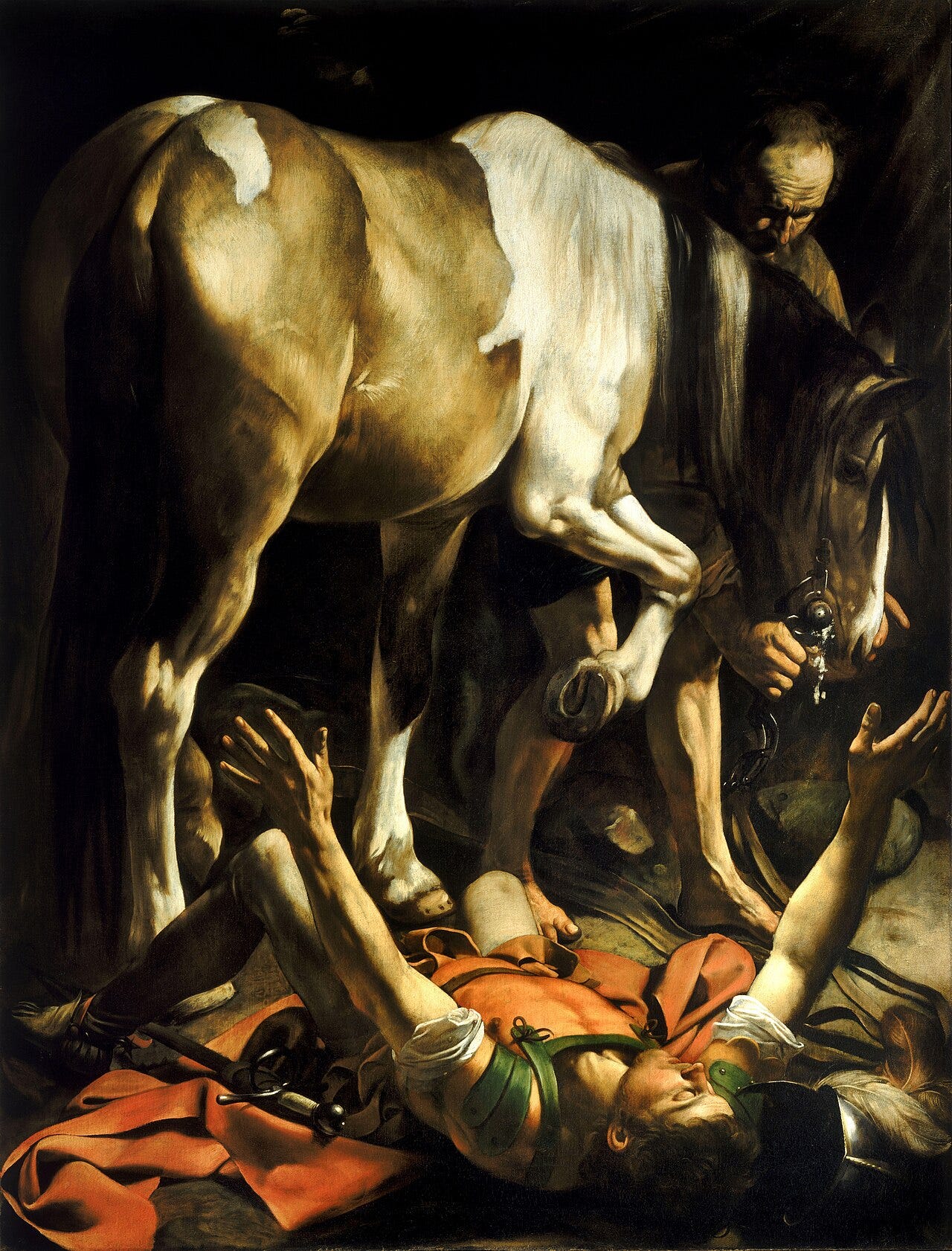
That is the tell. In most painting, light is the star and shadow plays the supporting role. In tenebrism, it is reversed. The darkness is the lead, and the light is a blade.
Tenebrism vs chiaroscuro vs sfumato
People use these three words as if they were interchangeable. They are not. Here is how I keep them straight:
Chiaroscuro is modeling with light and shade to make things look round. It can be soft and gentle.
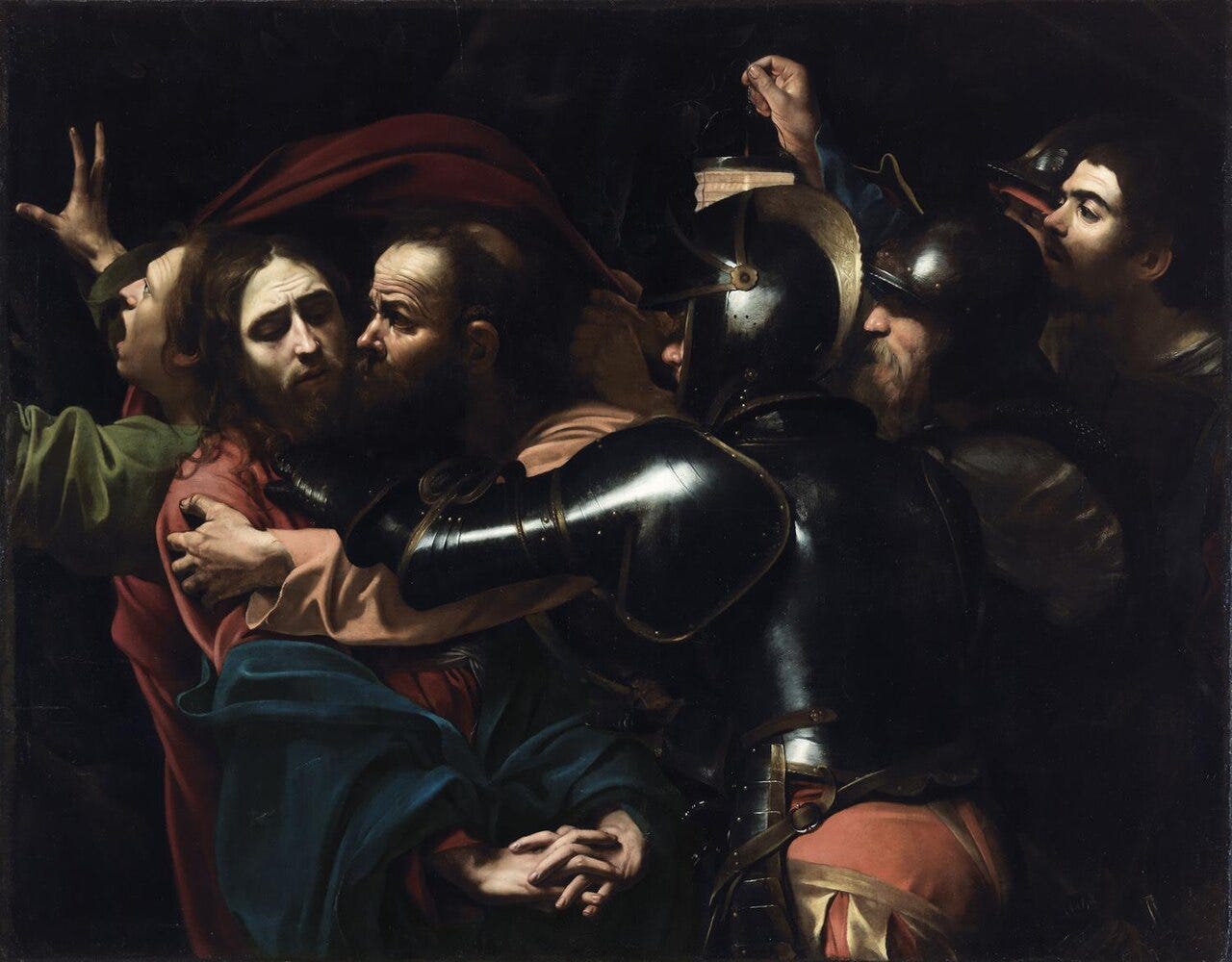
Tenebrism is chiaroscuro pushed to violence. Shadow swallows the canvas, one hard light remains. Always dramatic, almost always dark in mood.
Sfumato is the opposite of both. Leonardo’s technique of dissolving every edge into soft smoke, with no hard light at all.
The sentence to keep: all tenebrism is chiaroscuro, but not all chiaroscuro is tenebrism.
And at the far end of the other extreme sits its opposite, sfumato, where every edge dissolves into smoke.
Who invented tenebrism?
Caravaggio.
He did not invent shadow. But around 1600, in Rome, he did what nobody had dared.
He dropped the golden skies and pretty landscapes of the late Renaissance, and dropped his saints into near total black.
According to his biographer Giovanni Pietro Bellori, writing in 1672, Caravaggio worked in a darkened room and let a single high light fall on his models. That is exactly the effect on the canvas.
Bellori did not fully approve. He felt Caravaggio had traded beauty for raw, brutal truth.
That trade is the whole point.
Caravaggio painted real, dirty, frightened people, then hit them with one hard light. The result looks less like a painting and more like a crime scene caught by a flash.
He hid codes, and even his own signature in blood, inside his work.
Why did tenebrism spread so fast?
Two reasons: it was contagious, and Rome was the center of the art world.
Young painters came to Rome from across Europe, saw Caravaggio's altarpieces, and went home changed. They even earned a name: the Caravaggisti, the followers of Caravaggio.
Within twenty years you could find tenebrism in Naples, in Seville, in Utrecht.
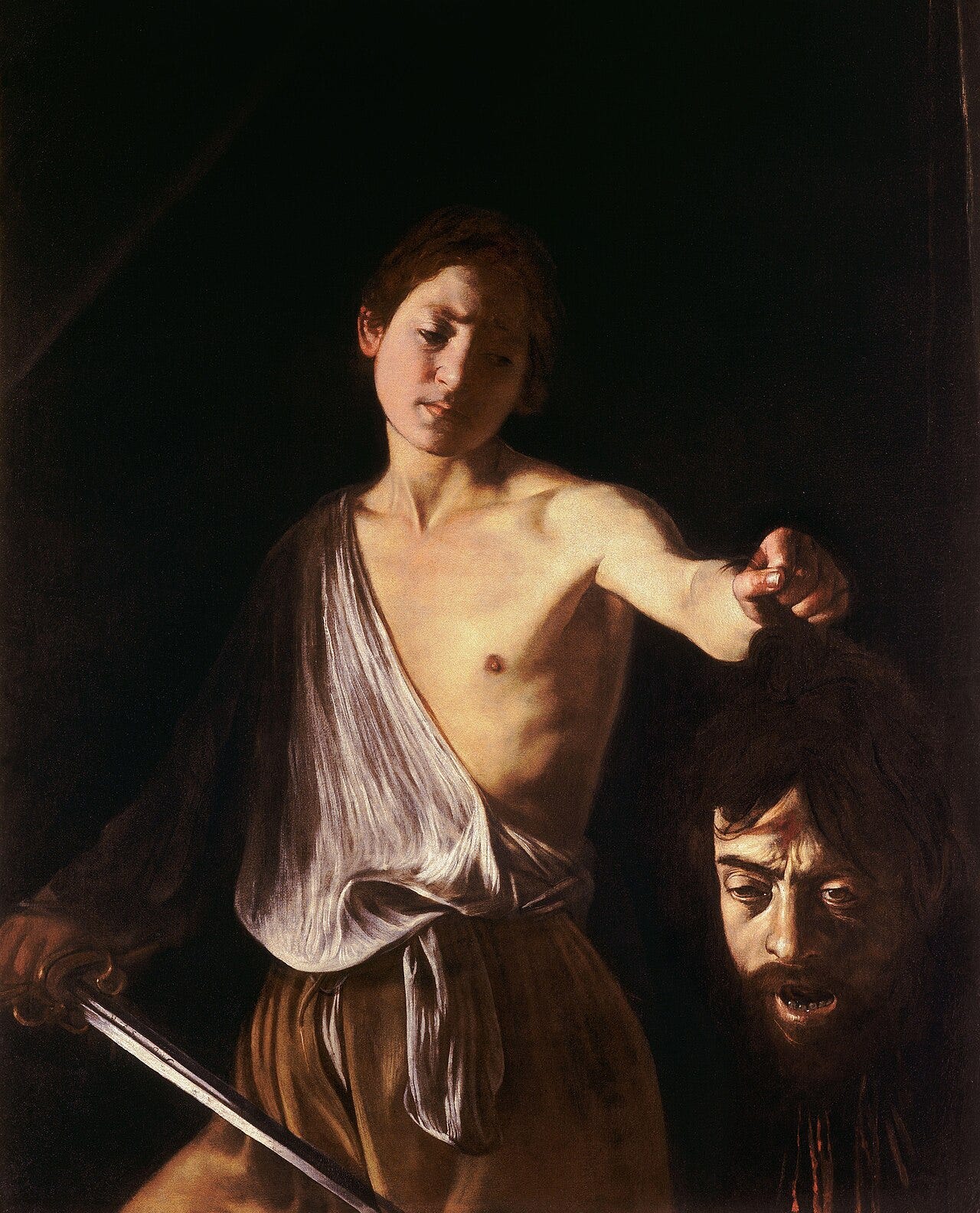
And here is the irony.
Caravaggio himself was a fugitive. He killed a man in 1606 and spent his last years on the run, dying in 1610. His life ended in chaos.
But his shadow, literally, conquered a continent.
One of his greatest works was stolen by the mafia in 1969 and has never been found, a saga told in the Mafia and the Missing Caravaggio.
Caravaggio, Artemisia, La Tour, Ribera, Zurbaran
Five painters used the dark best, to my eye. Here is who, and why.
1. Caravaggio. The source. Every tenebrist works in his shadow. His genius was timing: he always froze the single second of maximum drama, the blade going in, the head turning.
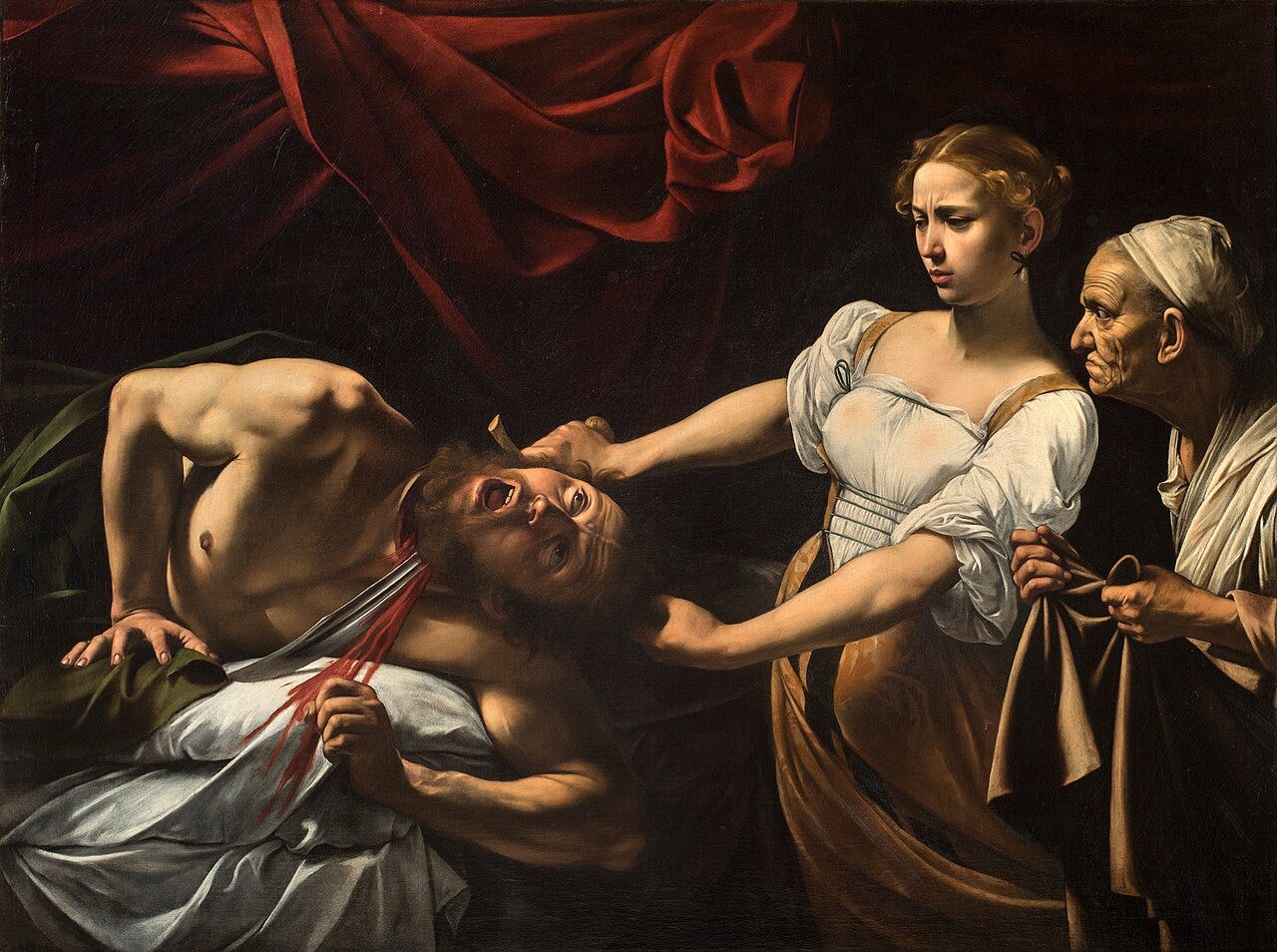
2. Artemisia Gentileschi. She took his darkness and aimed it.
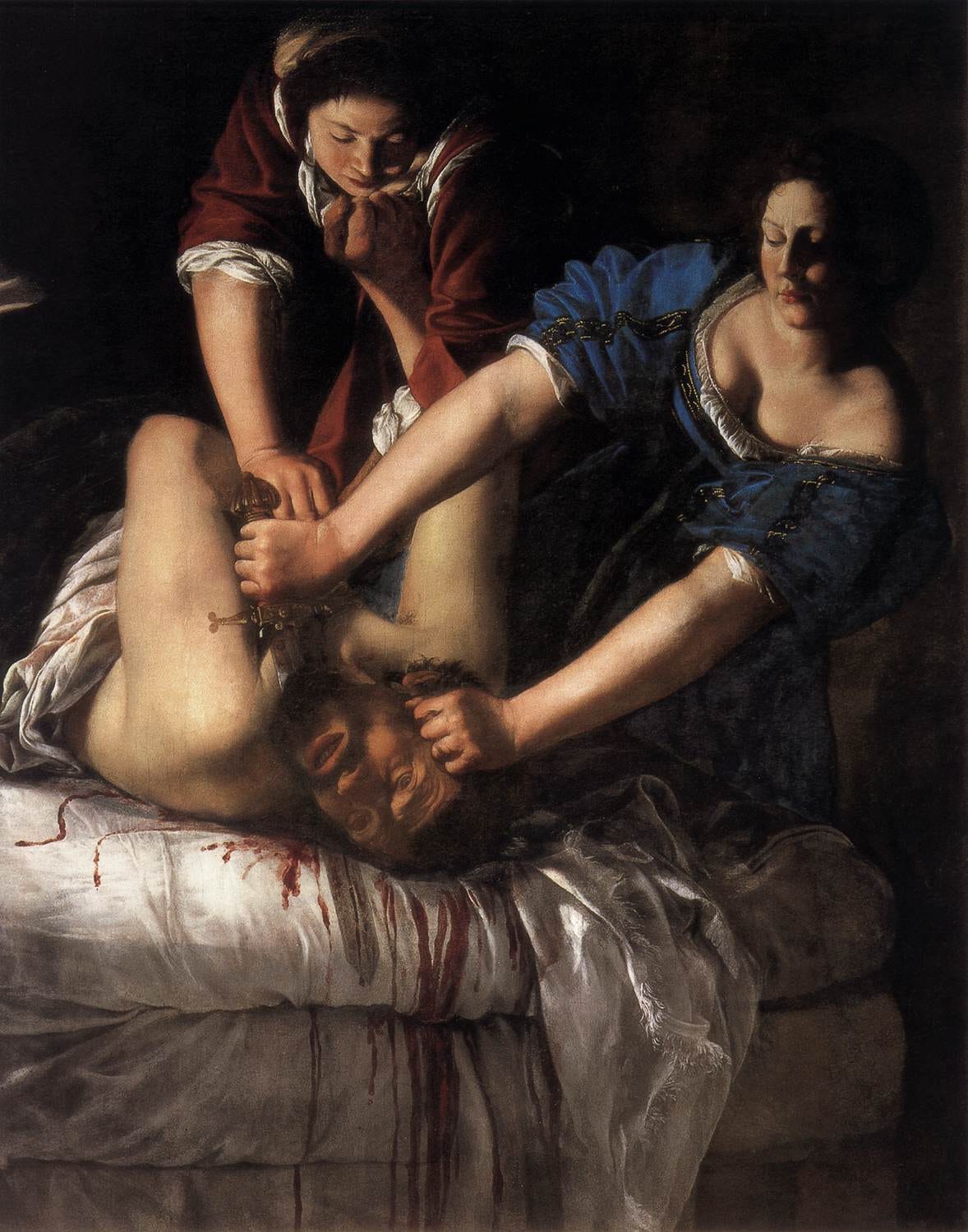
Her Judith Slaying Holofernes is the most physical beheading in art: two women bracing their weight against a man's neck, lit like a stage murder.
She was the first woman admitted to the Accademia delle Arti del Disegno in Florence, and she had survived a public rape trial at seventeen. The fury in her work feels earned.
3. Georges de La Tour. The quiet one.
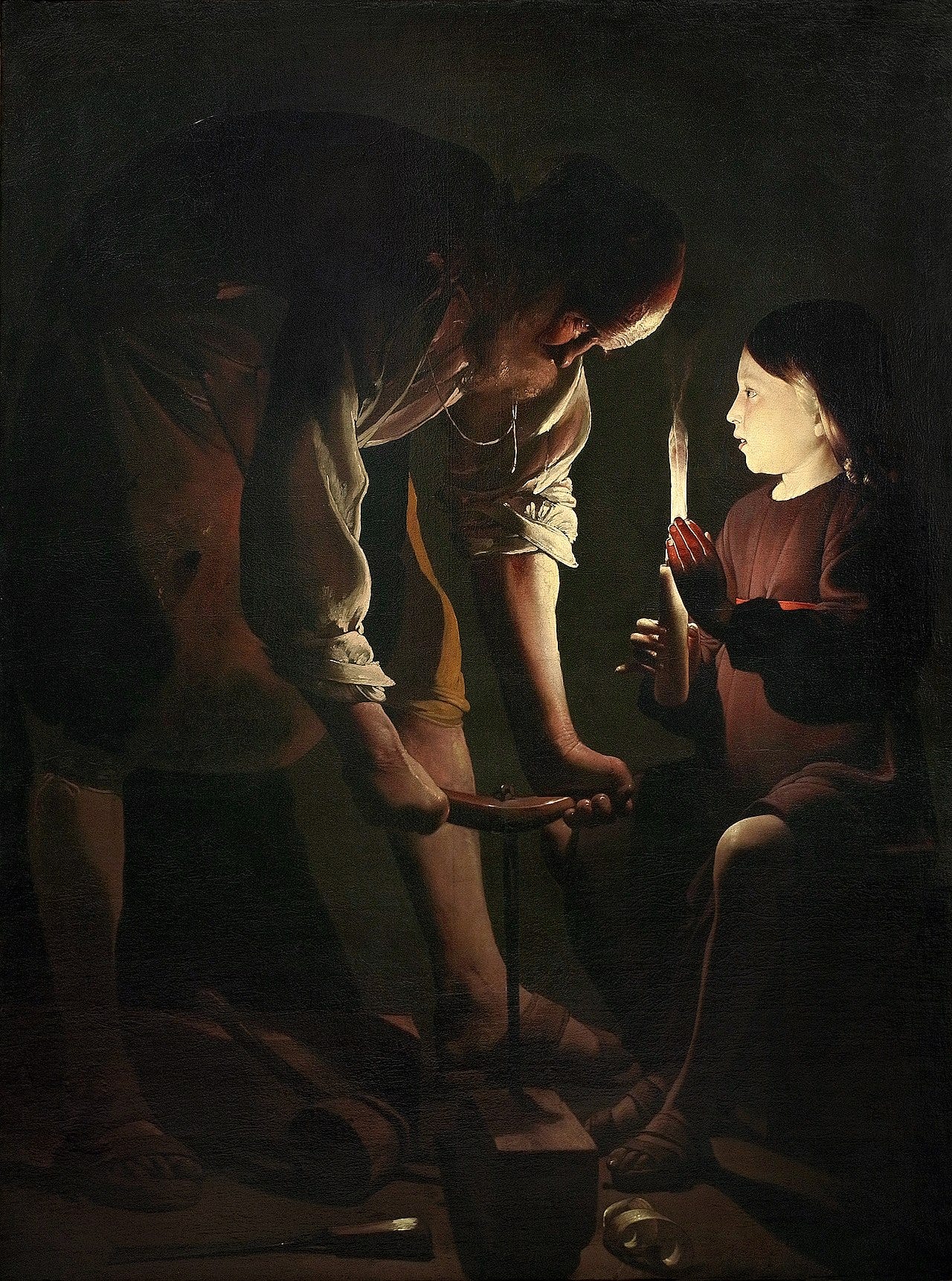
While the others used harsh daylight, La Tour used a single candle. His nights are warm, not cruel. Then history did something strange: he was almost entirely forgotten for nearly 250 years, and only rediscovered in the early 20th century.
Today the Louvre treats him as a national treasure.
4. Jusepe de Ribera. The Spaniard in Naples who made tenebrism brutal and tactile.
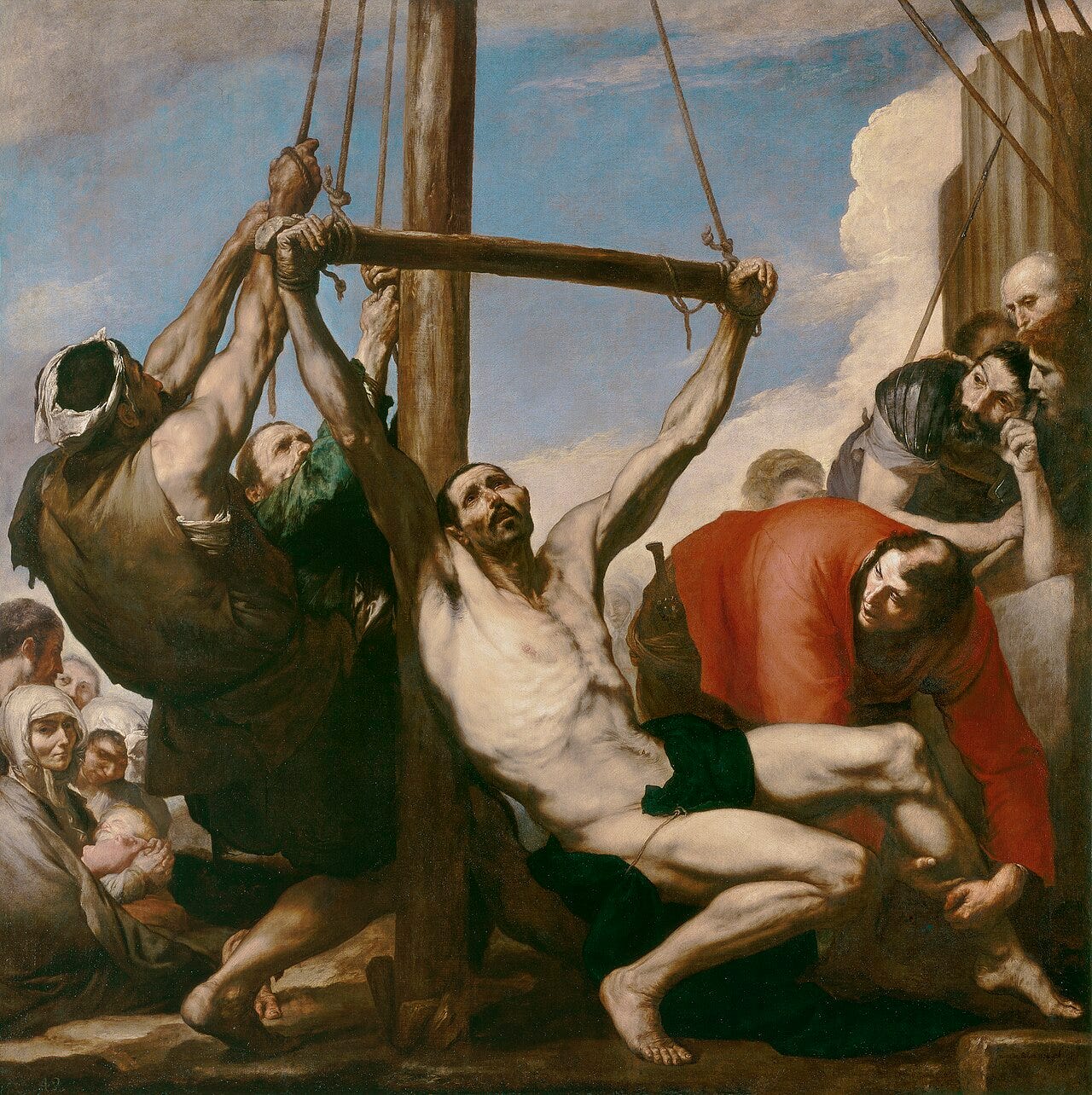
You feel the wrinkled skin, the dirt under the nails, the weight of an old body. His light does not flatter. It investigates.
5. Francisco de Zurbaran. The mystic.
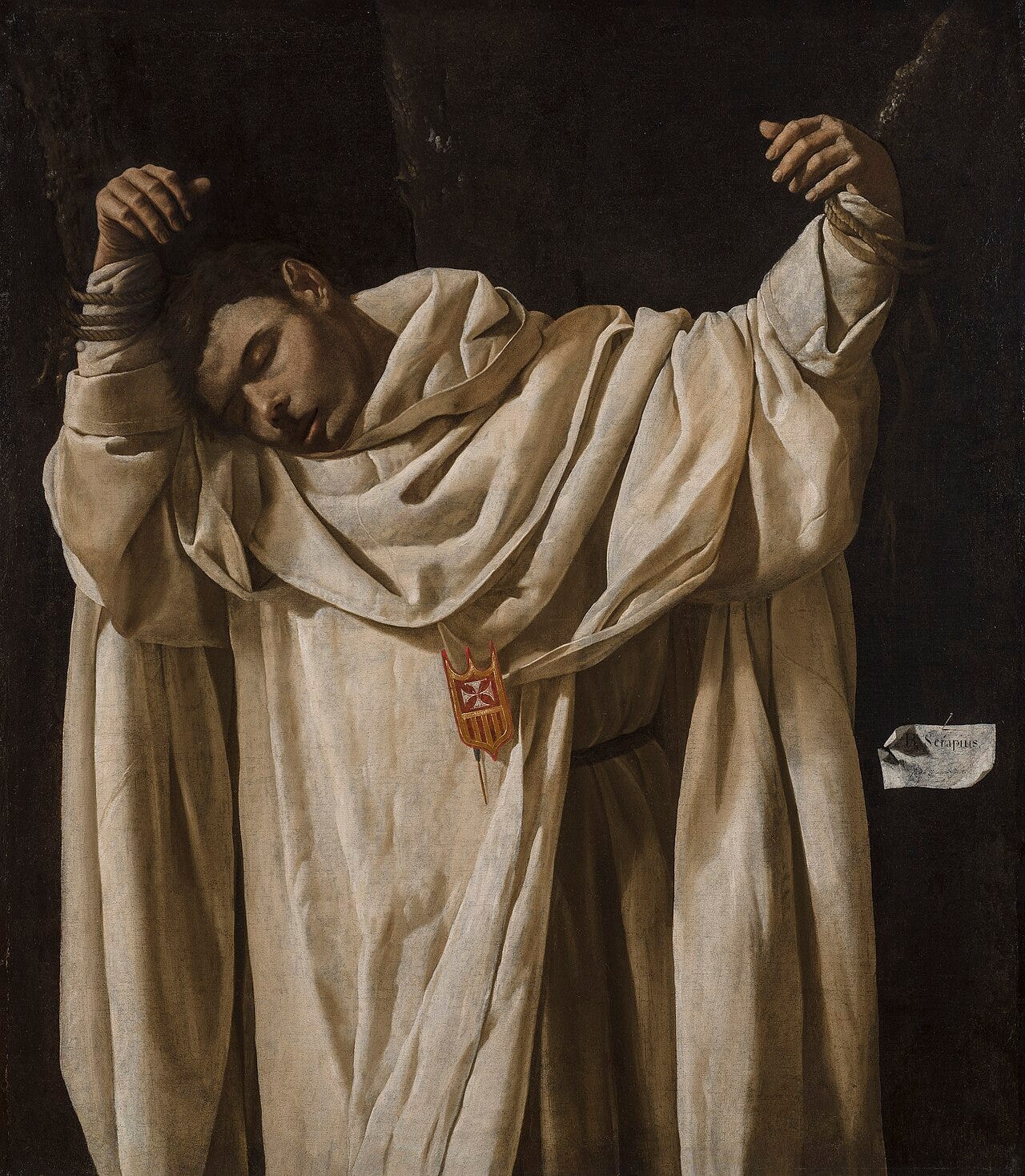
His monks and saints stand alone in pure black, lit like apparitions. Where Caravaggio is violent, Zurbaran is silent. His tenebrism feels like prayer in an empty chapel.
Why every thriller poster is tenebrist
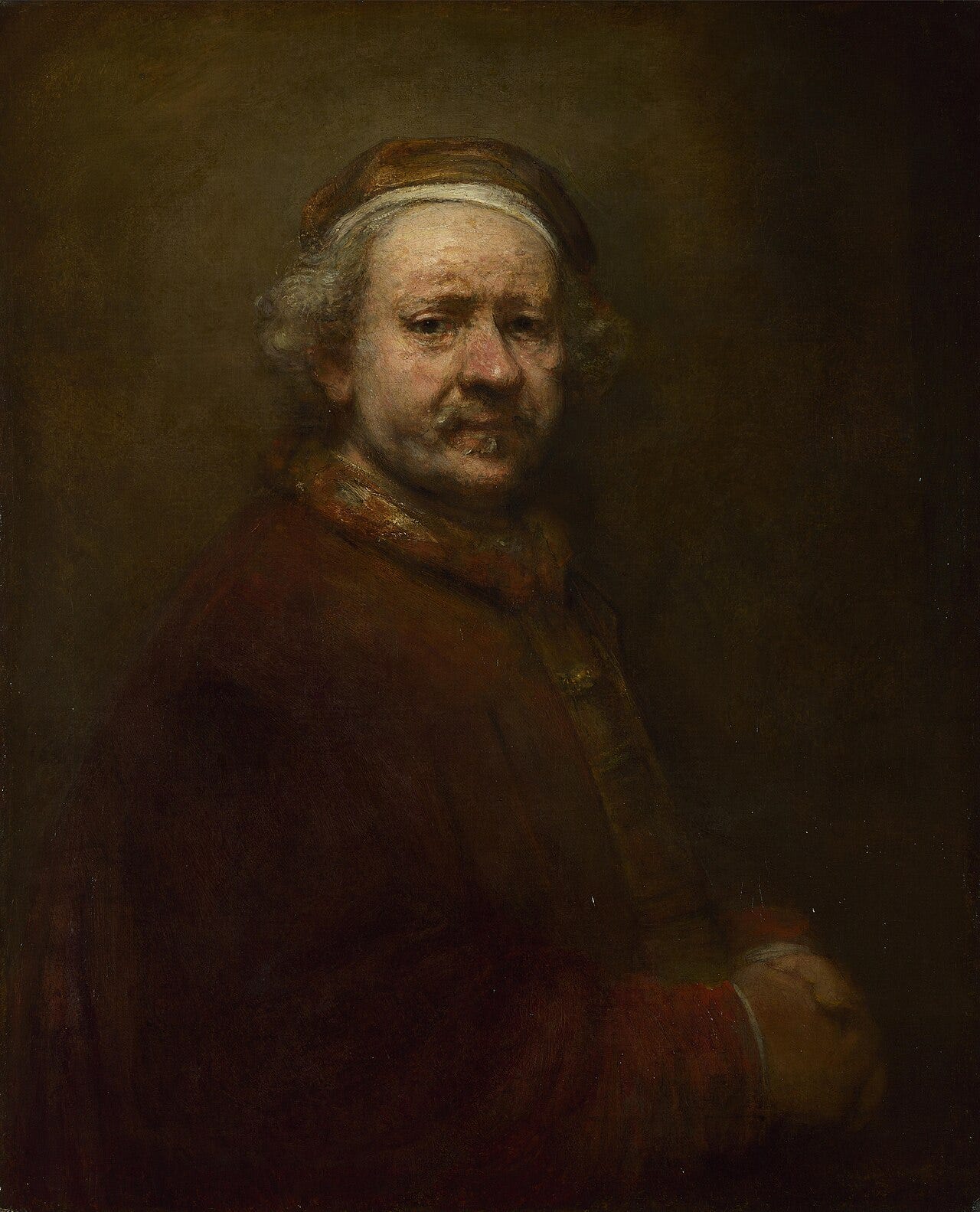
Tenebrism never died. It just changed screens.
Every time a single hard light carves a face out of the dark, that is Caravaggio’s idea at work. You have seen it this week without naming it:
Film noir. The 1940s detective lit by one streetlamp, half his face in black. Pure tenebrism.
The Godfather. Gordon Willis lit Marlon Brando from above so his eyes fell into shadow. Critics called him “the Prince of Darkness.”
Movie posters. A single face emerging from black is the most reused poster design on earth.
Studio portrait photography. “Low key” lighting, one light, deep shadow, is tenebrism with a camera.
Video games and album covers. Same trick, one light source, maximum mood.
So when people say old art is irrelevant, point at any thriller poster. Caravaggio is still art directing, 400 years later.
Where to stand in the dark
Next time you are near one of these, here is what to look for:
San Luigi dei Francesi, Rome. Caravaggio’s Saint Matthew cycle. Watch the beam of light do all the storytelling.
Galleria Borghese, Rome. Caravaggio’s darkest late works, including his self portrait as a severed head.
Uffizi, Florence. Artemisia’s Judith Slaying Holofernes. Follow the light along the blade.
Louvre, Paris. Georges de La Tour’s candlelit nights. The whole room glows from one small flame.
Prado, Madrid. Ribera and Zurbaran. The Spanish dark, two very different moods, side by side.
Tenebrism, the questions in the dark
What does tenebrism mean? From the Italian “tenebroso,” dark or gloomy, from the Latin “tenebrae,” darkness. In painting: a style dominated by deep shadow, with one harsh light on the subject.
Who invented tenebrism? Caravaggio, around 1600 in Rome. His followers, the Caravaggisti, spread it across Europe.
What is the difference between tenebrism and chiaroscuro? Chiaroscuro is the general use of light and shadow, and can be soft. Tenebrism is its extreme, shadow dominated version. All tenebrism is chiaroscuro, not the reverse.
Is tenebrism still used today? Constantly. Film noir, The Godfather, thriller posters and low key photography are all tenebrism with modern tools.
What does the word tenebrism mean? From the Italian tenebroso, murky or dark. It describes painting where deep shadow dominates and a single hard light reveals only part of the scene.
More secrets to unlock


What the darkness is doing
Darkness in a painting looks like empty space, the part where nothing happens.
Caravaggio understood the opposite. The dark is where everything you cannot see is happening.
When he drowned a scene in black and left one lit face, he was making you feel the whole room you cannot see.
The threat is in the shadow. The next blow comes from the dark.
That is why, for me, a Caravaggio raises your pulse before you have read a single label.
Caravaggio felt it most in his own flesh. Around 1610 he painted his own face onto the severed head in David with the Head of Goliath, a murderer staring out of his own darkness.
Tenebrism gets confused with chiaroscuro constantly, so I wrote out the difference in full.
