

170 000+ readers. Learn art the fun way.
This is a preview. Paid subscribers get the full story.
You’ll also get:
10 new stories every month
The full archive (130+ Art stories)
Your personal art guide. Comment, ask questions, DM me anytime
iPhone user? Subscribe at coolstoriesabout.art, not via the app. Apple adds 30% to the price.
Paris, June 1875.
The auction rooms of the Hôtel Drouot, the heart of the Paris art market.
A young man stops in front of some drawings. He looks at them one by one. He does not move on.
Peasants in charcoal and pastel, a sower, gleaners, a man bent over his spade: ninety five sheets, put up for sale after the death of the man who made them.
He is 21. He sells reproductions at Goupil, one of the biggest art dealers of the day, and he has never painted a canvas.
That evening, he writes to his brother to say what he felt. The only words he can find are from the Bible, the ones God speaks to Moses before the burning bush: “Put off thy shoes from off thy feet, for the place whereon thou standest is holy ground.”
Holy ground. For simple peasants who sow and glean. For this young man, their labor is already a prayer.
This clerk is named Vincent van Gogh.
The man whose sheets hold him there died five months earlier, on 20 January 1875, in Barbizon. The two never met, never wrote to each other, never will. And yet, until his own death, Vincent will keep coming back to this man.
The Painter of Peasants
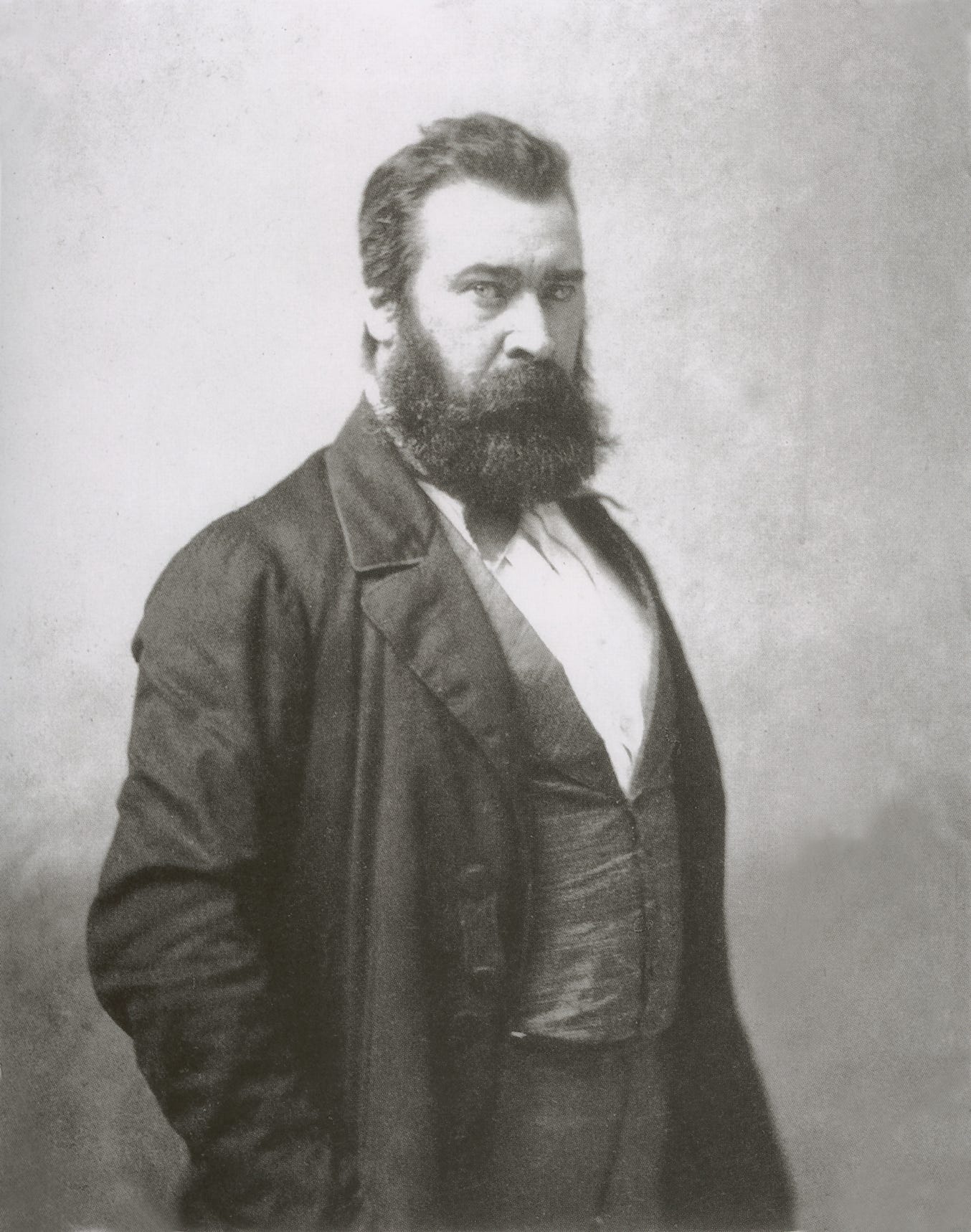
Jean François Millet was born on 4 October 1814 in Gruchy, a hamlet on the coast of Normandy, into a family of well off, devout farmers. The village priest taught him Latin, but for his whole life he read almost nothing but the Bible.
He trained in Cherbourg, then in Paris under the painter Paul Delaroche. In 1849, fleeing the cholera, he settled in Barbizon, on the edge of the Fontainebleau forest, with his companion Catherine. They would stay there twenty six years and raise nine children.
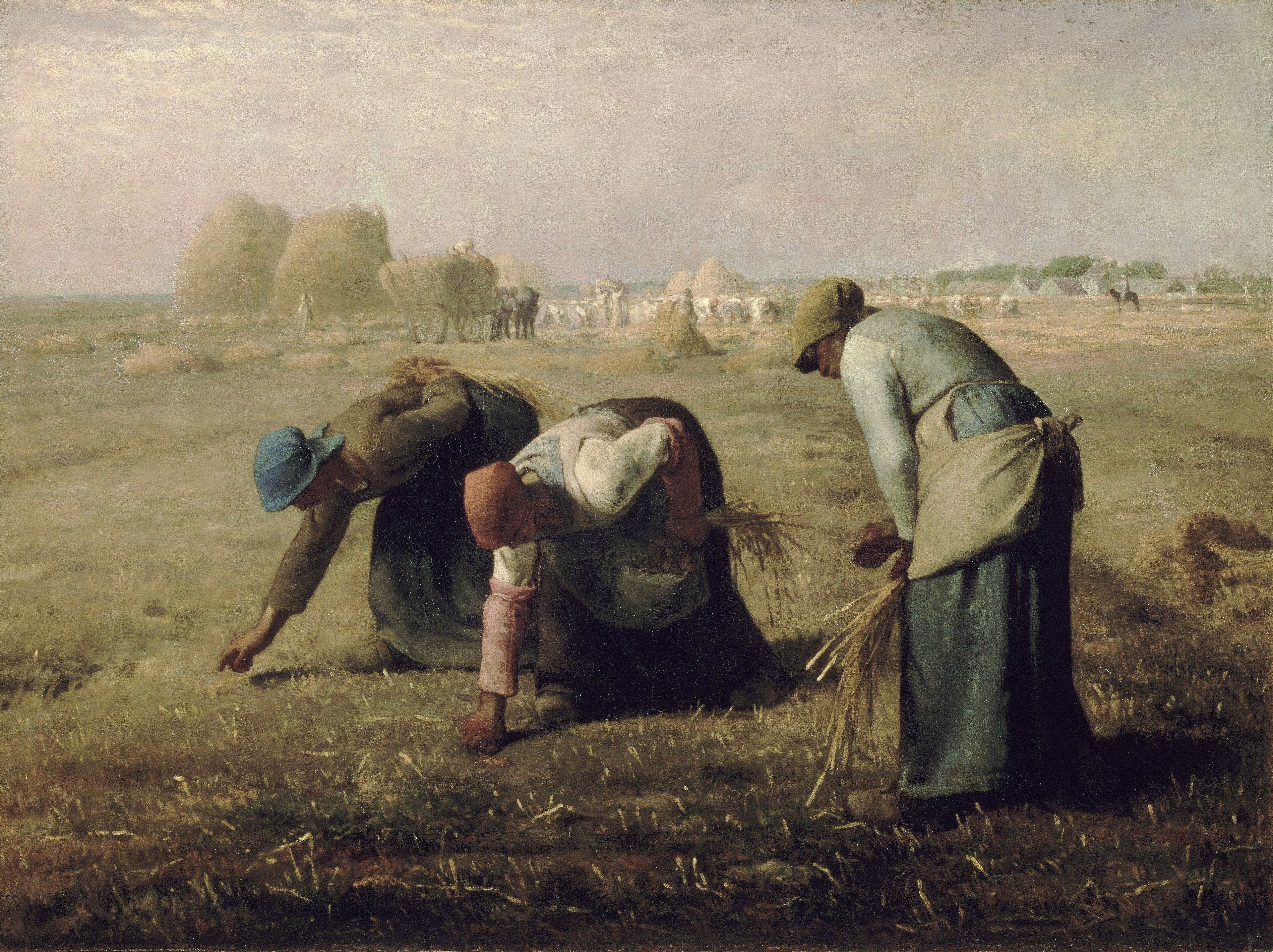
There, he caused a quiet scandal: he painted nothing but peasants at work. The sower. The gleaners picking up fallen grain. The couple who stop their digging to say the Angelus. No gods, no heroes, no battles. Backs bent over the soil.
Middle class critics smelled socialism in it, almost a call to revolt in his man leaning on a hoe. Millet himself was thinking of a verse from Genesis: you shall eat your bread in the sweat of your brow.
The money never came. For years he painted in a damp cellar, dodged his creditors, traded a canvas for a pair of shoes or a bed. One man kept him afloat: Alfred Sensier, a dealer and friend, who advanced him paints and money, paid his debts, and would one day write his life. Almost what Theo would soon be for Vincent.
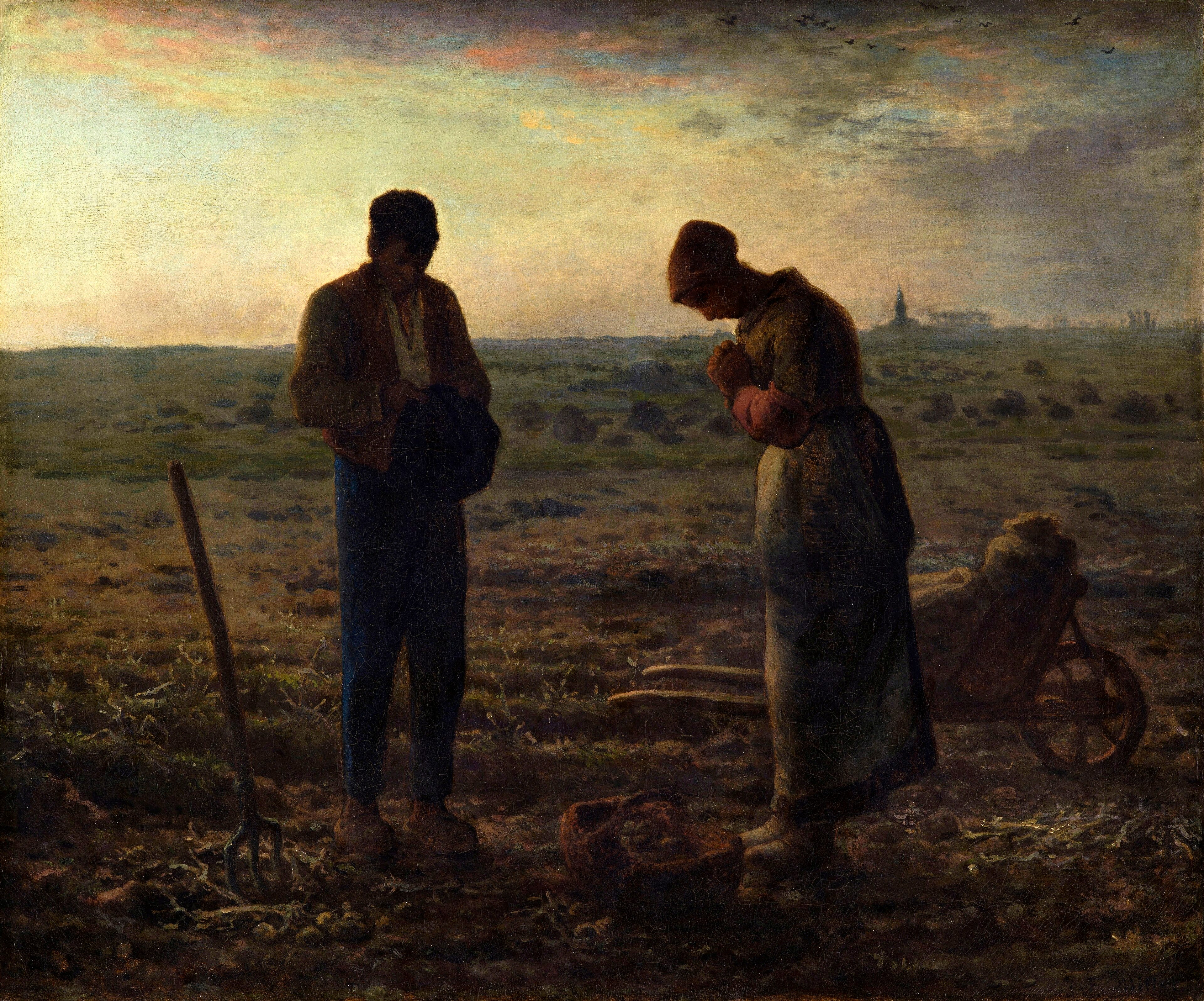
Even one of his most famous paintings was born of a misunderstanding. An American commissioned The Angelus, then never came to collect it. Its first title had nothing holy about it: Prayer for the Potato Crop. It was for lack of a buyer that Millet added a steeple on the horizon and renamed the canvas.
He died in Barbizon in early 1875, barely out of poverty. A few years later, his paintings would be worth fortunes.
The First Gesture
Back when he wrote his letter from Drouot, Vincent wanted to be a pastor, like his father.
In December 1878, he left for the Borinage, the Belgian coal country, to bring the Gospel to the miners. He took it literally. He gave away his clothes and kept only an old soldier’s coat, left the baker’s comfortable house for a hut, and slept on straw.
He stopped washing the coal dust from his face, to look like the men he visited. He went down with them, seven hundred meters underground.
The locals called him the Christ of the coal mine.
The church, for its part, grew alarmed. In the summer of 1879, his post was not renewed: he preached badly, they said, he got lost in the miners’ fast speech. The truth was that his zeal and his self chosen poverty made the church uneasy.
He stayed there a whole winter, with nothing. Twenty six years old, a failed calling, and he drew.
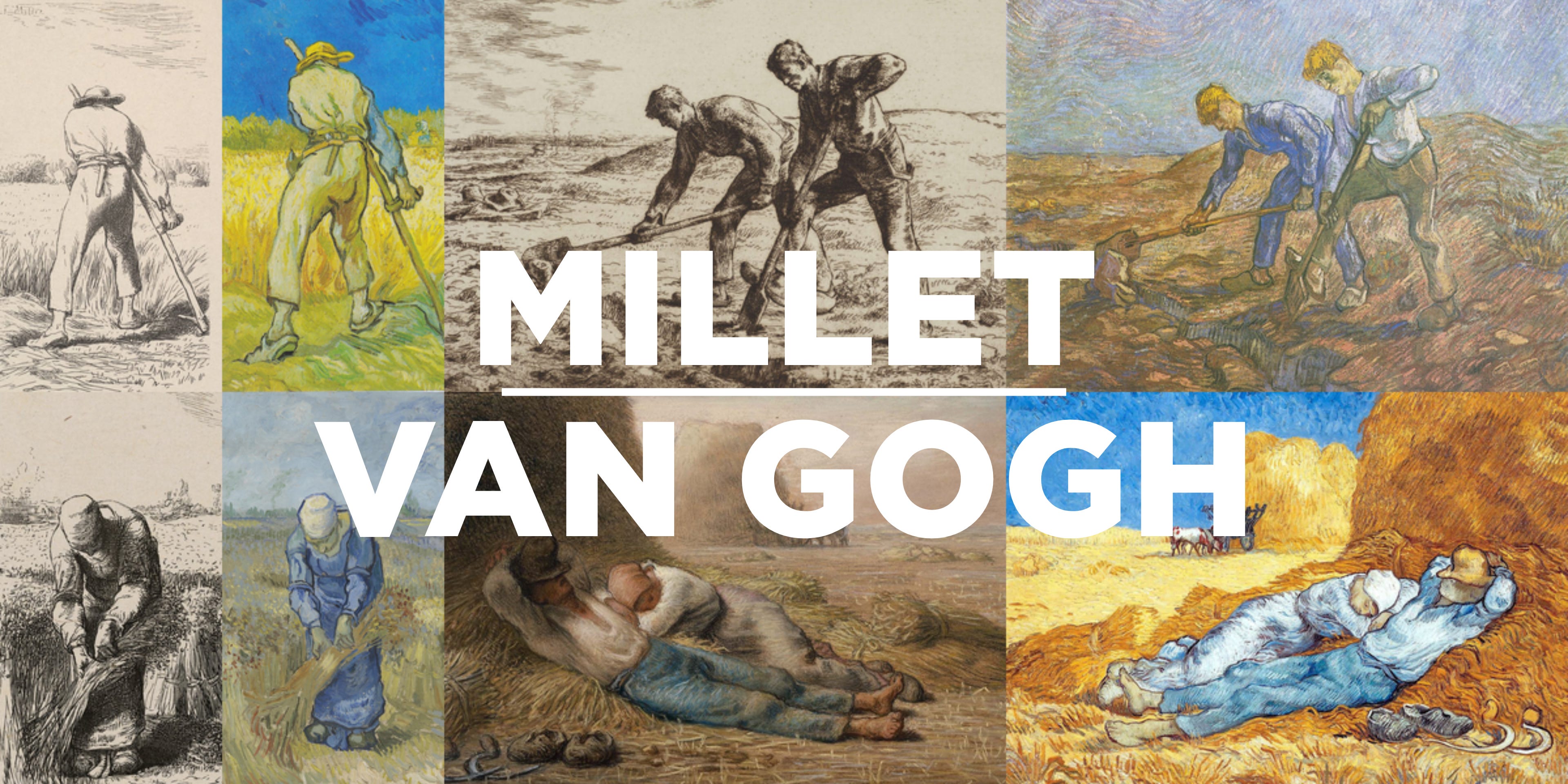
In 1880 he made up his mind: he would be a painter. His first act as a painter was a copy. On 20 August, from Cuesmes, he wrote to Theo that he had started large drawings after Millet, The Times of the Day and The Sower.
He did not copy just anyone. He copied the painter of the poor peasants, the very people he had just left at the bottom of the mines. The Sower above all would never let him go: he would come back to it again and again, he wrote to Theo, that figure haunts him.


The Lamp at Night
For five years, in Brussels, in The Hague, in Nuenen, Vincent copied Millet by the dozens of sheets, in pencil and charcoal, in the black and white of the prints.
In 1882, someone lent him the thick biography Sensier had just devoted to Millet. The book robbed him of sleep; he would get up at night, light the lamp, and go on reading. What a man, he wrote to Theo, this Millet was.
In his letters, he never said Millet alone. He said Father Millet. A master, a guide, almost a comforter.
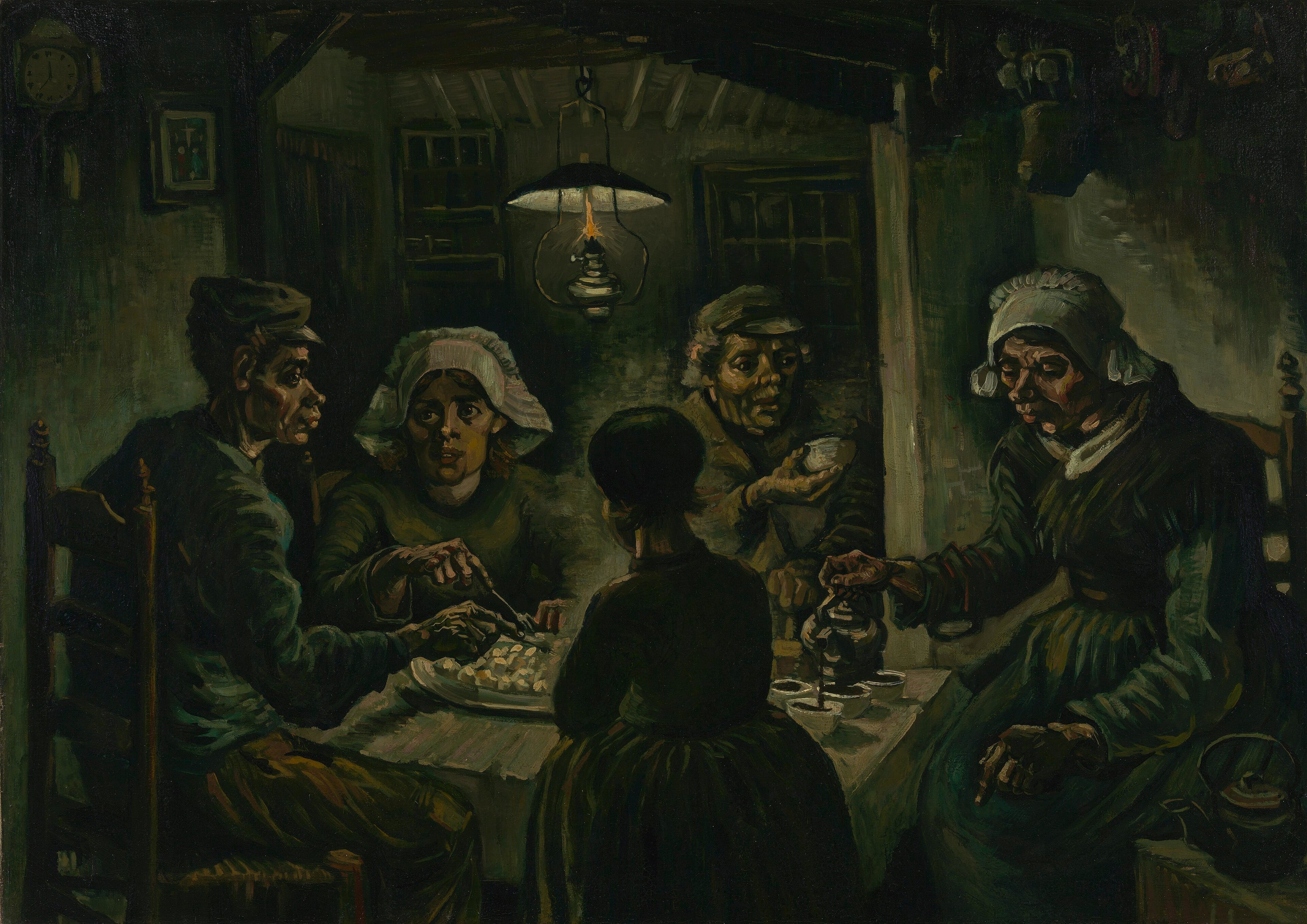
In 1885, in Nuenen, all of this became his first great canvas, The Potato Eaters. Five peasants gathered around a dish, under a lamp, in a room the color of earth, their hands reaching for the potatoes they themselves had pulled from the ground.
The composition is Vincent’s; the rest, the gravity, the bias toward the humble, comes from Millet.
Discover my new newsletter !

The Sower Turns to Color
In 1886, Vincent joined Theo in Paris. There he discovered the bright color of the Impressionists and Japanese prints.
In February 1888, he left for Arles. And The Sower came back with him. But it had changed languages.
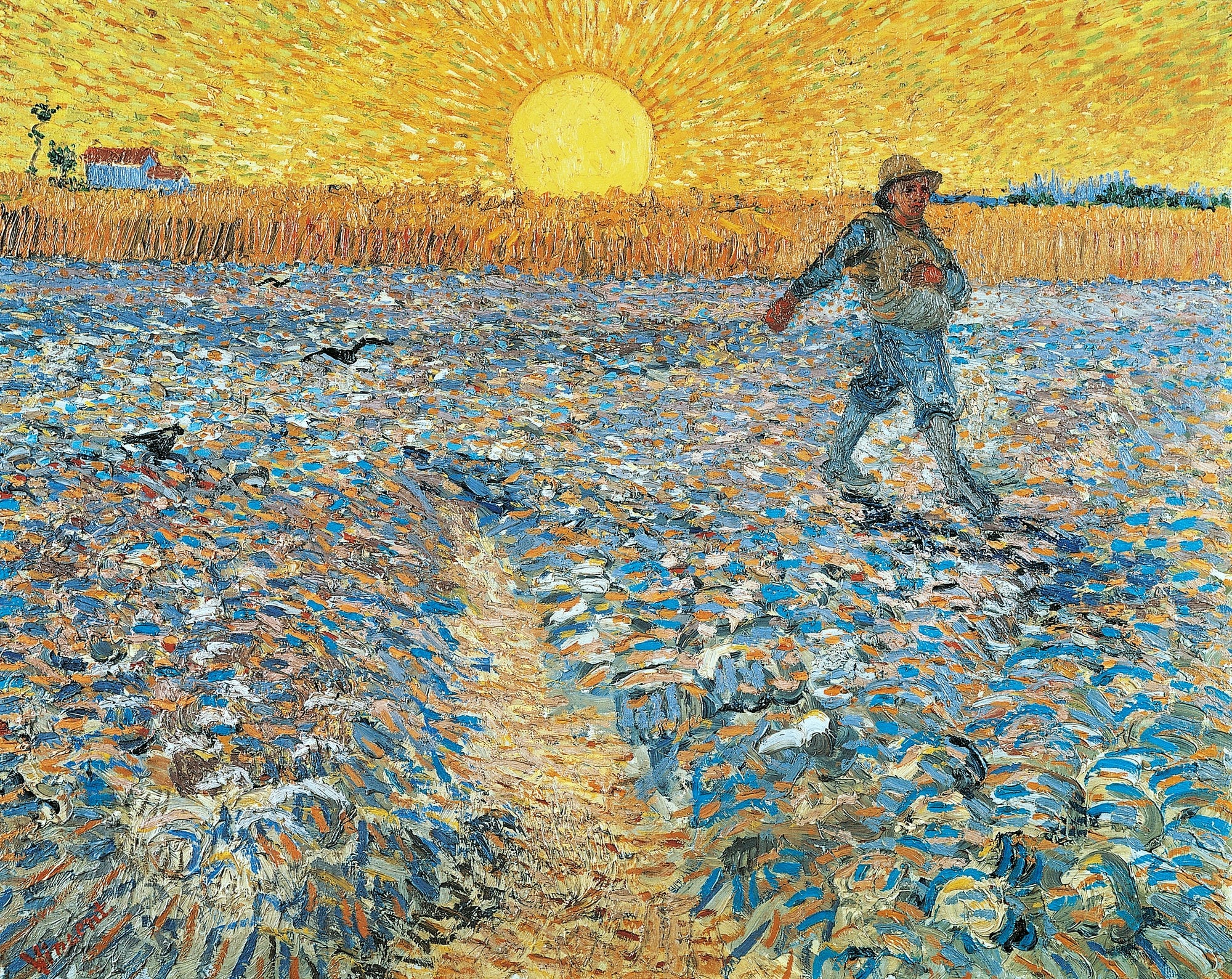
In Millet’s version, the sower strides down a gray slope at dusk, an almost black silhouette, his arm open on the seed. No color: everything is in the gesture.
On 28 June 1888, Vincent wrote to Theo that this sower was gray, lifeless, and wondered whether it was at last possible to paint him another way, yellow against violet.
His canvas keeps the stride, the arm, the curve of the back. But behind the peasant, a yellow sun devours a quarter of the sky, and the earth he walks on turns violet. The drawing is still Millet’s. The color is his alone.
For Vincent, this sower is more than field work. Millet almost never painted an angel or a saint, only peasants at their labor, and yet, Vincent wrote to his friend Émile Bernard, what he painted was “the doctrine of Christ.”
His Angelus is not priests under a vault, but two peasants who stop their digging, heads bowed, in the middle of a field.
Vincent, the former preacher of the Borinage, sees the same Gospel in it.
Keep learning art the fun way


Saint Rémy, May 1889
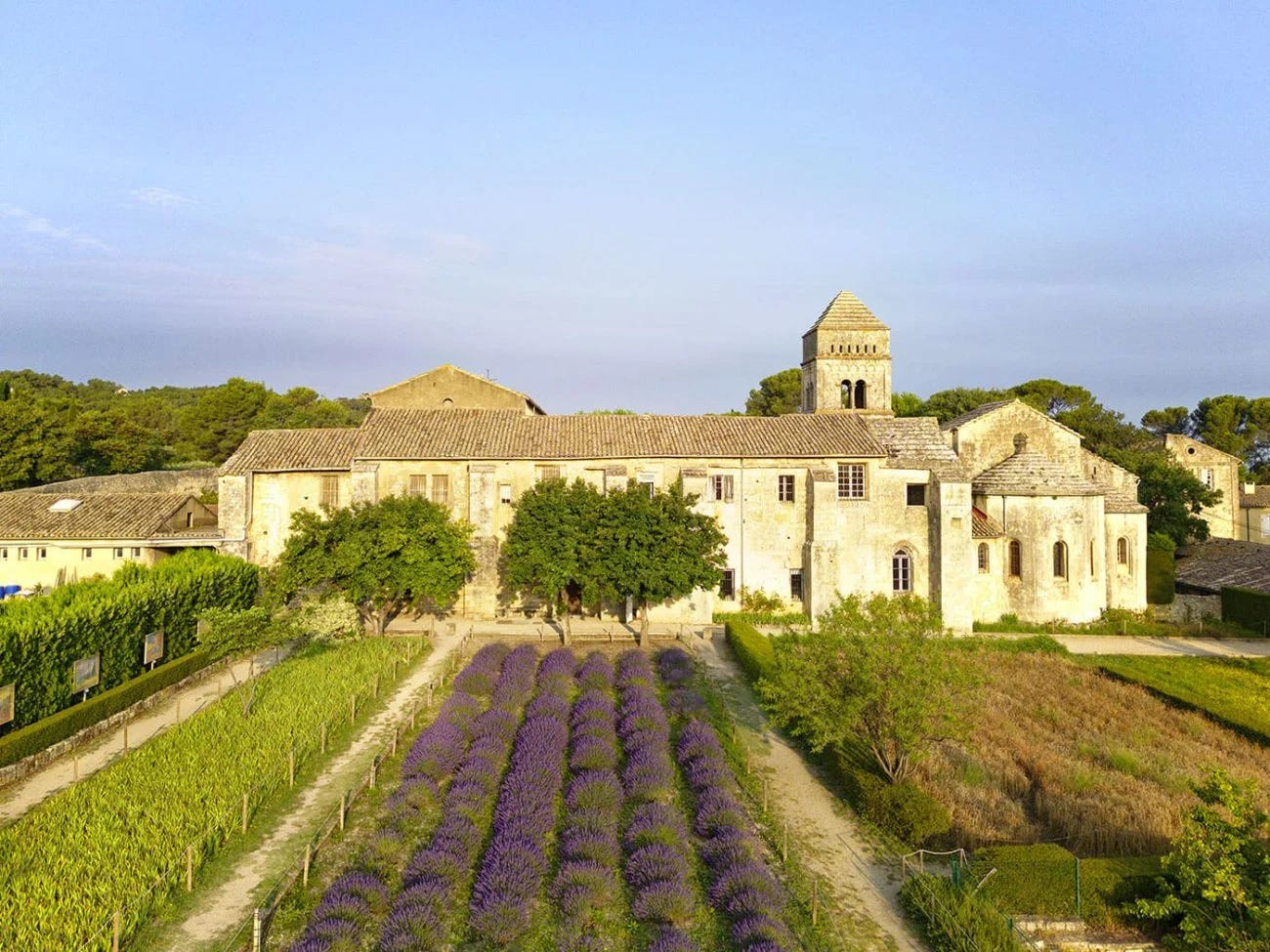
Saint Rémy de Provence, 8 May 1889. A carriage stops in front of Saint Paul de Mausole, an old monastery turned mental hospital, set apart among the olive trees.
Vincent steps down with his painting gear. He is 36. Five months earlier, in Arles, he had cut off his ear. No one forced him to come: he asked to be locked up himself.
The doctor who takes him in, Théophile Peyron, is a former navy doctor. He believes Vincent is epileptic rather than mad. His whole treatment comes down to two baths a week, two hours each time, hot water then cold.
Vincent is given a narrow cell and, on the ground floor, a room to paint in, with a barred window that looks out on a wheat field closed off by a wall.
Then winter comes, and the attacks with it. In late December 1889, Vincent loses his mind for several days. He picks up filth off the floor and puts it in his mouth. He tries to poison himself by swallowing his own paints and his lamp oil, convinced that someone else is trying to poison him. Peyron saves him.
It is in this state, between two attacks, that he asks for some Millets.
Not paintings, which cannot be moved, but prints after the master’s drawings, cut by the engraver Adrien Lavieille. Theo slips them into his letters: the ten plates of The Labors of the Fields, The Four Times of the Day. Vincent lays them out on his table.


The first one he finishes is The Evening, a scene of nightfall: the woman sews, the man busies himself by the lamp, a cradle sits in the shadow. Then The Diggers. Then The Sower, again.
This work keeps him on his feet. Between two attacks, it is to this dead man that he turns, and he writes to Theo that painting after Millet comforts him.
From September 1889 to January 1890, in that room, he paints twenty one canvases after Millet. Some will count among his greatest masterpieces...