
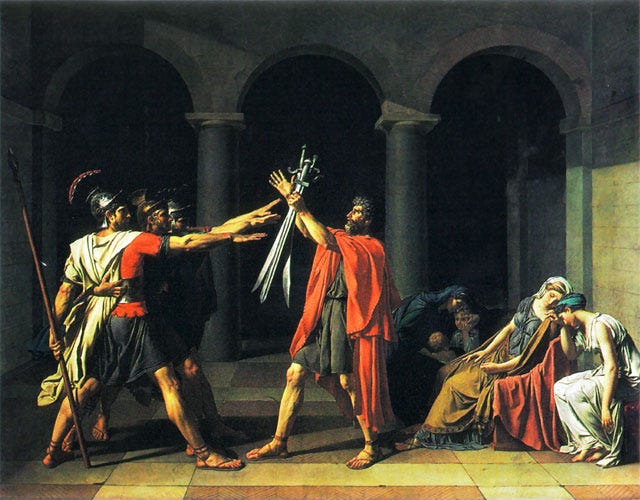
History painting is the grandest and, for centuries, the most prestigious kind of painting: large, multi figure scenes drawn from history, the Bible, mythology or great literature, made to show a noble human action and teach a lesson.
The academies ranked it the highest art a painter could attempt.
A battle, a sacrifice, a sworn oath, a crowd of figures caught in one charged, meaningful moment.
History painting was once ranked the highest art of all, the grand prize a serious painter was expected to chase.
History painting, the basics
What it is: grand, multi figure scenes of noble or significant action.
The sources: history, the Bible, mythology, great literature.
The rank: the highest genre in the academic hierarchy.
The demand: it needed everything, drawing, drama, learning and scale.
The fate: crowned first, then overtaken by the genres it looked down on.
The grandest kind of painting
History painting was meant to be serious, large and improving.
It gathered many figures into a single dramatic moment, a sacrifice, a battle, an oath, a martyrdom, and asked the viewer to feel the weight of it.
It demanded the most from a painter: anatomy, perspective, composition, expression, and a deep knowledge of stories and texts.
This was painting as public speech, meant to make you a better person.
Top of the hierarchy
For centuries the academies ranked the genres like a ladder, and history painting stood at the top.
In 1667 Andre Felibien, secretary of the French Academy, wrote the order down. Its grand prize, the Prix de Rome, was awarded for history painting and sent the winner to Rome for years.
In England, Joshua Reynolds preached the same gospel a century later, urging Royal Academy students in his Discourses toward the grand style above all else.
Keep learning art the fun way


Prestige, prizes and prices followed that order. A young painter who wanted glory was pushed toward history.
The reasoning: only history painting needed invention, learning and the whole human figure in action.
More than history
The name has always misled me a little. History painting is not only about history.
The category covered any elevated human action: the Bible, Greek and Roman myth, allegory and epic poetry as much as real events.
The Renaissance called it istoria, and in his 1435 treatise On Painting, Leon Battista Alberti declared the istoria the painter's highest task, the idea the whole hierarchy was built on.
So a Crucifixion, a tale from Ovid and the death of a Roman hero all counted as history painting. What mattered was the seriousness of the action, real or invented.
David and the call to virtue
To me, history painting peaked with a moment of cold, clear nerve.
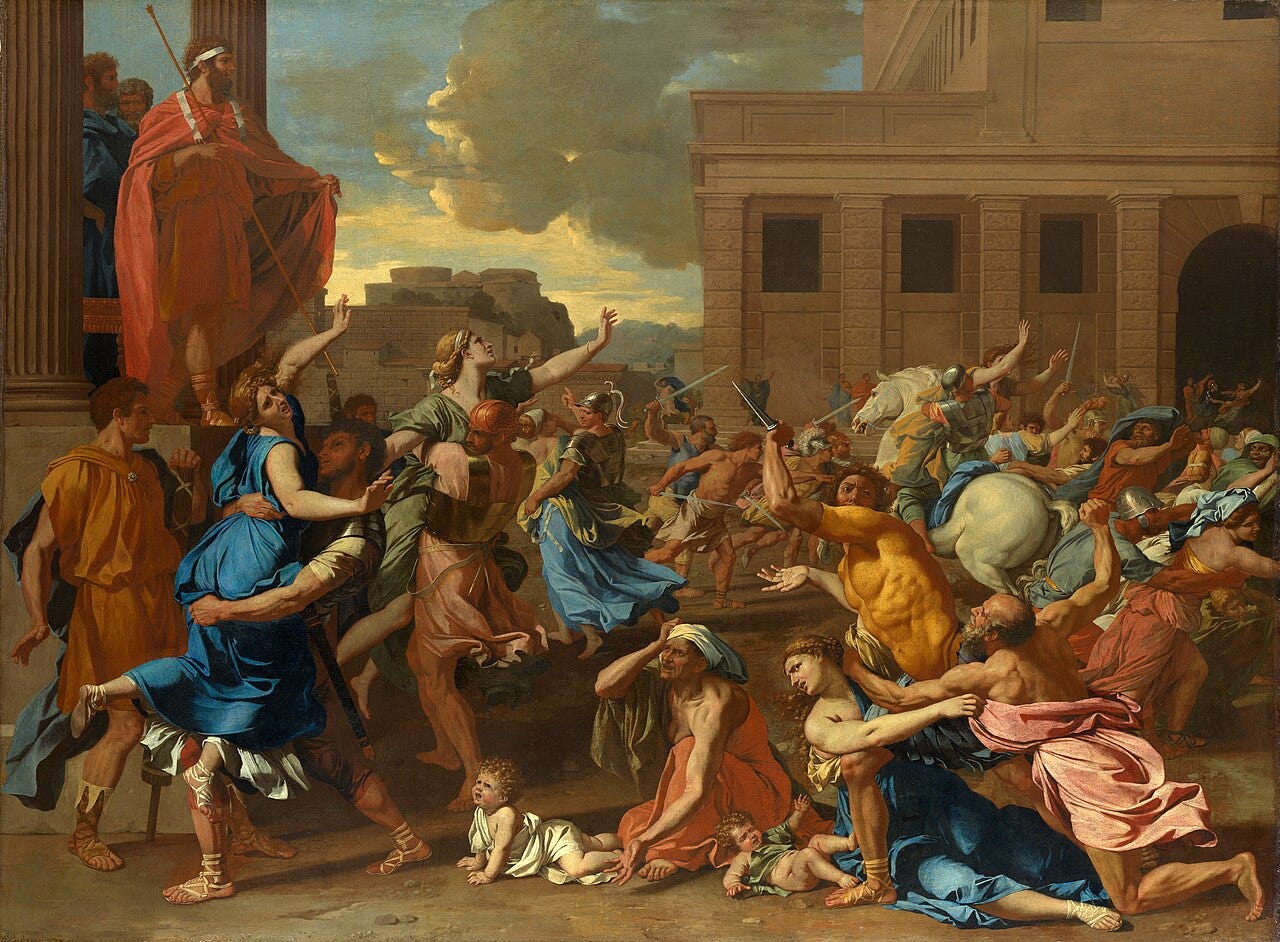
In 1784 Jacques Louis David painted the Oath of the Horatii, three brothers swearing to die for Rome, their arms rigid, the women collapsing in grief.
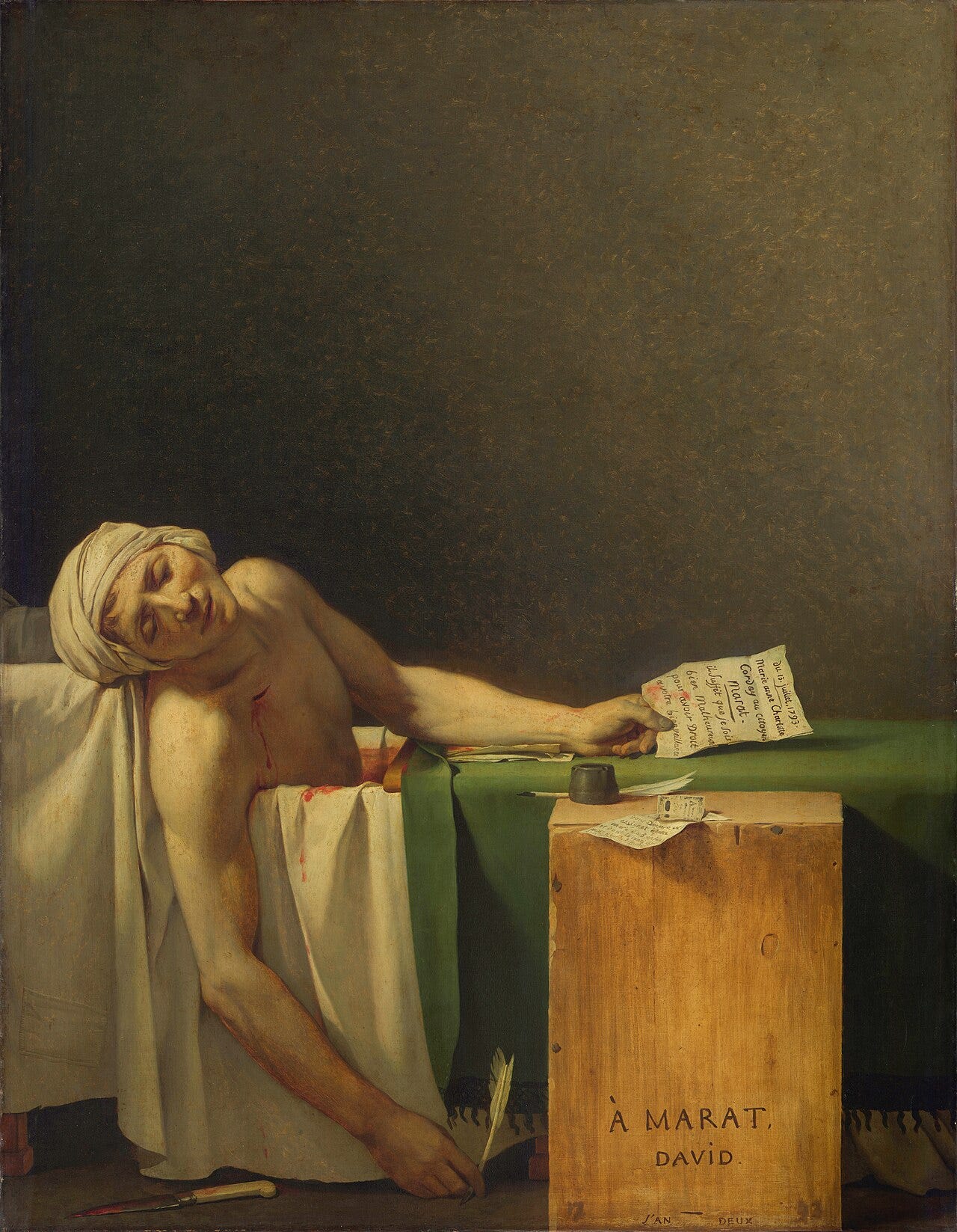
It was a manifesto for a stripped down, heroic style, and a call to duty on the eve of the French Revolution. His Death of Marat turned a murdered radical into a secular martyr.
David made history painting feel urgent, political and absolutely of its moment.
When current events became history painting
The most ambitious painters aimed the grandest genre at the news.
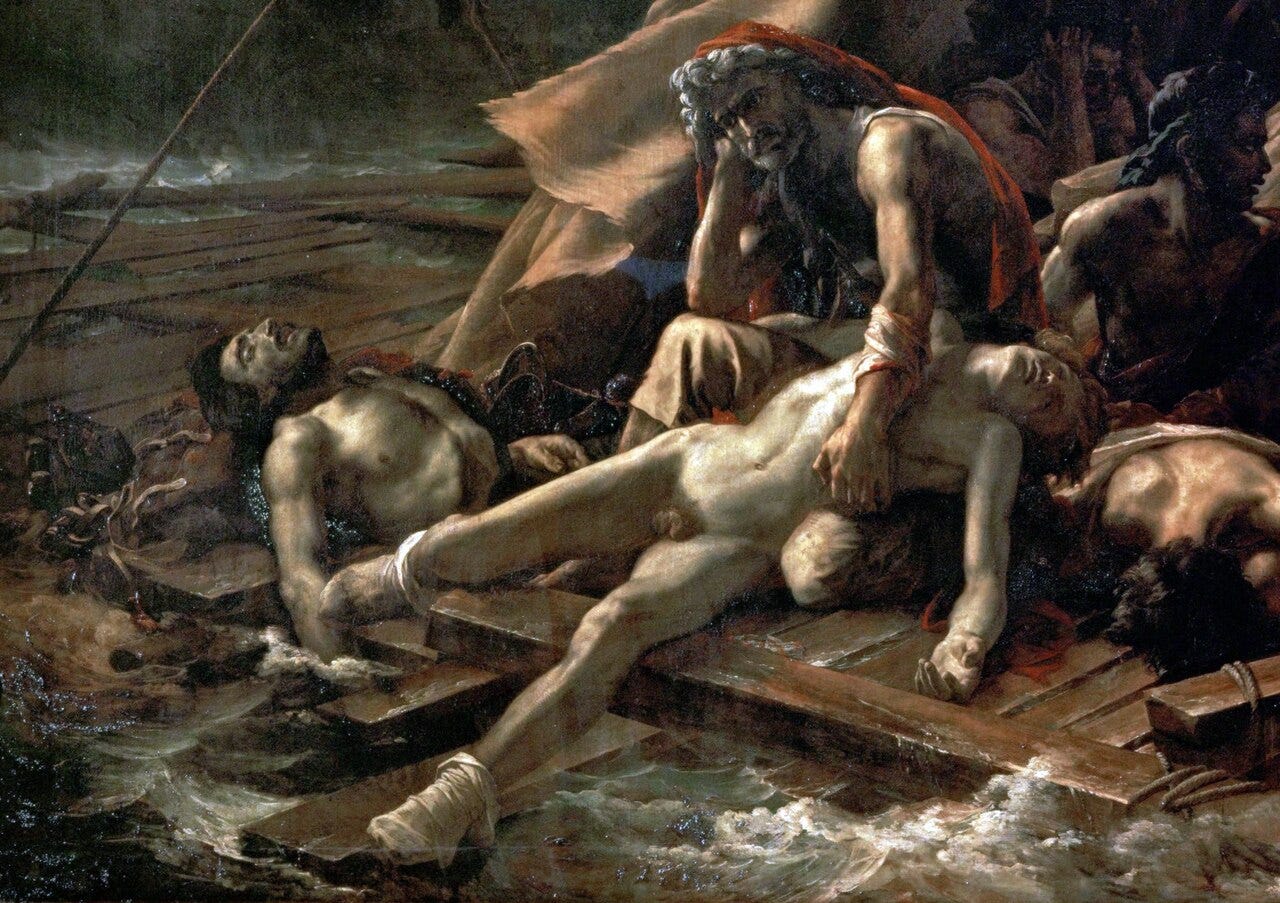
Theodore Gericault painted the Raft of the Medusa in 1819, a recent shipwreck scandal blown up to nearly five by seven meters, the scale once reserved for kings and saints.
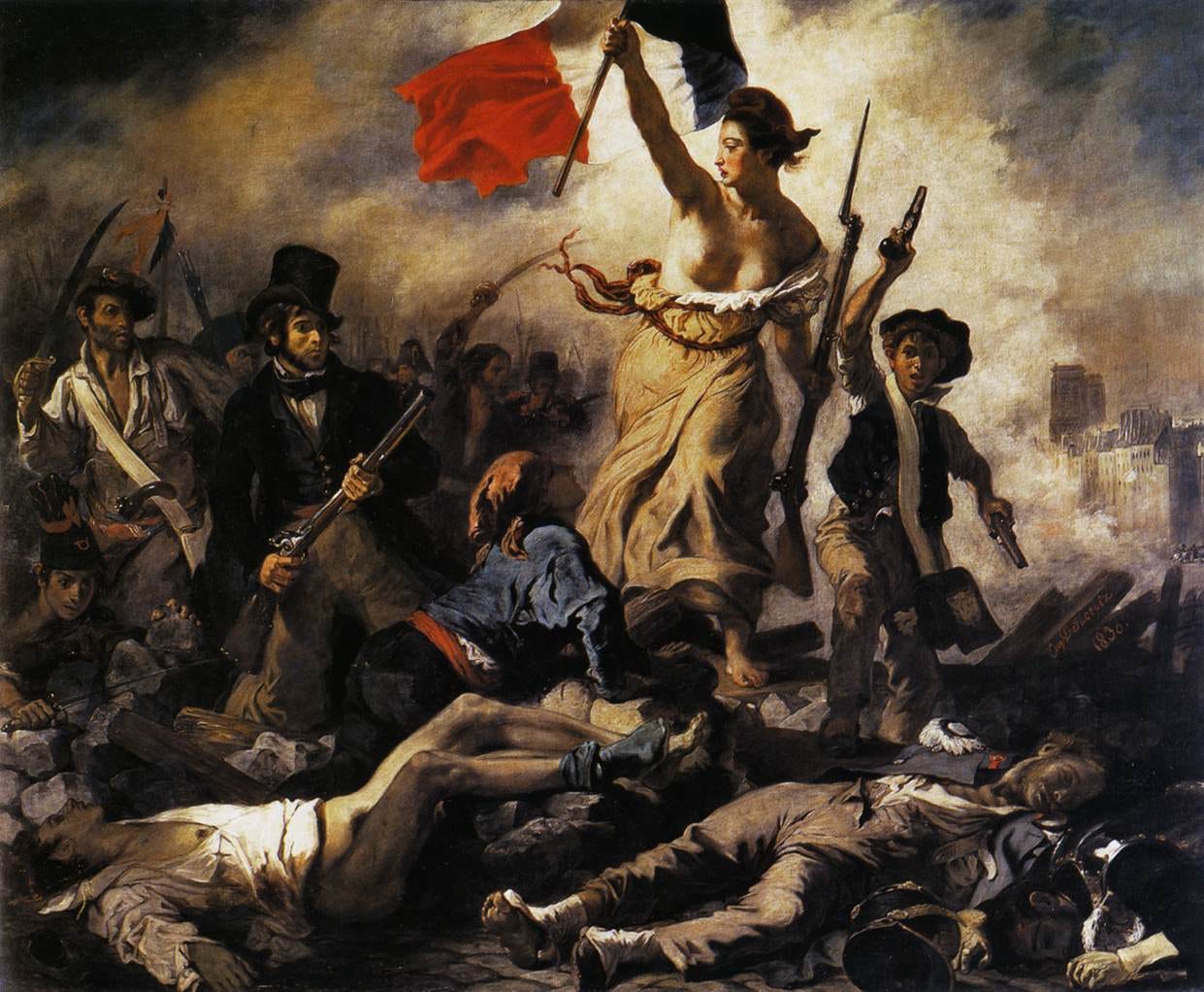
Eugene Delacroix painted Liberty Leading the People in 1830, nearly three meters tall, raising a street uprising to the level of myth. They smuggled the present into the most prestigious frame in art.
A century later, Jacob Lawrence pushed the same idea into his own era. His sixty panel Migration Series, painted between 1940 and 1941, turned the recent journey of six million Black Americans out of the rural South into grand historical narrative.
The fall from the top
Then the ladder turned upside down.
Through the 1800s, the prestige drained out of history painting. Audiences and then artists turned to modern life, to landscape, to Impressionism, to the ordinary.
The huge mythological canvases the academies prized began to look stiff and dated, while the once lowly genres flourished.
The genre crowned highest aged the worst, which I find the great irony of the whole hierarchy.
Yet the form never quite died. Pablo Picasso's Guernica, painted in 1937 after the bombing of a Basque town, stretches nearly eight meters wide. It is a history painting by any honest measure: a current atrocity raised to vast, grave, public scale.
History painting, the big questions
What is history painting? Grand, multi figure painting of noble action from history, the Bible, myth or literature.
Who started it? The idea was set out by Leon Battista Alberti in 1435, who called the meaningful story, or istoria, the painter's highest task.
What is the highest genre in the hierarchy? History painting. Below it sat portrait, genre, landscape and still life.
How is it different from genre painting? Genre shows anonymous people in daily life. History painting shows noble, meaningful action from myth, religion or the past.
What are famous examples? David's Oath of the Horatii, Gericault's Raft of the Medusa, Delacroix's Liberty Leading the People.
Is it still made today? Rarely under that name, but Picasso's Guernica is its modern descendant.
Why did it decline? Tastes shifted to modern life, landscape and Impressionism, and the grand style came to seem dated.
More secrets to unlock


The top of the ladder, the bottom of the line
The academies crowned history painting and left the still life at the foot of the ladder. Modern taste nearly flipped that order.
Fittingly, the genre's one undisputed twentieth century landmark, Picasso's Guernica, now hangs in a museum of modern art, the Reina Sofia in Madrid.
The German painter Anselm Kiefer picked the genre back up decades later, building his own history paintings out of straw, lead and ash to confront his country's wartime past. His career is covered in Anselm Kiefer, The Complete Story.
