
Iconography is the study of the symbols and subjects in art, and the visual code that lets you read them. It is how you know a figure holding keys is Saint Peter, a skull on a desk means death, and a white lily means purity.
Most of these signs were once common knowledge, read at a glance. Today we walk past them without noticing the clues are there.
The hidden vocabulary
What it is: the study and identification of symbols and subjects in art.
Why it matters: it turns a pretty picture into a text you can read.
Attributes: objects that name a figure, like keys for Saint Peter.
Hidden meaning: everyday things often carry coded messages.
The scholar: Erwin Panofsky built the modern method for reading them.
Keep learning art the fun way


How to read a painting
For most of Western history, painting was made for viewers who knew their symbols by heart even without reading words.
A patron did not need a label to recognize a saint. The objects did the work. Learn the system and you stop seeing decoration and start seeing meaning.
That is what iconography studies: not how a painting looks, but what it says, whether it is a portrait or a still life or an altarpiece.
The saints and their props
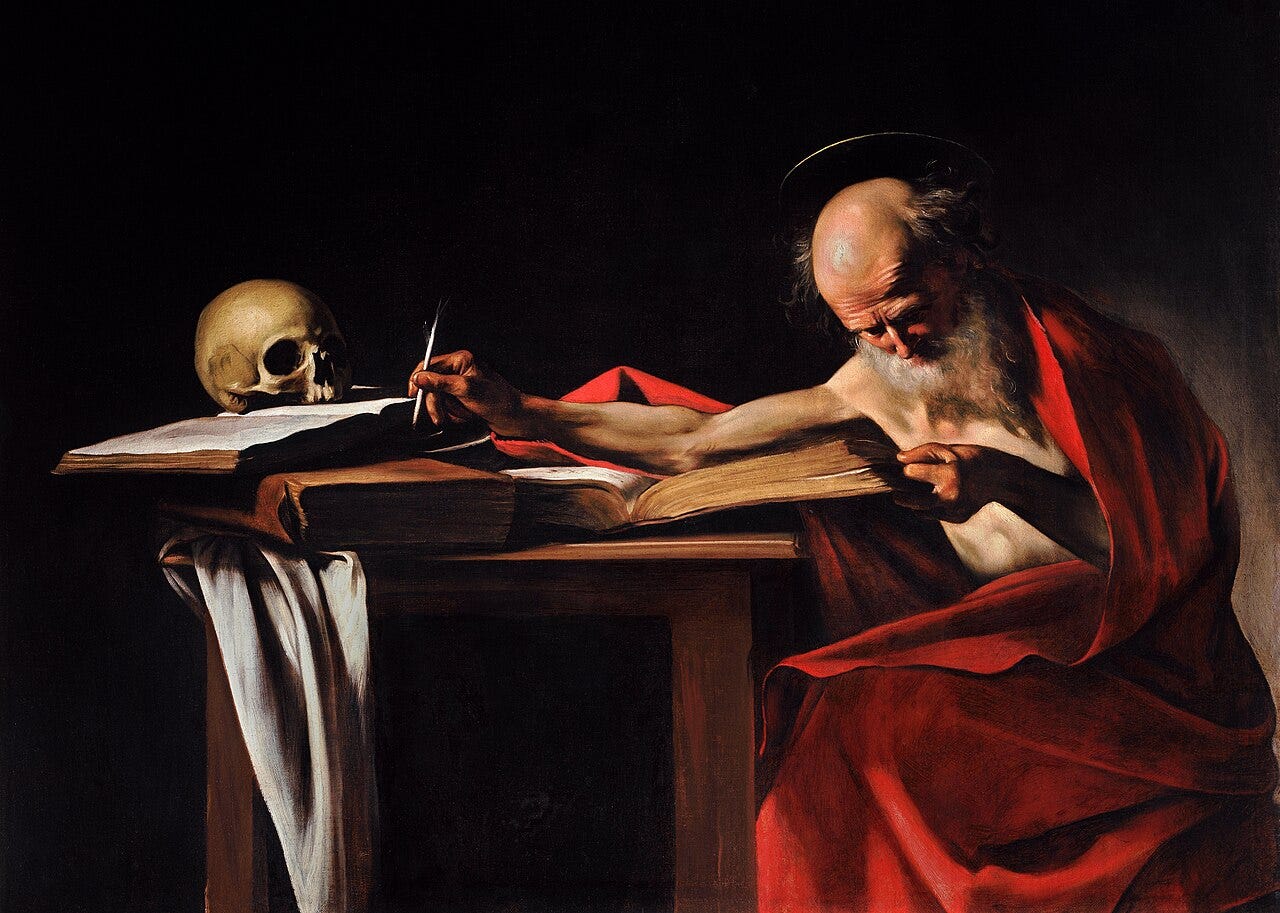
Saints come with attributes, objects that identify them at a glance, usually tied to their life or their death. A painter like Caravaggio could make a saint unmistakable with a single prop and a shaft of light.
A few of the regulars:
Keys: Saint Peter, keeper of the gates of heaven.
A spiked wheel: Saint Catherine, who was sentenced to it.
A lion: Saint Jerome, his companion in the wilderness.
Arrows: Saint Sebastian, shot and left for dead.
A gridiron: Saint Lawrence, martyred on one.
Once you know the props, you can name the cast of almost any altarpiece, which I find absurdly satisfying.
A language of objects
Beyond the saints, a whole vocabulary of things carries meaning.
A lamb stands for Christ, the sacrifice.
A skull or a snuffed candle means death, the core idea of every vanitas.
A dog at someone's feet means loyalty and faith.
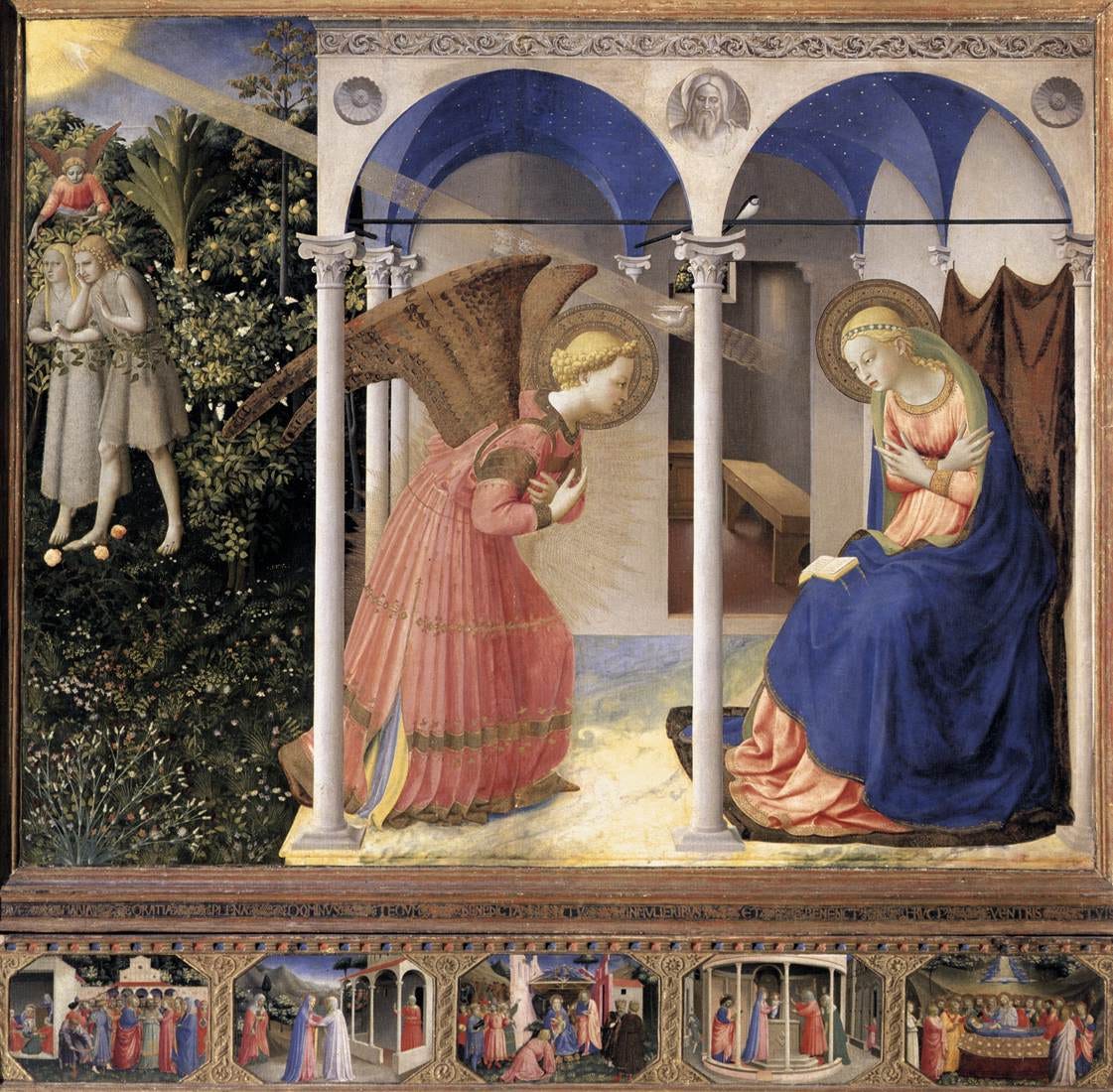
A white lily means purity, and turns up in almost every Annunciation.
A pomegranate, splitting open with seeds, points to resurrection.
None of it is random. In a good painting, the objects do as much work as the faces.
And we never stopped. A skull emoji, a red heart, a crown: this is iconography we still read every day, in an instant, exactly like a saint's attribute.
Color was code too
Even the paint carried meaning.
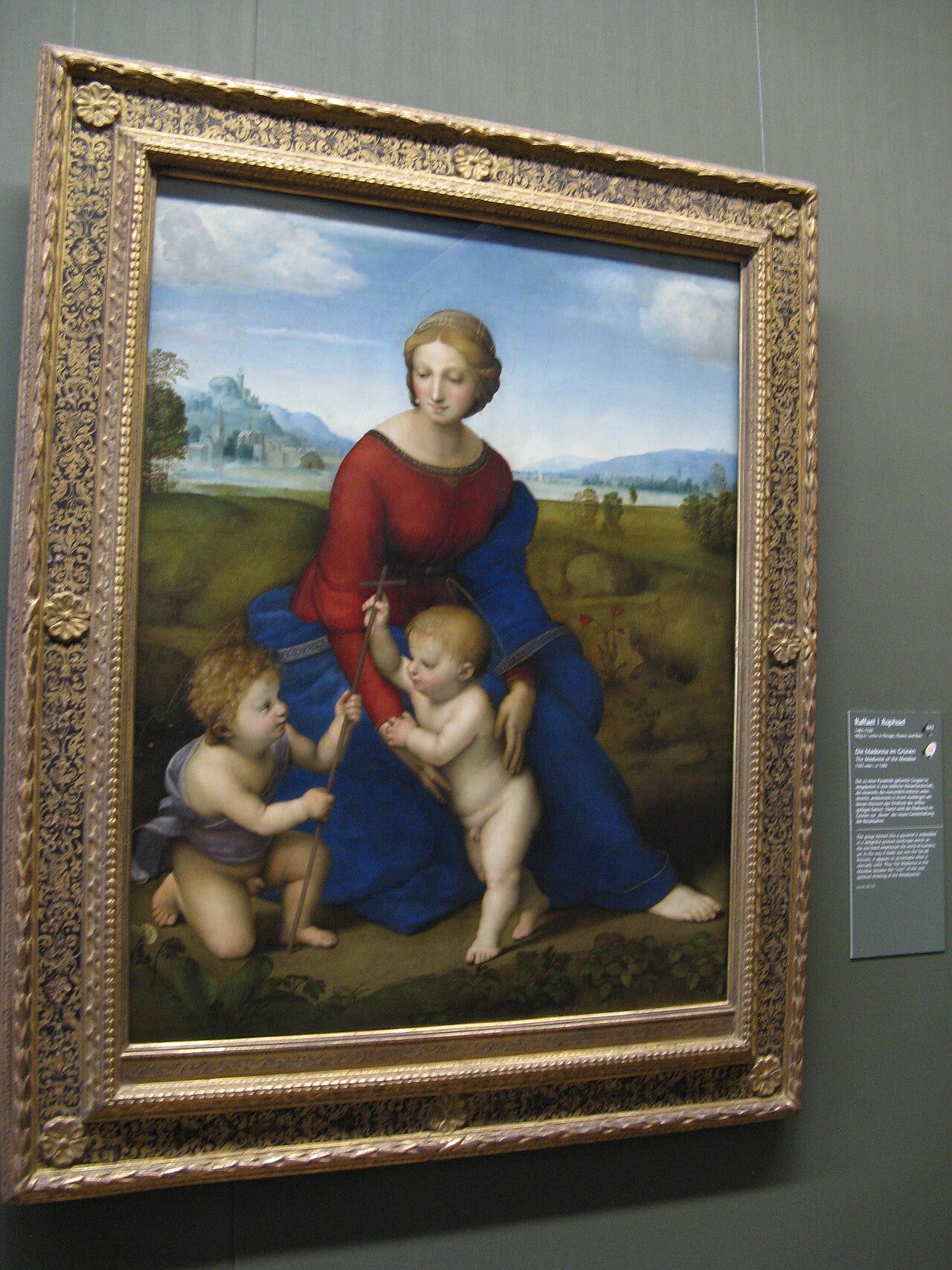
The Virgin Mary is almost always draped in deep blue, because that blue was ultramarine, ground from lapis lazuli hauled from Afghanistan and for centuries more costly than gold by weight.
Spending it on her robe was a display of devotion and of the patron's wealth at once.
Color carried as much as the figures. It was budget, status and theology, mixed on the palette.
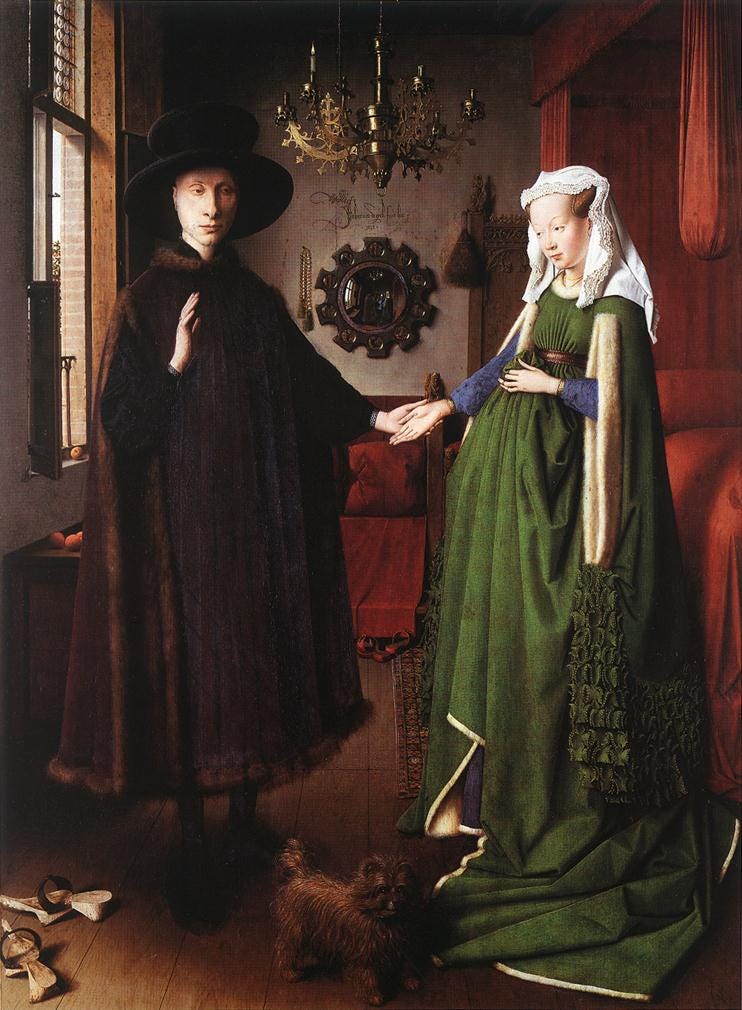
The Arnolfini portrait: a room full of clues
No painting rewards a close reading like Jan van Eyck's Arnolfini Portrait from 1434.
Almost everything in the room is a sign. The little dog means fidelity. The single candle burning in daylight suggests the eye of God.
The fruit on the sill hints at wealth and at Eden. The shoes, slipped off, mark the floor as something close to holy ground.
This is disguised symbolism: real objects in a real room, each one quietly carrying a second meaning.
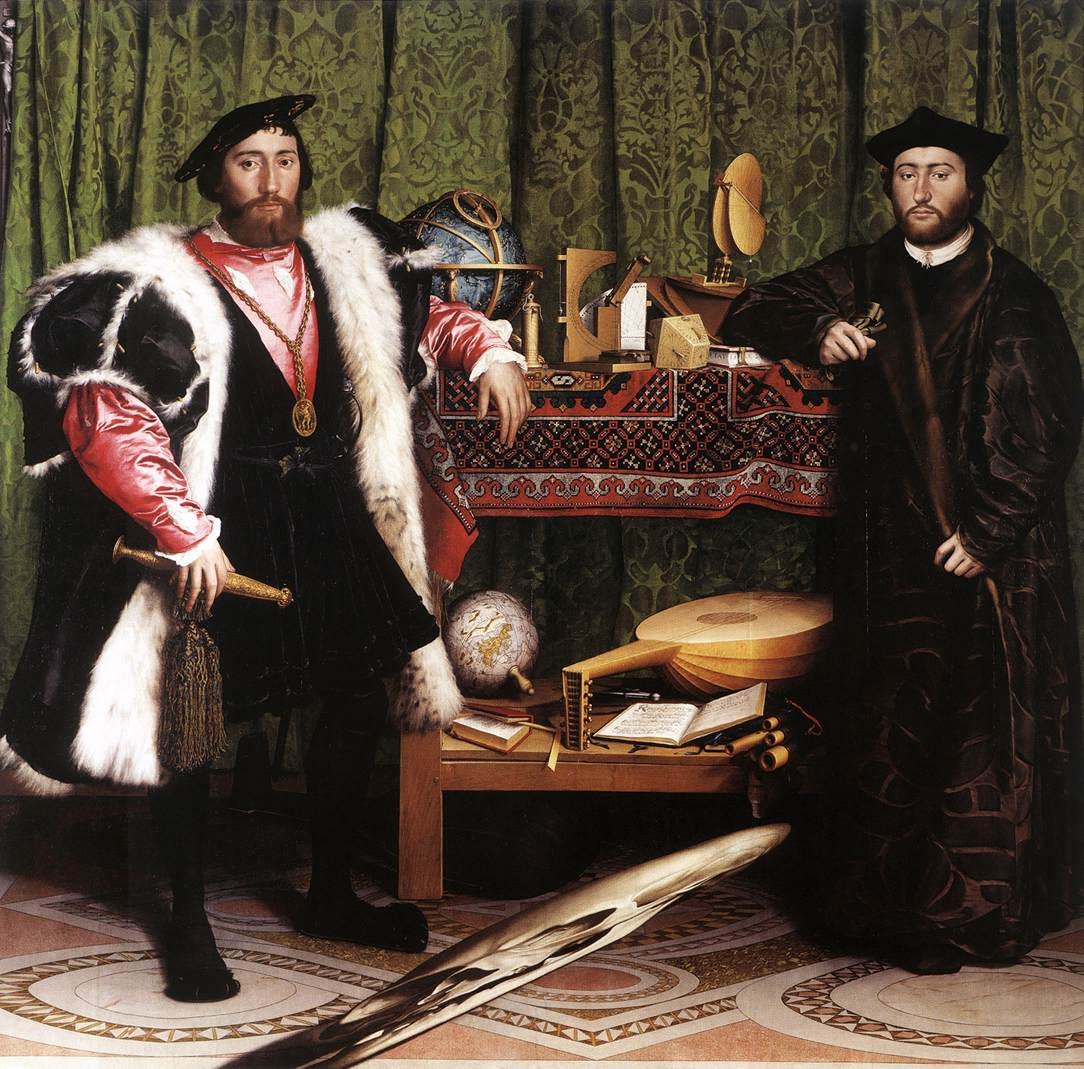
Reading versus decoding
In the 20th century Erwin Panofsky split the act of reading art into levels in his Studies in Iconology of 1939, building on Aby Warburg, who had founded the study of how images carry cultural memory.
First you see a man lifting his hat, the plain facts. Then you recognize it as a greeting, the symbols and stories a culture shares. Then you reach the deepest layer, what the whole image reveals about its time and mind.
That last step has its own name, iconology. Iconography identifies the symbols. Iconology asks what they meant to the people who made and saw them.
Turning that reading into prose has its own literary tradition too, called ekphrasis, running from Homer's shield of Achilles to modern poets describing paintings line by line.
Reading these coded signs is the game behind 7 secrets hidden in famous paintings.
For a short, authoritative primer on reading images, see the Tate glossary entry on iconography.
Iconography versus symbolism, and other questions
What is iconography in art? The study and identification of the symbols, subjects and attributes in a work, and the code used to read them.
What is an attribute? An object that identifies a figure, such as keys for Saint Peter or a wheel for Saint Catherine.
Iconography versus symbolism? Symbolism is the use of symbols itself; iconography is the scholarly study that reads it.
What does a skull mean in a painting? Mortality, a reminder that life is short. It is the key symbol of the vanitas.
Iconography versus iconology? Iconography names the symbols. Iconology asks what they meant in their culture.
Who founded iconography? Aby Warburg pioneered it around 1900, and Erwin Panofsky gave it its modern method in the 1930s.
Why is color symbolic? Some colors carried meaning and cost, like the ultramarine blue reserved for the Virgin.
More secrets to unlock


The dictionary the world forgot
Renaissance viewers read these signs as fluently as we read a road sign, no caption needed. The meaning was simply understood.
Recovering that lost dictionary is the detective work I love most in art history. Van Eyck even hid his signature in the Arnolfini room, on the back wall in careful Latin: Johannes de Eyck was here, 1434.
