
Blindness in art is a subject painters took personally. Bruegel painted six blind men falling into a ditch with such accuracy that doctors have since diagnosed their conditions, and Monet, Degas and Cassatt all worked while losing their own sight.
Learn art the fun way
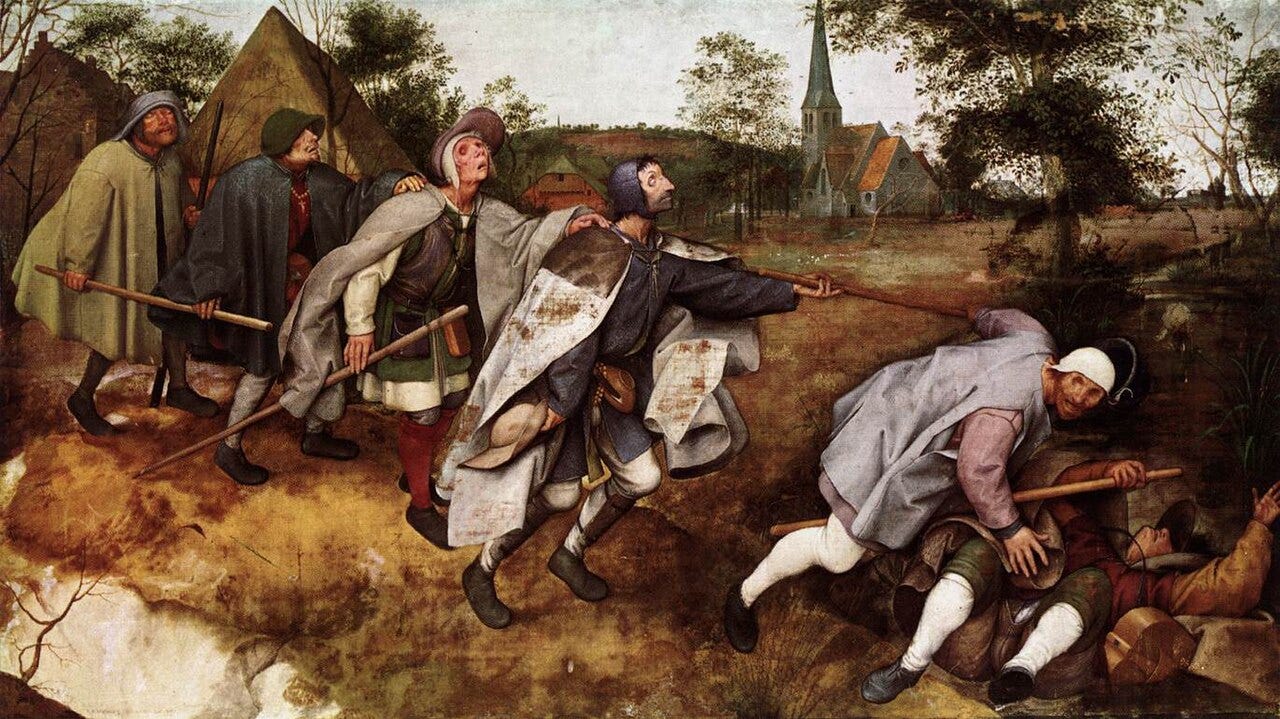
1 | The Parable of the Blind, Pieter Bruegel the Elder (1568)
Six blind men in a chain stumble toward a ditch, the first already down, the last still walking. Bruegel gave each face a different real condition.
Ophthalmologists have proposed diagnoses including corneal leukoma and removed eyes: observation, not symbol. I go into his whole story in Pieter Bruegel the Elder.
2 | The Blind Girl, John Everett Millais (1856)
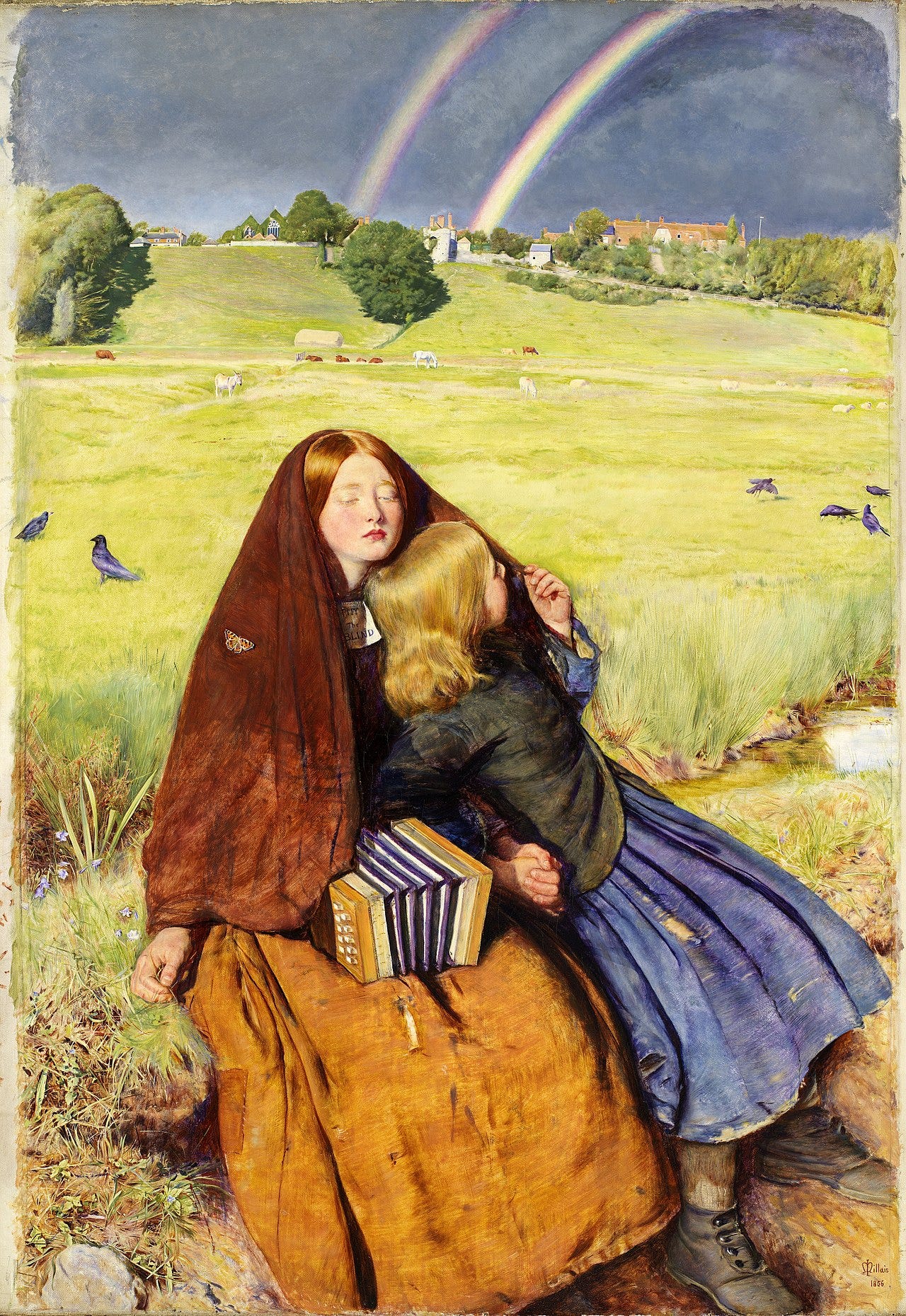
A blind musician rests in a field with her sister, a double rainbow behind them, a butterfly on her shawl. She touches the grass while everything visible goes unwitnessed.
Millais repainted the rainbow after getting the color order wrong. More on him in John Everett Millais.
3 | The Blind Men of Jericho, Nicolas Poussin (1650)
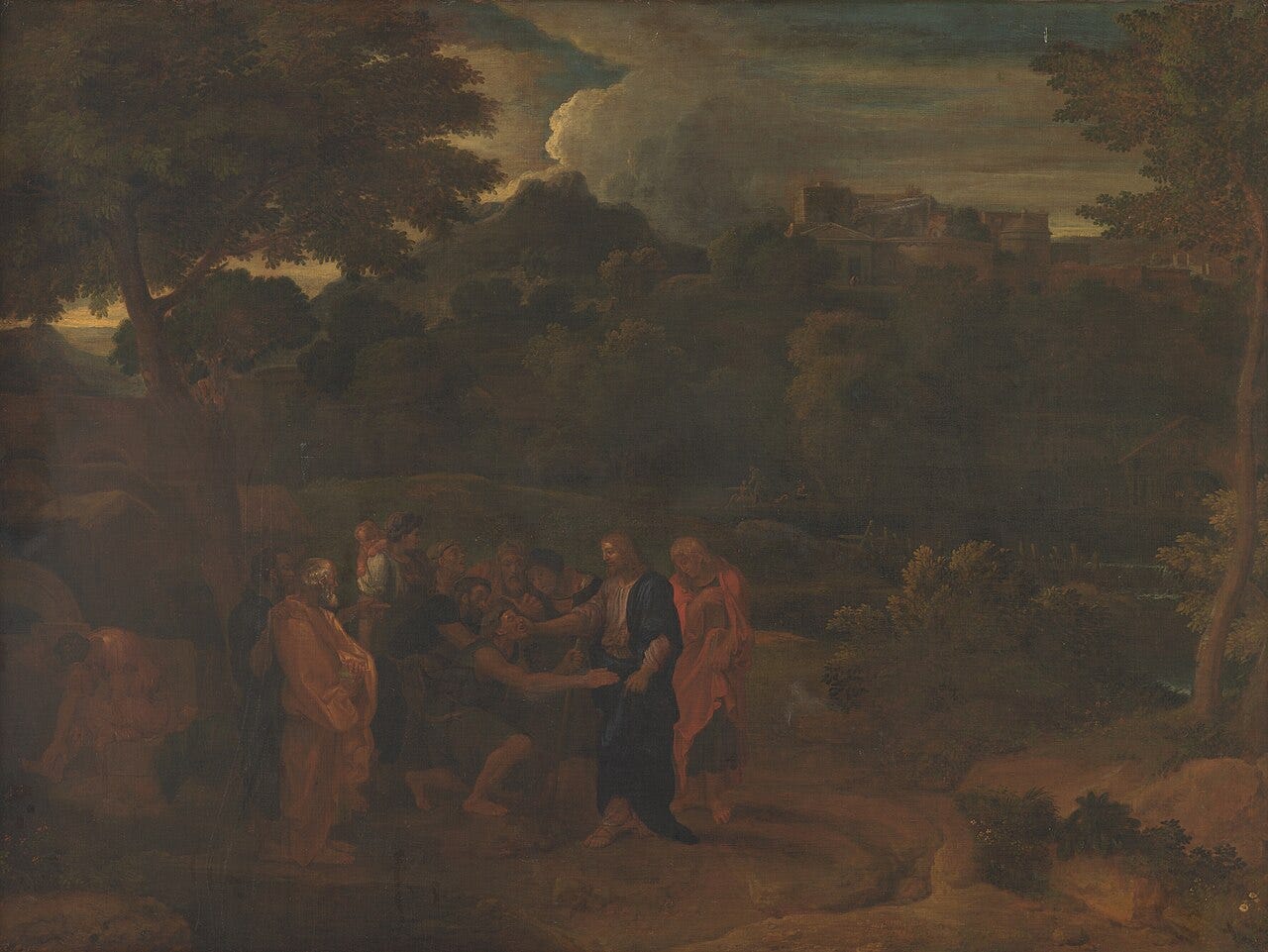
Christ heals two blind men on a road outside a walled city, painted with the calm geometry Poussin used for everything, miracles included.
He argued that a painting should be read like an argument, not felt like a shock. The rest of his life is in Nicolas Poussin.
4 | The blind beggars of Jusepe de Ribera (1630s)
Ribera painted blind beggars and blind philosophers with the same dignity and the same dirt, using real Naples street models.
One of them holds a paper he cannot read, which is the joke and the tragedy at once. I cover him properly in Jusepe de Ribera.
5 | The Blinding of Samson, Rembrandt (1636)
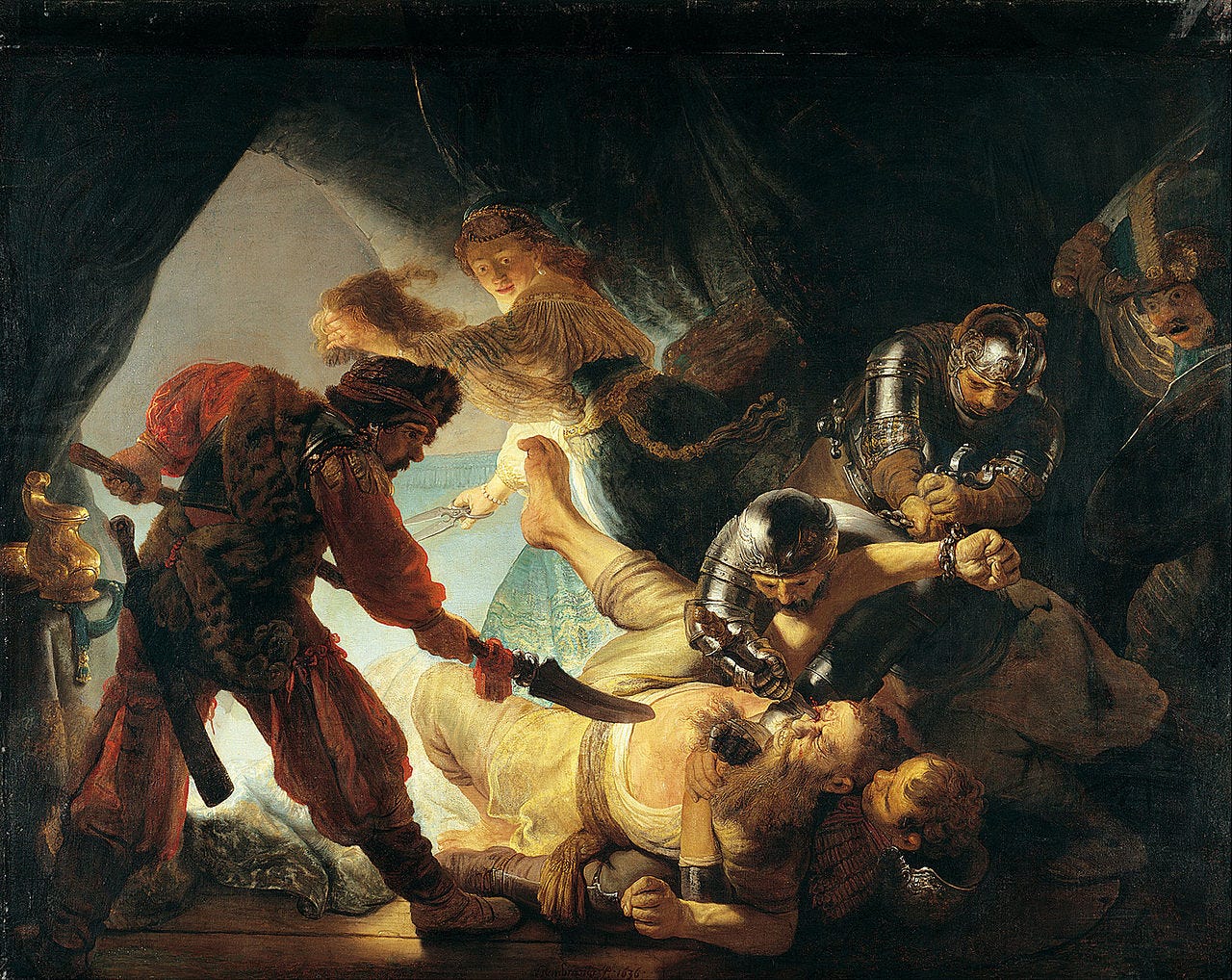
Rembrandt painted the exact second the blade goes in, Samson’s heel spasming, Delilah running out with the scissors and his hair.
It is his most violent canvas, painted at 30. His full story sits in Rembrandt.
Rembrandt painted it in 1636 and it is one of the most violent pictures of the Dutch Golden Age. He sent it to Constantijn Huygens, the secretary who had got him his court commissions, apparently as a gift.
6 | Monet and his cataracts (1912 to 1923)
Monet was diagnosed with cataracts in 1912. Reds turned muddy, blues disappeared, and the Japanese bridge canvases went orange and brown.
After surgery in 1923 he saw blue again and destroyed or repainted work from those years. The full comparison is in Monet’s Japanese bridge before and after.
7 | Degas and the failing eye
Degas began losing central vision in his thirties and moved from fine oil detail to pastel, then to wax sculpture he could judge by touch.
By the end he modeled dancers almost entirely with his hands. I go into his whole story in Edgar Degas.
8 | Mary Cassatt’s last decade
Cataracts and diabetes ended Cassatt’s career around 1915. Several operations failed, and the painter of children’s faces spent her final years unable to work.
She put her energy into the campaign for women’s suffrage instead. More on her in Mary Cassatt.
Cataracts and diabetes ended her work around 1914 and she was effectively blind for her last twelve years. She had spent her career painting the act of looking, mothers watching children, women at the theatre with opera glasses.
9 | Tobit and Anna, Rembrandt (1626)
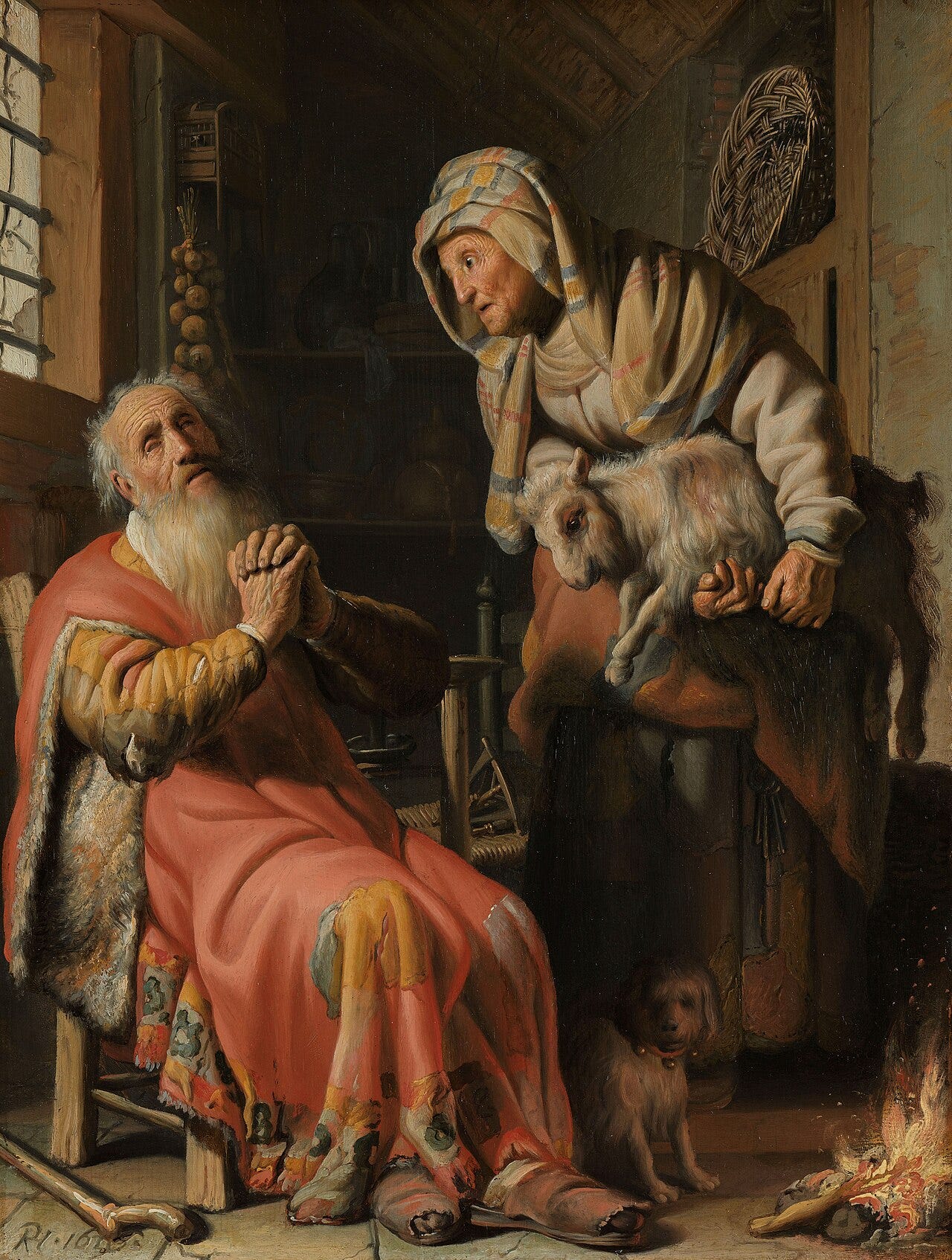
Blind old Tobit accuses his wife of stealing a goat she was actually given. He is wrong, and he cannot see her face to know it.
Rembrandt was 20 and already painting the loneliness inside a household argument.
The story is from the Book of Tobit, where a blind old man is cured by his son. Rembrandt painted it at about twenty, in 1626, and returned to the subject repeatedly, including etchings made forty years later.
10 | Blind man’s buff and the Rococo game
Blindfold games were a Rococo favorite: a young woman gropes forward while everyone watches, and the joke is always about who lets themselves be caught.
Chosen blindness as flirtation, in a century that painted very little real disability.
Fragonard and his circle painted the game as flirtation, with the blindfold as permission. The same motif in a Bruegel or a Goya is not charming at all, which is the difference a century and a country make.
11 | Landscape with Orion, Nicolas Poussin (1658)
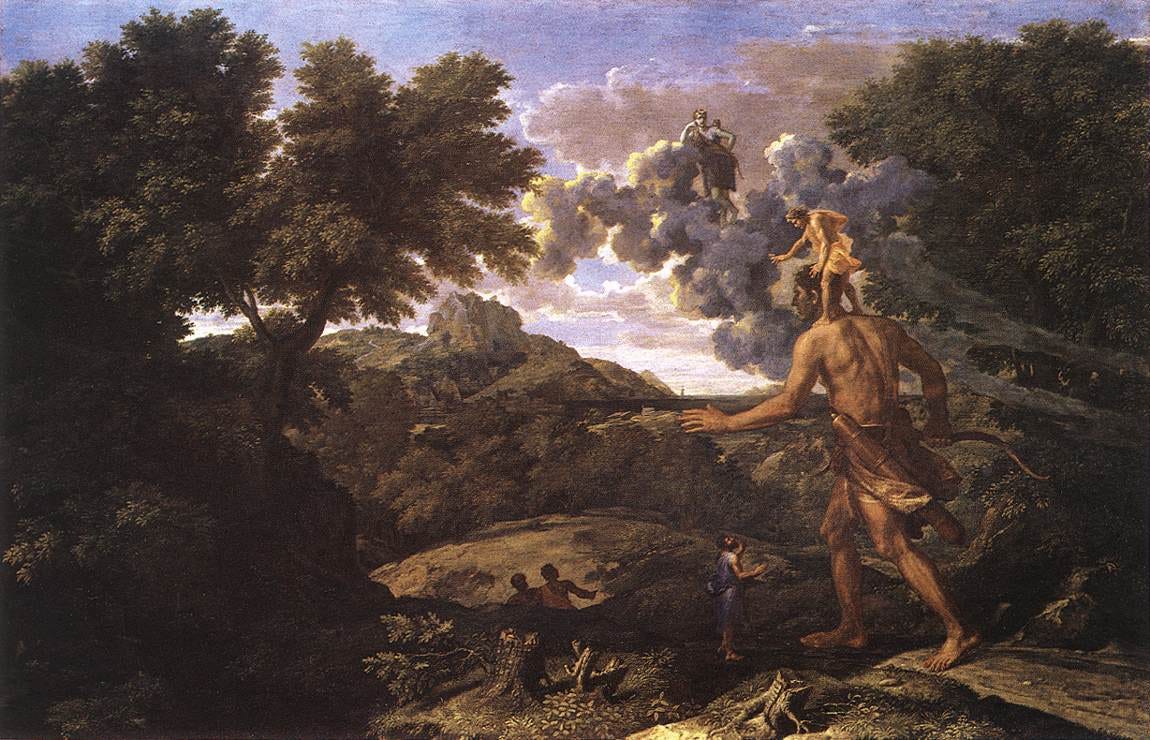
The blinded giant Orion strides through a landscape with a guide on his shoulders pointing him toward the sunrise that will heal him.
A painting about needing someone else’s eyes, by a painter obsessed with how looking works.
Poussin painted it in 1658. The blinded giant walks east towards the sunrise that will restore his sight, with a small guide standing on his shoulders to steer him, exactly as the myth describes.
12 | Christ Healing the Blind, El Greco (about 1570)
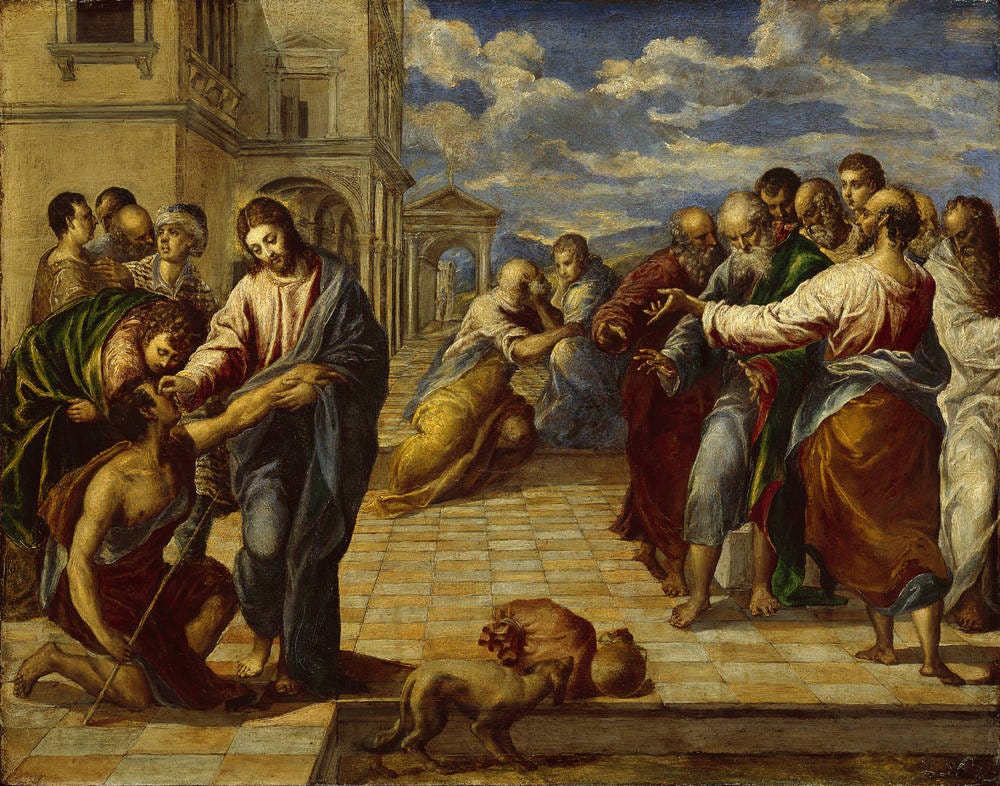
El Greco returned to this subject at least three times across decades and cities, stretching the figures further each time.
The Greek of Toledo I go into it in El Greco.
The Met and the Rijksmuseum both hold works from this list, with the conservation notes published alongside.
What readers ask about sight and its loss
Which famous painters lost their sight? Monet had cataracts, Degas lost central vision, and Mary Cassatt stopped painting after failed eye surgery.
Did Bruegel paint real eye conditions? Modern ophthalmologists think so. Each of his six blind men shows a different, identifiable clinical picture.
Did Monet’s cataracts change his painting? Yes. His late Japanese bridges turned red and brown, and after surgery in 1923 he reworked or destroyed several.
Which of these is the icon? Bruegel’s Parable of the Blind, with Millais’ Blind Girl as the Victorian answer.
Where do I find them in person? Naples for Bruegel, Birmingham for Millais, Frankfurt for the Blinding of Samson, the Louvre for Poussin.
The postscript is the best part: Bruegel died in 1569, the year after painting the blind men. His son copied the composition repeatedly, which is how it spread while the original stayed in Naples.