
Bread in painting is never only bread. It is the body of Christ on an altarpiece, the last thing in a poor family’s cupboard, and the object Dali chose when he wanted to paint something nobody would suspect. Twelve loaves and what each one is doing there.
Learn art the fun way
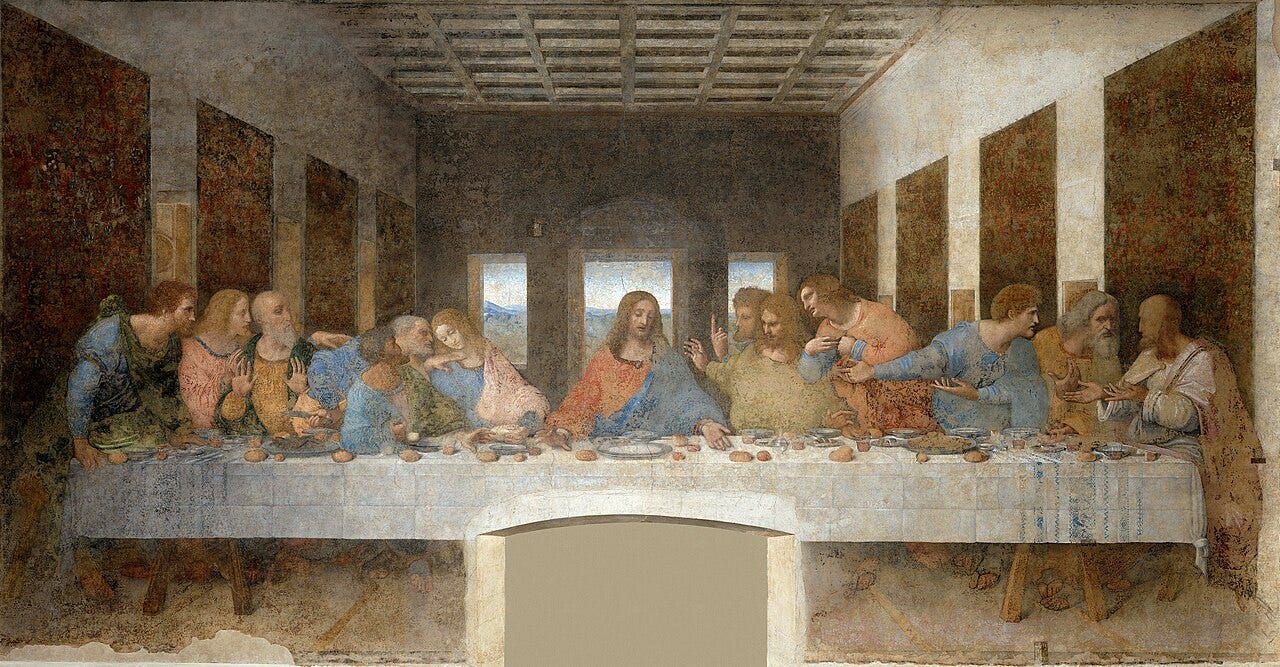
1 | The Last Supper, Leonardo da Vinci (1498)
Bread on a white cloth, in the second when Christ says one of you will betray me. Leonardo painted the table so that the bread and the hands do all the talking.
He painted it in tempera on a dry wall instead of true fresco, which is why it began to fail within his own lifetime. I go through the hidden details in the secret of the Last Supper.
2 | Still Life with Bread and Jug, Diego Velazquez (about 1618)
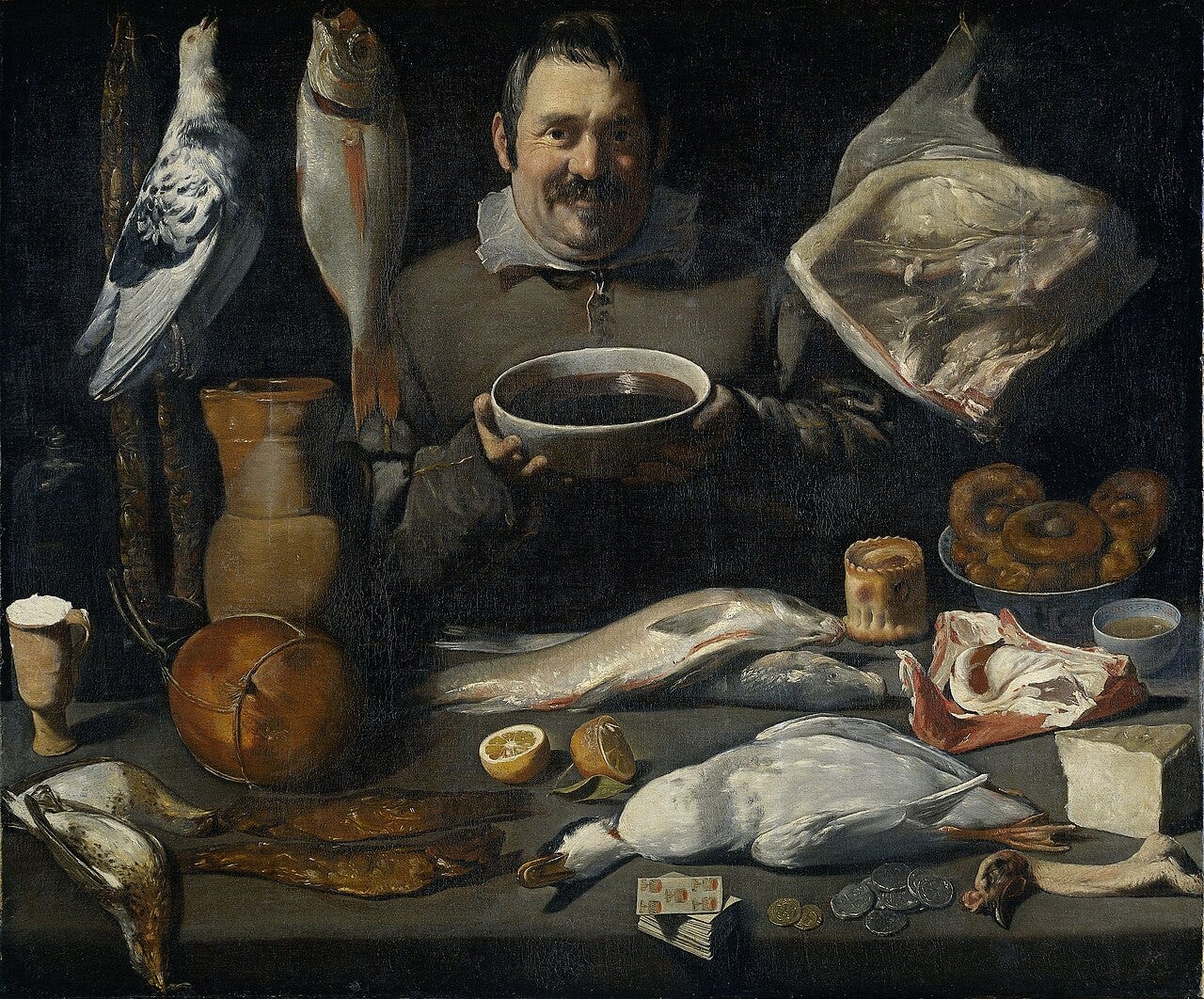
A loaf, a jug, a knife, a cloth. No story, no saints. The young Velazquez treated kitchen objects with the light and the seriousness normally reserved for cardinals.
These Spanish kitchen pieces are called bodegones, and they taught him everything he later used at court. I cover him properly in Diego Velazquez.
3 | Basket of Bread, Salvador Dali (1945)
Four pieces of bread in a basket on a dark ground, painted with a magnifying glass over two months. Dali had painted the same subject in 1926.
He said the later version was the most rigorous work of his life, and exhibited it as a statement against abstraction. More on him in Salvador Dali.
4 | The Supper at Emmaus, Caravaggio (1601)
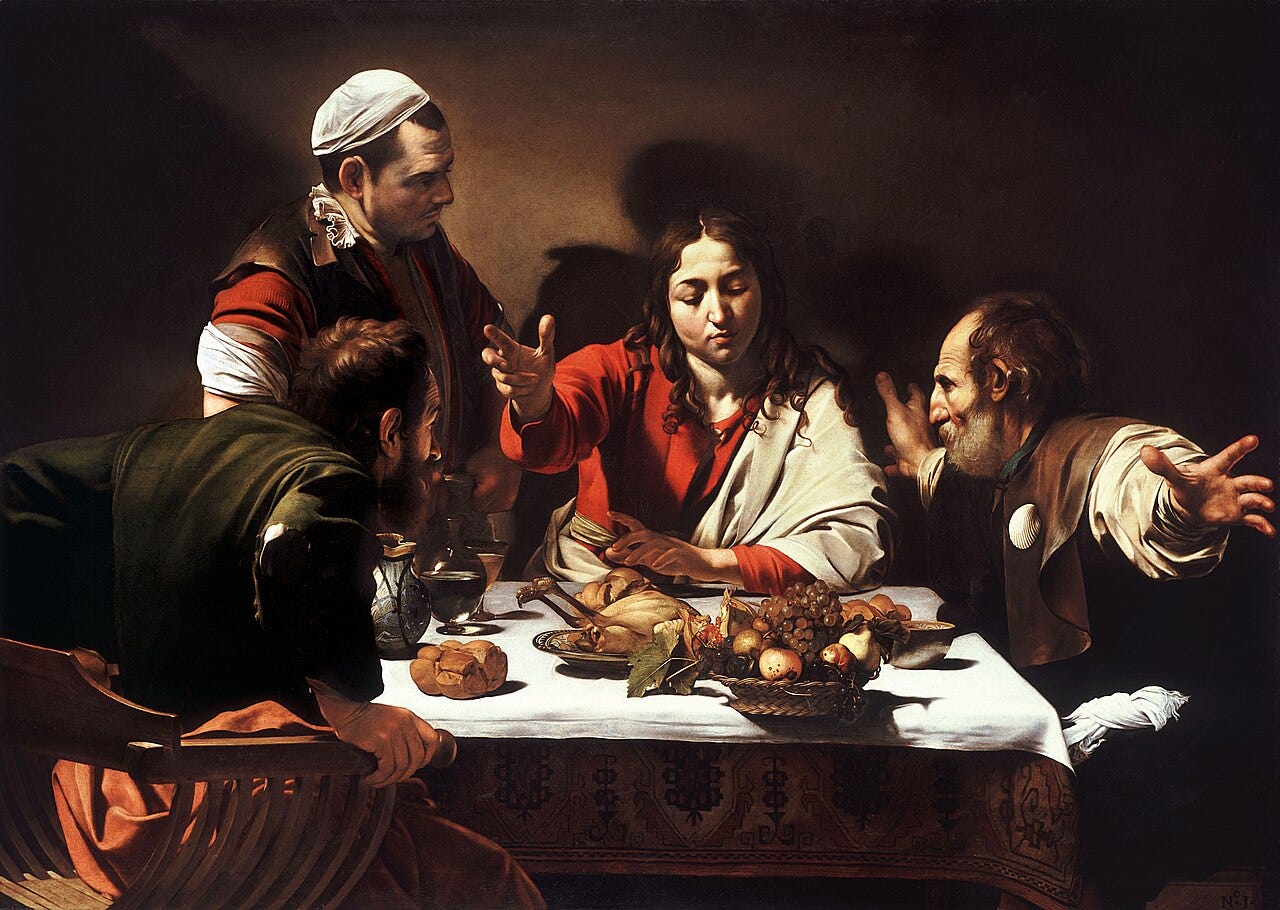
Christ breaks bread and two men suddenly recognise him. One shoves his chair back, the other throws his arms wide. A basket of fruit teeters on the table edge.
The bread is the trigger of the whole scene. The rest of his life is in Caravaggio.
5 | The Potato Eaters, Vincent van Gogh (1885)
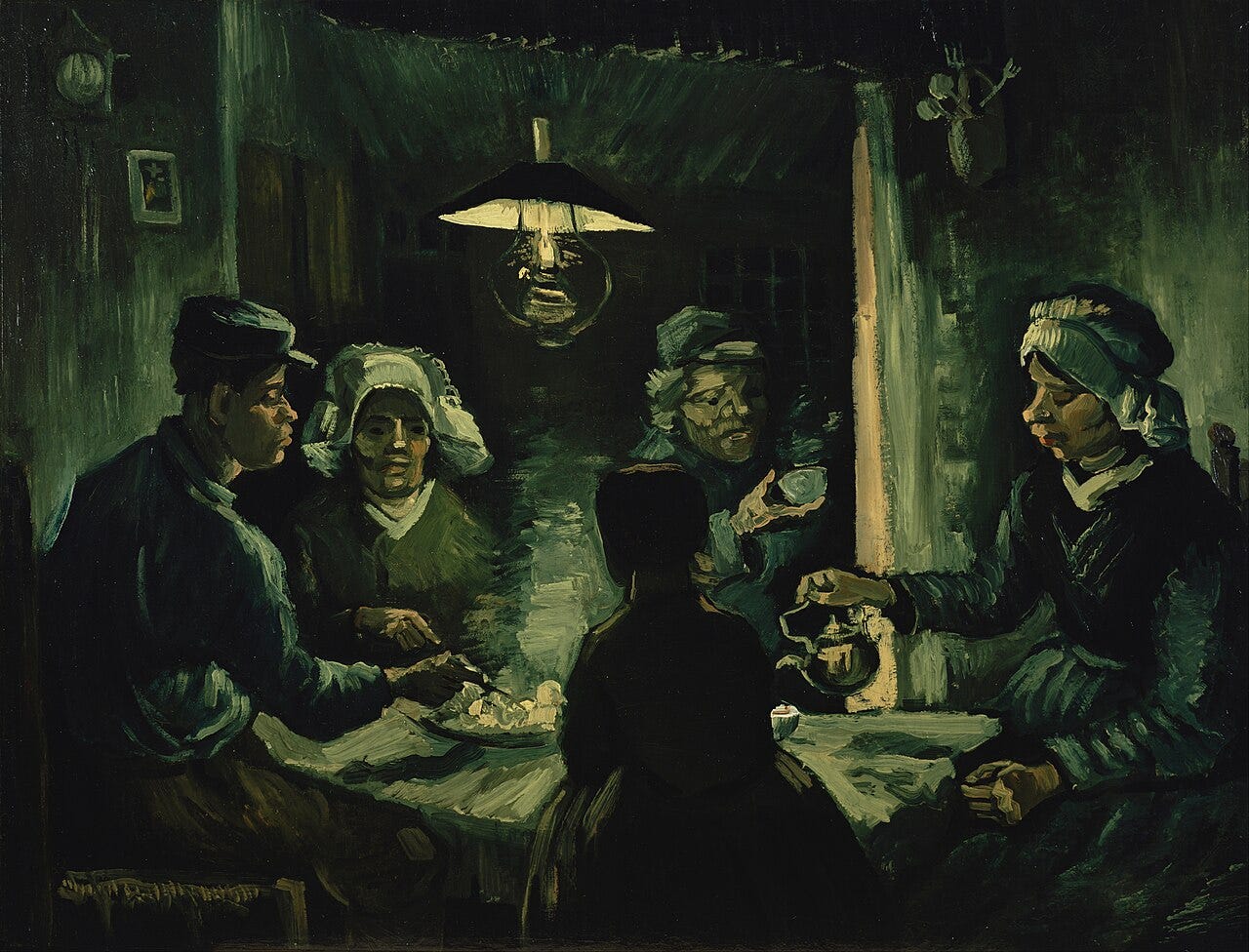
No bread at all, and that is the point. Van Gogh painted a family eating what they could dig, under one lamp, with hands he described as the hands that had worked the earth.
More of that world is in beggars and the poor in painting.
6 | The Milkmaid, Johannes Vermeer (about 1658)
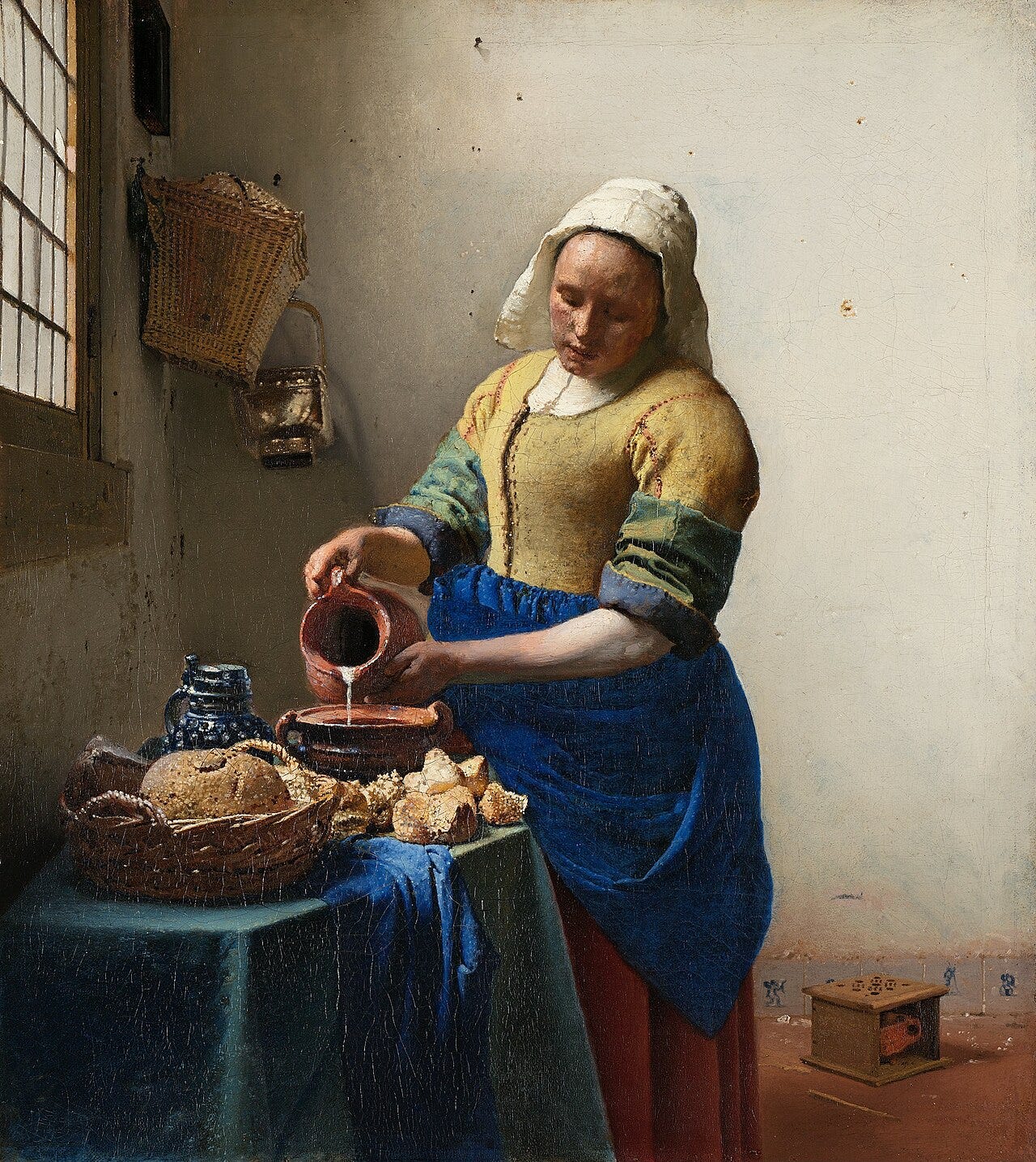
Bread on the table, some of it broken, in a basket and on a blue cloth. Vermeer painted the crust with tiny points of light, one of the most copied passages in Dutch art.
Everything else in the room was simplified. The bread was not. More kitchens in kitchens and cooks in painting.
7 | Dutch breakfast pieces, and the half eaten roll
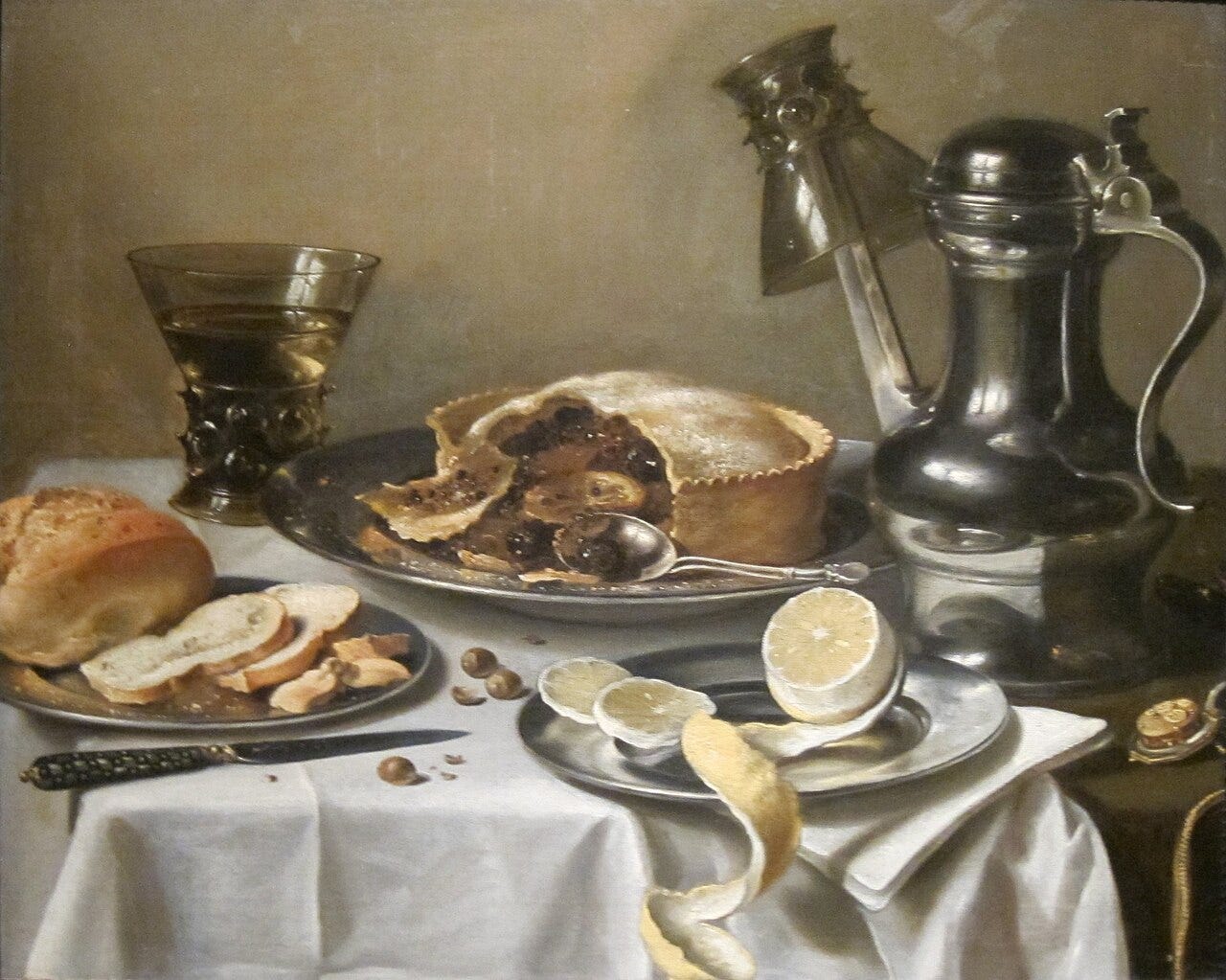
Painters like Claesz and Heda built a whole genre on a tipped glass, a peeled lemon and a bread roll with a bite taken out of it.
The unfinished meal means someone has gone, which means time is passing, which means you will too. The grammar is in what is vanitas.
8 | The Miracle of the Loaves and Fishes
Five loaves feeding five thousand gave painters a rare chance to show generosity rather than suffering, and Tintoretto, Murillo and Lanfranco all took it.
It is one of the few Bible scenes where the crowd is happy, which may explain why it never became a blockbuster subject.
9 | The Gleaners, Jean Francois Millet (1857)
The bread is not painted, it is implied: three women gathering the grain left after the harvest, which is the only flour they will have.
Critics called it political. I cover that in How Millet Shaped Van Gogh.
Gleaning was a right written into French law, allowing the poor to take what the harvesters left. Millet shows three women bent double over almost nothing, and the Salon of 1857 read it as a threat.
10 | Bread queues and the twentieth century
After 1914, bread stops being a symbol and becomes a queue. Soviet, German and American painters all drew the line outside the bakery.
The loaf had gone from sacrament to ration in about four centuries.
Bread riots ran through European history, and the queue becomes a subject in the twentieth century with war rationing. A painted queue is a way of showing a state, not a person.
11 | Arcimboldo and the head made of food
Arcimboldo built portraits out of ingredients, bread rolls included, for a Habsburg court that paid well for the joke.
Turn some of them upside down and the face becomes a plate again.
He served three Habsburg emperors as court painter and produced the composite heads as courtly wit, not as surrealism. The bread and the loaf appear in the head representing summer and the harvest.
12 | The Peasant Wedding, Pieter Bruegel the Elder (about 1567)
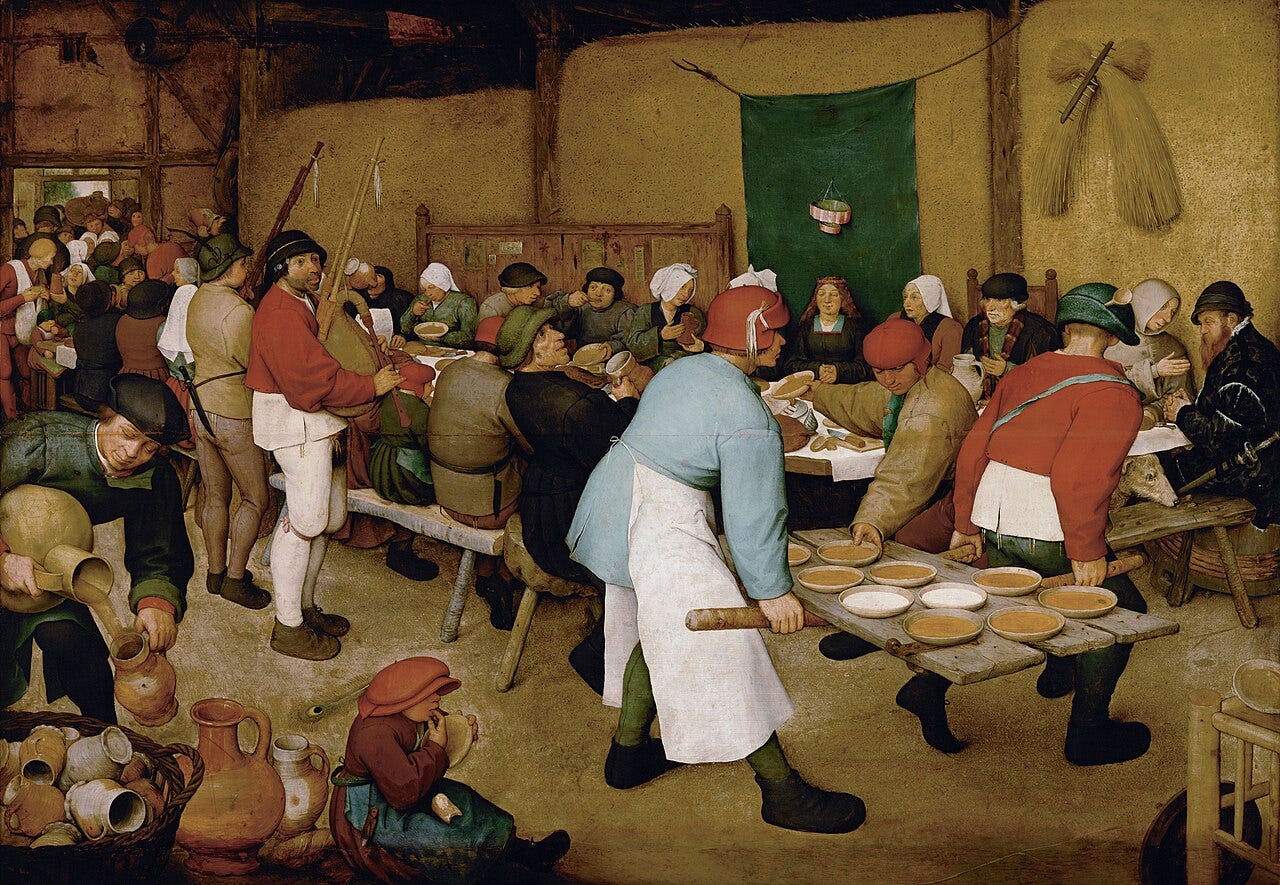
Bowls are carried on a door taken off its hinges, and bread is stacked in a basket at the edge of the frame. The bride sits doing nothing while everyone eats.
Bruegel painted food as logistics. More on him in Pieter Bruegel the Elder.
Bread is being handed round on a door taken off its hinges, because the barn has no table long enough. Bruegel painted it around 1567 and it hangs in Vienna.
Bread on the table, your questions
Why is bread everywhere in religious painting? Because of the Eucharist. Bread is the body of Christ, so any loaf on an altarpiece is doing theological work.
Which is the best known bread painting? The Last Supper by Leonardo, with Dali’s Basket of Bread as the modern answer.
Why did Dali paint bread twice? He returned to the subject in 1945, nineteen years after the first version, and called it the most disciplined work he had made.
What does a half eaten roll mean in a still life? Interruption. Someone has left, time is passing, and the picture is quietly about death.
Where is The Last Supper today? Milan for the Last Supper, the Prado for the bodegones, the Rijksmuseum for the Milkmaid.
Leonardo painted the Last Supper on a dry wall so he could work slowly and change his mind. It let him paint the hands exactly as he wanted, and it destroyed the picture within twenty years.
Two places to keep looking: the Met and the Rijksmuseum.
This subject is one thread in a wider theme. See how it fits into Food and Drink in Art.
A loaf of bread is a still life subject in miniature. See where that genre sits among portrait, landscape and history painting in Genres of Painting: The Complete Guide.