Giorgio de Chirico: The Complete Story

Giorgio de Chirico was the Italian painter of empty, dreaming cities. His Metaphysical pictures show silent Italian squares under long afternoon shadows, with faceless mannequins, lonely statues and a distant train. They feel like a memory you cannot place, and they helped invent the whole mood of Surrealism.

Then he turned against his own genius, and even faked the dates on his later work.

  • Born: Volos, Greece, 1888

  • Known for: Metaphysical art, empty piazzas, mannequins and long shadows

  • Died: Rome, 1978


Hooked on Giorgio de Chirico? Get more art secrets and stories in your inbox, free.


The invention of the empty square

Between about 1909 and 1919 de Chirico painted a run of haunting cityscapes. Deserted arcades, a clock, a tiny figure, a shadow stretching from offstage. Nothing happens, and that is the point.

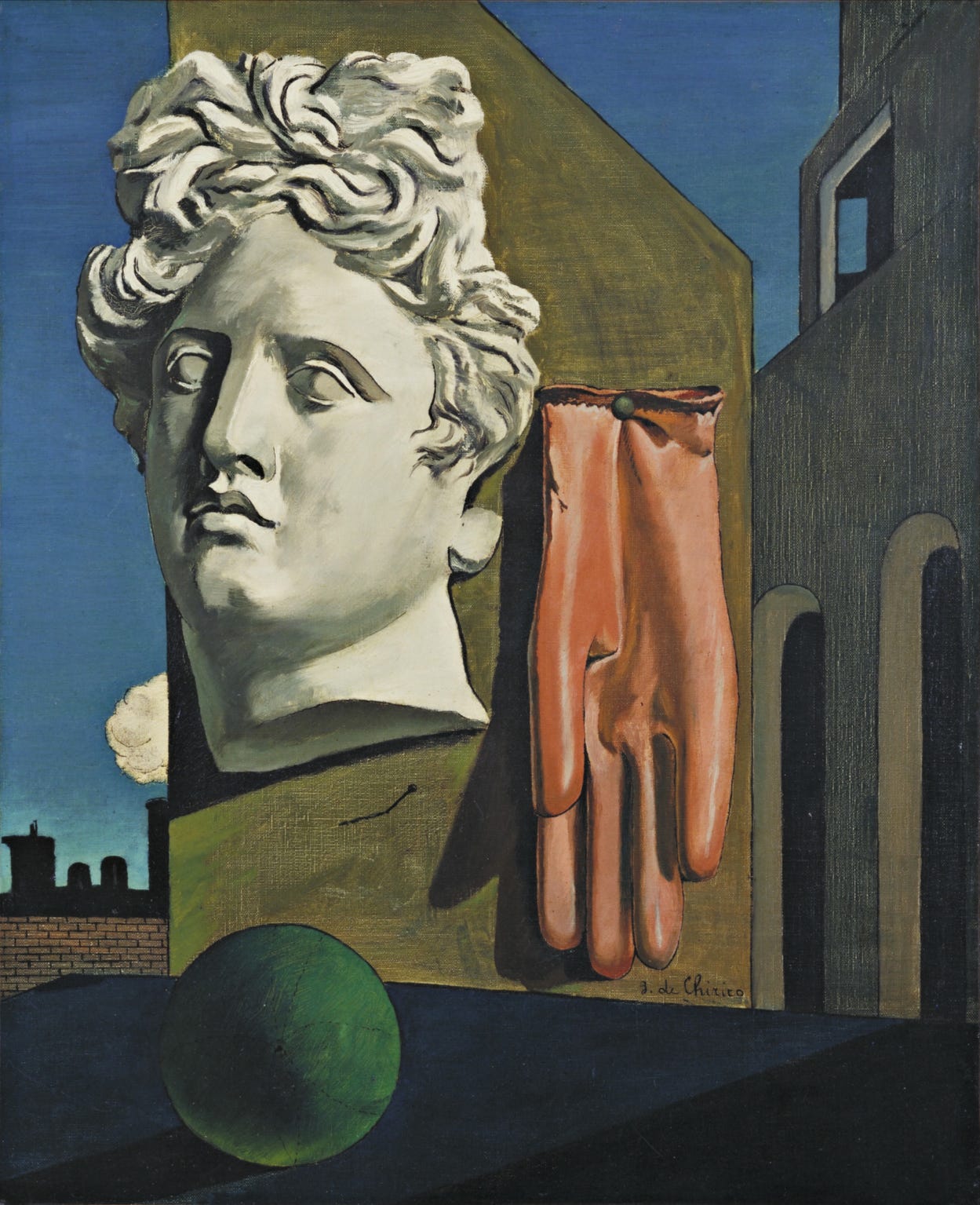
He called this Metaphysical painting, art that looks past the surface of things to a strange stillness underneath. Works like The Song of Love put a rubber glove next to a classical head and made it feel like a riddle.

The father the Surrealists adored

The young Surrealists in Paris treated these early pictures as scripture. Magritte said one de Chirico painting moved him to tears, and Ernst, Dali and others built on his dream logic.

For a few years he was the secret engine of modern art, the man who showed how to make a quiet picture feel like a premonition.

The artist who disowned himself

Then de Chirico changed course. He rejected modern art, embraced old master technique, and painted Baroque style horses and self portraits in costume. Critics were baffled and the Surrealists felt betrayed.

Stranger still, when collectors only wanted his early Metaphysical style, he simply painted new versions and backdated them, muddying his own record on purpose. He treated his famous period as a brand to reissue.

The mannequins and the muses

Faceless mannequins fill his world. In The Disquieting Muses, two dressmaker dummies stand like statues on a stage in Ferrara, tailor's tools for heads, throwing the long shadows he loved.

These blank figures haunted the next generation. You can trace their descendants through Surrealism, fashion photography and film, anywhere a creator wants a human shape drained of a face.

Questions about Giorgio de Chirico

What is Giorgio de Chirico famous for?

His Metaphysical paintings of empty Italian squares that prefigured Surrealism.

What is Metaphysical art?

His term for dreamlike scenes that hint at a mystery behind ordinary objects and places.

Why did the Surrealists fall out with him?

He abandoned his early style for traditional painting, which they saw as a betrayal.

When did he die?

In 1978, in Rome.

Why his shadows still stretch

De Chirico's empty cities seeped far beyond painting, into film, photography and album covers, anywhere a creator wants unease without a single event. The man who later mocked modern art had already handed it one of its deepest moods.


Join 110,000 readers who learn art the fun way. Free.


One last detail. He kept reusing his own early motifs into old age, so dating a de Chirico can be a detective job. The painter of mystery made his own catalogue a mystery too.


One good art story at a time. Join free, no catch.