How Was the Sistine Chapel Painted?
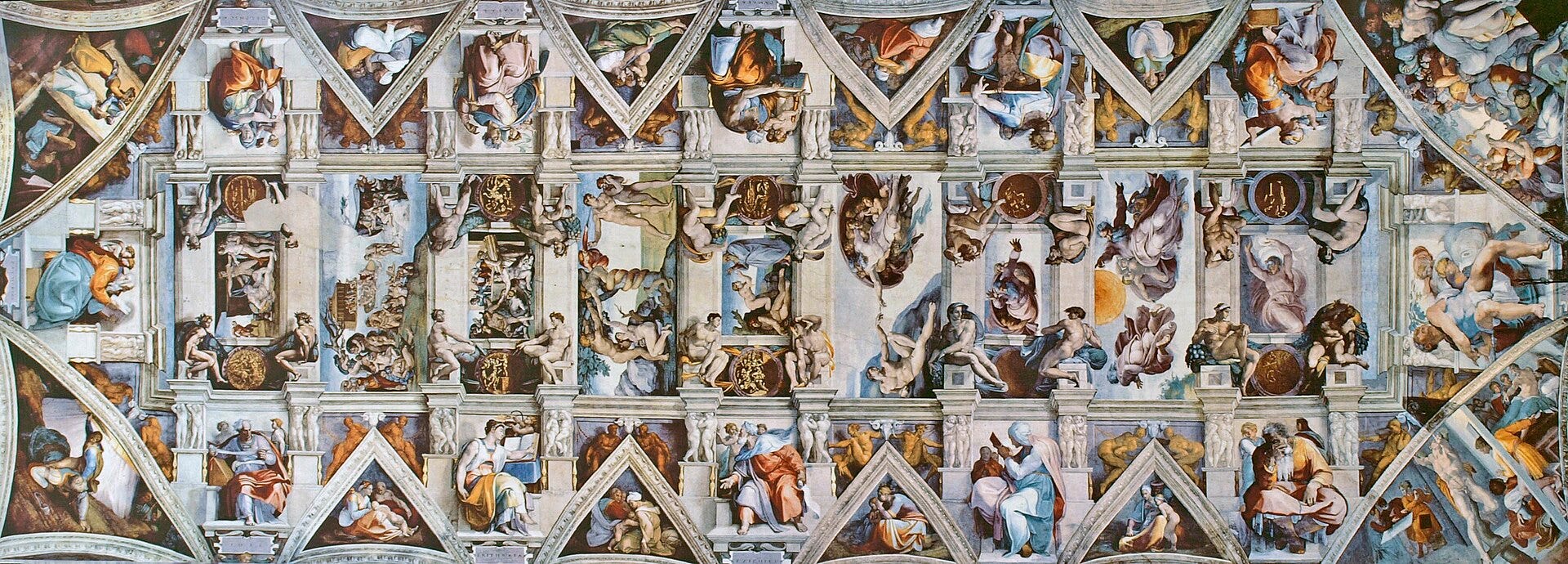
Michelangelo painted the Sistine Chapel ceiling in buon fresco, brushing color straight into fresh wet plaster so it set into the wall as the surface dried.
He worked from a high wooden scaffold of his own design, finishing one small patch a day.
The method explains almost everything about the ceiling: the glowing color, the speed, and the famous aching neck.
The method in five lines
Technique: buon fresco, paint into wet plaster.
Daily unit: a giornata, the area he could finish before the plaster dried.
Support: a custom scaffold bridging the chapel, not a tower from the floor.
Drawing: full size cartoons transferred onto the plaster.
The big myth: he did not lie on his back.
What buon fresco really means
A layer of fresh lime plaster goes onto the wall. While it is still wet, the painter works fast, and the pigment binds into the surface as the lime cures.
The result is luminous and lasts for centuries. The catch is that it is unforgiving. Once the plaster dries, you cannot just paint over a mistake. You chip it out and start that patch again.
This is the same technique behind most of Italy's great wall paintings. The full story is in what fresco painting is.
One day, one patch
Because the plaster dries within hours, Michelangelo could only paint as much as he could finish in a single session.
Restorers later counted the seams between these daily patches. The ceiling was built up across roughly 300 of them. A single face was often the work of one day.
How the drawing got up there
He drew the figures at full size on large sheets called cartoons.
To move a design onto the wet plaster, he pricked the outlines with tiny holes and tapped charcoal dust through them, or pressed the lines in with a stylus. Then he painted over the faint guide.
The scaffold, and the myth of his back
Michelangelo built a scaffold that braced into the walls high up, leaving the chapel floor usable below. He stood on it and bent his head back to reach the surface.
He never lay down to paint. The image of him flat on his back comes from a loose retelling and a famous Hollywood film, not the record, and to me it is the most stubborn myth in art. To weigh how much was truly his own hand, read did Michelangelo paint the Sistine Chapel alone.
The disaster on the first section
The opening stretch went wrong. Mold bloomed across the new plaster because the mix held too much water.
A drier formula fixed it, but part of the early work had to be scraped off and redone. The greatest fresco nearly failed in its first months.
Why the colors look so bright today
For centuries the ceiling looked dim and smoky, darkened by candle soot and old glue varnish.
A deep cleaning between 1980 and 1994 lifted the grime. What appeared underneath was startling: pinks, greens and oranges far brighter than anyone expected. That cleaning rewrote how we picture his color.
FAQ about how the Sistine Chapel was painted
What technique was used? Buon fresco, pigment into wet plaster.
Did Michelangelo lie on his back? No. He stood on a raised scaffold with his head tilted up.
How was the design transferred? With full size cartoons, pricked and dusted onto the plaster.
Why are the colors so vivid now? A cleaning between 1980 and 1994 removed centuries of grime.
How many sessions did it take? Around 300 daily plaster patches over four years.
What the cleaning revealed about his plan
When restorers studied the cleaned surface, they found Michelangelo had added some final touches a secco, painted dry on top of the set fresco.
Over 450 years most of those dry strokes have flaked away. What we admire now is mostly what he locked into the wet plaster itself, the part built to last. I tell his whole story in Michelangelo: The Complete Story.