
Marcel Duchamp was a French artist, born near Rouen in 1887, who became an American citizen in 1955 and died in 1968. In 1917 he signed a porcelain urinal "R. Mutt" and sent it to an exhibition in New York, a gesture that gave modern art the readymade. He is also remembered for the story that he gave up art for chess, and for the last work he built in secret while telling everyone he had stopped.
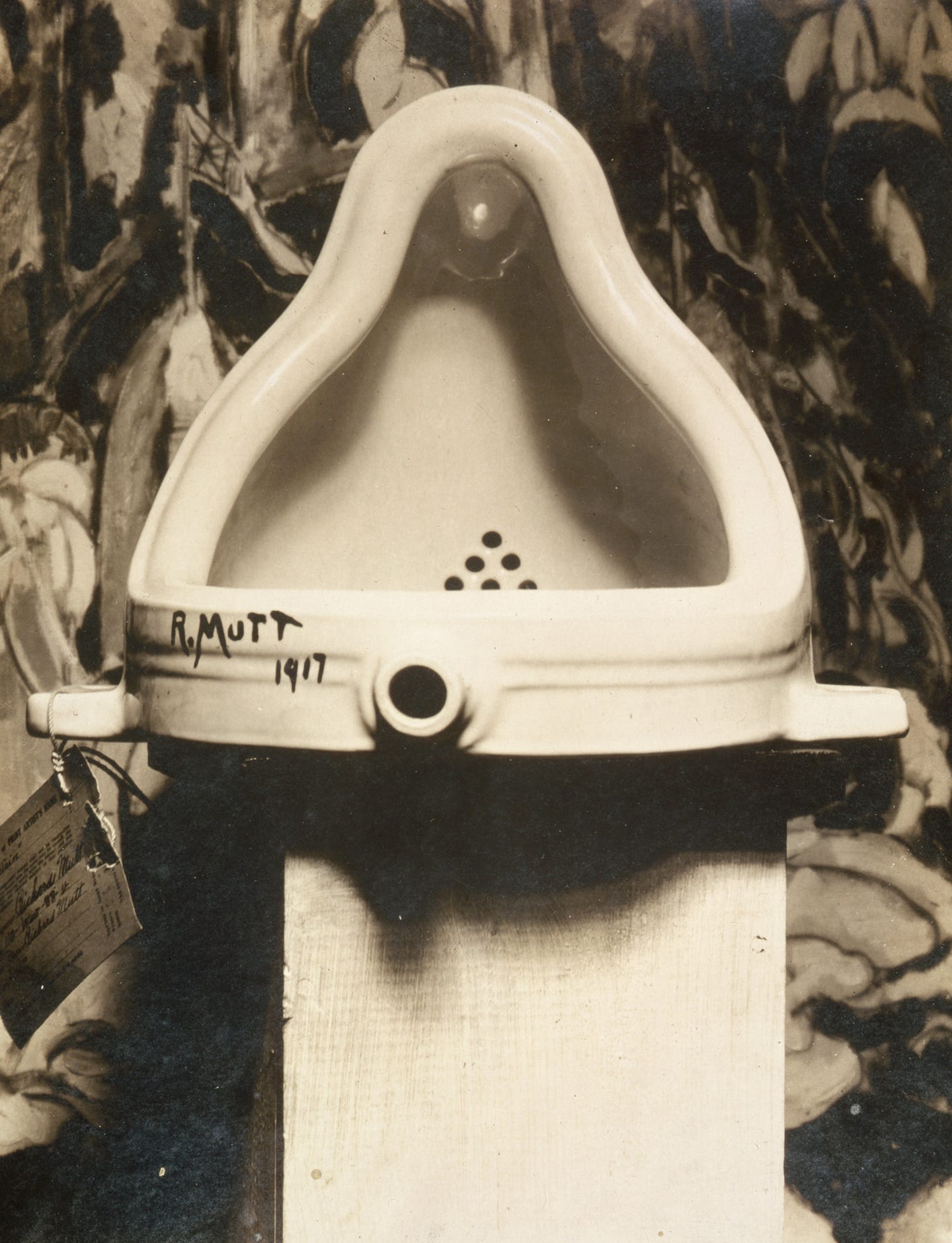
The urinal itself is lost. What remains of it is a photograph and a set of copies made decades later.
Cool Stories About Art is a newsletter to learn art the fun way.
Join 200,000+ readers and get:
10 new art stories / month
The entire archive of content (1,000+ articles)
Comment, ask questions, and chat with other readers
In April 1917 the Society of Independent Artists opened its first exhibition in New York with a simple rule: every artist who paid to enter would be shown. A porcelain urinal signed R. Mutt arrived with an entry. The board argued over whether it was art at all, and the urinal was placed behind a partition and never displayed.
Duchamp sat on that board. Most of his colleagues did not know the urinal was his. When it was hidden he resigned and withdrew his own entry. In a letter to his sister Suzanne that April, he wrote that a female friend had sent it under the name Richard Mutt. Historians still argue about who she was, and the name most often proposed is the poet Elsa von Freytag-Loringhoven.
Alfred Stieglitz photographed the urinal at his gallery, in front of a painting by Marsden Hartley, and the picture ran in the second issue of a small magazine, The Blind Man, in May 1917. Then the object itself disappeared.
What You'll Discover
Why his own brothers turned him down.
What he did with a bottle rack.
What broke on the way to Brooklyn.
What he built while pretending to retire.
What he wrote for his own grave.