Matthias Grunewald: The Complete Story

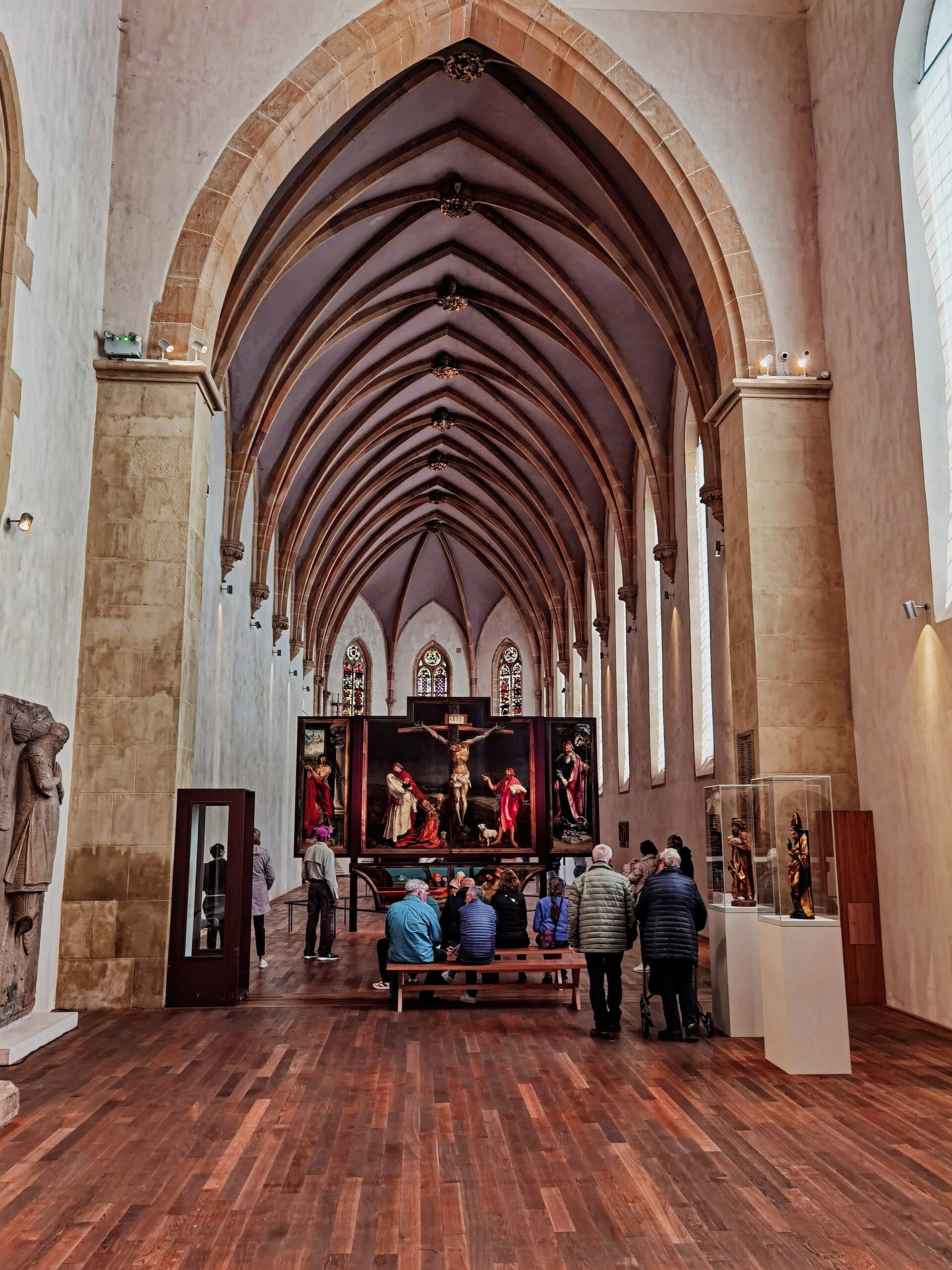
The crucified Christ is covered in sores, the skin green and torn, the fingers splayed in agony. It is one of the most harrowing images ever painted, and it was made for the sick. This is the Isenheim Altarpiece, and the man behind it, Matthias Grunewald, is one of the great mysteries of German art.

the Isenheim Altarpiece by Matthias Grunewald
Matthias Grunewald, the Isenheim Altarpiece

He was a master of the German Renaissance whose handful of surviving works hit with a force few painters have ever matched, even though we barely know who he was.


The fierce corners of art, free in your inbox.


The altarpiece for the dying

Grunewald greatest work is the Isenheim Altarpiece, painted for a monastery hospital that cared for victims of a terrible skin disease.

The crucified Christ is shown with the same sores the patients suffered, so the sick could see their own pain mirrored in his. It is one of the most powerful uses of iconography in all of Christian art.

The wound and the resurrection

the Stuppach Madonna
Matthias Grunewald, the Stuppach Madonna

The altarpiece opens and closes like a cabinet. Closed, it shows that agonised crucifixion. Opened, it reveals a blazing Resurrection, with Christ rising in a halo of light and colour.

The leap from horror to glory, from a green corpse to a body of radiant gold, is one of the great emotional shocks in Renaissance art.

The man who left no name

the Resurrection from the Isenheim Altarpiece
Matthias Grunewald, the Resurrection from the Isenheim Altarpiece

We are not even sure of his name. The label Grunewald came from a writer long after his death, and may be wrong. His real name was probably something like Mathis Gothart Nithart.

Only about ten works survive, and for centuries some were credited to Durer, until scholars slowly pieced his identity back together.

The painter who built machines

a panel from the Isenheim Altarpiece
Matthias Grunewald, a panel from the Isenheim Altarpiece

Grunewald was not only a painter. Records show he worked as a hydraulic engineer and oversaw waterworks, a reminder that artists of the age often wore many hats.

He seems to have sided with the peasants in the great uprising of the 1520s, which may have cost him his court positions and left him to die quietly in 1528.

Grunewald, briefly answered

What is he known for?

The Isenheim Altarpiece, one of the most intense images in Christian art.

Was Grunewald his real name?

Probably not, his name was likely Mathis Gothart Nithart.

How many works survive?

Only about ten paintings.

When did he die?

In 1528.

Why his pain still stuns

Grunewald painted suffering more directly than almost anyone before or since, and made it serve comfort, so the dying could feel less alone. That fusion of horror and tenderness is why his altarpiece still stops visitors cold five hundred years on.


Join 110,000 readers who learn art the fun way. Free.


The German painters and writers of the modern age, especially the Expressionists, claimed him as a spiritual ancestor for his raw emotion, and a major opera was written about him in the twentieth century. A man whose own name we cannot be sure of became, in the end, a symbol of German art at its most intense. His colours were mixed with a chemistry so unusual that later painters could not easily copy his glowing reds and greens, and modern study of the altarpiece still turns up new details about how he built those unearthly effects. For a man who left almost no record of his life, the work itself has become the only reliable witness to his genius.


One good art story at a time. Join free, no catch.