

170 000+ readers. Learn art the fun way.
This is a preview. Paid subscribers get the full story.
You’ll also get:
10 new stories every month
The full archive (130+ Art stories)
Your personal art guide. Comment, ask questions, DM me anytime
iPhone user? Subscribe at coolstoriesabout.art, not via the app. Apple adds 30% to the price.
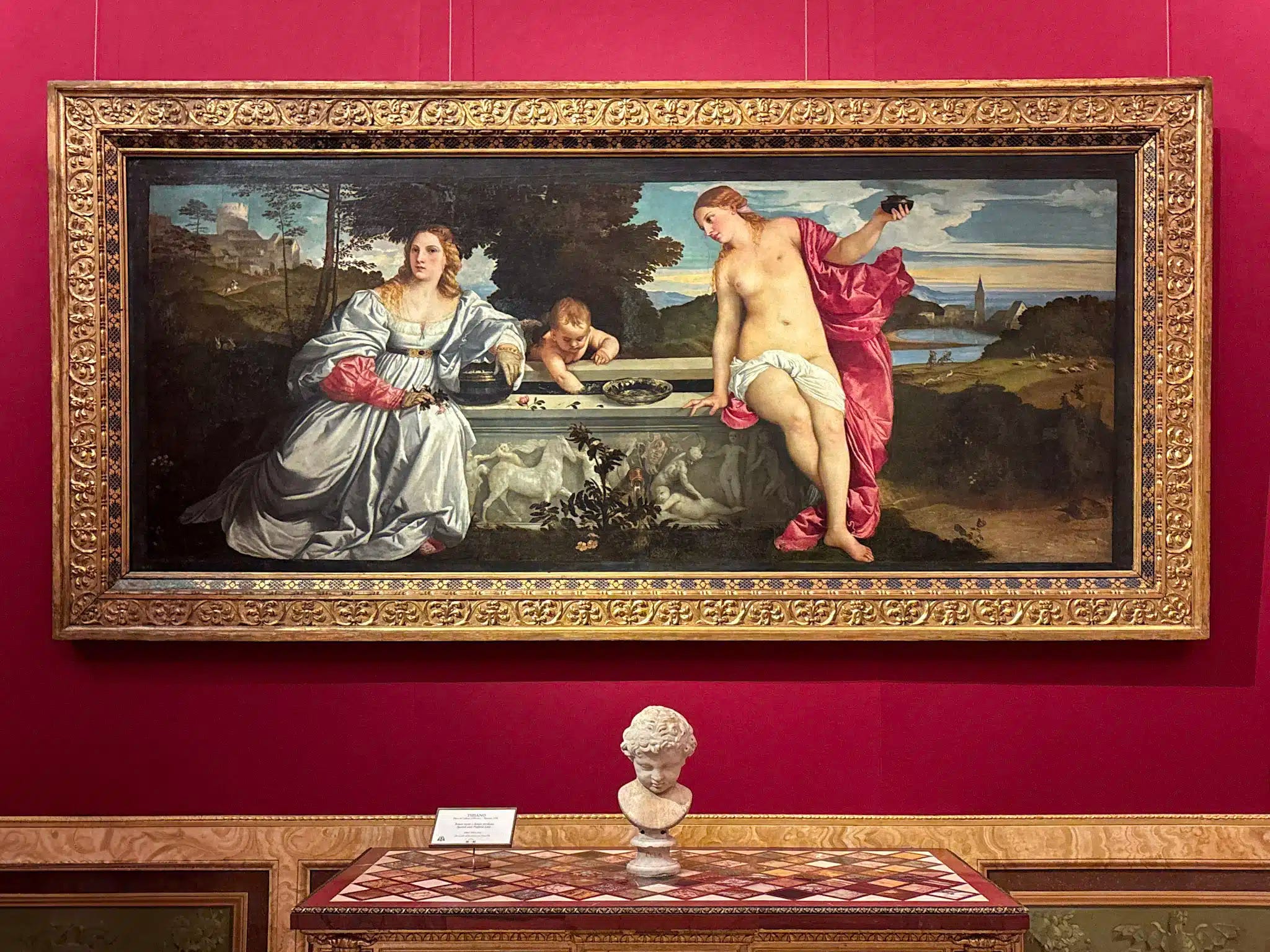
Rome, 1899. In a room of the Villa Borghese, envoys of the Rothschild family stop in front of a painting. They name a figure. Four million lire, for this single canvas.
That same year, the whole villa is valued. The gardens, the walls, 557 paintings, 314 statues. Total: 3.6 million. One painting is worth more than the palace that holds it, and everything inside it.
The sale will never happen. Italy refuses to let the canvas leave. It is still there, in Room 20. In front of it, two women frame a marble fountain.
On the left, a young woman in a white dress. On the right, the same one, or almost, but nude. Between them, a winged child playing with the water.
On the label, the title the whole world knows. Sacred and Profane Love. You read it, and you sort them without thinking.
The nude woman must be the profane one. The clothed woman, the sacred. Settled in two seconds. You are wrong about both. And the title is wrong with you.
Let's go back through this painting, detail by detail. The painter is 25. His name is Titian, and in 1514 he is still just one gifted young man among many.

In Venice, lately, people paint differently: with light and color more than with line. Two men opened that path, old Giovanni Bellini and his pupil Giorgione.
But Giorgione has just been carried off by the plague, and Bellini is near the end of his life. The place of first painter of Venice is about to come free.
That is the place Titian will take, starting with this canvas, commissioned for a wedding. A wedding that hides a story no one guesses in front of the painting. Let's start on the left.
Discover my new newsletter !

The Clothed Woman
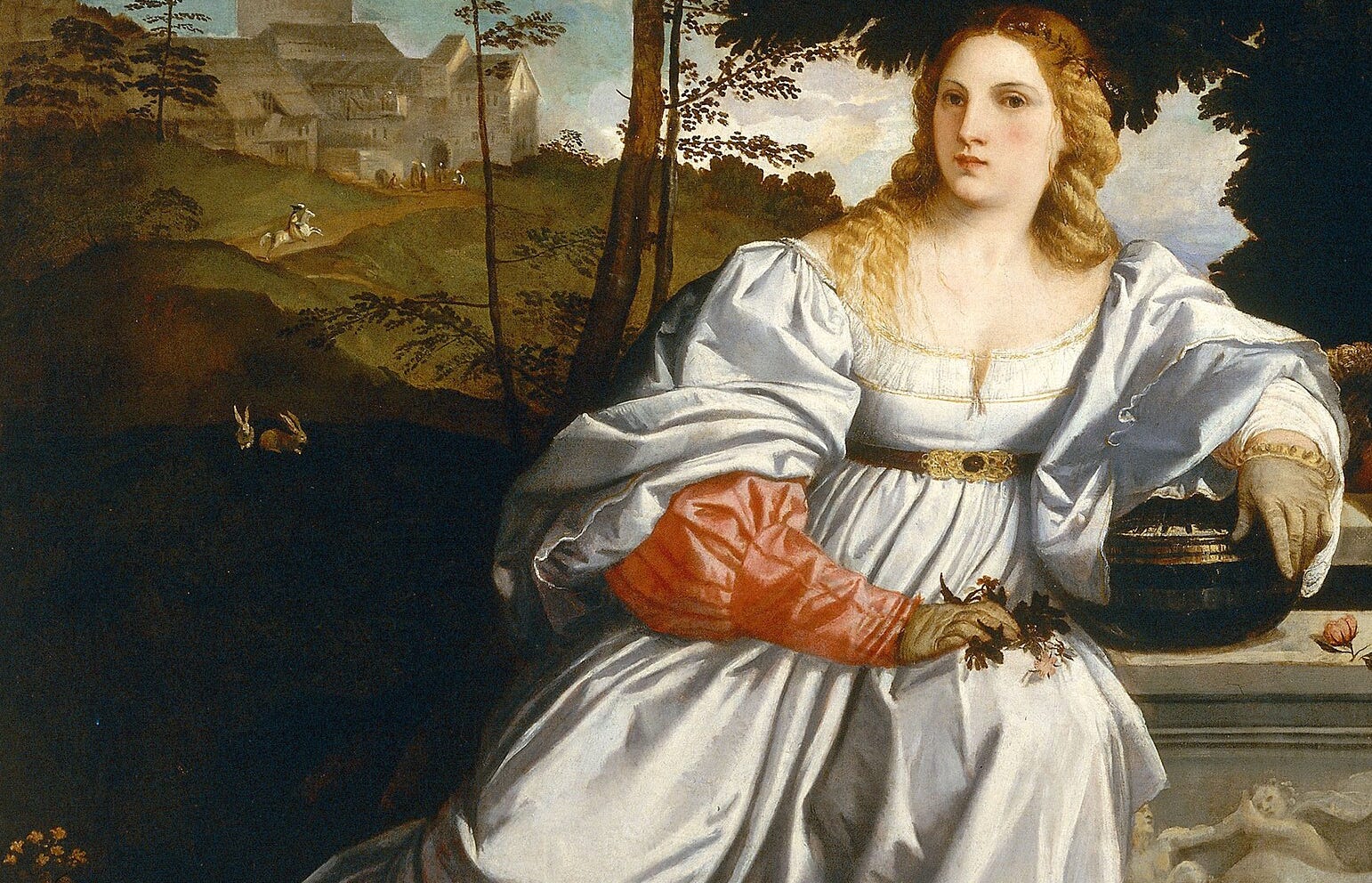
The young woman seated at the edge of the fountain wears a white satin dress, with one red sleeve still showing. A belt drawn high on her chest, fastened with a gold buckle. Gloves.
In her hand, a small bouquet of roses. And in her hair, a wreath of myrtle. None of this is decorative. It is a code, and in Venice everyone knows how to read it.
The closed belt means fidelity. The gloves mean restraint and rank.
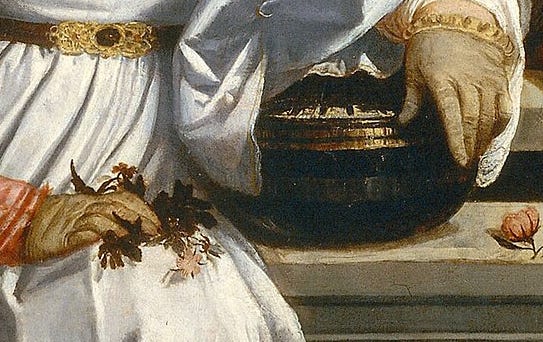
The roses are the flower of Venus, the goddess of love. As for the myrtle, it is both the plant of that same Venus and the wreath worn by Venetian brides. White, finally, is here a wedding color.
Put together, these signs describe neither a goddess nor an allegory. They describe a bride, on the day of her contract.
The Closed Casket
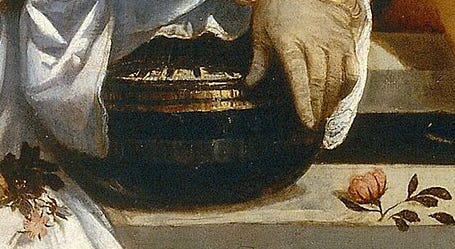
Under her hand, resting on the rim of the fountain, a small metal vessel closed with a lid. People long saw in it a courtesan's purse, and so made this woman a girl for sale. That is a mistake.
It is a silver casket. In 16th century Venice, brides receive their wedding gifts in this kind of closed casket. It seals the union, and it carries a precise hope: that of children.
Keep that hope of a child in mind. The landscape, further on, will echo it.
The Sarcophagus Turned Into a Fountain
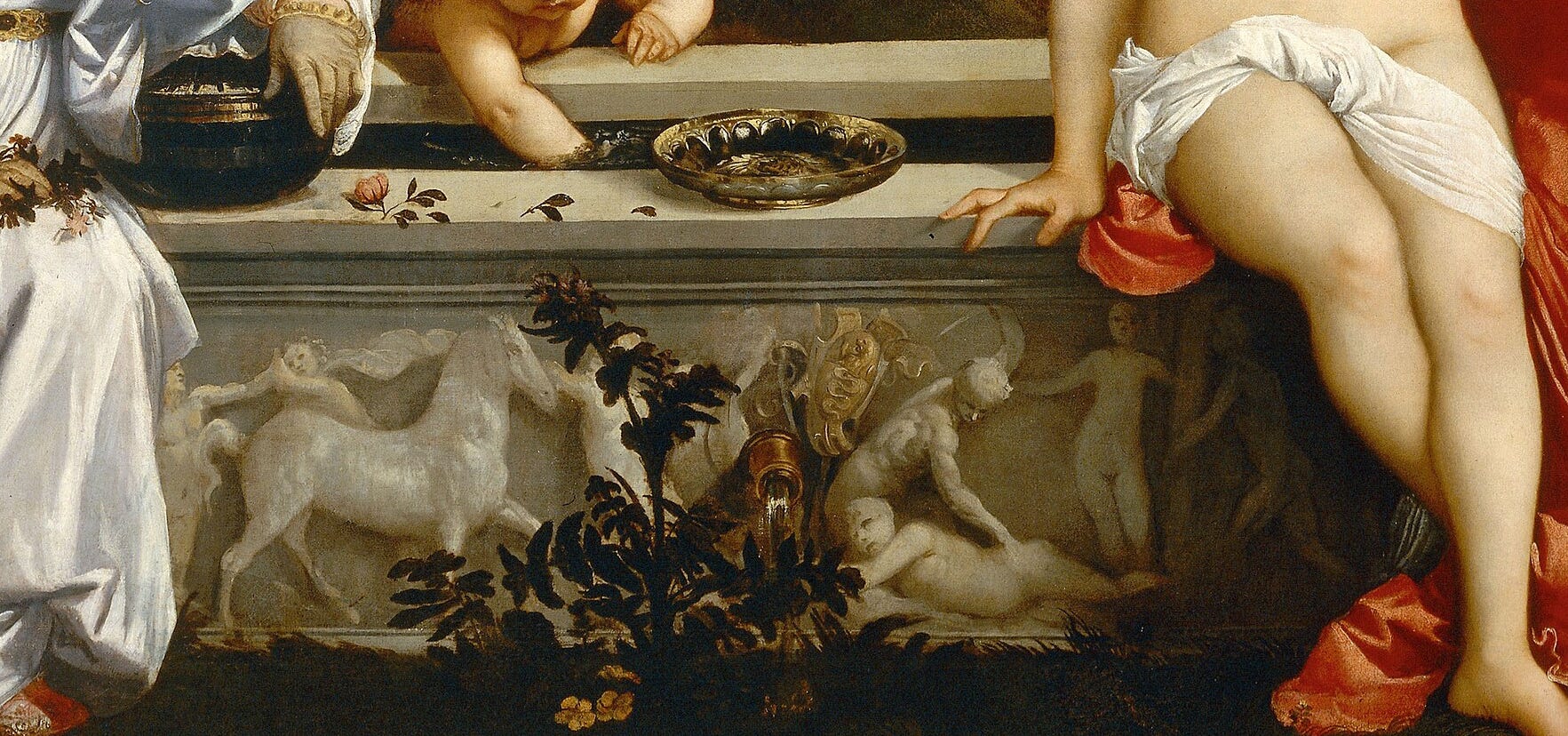
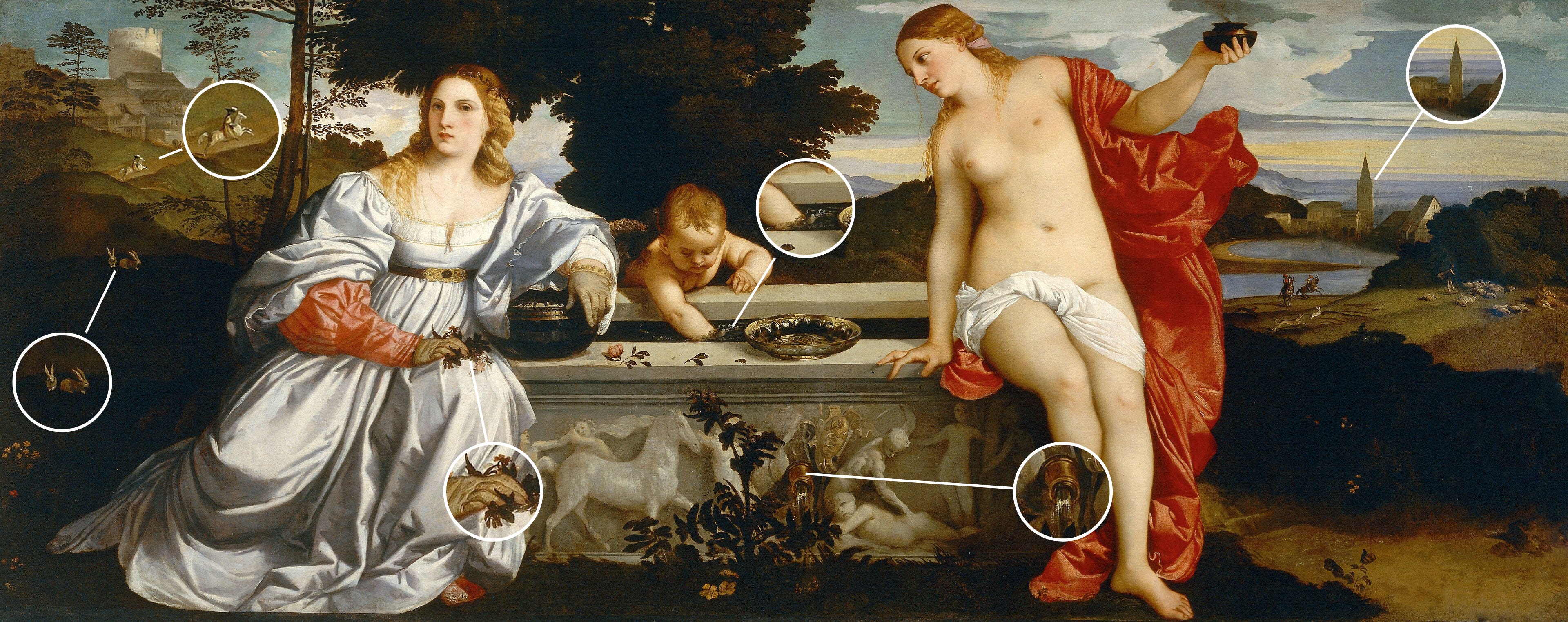
Now the center. The bench the two women sit on is not a bench. It is a Roman sarcophagus.
An ancient marble tomb. Someone has driven a bronze spout into it, and the water flows out, down to a small rosebush growing at its foot. Look at its wide rim. Real ancient sarcophagi do not have one.
Titian turned a tomb into a fountain. A coffin with living water pouring from it. And at the center of the marble face, below the spout, a carved crest. A coat of arms.
Whose crest is it? We'll come back to it. The answer is not innocent.
The Relief
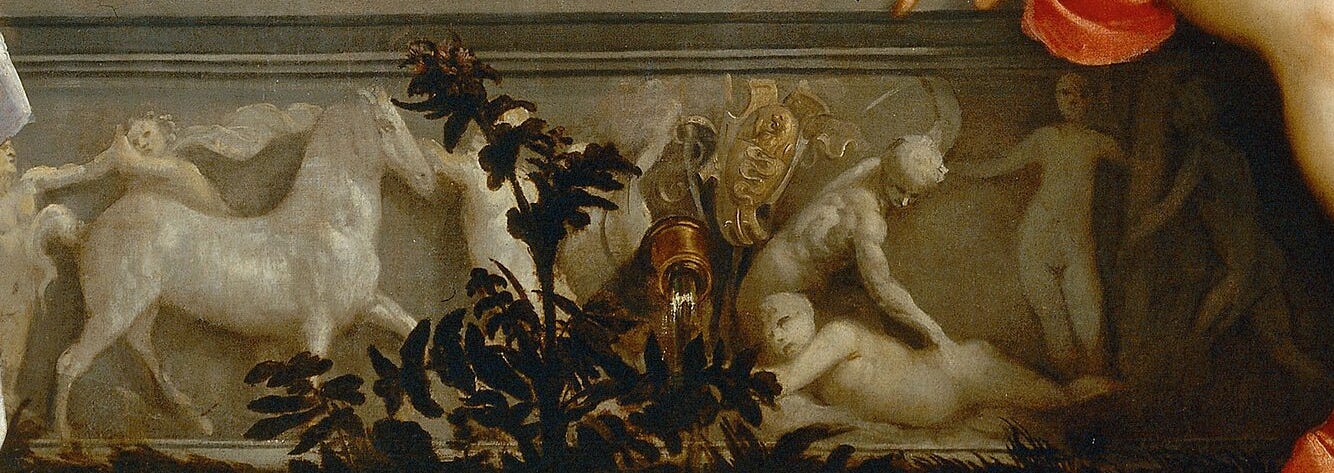
Stay on the marble. The face of the sarcophagus is carved with a brutal scene.
A naked man pulls a horse that has neither saddle nor bridle. Further off, a man beats another. A woman is dragged by the hair.
The unbridled horse has been, since antiquity, the image of passion that can no longer be controlled. Around it, figures strike, drag, punish. This is raw desire, and its punishment.
Titian copied this scene from no known ancient marble. He invented it. Beneath the two calm women, he carved savage love, the kind you must tame in order to love otherwise.
The Child Stirring the Water
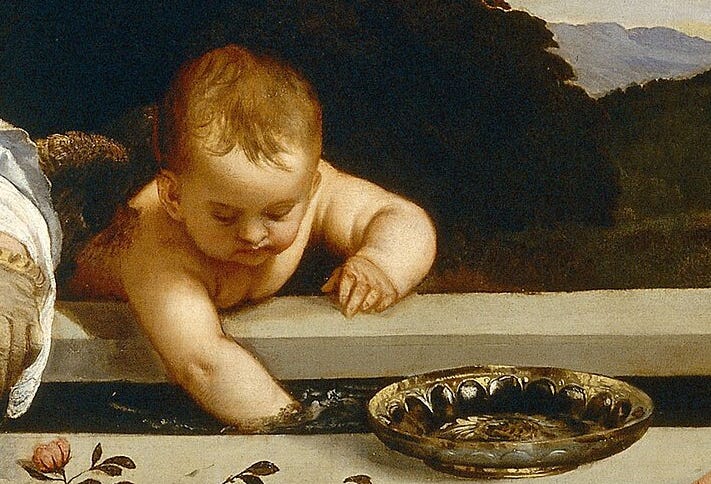
Between the two women, leaning over the rim, the winged child. It is Cupid. Usually, Cupid shoots arrows. Here, he has neither bow nor arrow.
He has plunged his arm into the water of the tomb, and he stirs it, focused, like a child at a serious game.
No one, standing before the painting, can say what he is doing there, his hand in that water.
The Nude Woman
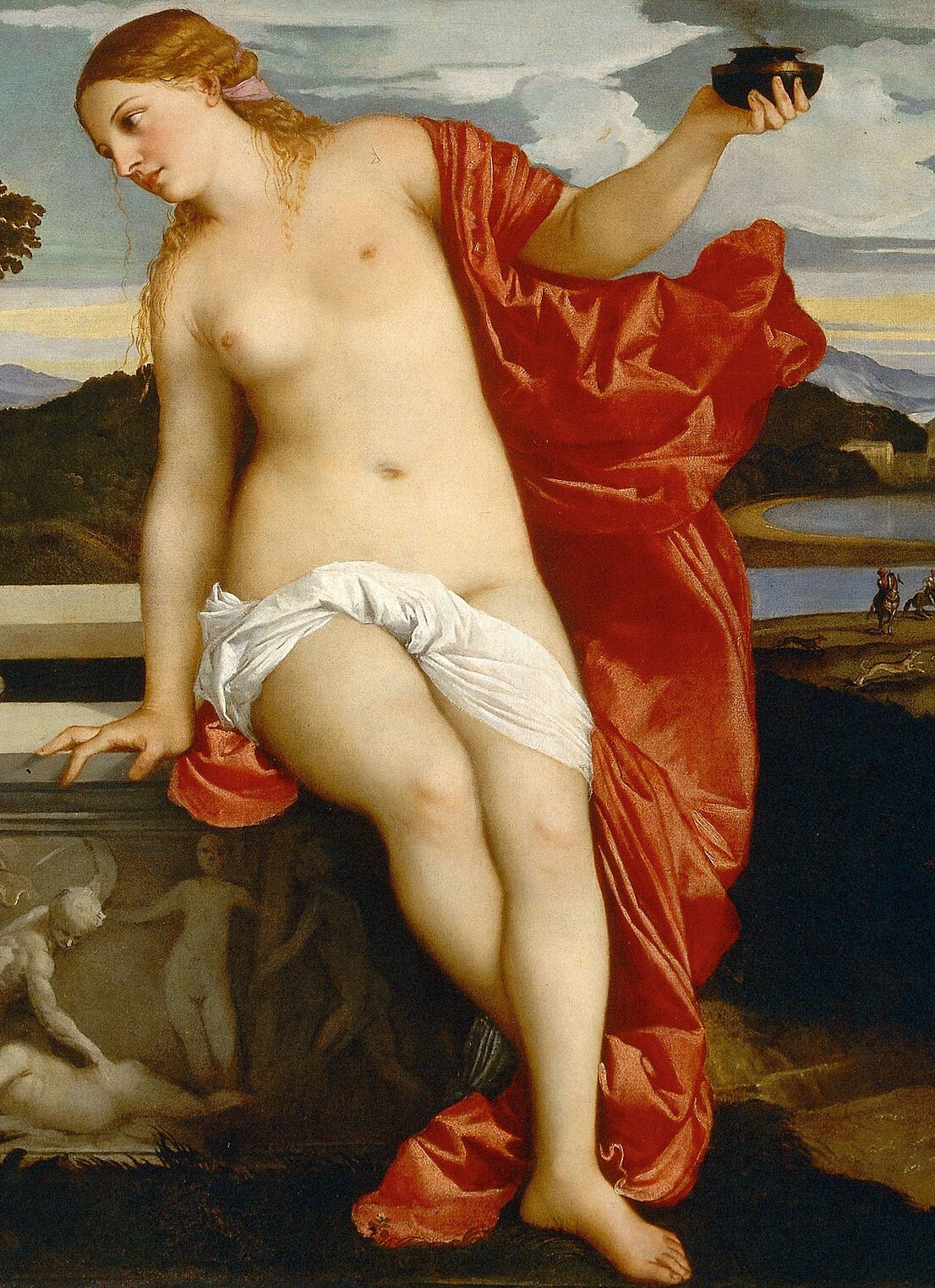
Now to the right, to the nude woman. A large red cloak slips from her shoulder and falls to her legs. A white cloth covers her lower belly.
Her left arm is raised, and at the end of that arm she holds a vessel from which a flame and dark smoke rise. Now her face. It is exactly the face of the clothed woman. Same features, same model.


Two identical women, separated by one thing only: their clothes. And she is not staring into space. She is turned toward her clothed twin, her body leaning toward her, as if to speak to her.
The same face, twice. A flame. And the nude woman, seated higher, leaning toward the one who is dressed.
Keep learning art the fun way


The Landscape Takes Sides
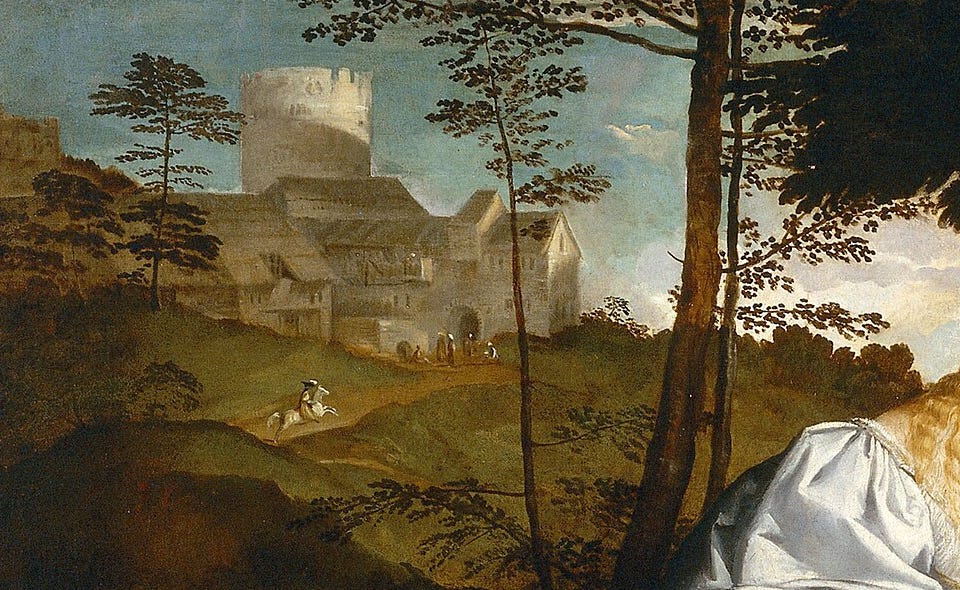
Step back, and look behind them. A tree, planted just above Cupid, splits the landscape into two halves that do not tell the same story.
Behind the clothed woman, on the left, a fortified castle on a hill, a rider galloping toward the gate, two rabbits in the grass. The rabbit, to a Venetian, is the promise of a bloodline.
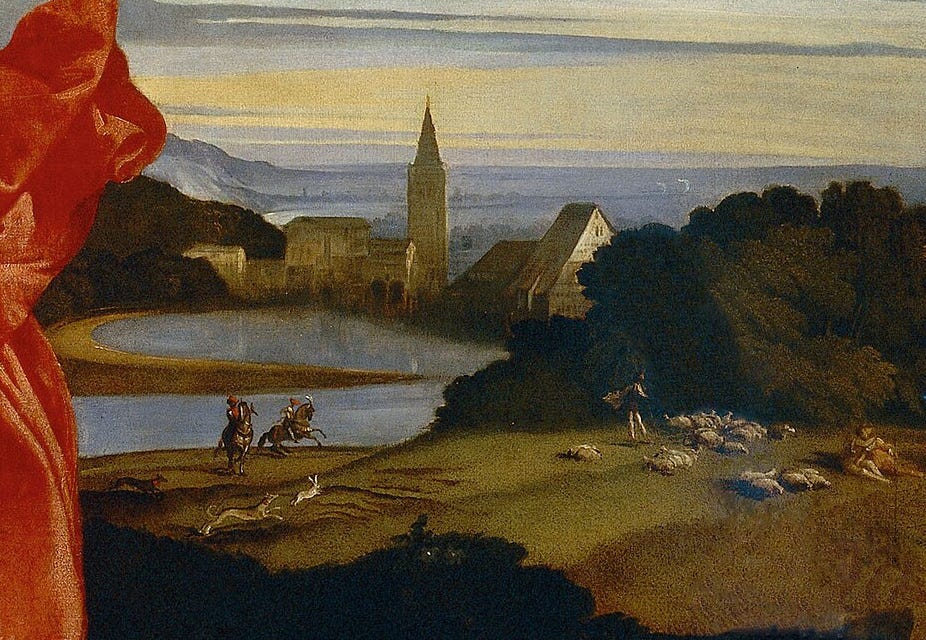
Behind the nude woman, on the right, things grow softer. A plain by the water, a shepherd and his flock, hunters chasing a hare. The hare, too, is an animal of Venus.
And above all, in the distance, a bell tower. A church, set on the side that was called profane. Let's take stock. A bride in white. A wedding casket and its hope of a child.
A tomb that turns into a spring. A carved crest, whose owner we do not yet know.
A Cupid stirring water, without our knowing why. A second woman, nude, with an identical face. And a church blessing the wrong side.
It is all there, before your eyes. And yet the true story has not begun. To read it, you need the bride's name, and what Venice did to her father five years earlier.