Arnold Bocklin was the Swiss Symbolist who painted the Isle of the Dead, the most haunted image of the nineteenth century. Born in Basel in 1827, he painted the silent island five times between 1880 and 1886, and Europe could not stop looking.
He buried most of his children, painted with Death at his shoulder, and tried to build a flying machine. The life is as strange as the pictures.
Böcklin at a glance:
Born in Basel in 1827; worked between Switzerland, Germany, and Italy.
Painted five versions of the Isle of the Dead between 1880 and 1886.
A client asked for a picture to dream over; the island answered.
Freud, Lenin, and Hitler all owned reproductions.
Died near Florence in 1901, facing his own cypress island.
Basel, Rome, and the classical south
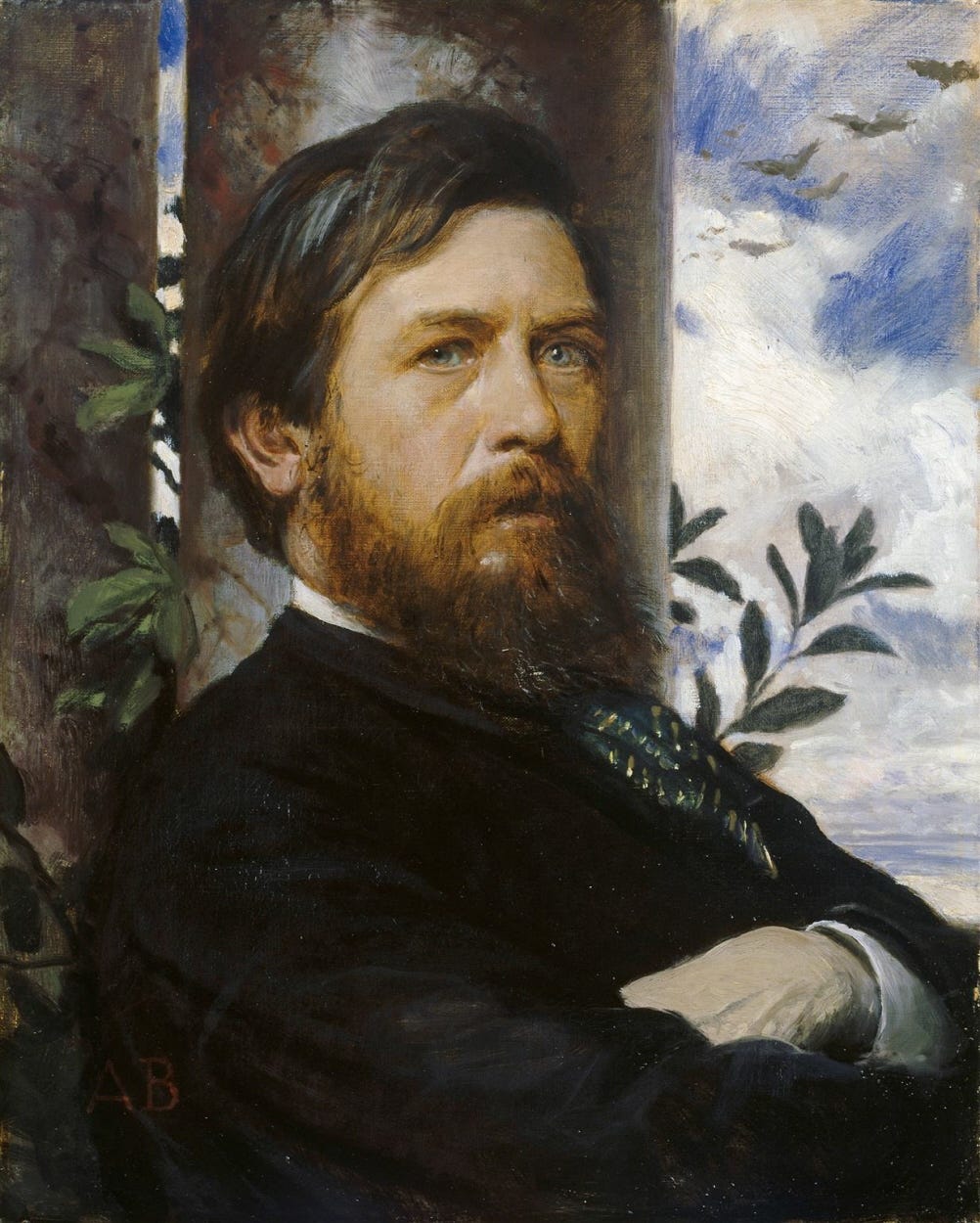
Bocklin trained in Dusseldorf, but Italy made him: from his first stay in Rome in 1850 he soaked in cypress groves, ruins and Mediterranean myth, and spent most of his life shuttling between German cities and Italian light. His nymphs, tritons and centaurs are classical creatures painted with unsettling realism, gods with sunburn and wet hair.
A picture for dreaming over
In 1880 a young widow, Marie Berna, visited his Florence studio and asked for a picture to dream over.
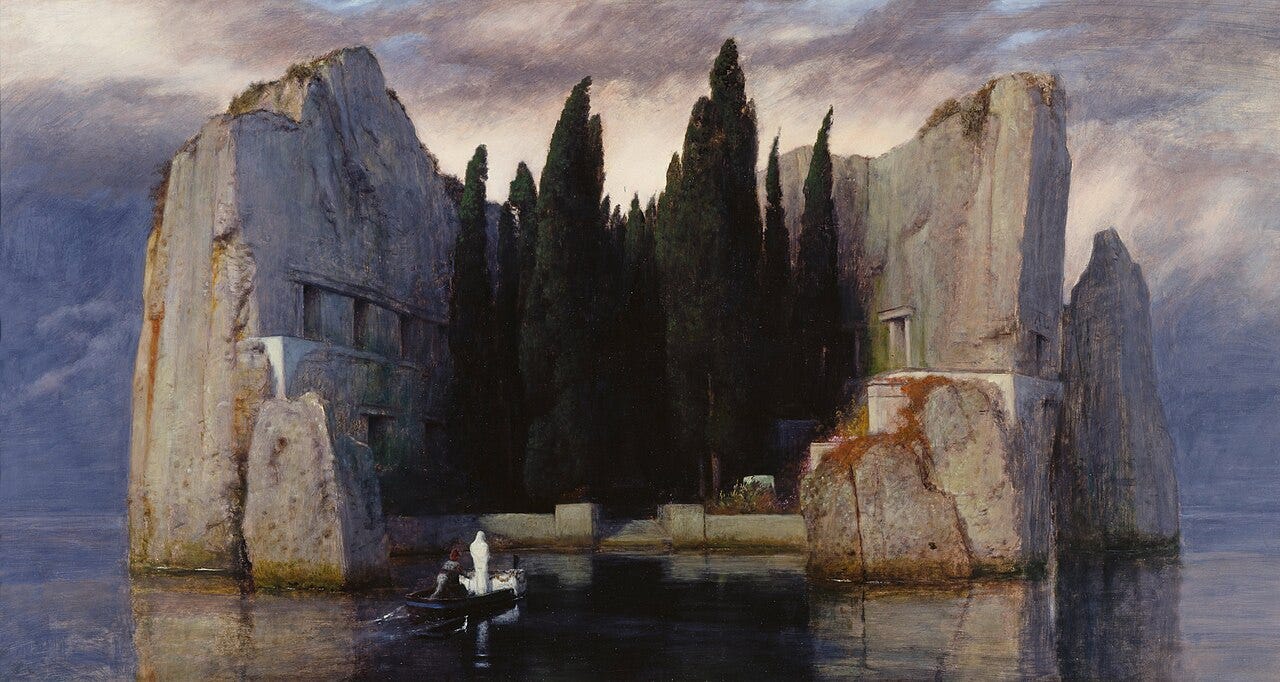
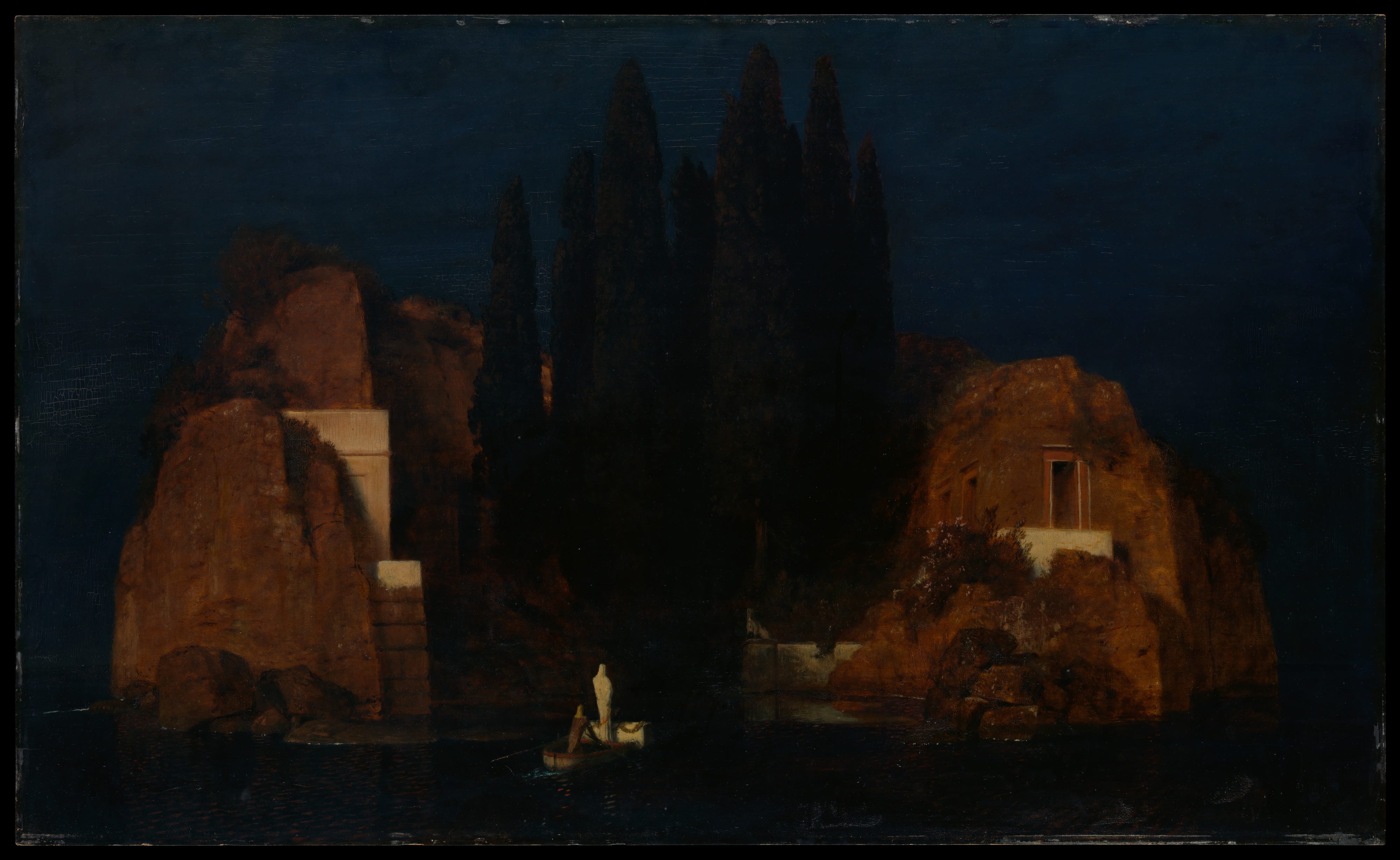
The result was the Isle of the Dead: a white shrouded figure in a rowing boat, an island of rock and cypresses, no explanation.
Demand was such that he painted five versions by 1886; one was destroyed in the Second World War, and the others hang today in Basel, New York, Berlin and Leipzig.
More incredible painter stories
If Arnold Böcklin pulled you in, you will love these too:


Death at his shoulder
He knew his subject from home.
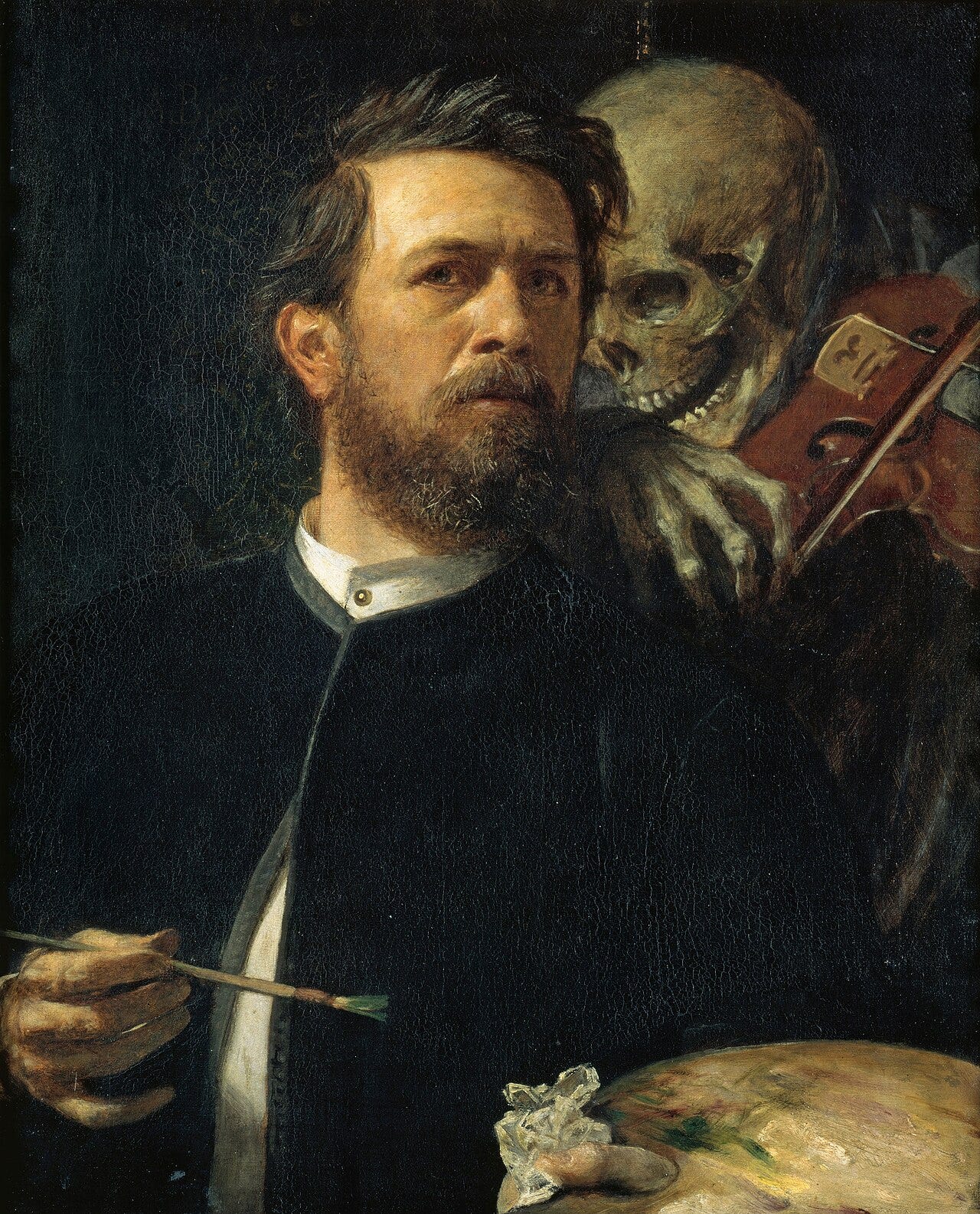
Of his fourteen children, eight died before him, and in 1872 he painted himself listening to a skeleton playing a violin behind his ear, the Self Portrait with Death Playing the Fiddle now in Berlin's Alte Nationalgalerie.
Cholera nearly took him in 1859; a stroke slowed him in 1892. He painted on with his left hand.
The myth: gloomy Victorian kitsch
Because prints of the island hung in thousands of parlours, critics later filed Bocklin under mass produced gloom.
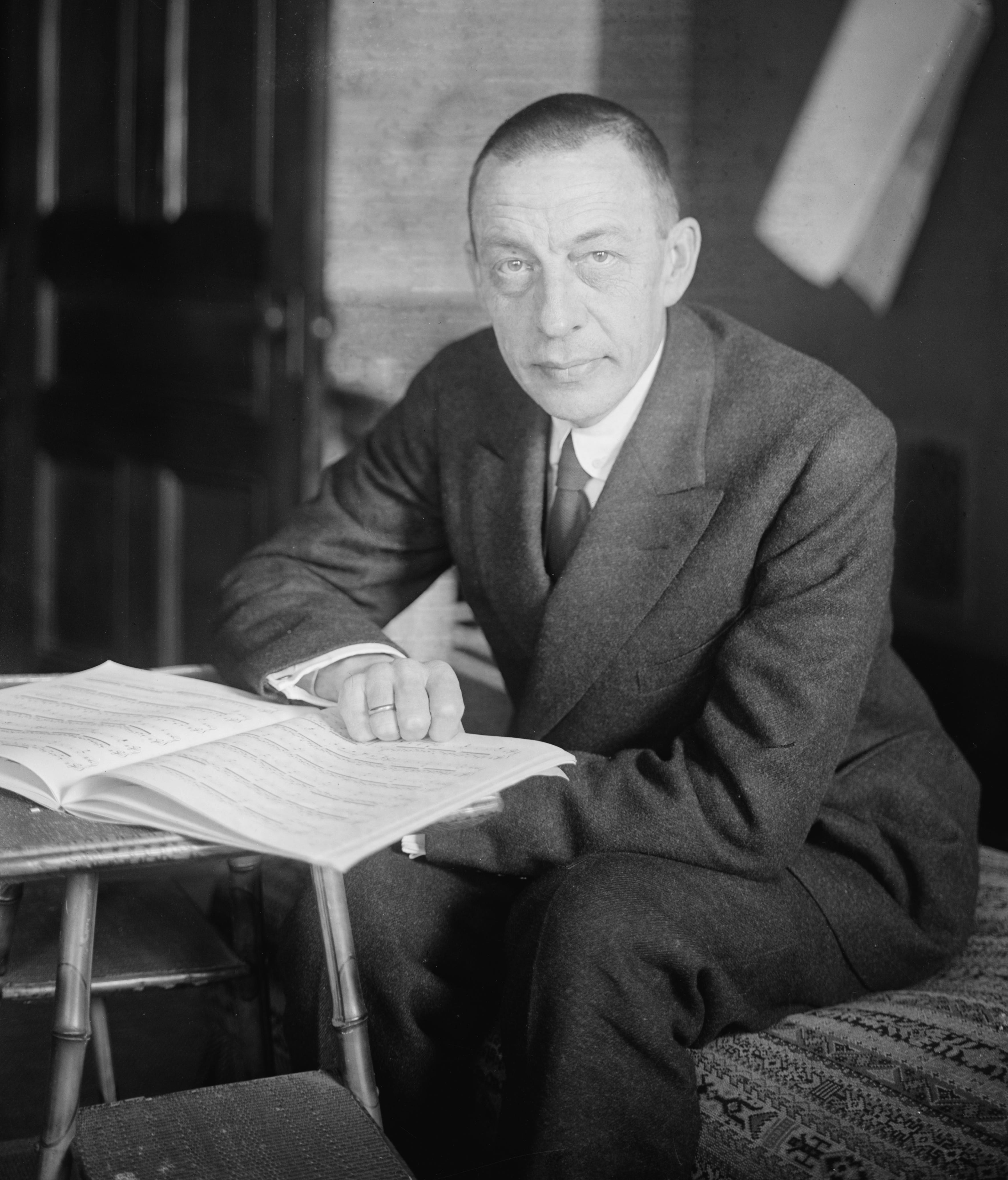
The wrong people loved him for that to be true: Giorgio de Chirico called his art an unmatched world and built metaphysical painting on his silence, Dali and Ernst borrowed the island outright, and Rachmaninoff composed his tone poem Isle of the Dead in 1908 after seeing a reproduction.
The kitsch painter turns out to be a grandfather of Surrealism.
The painter who tried to fly
Painting was not his only obsession. Through the 1880s Bocklin designed and built flying machines, testing gliders with home made wings while his friends despaired of the time it cost him.
The experiments failed, the drawings survive, and they say everything about a man who spent his life painting the crossing to somewhere else.
Where to see Bocklin
The Kunstmuseum Basel holds the first Isle of the Dead and the deepest collection; the Met in New York and the Alte Nationalgalerie in Berlin have their own islands, Berlin's being the version whose strange afterlife among the century's tyrants is a story of its own. He died in 1901 near Fiesole, and is buried in Florence.
Five islands, one commission
The first Isle of the Dead was altered mid-course when a young widow, Marie Berna, asked for a painting to dream over, and Böcklin added the coffin and the shrouded figure.
He painted five versions as demand grew; one burned in Rotterdam in the war, and the others anchor Basel, New York, Berlin, and Leipzig.
The print above every piano
By 1900 reproductions of the island hung across middle-class Europe; Nabokov joked one could be found in every Berlin home.
Freud kept one, Lenin lived under one in Zurich, and Hitler bought the third version, which now hangs in Berlin with that history attached.
Rachmaninoff's echo
Rachmaninoff saw a black-and-white reproduction in Paris and composed his tone poem The Isle of the Dead in 1908 from it.
Seeing the color original later, he said he might not have written the piece: the monochrome had made the dream. The painting works even secondhand, which is its whole point.
The Arnold Böcklin questions that keep coming up
What is he known for? The Isle of the Dead, painted in five versions between 1880 and 1886.
What does the painting mean? He never said. It was commissioned as a picture to dream over, and he kept it that way.
Where can I see it? Basel, the Met in New York, Berlin and Leipzig each hold a version.
Who did he influence? De Chirico above all, then the Surrealists, and Rachmaninoff in music.
Where can I see the Isle of the Dead? Basel and the Met hold early versions, Berlin's Alte Nationalgalerie the third, Leipzig the fifth. The fourth burned in Rotterdam in 1944.
What did Böcklin call the painting? He never titled it: the dealer Fritz Gurlitt named it Isle of the Dead for the market. Böcklin only promised a picture so quiet you would hear a knock at the door.
More secrets to unlock


One last fact
The island's grip on the twentieth century's darkest minds, Freud's consulting room, Lenin's bedroom, and the version Hitler bought in 1933, is a story we tell in full in The Painting That Obsessed Hitler, Freud and Lenin. Bocklin, dead in 1901, never knew who would come to dream over his island.