
In 2013, a Texas software engineer named Tim Jenison did something strange. He had never been trained to paint. He spent 130 days copying a Vermeer, stroke by stroke, using only mirrors, lenses, and a small rig he built himself.
The result looked uncannily like the original. And it reopened one of the oldest arguments in art history.
So, did Vermeer use a camera obscura? Nobody knows for certain. No document from his lifetime mentions one. The theory rests entirely on visual clues inside the paintings, and it remains an open, unresolved debate among art historians, with serious arguments on both sides.
What a camera obscura actually is
A camera obscura uses a lens, and often a mirror, to project a scene onto a surface. It is a precursor to photography.
Point it at a room and the room appears on your table or wall, in full color, ready to be traced or studied.
The question is whether Johannes Vermeer, working in Delft in the 1660s, had one of these on hand.
The clues inside the paintings
Here is the awkward fact at the center of everything. No inventory, letter, or contemporary document from Vermeer's lifetime ever mentions him owning such a device. He died in 1675 and left no written trace of one.
The evidence is in the paint itself.
Look at the foreground of "The Milkmaid" or "The Lacemaker." Objects closest to the viewer show unusual, exaggerated blurring, the kind a lens produces when part of a scene falls out of focus.
Then there are the small circular highlights, sometimes called disks of confusion. Bright points of light spread into soft little circles, which is how a camera obscura lens scatters light. It is closer to how a lens sees than how a human eye does.
The man who measured the room
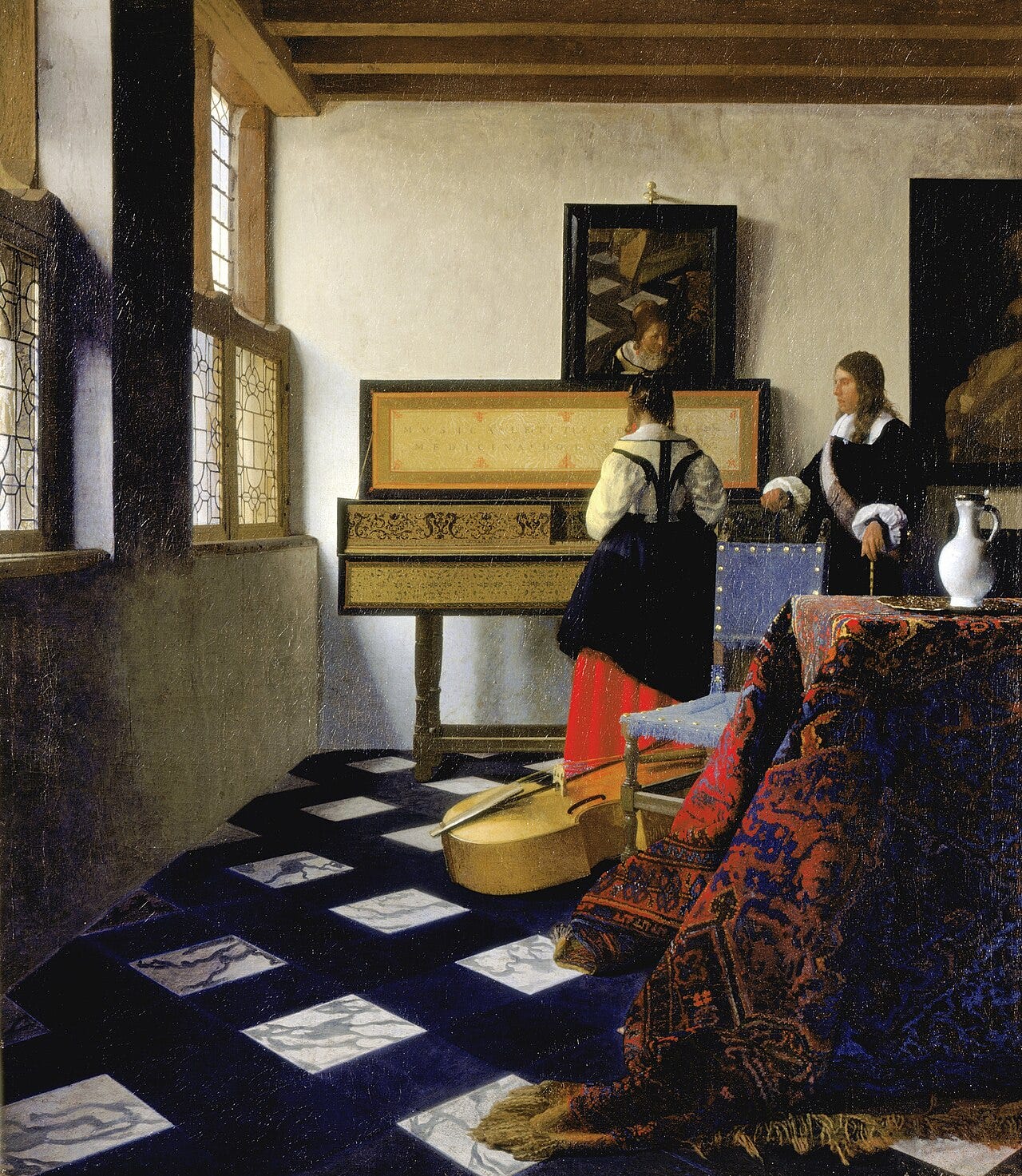
In 2001, art historian Philip Steadman published "Vermeer's Camera: Uncovering the Truth Behind the Masterpieces."
Steadman noticed that the same floor tiles, windows, and furniture reappear across several Vermeer paintings. From those recurring elements, he mapped the exact dimensions of what is believed to be Vermeer's studio.
His conclusion: the geometry of these paintings only makes consistent sense if Vermeer projected each scene with a camera obscura set up inside that specific room.
The Delft connection
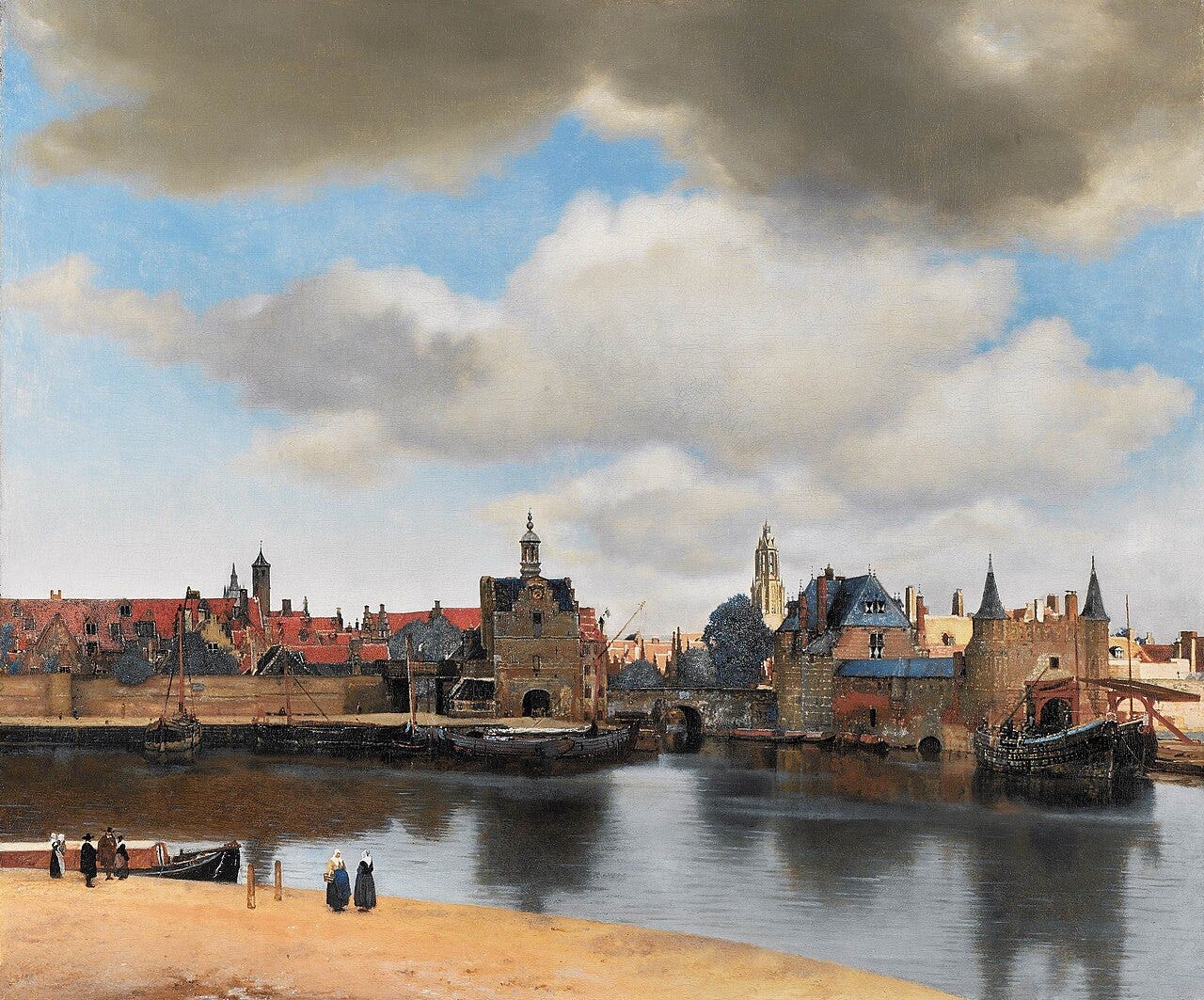
Vermeer lived in the right city for it. Delft had a notable lens grinding and optics industry at the time.
It was also home to Antonie van Leeuwenhoek, the inventor of the microscope, born in the same year and the same parish as Vermeer. After the painter died, Van Leeuwenhoek was the man appointed to handle his estate.
Tempting as it is to imagine the microscope pioneer handing lenses to the painter, no surviving document proves the two were close friends, or that Van Leeuwenhoek supplied Vermeer with anything at all.
What Tim Jenison proved, and what he did not
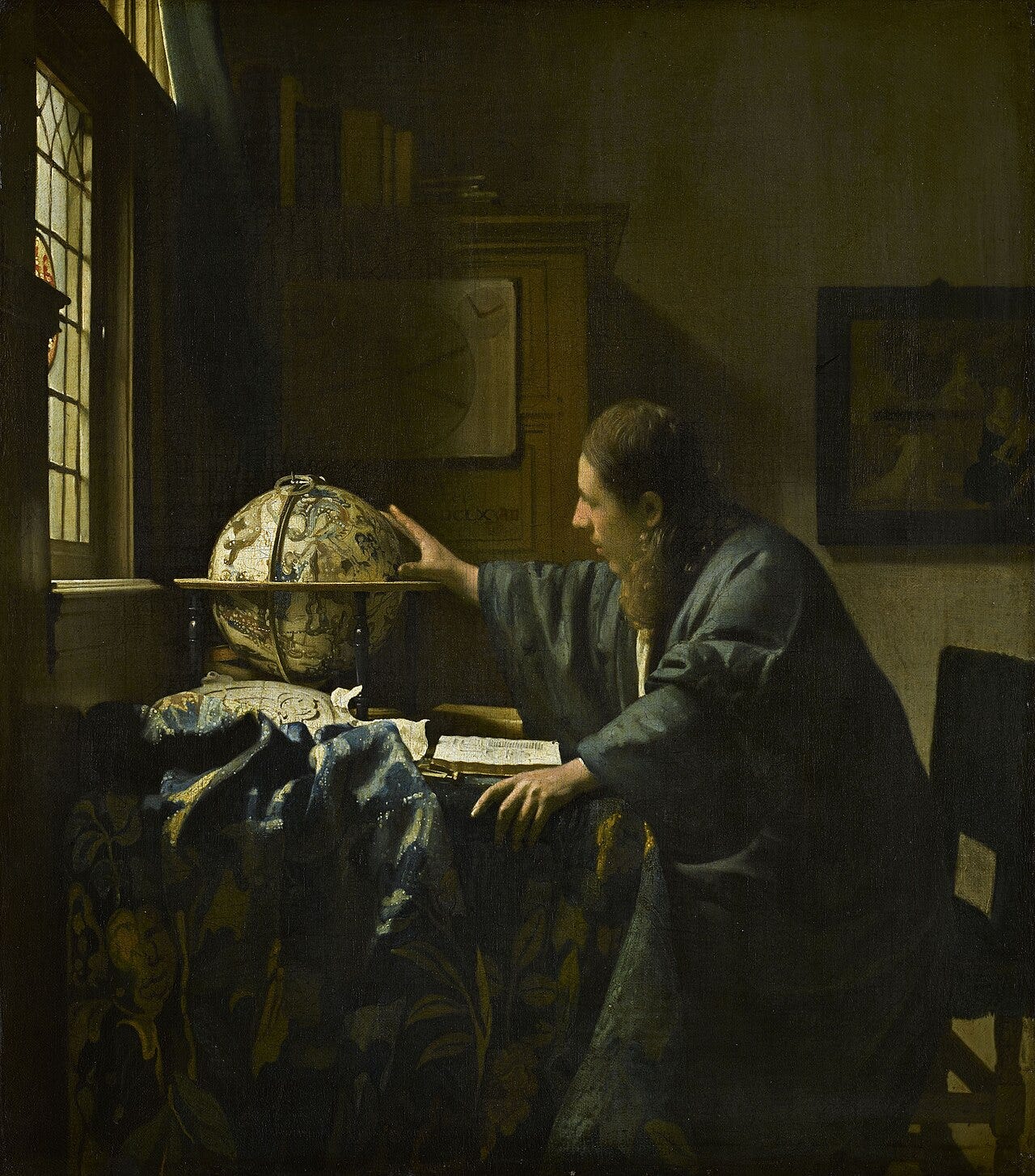
Back to 2013. In the documentary "Tim's Vermeer," Jenison rebuilt a version of Vermeer's studio and set out to reproduce "The Music Lesson."
His tool was a comparator mirror, a device related to a projecting camera obscura but distinct from it. A small mirror let him compare his canvas to the scene, color by color, until the two matched.
It took him 130 days. He had no formal training in painting. His argument: if an amateur can achieve a Vermeer level of optical accuracy with this method, the method itself is within reach of anyone, which makes it plausible that Vermeer used something similar.
Many art historians remain unconvinced. Showing that a technique works in 2013 says nothing certain about what happened in a Delft studio in the 1660s. The question stays open.
FAQ
Is there any written proof that Vermeer owned a camera obscura? No. No inventory, letter, or document from his lifetime mentions one. The entire theory rests on visual evidence inside the paintings.
What visual evidence suggests he used one? Exaggerated blurring in foreground objects in works like "The Milkmaid" and "The Lacemaker," plus small circular highlights that resemble the way a lens scatters bright light.
What did Philip Steadman argue? In his 2001 book "Vermeer's Camera," he reconstructed the dimensions of Vermeer's likely studio from recurring tiles, windows, and furniture, and argued the paintings' geometry fits a projected image made inside that room.
Did Van Leeuwenhoek give Vermeer his lenses? Unproven. The microscope inventor lived in Delft, was born the same year and parish as Vermeer, and handled his estate after his death, but no document shows they were friends or traded equipment.
Did Tim Jenison settle the debate? No. His 130 day experiment showed the optical method can produce a Vermeer level result. It did not show that Vermeer used it, and many historians remain skeptical.
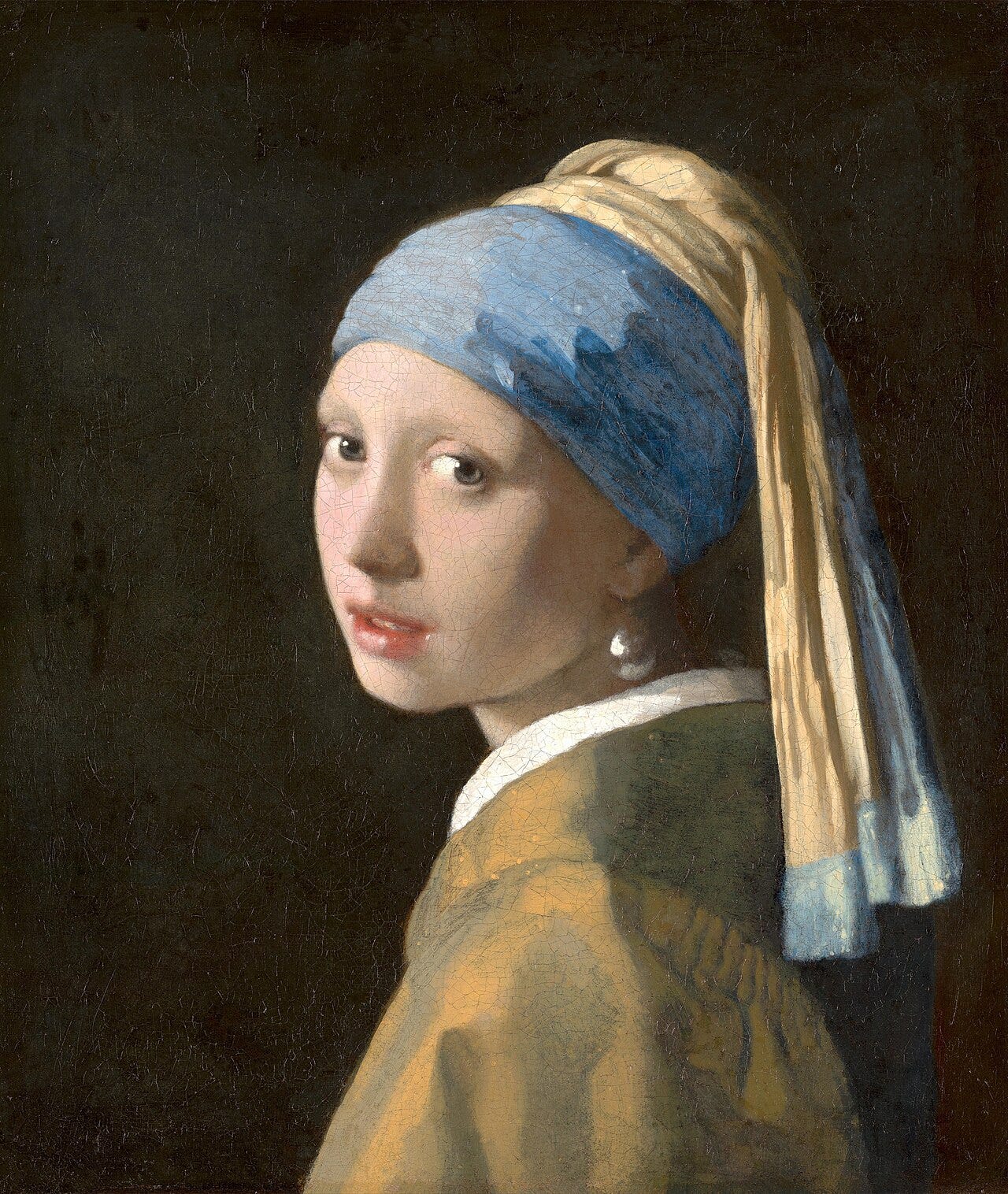
Here is where the whole argument stands. In 2013, an engineer with no formal training in painting spent 130 days reproducing one Vermeer using only mirrors, lenses, and patience. It proved the technique works. It did not prove Vermeer used it.