
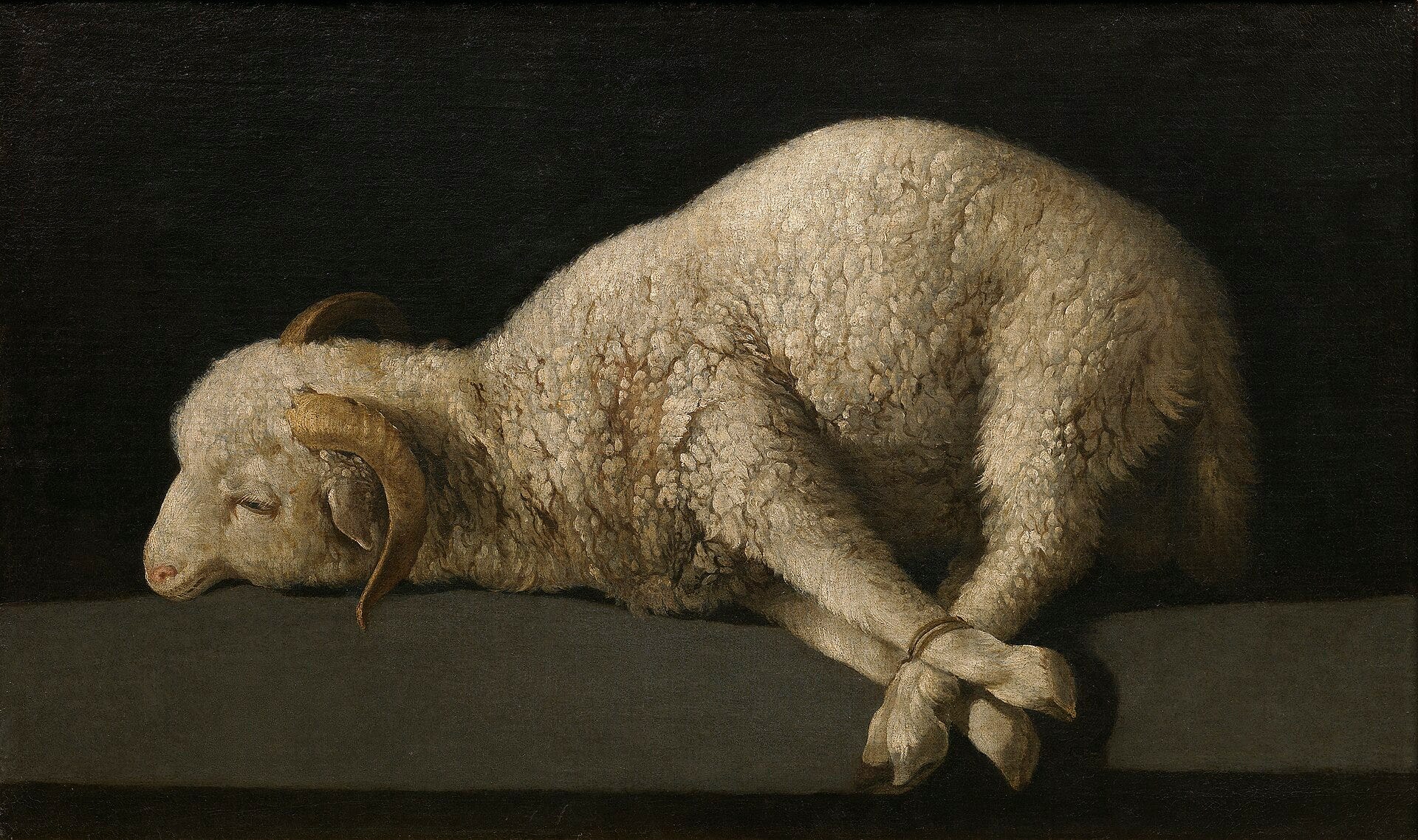
Francisco de Zurbarán (1598 to 1664) was a Spanish painter from Extremadura who built his career in Seville, painting monks, martyrs and saints in plain white cloth under a hard light. He is remembered above all for the Agnus Dei, a small canvas of a lamb with its feet tied, now in the Prado in Madrid. Critics call him the Spanish Caravaggio, but his pictures are quieter than that.
The lamb lies on a bare ledge with its feet bound, and the bound feet hang over the edge, as if the animal had been set down right in front of the viewer. Zurbarán gave it no scene, no shepherd and no explanation, only the waiting.
Cool Stories About Art is a newsletter to learn art the fun way.
Join 200,000+ readers and get:
10 new art stories / month
The entire archive of content (1,000+ articles)
Comment, ask questions, and chat with other readers
The man who painted that stillness did not live like a monk. He ran a busy workshop in Seville, and from the late 1630s he sold its output across the Atlantic. Saints and Biblical patriarchs, many of them finished by assistants, went by ship to Lima and other colonial towns, painted on speculation and handed to ship captains who were supposed to find buyers.
It was a risky way to do business. Some of those captains did not pay, and Zurbarán had to take them to court to collect, which is how historians know so much about the trade today. The painter of the quietest pictures in Spain was also a merchant chasing debts across an ocean.
That is the Zurbarán the lamb does not show. It also raises a plain question: how does a haberdasher's son from a village in Extremadura end up painting for the monasteries of Seville, and then for the king?
What You'll Discover
Where a village boy learned to paint.
The paper pinned to the tree.
Why Seville wanted him to stay.
Why a lamb lies bound on a ledge.
How twelve brothers reached County Durham.
What ended the good years.