
The Sistine Chapel ceiling took Michelangelo about four and a half years, from the contract of 1508 to the unveiling in 1512. Only about three of those years were spent painting, because the work stopped for months in the middle.
The altar wall, with the Last Judgment, came much later. It took him from 1536 to 1541.
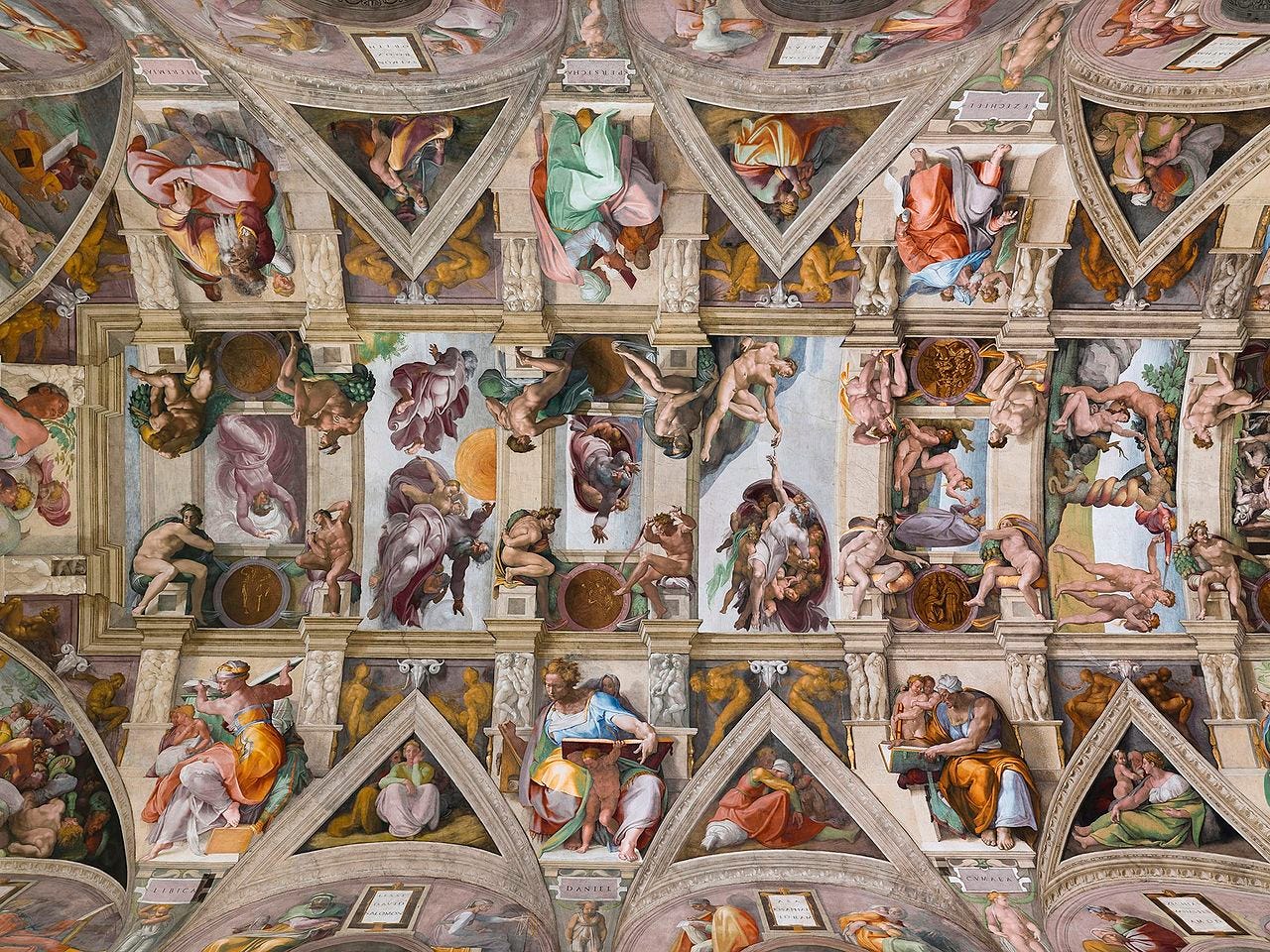
The Sistine Chapel is the pope's own chapel in the Vatican, a long hall with the entrance at one end and the altar at the other. Its ceiling is a shallow curved vault that rises about 66 feet above the floor.
Michelangelo was a sculptor, and fresco was a craft he had hardly practiced. Pope Julius II insisted, and he took the job. Halfway through, while the pope was away at war, the work stopped for months over a dispute about his pay.
Cool Stories About Art is a newsletter to learn art the fun way.
Join 200,000+ readers and get:
10 new art stories / month
The entire archive of content (140+ articles)
Comment, ask questions, and chat with other readers
That pause is missing from the shortest account of the job. Ascanio Condivi, a pupil of Michelangelo's, published a life of his master in 1553, while the artist was still alive, and wrote that the whole ceiling was finished in twenty months.
The record rules that out. The contract was signed in the spring of 1508, and the last part of the ceiling was painted in the fall of 1512. Nobody has shown how Condivi reached his figure.
The dates do show where the missing time went. The job ran in two bursts, with a long stop between them.
From the contract to the first fresco
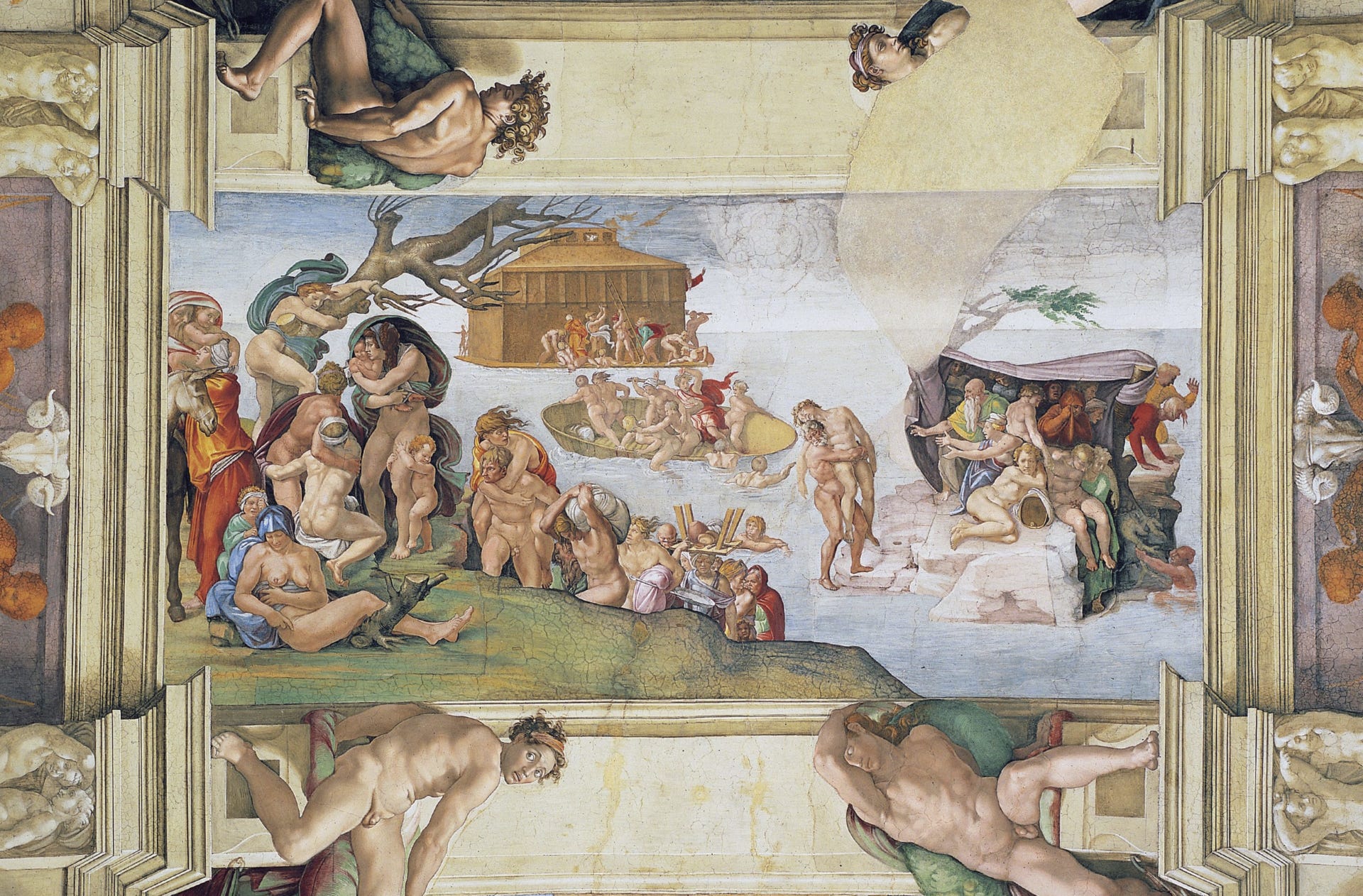
The contract Michelangelo signed for the ceiling on May 8, 1508, promised him 3,000 ducats, roughly $600,000 in gold at 2021 prices. His first day of work is known from his own hand, because he wrote it down beside a payment on that sum.
What You'll Discover
Why the work stopped halfway.
What the pope insisted on seeing.
How fast the second half went.
Who sent him back to the wall.