
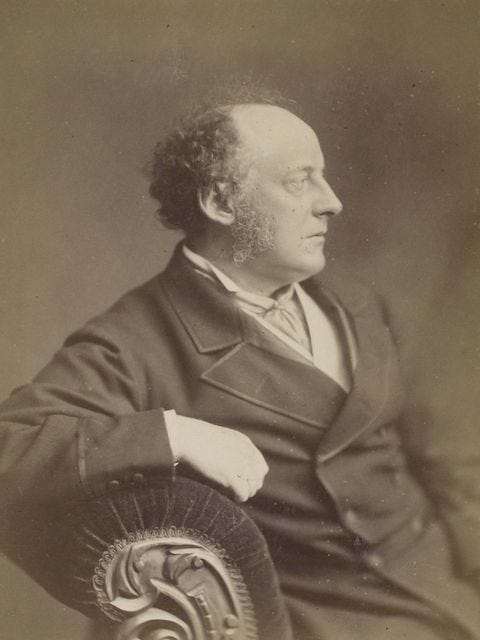
John Everett Millais (1829 to 1896) was an English painter and a founder of the Pre Raphaelite Brotherhood.
John Everett Millais was a child prodigy who helped launch the Pre Raphaelite movement at 19, painted one of the most famous images in British art, the drowning Ophelia, and then scandalised and conquered Victorian society in equal measure.
He went from rebel to the richest, most decorated artist in the land.
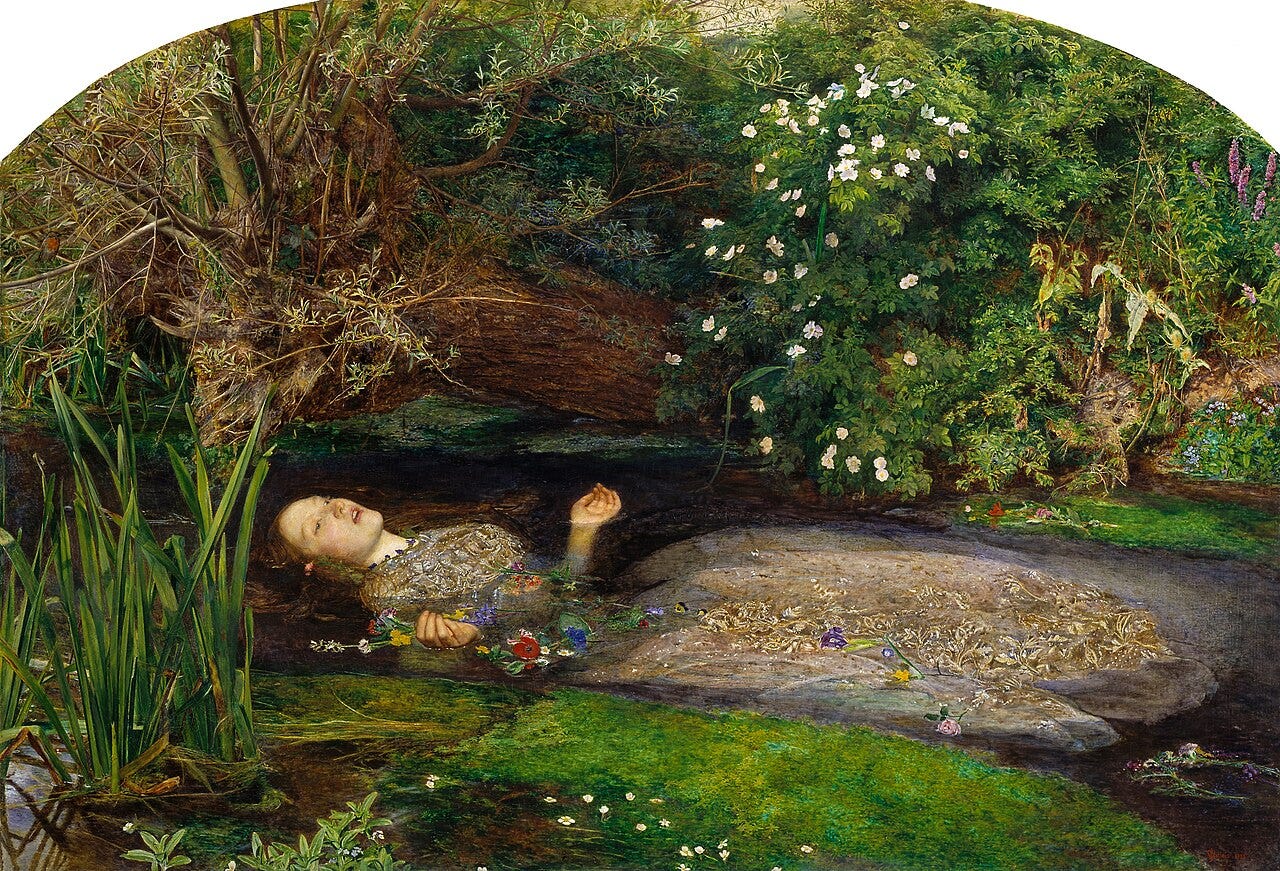
His life has everything: a teenage revolution against the art establishment, a notorious love triangle, and a late career so commercial that one painting became a soap advert.
Born: Southampton, 1829
Known for: Ophelia, founding the Pre Raphaelites, Victorian fame
Died: London, 1896
More incredible painter stories
If John Everett Millais pulled you in, you will love these too:


John Everett Millais at a glance
1829. Born in Southampton to a family from Jersey.
1840. Youngest student ever admitted to the Royal Academy schools, at eleven.
1852. Ophelia, painted from a Surrey riverbank and a London bathtub.
1855. Married Effie Gray after the annulment of her marriage to Ruskin.
1896. Elected President of the Royal Academy months before his death.
From Southampton to the Royal Academy at eleven
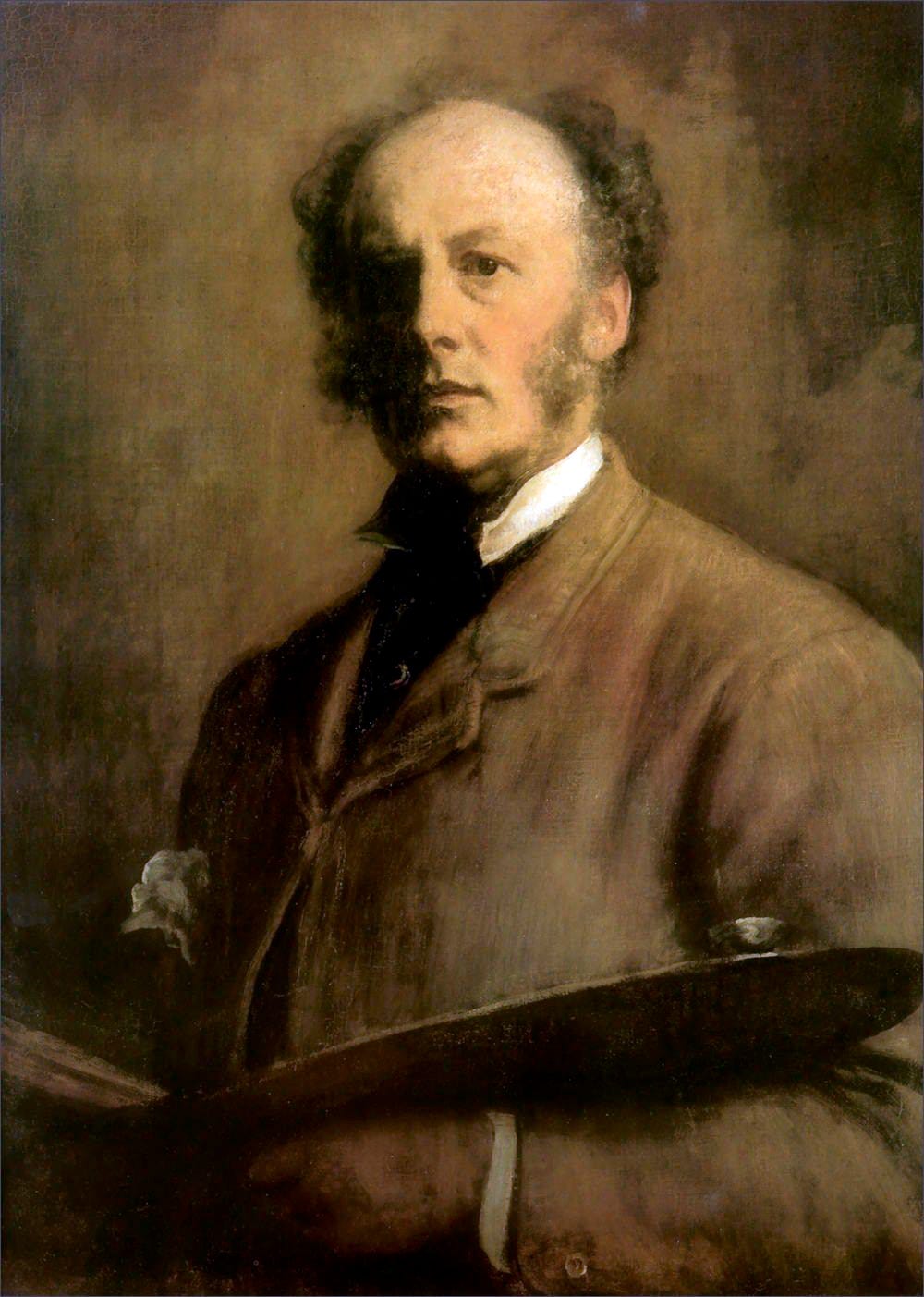
John Everett Millais was born in Southampton on 8 June 1829, into a comfortable family with roots in an old Jersey line. The family moved to London in 1838, and the boy's talent was already obvious.
He won a silver medal from the Society of Arts at the age of nine while studying at Sass's drawing school. In 1840, aged 11, he entered the Royal Academy schools as their youngest ever pupil.
He then swept the Academy's prizes, taking a gold medal in 1847. By the time most students were still copying casts, Millais could paint anything put in front of him, which is exactly why what he did next shocked his teachers.
The 1848 Brotherhood and the quarrel with Raphael
In 1848 Millais, William Holman Hunt and Dante Gabriel Rossetti founded the Pre Raphaelite Brotherhood, a secret society of young artists that eventually numbered seven, including one writer. Paintings by all three now anchor a ranked list of famous Pre Raphaelite paintings.
Rossetti later buried his own poems with his wife Elizabeth Siddal, then had her grave opened seven years afterward to get them back.
They met and plotted at 7 Gower Street in London, where a plaque still marks the spot.
The name was a direct insult to the establishment. The group rejected the Royal Academy's worship of Raphael and the smooth, formulaic painting his example had produced for 300 years.
Instead they wanted bright colour, hard detail and honesty. They looked back to the Italian painters who worked before Raphael's generation, when art still felt observed rather than staged.
Truth to nature, and the critic who backed them
The rallying cry came from the critic John Ruskin, who told artists to go to nature and reject nothing. The young Pre Raphaelites took him at his word and painted outdoors, plant by plant, which almost no one did at the time.
Ruskin became a patron of the Brotherhood from 1851 and defended them in print when the press turned hostile. His backing gave the movement a respectability it could not have bought.
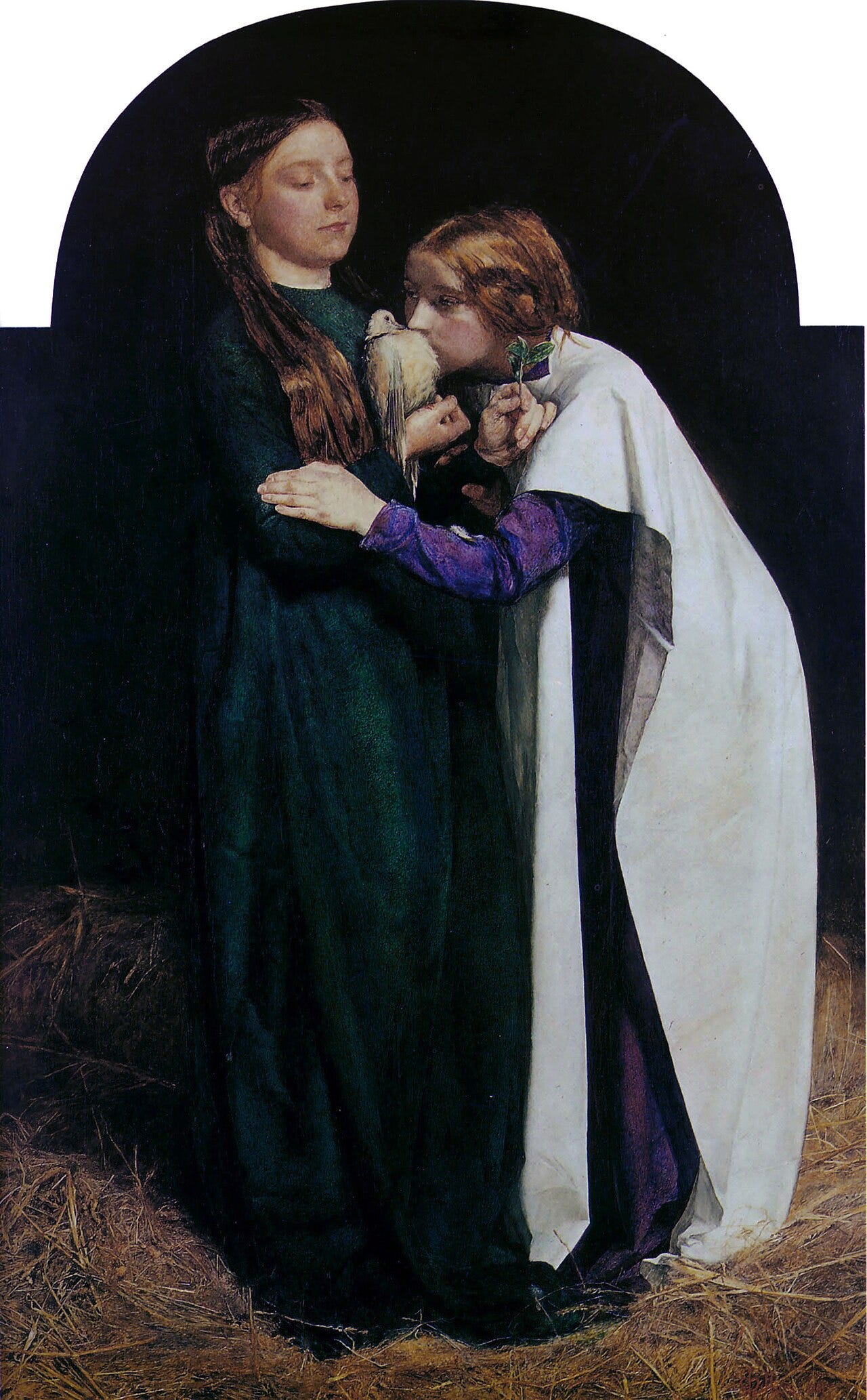
That year Millais painted The Return of the Dove to the Ark, admired by both Ruskin and the French writer Theophile Gautier. The rebels were starting to win.
Dickens and the outrage of 1850
The fight came to a head in 1850 with Christ in the House of His Parents. Millais showed the holy family as ordinary workers in a real carpenter's shop, with dirt underfoot and a boy holding a bleeding hand.
Charles Dickens led a savage public attack on the picture, and many viewers called it blasphemous for stripping the sacred of any idealisation.
Millais was 20. The scandal made him notorious, and notoriety, in Victorian London, was a form of fame he learned to use.
The Ruskin triangle, from Glenfinlas to the annulment
In the summer of 1853 Millais travelled to the Scottish Highlands with Ruskin and his wife Effie Gray. There he painted Ruskin's portrait standing by a waterfall at Glenfinlas in Perthshire, a canvas signed and dated 1854.
By the time the trip ended, Millais and Effie had fallen in love. She left Ruskin on 25 April 1854 and won an annulment on the grounds that the marriage had never been consummated.
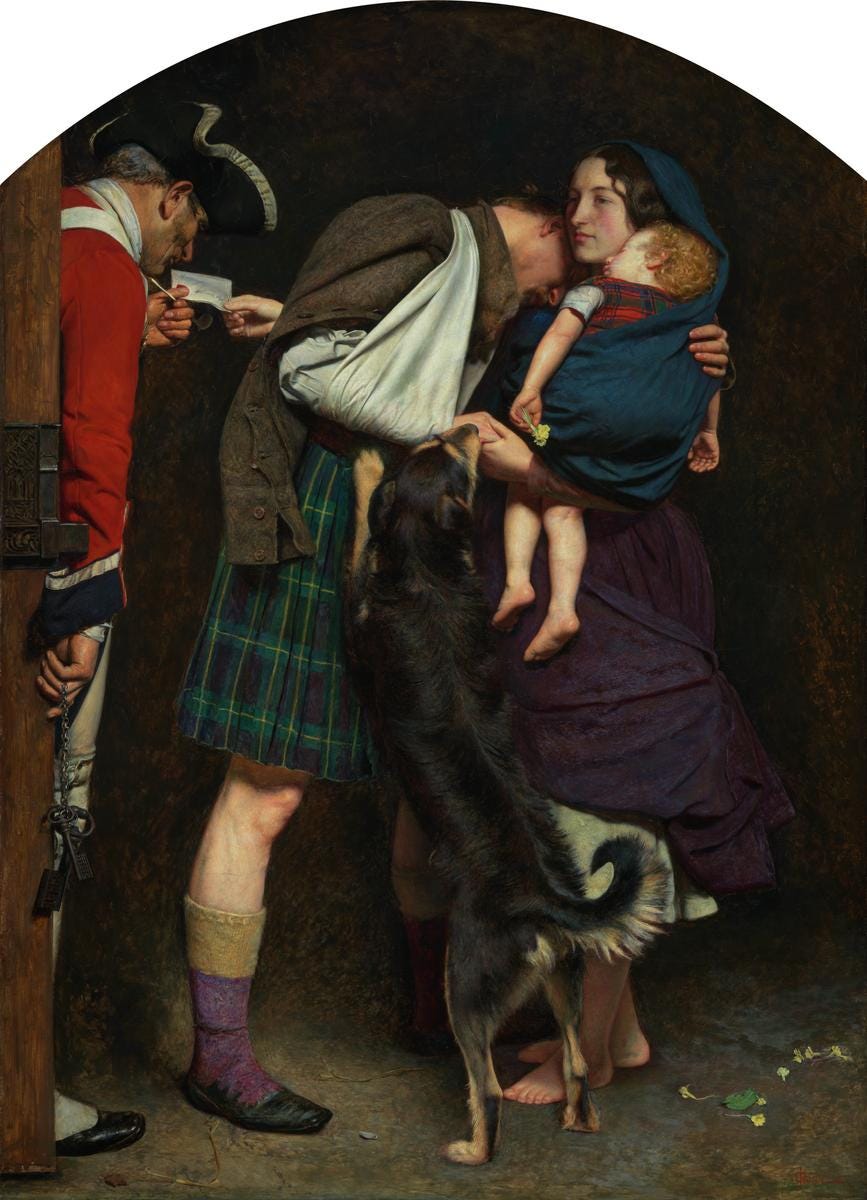
Effie married Millais on 3 July 1855, and they went on to have eight children. Her face had already reached the public in his The Order of Release of 1853, a work the painter Eugene Delacroix praised in 1855.
The pictures that made Millais Britain's favourite storyteller
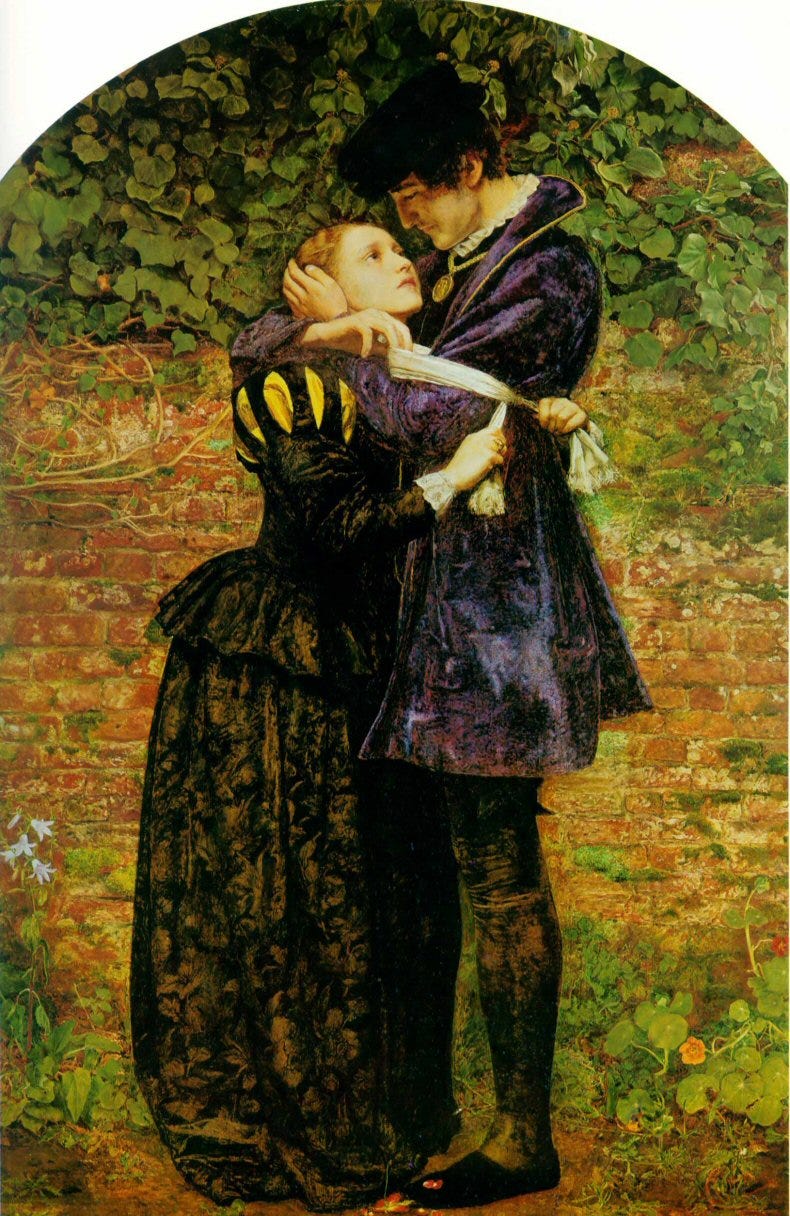
A Huguenot, on St Bartholomew's Day went to the Royal Academy in 1852 beside Ophelia, and it staked everything on two figures. A Catholic woman tries to knot a white badge onto her Protestant lover so he will pass as loyal on the eve of the 1572 massacre.
He gently pulls it away, knowing refusal may mean death, while one broken flower lies at his shoe.
The Order of Release 1746, painted in 1852 and 1853 and now at Tate Britain, holds a prison doorway. A Highland wife presents the paper that frees her captured husband, and the model for her was Effie Gray.
Delacroix praised the picture in 1855, and it earned Millais his Academy associateship the same year.
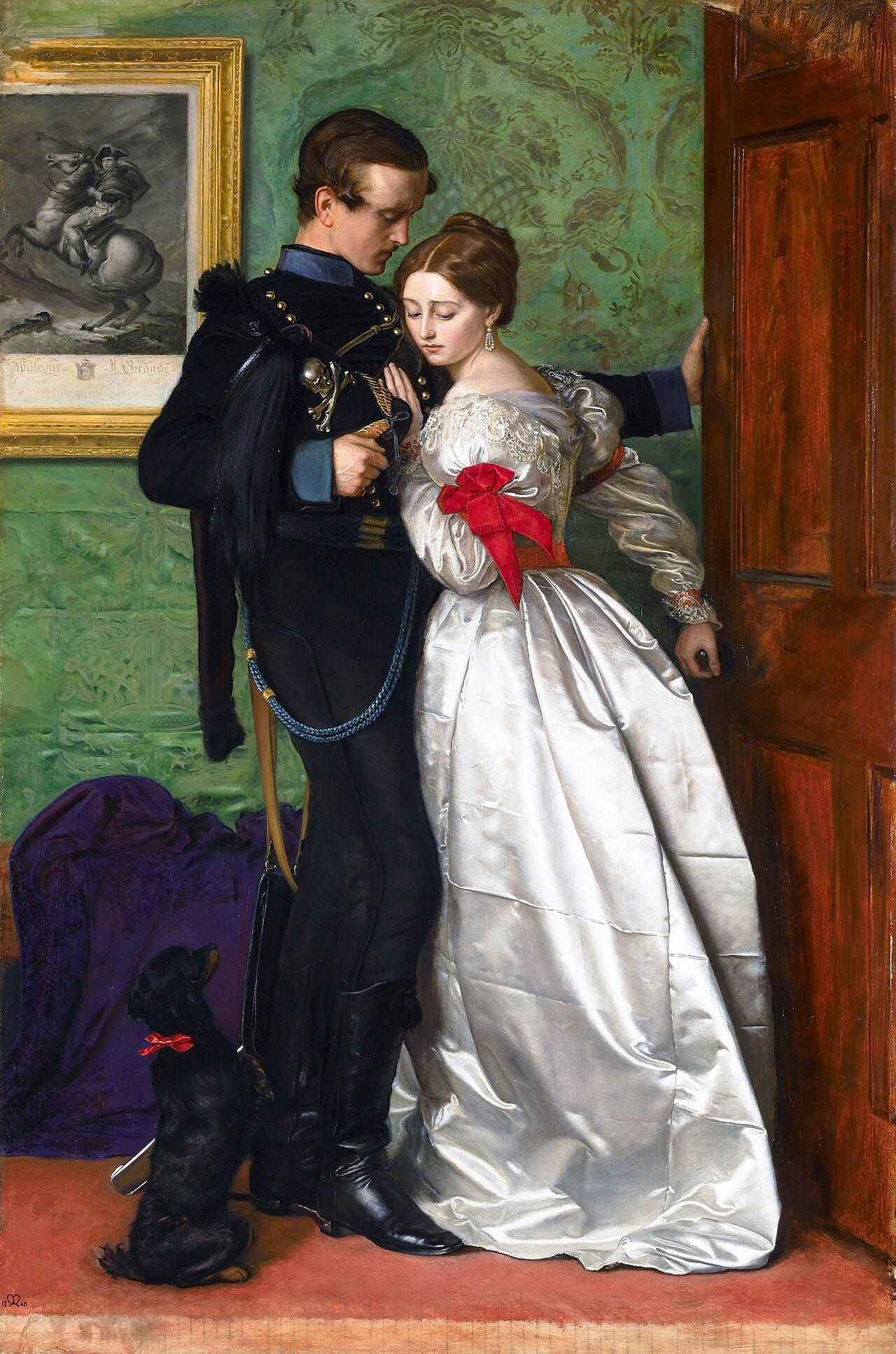
The Black Brunswicker of 1860 moved the same idea indoors. A soldier leaves for Quatre Bras in June 1815 while his English love plants her body between him and the door, her pale satin set against his black coat, a print of David's Napoleon on the wall hinting at how the day ends.
The Boyhood of Raleigh of 1870, also at Tate Britain, needs only a weathered sailor, two boys on the shore, and his arm flung toward the sea.
How Ophelia was actually made
Millais painted Ophelia across 1851 and 1852 in two places. The riverbank came first, worked outdoors by the Hogsmill River at Ewell in Surrey over about five months, so that flowers blooming in different seasons ended up side by side.
He bought the double canvas from the colourman Charles Roberson on 7 June 1851 for 15 shillings. The Pre Raphaelites treated the landscape as equal to the figure, which is why he finished the setting before the drowning woman was added.
The figure was painted back in his Gower Street studio. His model was Elizabeth Siddall, aged 19, whom his friend Walter Deverell had spotted working in a London hat shop.
Siddall lay for hours in a bath kept warm by oil lamps set underneath. One day the lamps went out and Millais, lost in the work, failed to notice.
She caught a serious chill, and her father sent the painter the doctor's bill. The silver embroidered gown she wore had cost Millais 4 pounds secondhand.
Bubbles, Pears and the charge of selling out
In his later years Millais turned to sweet, popular subjects that sold in huge numbers. The most famous was an 1886 painting of a small fair haired boy, his own grandson, watching a soap bubble rise.
Thomas Barratt of the soap firm A. and F. Pears acquired the image, added a bar of soap and the company name, and turned it into one of the most reproduced advertisements of the decade.
Barratt deliberately wanted work by Royal Academicians to lend his product prestige. The art world protested at the commercialisation, but the public loved it, and Millais banked the reward.
Baronet and president: the establishment years
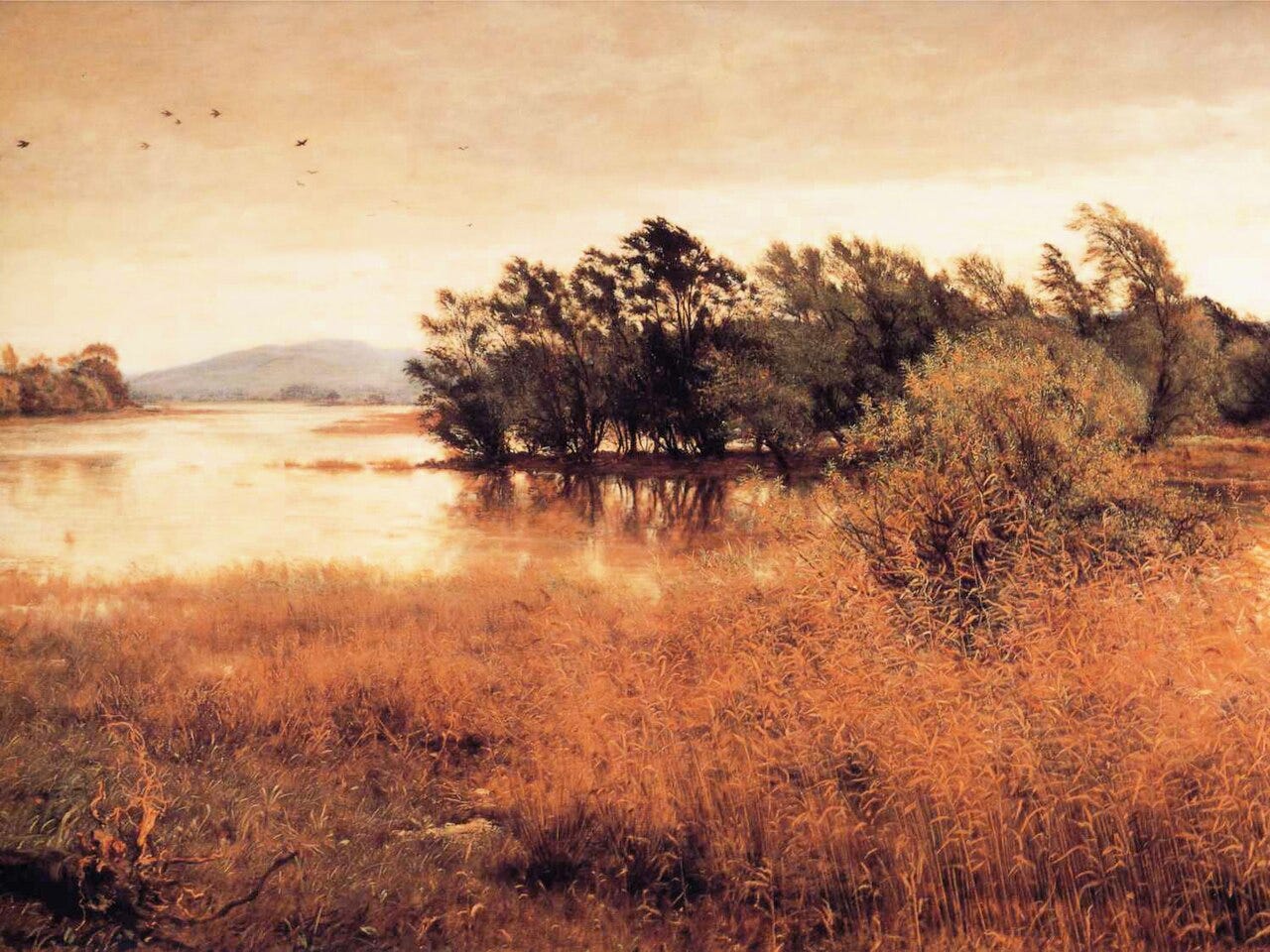
The teenage rebel became the ultimate insider. Millais was elected a full Royal Academician in 1863, and in 1870 he exhibited Chill October, the first of the pure landscapes drawn from the Perthshire country where he shot and fished each autumn.
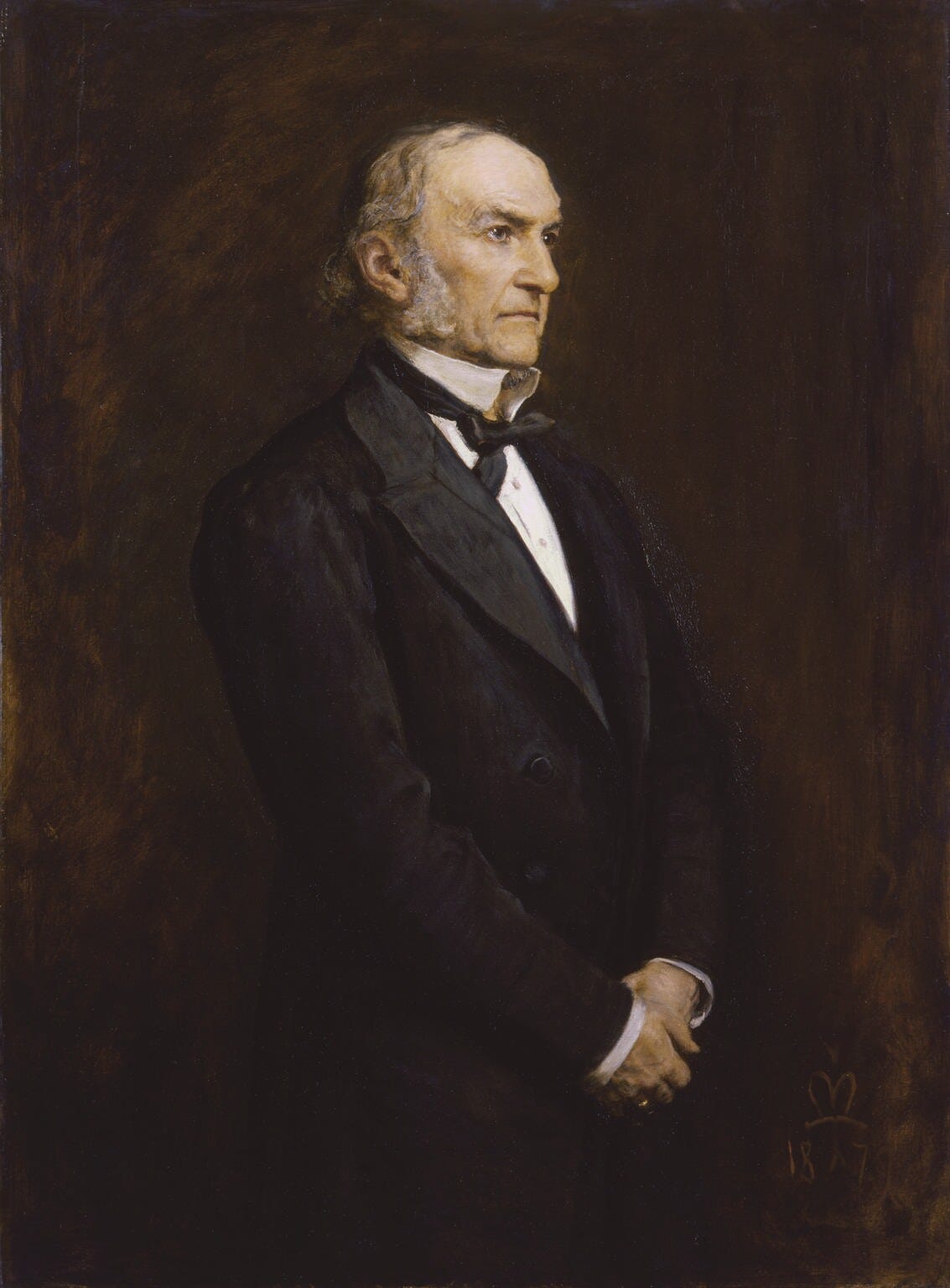
He became one of the most sought after portrait painters in Britain, recording Gladstone, Tennyson and Arthur Sullivan among many others. In 1885 he was created a baronet, the first British artist to receive a hereditary title.
In 1896 he was elected president of the Royal Academy, the highest post in British art. He died in London on 13 August 1896, aged 67.
Why Ophelia outlived everything
Millais sold Ophelia on 10 December 1851 to the dealer Henry Farrer for 300 guineas. It passed through several collectors before Sir Henry Tate bought it in 1892 and gave it to the nation in 1894.
It now hangs at Tate Britain and is one of the most loved works in the collection. When it once travelled abroad on tour, a visitor who had come from Australia to see it reportedly wept at the empty wall.
Photography had been invented in 1839, just 12 years before the painting, and Ophelia records the riverbank in more detail than any camera of the day could manage.
That coded bank of flowers keeps pulling in painters, photographers and filmmakers to this day.
The pull is measurable. Tate lists Ophelia among its best selling postcards and one of the nation's most loved paintings, and when it travelled with other Pre Raphaelite works to the United States, Russia, Japan and Italy, those works were seen by over 1.1 million people.
The drowned pose kept drawing other hands. John William Waterhouse painted Ophelia three times, Arthur Hughes showed his own version beside Millais at the Academy, and Reg Butler made an Ophelia in 1955 that now hangs in the same collection.
The John Everett Millais questions that keep coming up
What is John Everett Millais famous for? Co founding the Pre Raphaelites and painting Ophelia.
Was his work realistic? Yes, obsessively so in his early years. See what is Realism art.
Did a painting become an advert? Yes, his Bubbles was used to sell Pears soap.
Who was the model for Ophelia? Elizabeth Siddall, a young woman of 19 discovered working in a London hat shop by Millais's friend Walter Deverell. She later married the painter Dante Gabriel Rossetti in 1860.
Where did Millais paint the Ophelia landscape? By the Hogsmill River at Ewell in Surrey, working outdoors over roughly five months in 1851 and 1852. He painted the figure separately in his Gower Street studio in London.
More secrets to unlock


Why Millais still pulls a crowd
Millais lived the whole arc of Victorian art, from teenage radical to establishment grandee, and left behind one unforgettable image of beauty and death. Ophelia alone draws crowds to Tate Britain every day.
A final detail. The flowers around Ophelia are not random. Each one, the willow, the nettle, the daisy, the poppy, carries a meaning from Shakespeare or Victorian flower language, turning the riverbank into a coded message about love, pain and death.