
Pre Raphaelite art is the work of a rebel brotherhood of young Victorian painters who rejected academic rules and returned to the bright color, sharp detail and sincere feeling of art before Raphael. Jewel colors, real nature, tragic beauty. Twelve of the movement's best known canvases, from Ophelia to The Lady of Shalott, are gathered in famous pre raphaelite paintings. One of its three founders, John Everett Millais, gets a fuller account in his own complete story. John Collier worked in their wake a generation later, told in his own complete story.
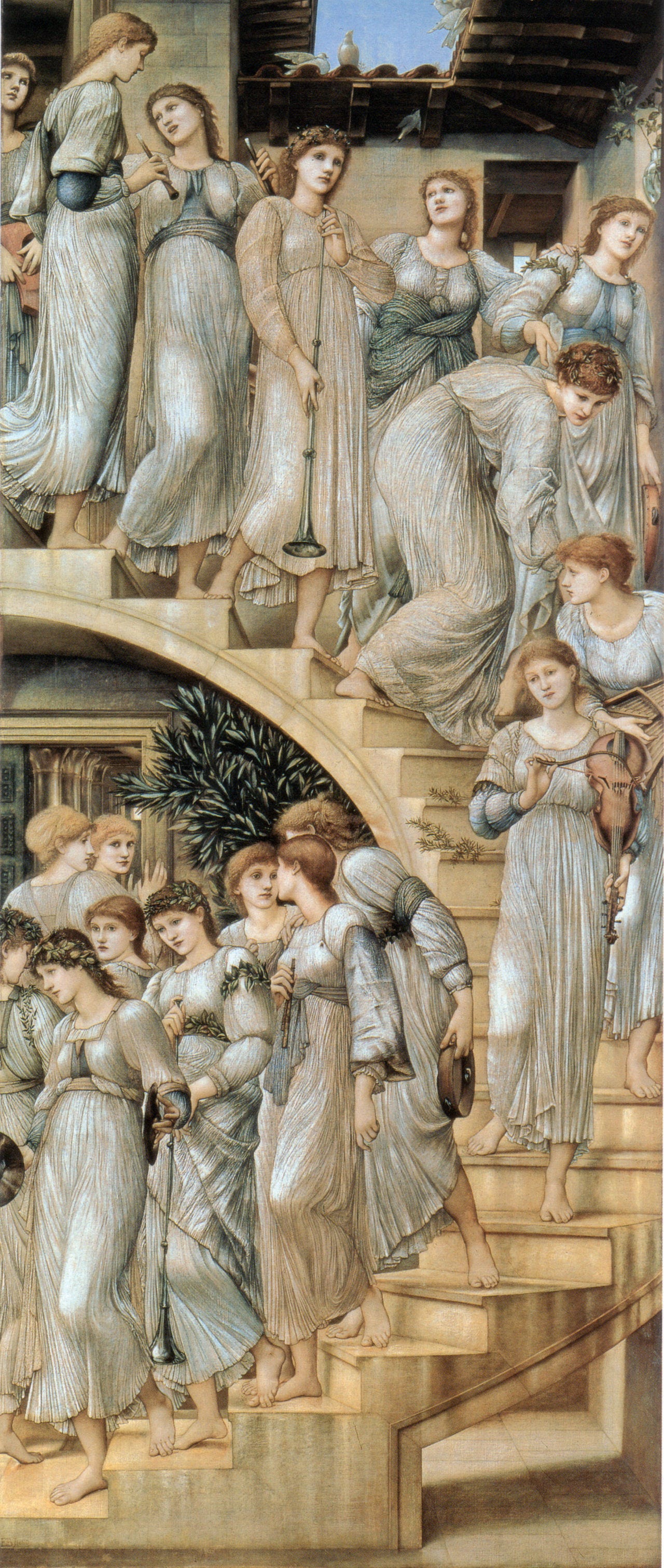
They formed a secret society in London in 1848, and they wanted to burn down the art establishment.
The name is a declaration of war.
These young painters thought art had gone soft and fake ever since Raphael, the great hero of the Renaissance.
The academies worshipped him and taught everyone to imitate his smooth, idealized style.
The rebels refused. They would go back to before Raphael, to the honesty, detail and glowing color of the early Italians. Hence Pre Raphaelite.
It was the first avant garde movement in British art, made by men barely out of their teens.
Pre Raphaelite in one minute:
Who: a secret Brotherhood of young British artists, founded in London in 1848.
The rebellion: against the academic worship of Raphael and the Renaissance ideal.
The look: intense jewel colors, obsessive detail, real nature, literary and tragic subjects.
The leaders: Dante Gabriel Rossetti, John Everett Millais, William Holman Hunt.
The most famous painting: Millais’s Ophelia.
Keep learning art the fun way


What does Pre Raphaelite mean?
It means, literally, “before Raphael.”
By the 1840s, the official art world held up Raphael and the High Renaissance as perfection itself. Every student was trained to copy that smooth, balanced, idealized manner. To the young rebels, this had drained art of all truth and feeling.
So they looked further back, to the painters before Raphael: the early Italians with their clear bright color, their sincere emotion and their patient, glowing detail.
The whole movement is named after what it refused to be.
What makes a Pre Raphaelite painting?
You can spot one across a crowded gallery. Here is how.
Jewel like color. Intense, glowing, almost unreal blues, greens and reds, often painted on a wet white ground to make them shine.
Obsessive detail. Every leaf, petal and strand of hair rendered with almost painful precision.
Real nature. They painted outdoors and from life, refusing to fake a single flower.
Tragic, literary subjects. Scenes from Shakespeare, medieval legend, poetry and the Bible, usually heavy with love, death and longing.
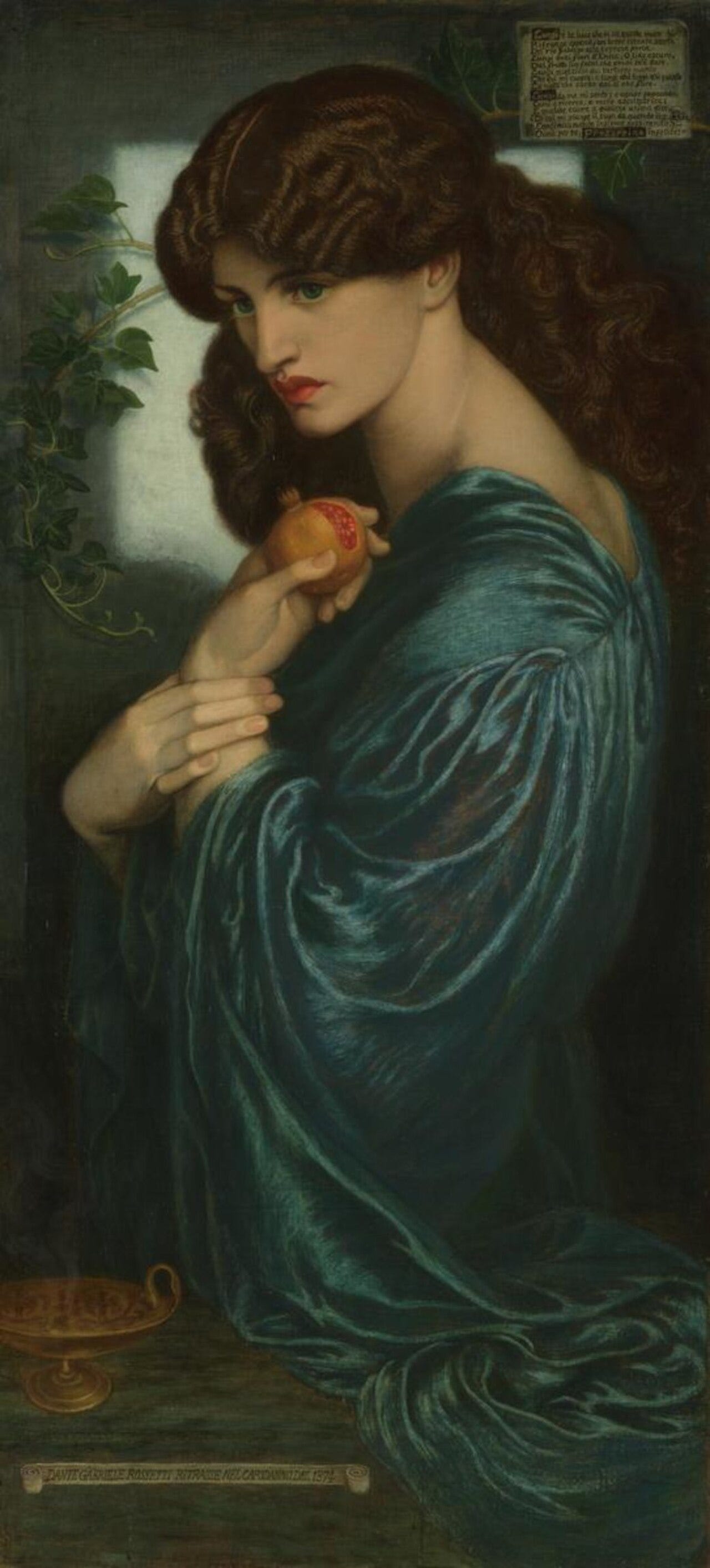
Beautiful, melancholy women. Especially in Rossetti’s work, the dreaming, symbol laden female face became the movement’s signature.
The most famous Pre Raphaelite painting
If you know one Pre Raphaelite painting, I would bet it is this one.
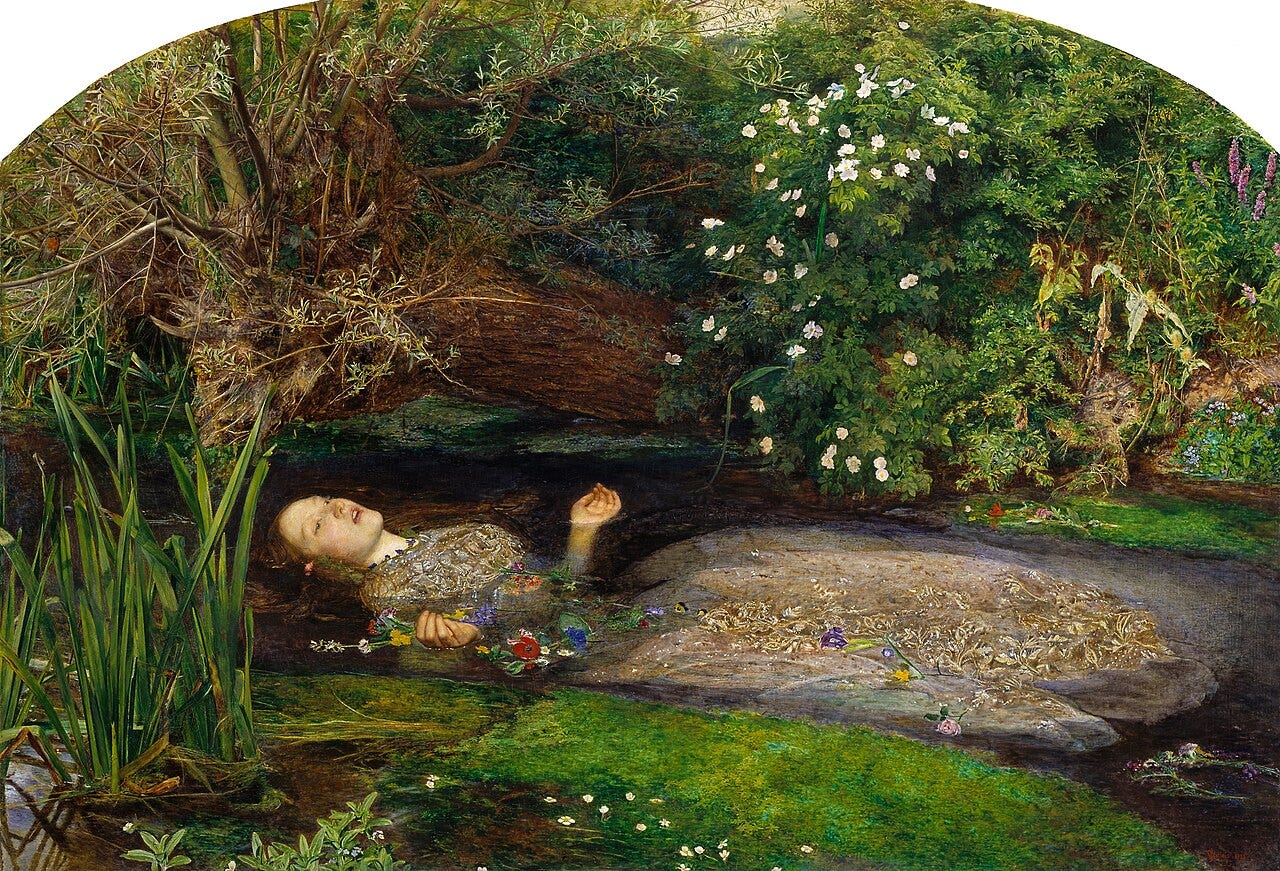
John Everett Millais's Ophelia shows Shakespeare's drowning heroine, floating and singing as she sinks.
Millais painted the river and its plants with such fanatical accuracy that botanists can still identify every species.
Then he had his model, Elizabeth Siddal, lie in a bath for months to pose, until she fell seriously ill.
The result is unbearably beautiful and unbearably sad, the whole Pre Raphaelite project in one frame, and it hangs at Tate Britain.
Rossetti, Millais, Holman Hunt
Three members tower over the rest. Here are the ones I keep coming back to.
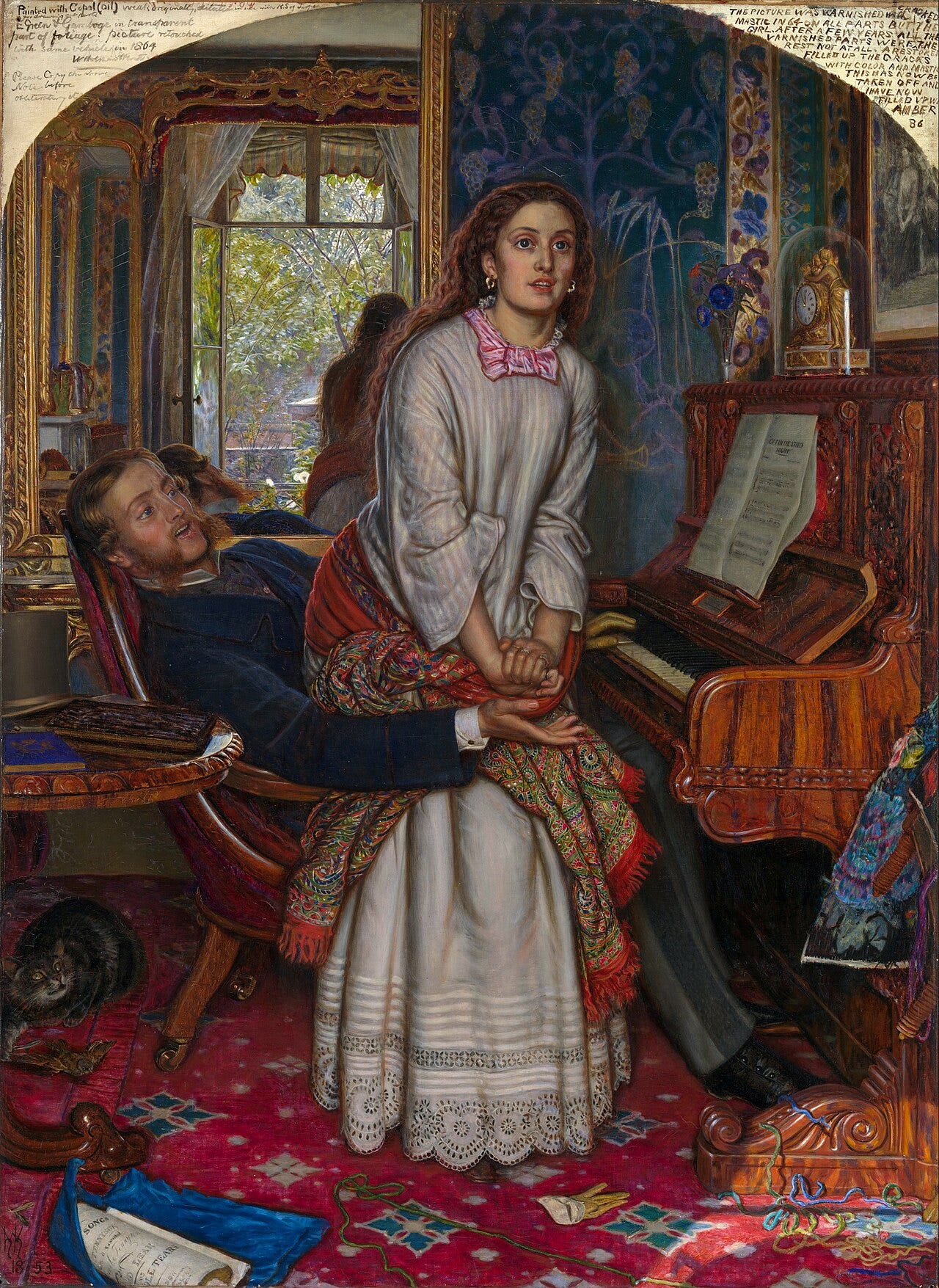
1. Dante Gabriel Rossetti. The poet painter and the soul of the group. His dreaming, sensual women, loaded with symbols and longing, are the closest British art came to Symbolism. Half painter, half mystic.
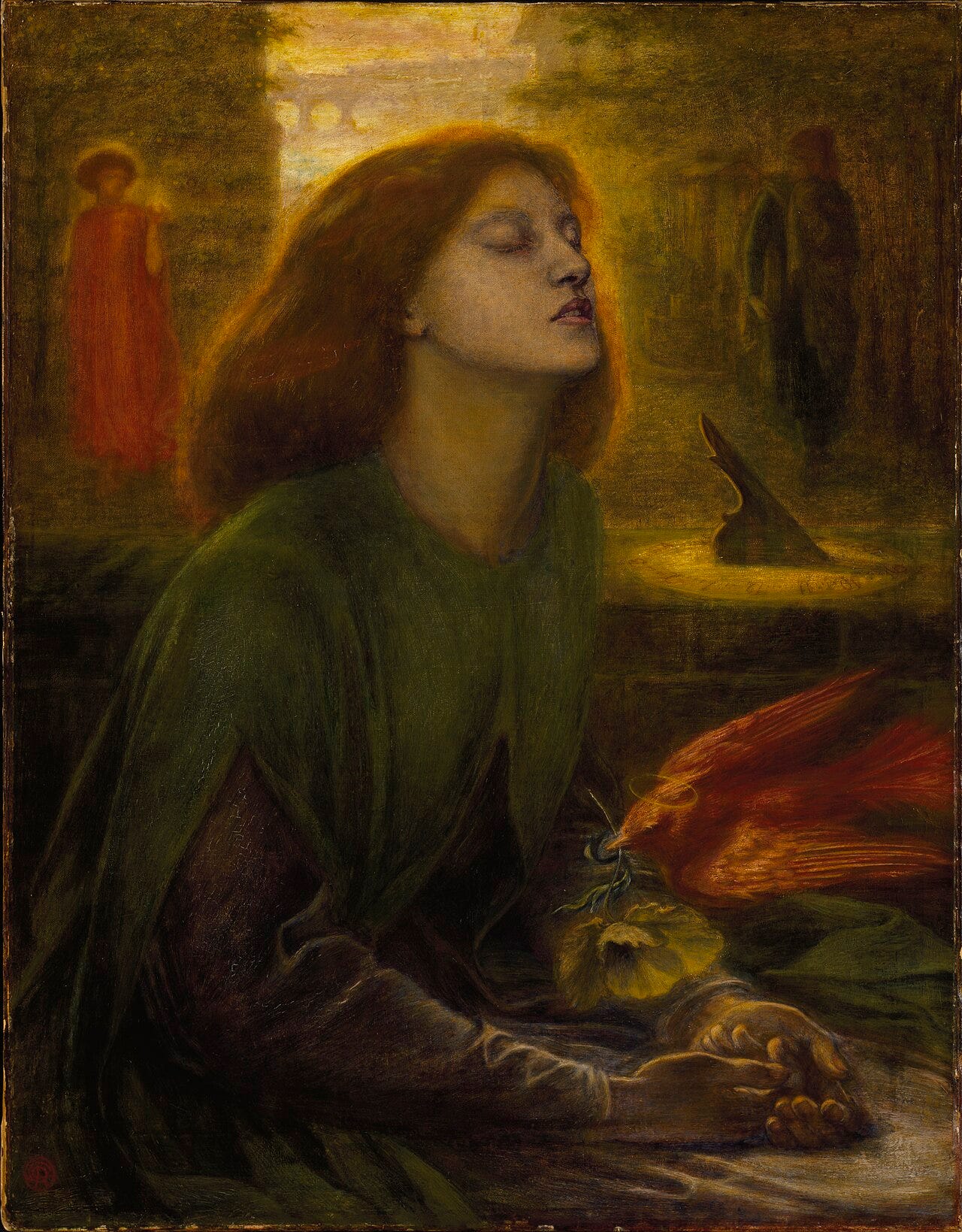
2. John Everett Millais. The prodigy and the technician. The most naturally gifted, who could paint anything, from the drowning Ophelia to the wet English fields. He later won every honor the establishment had, the rebel turned president.
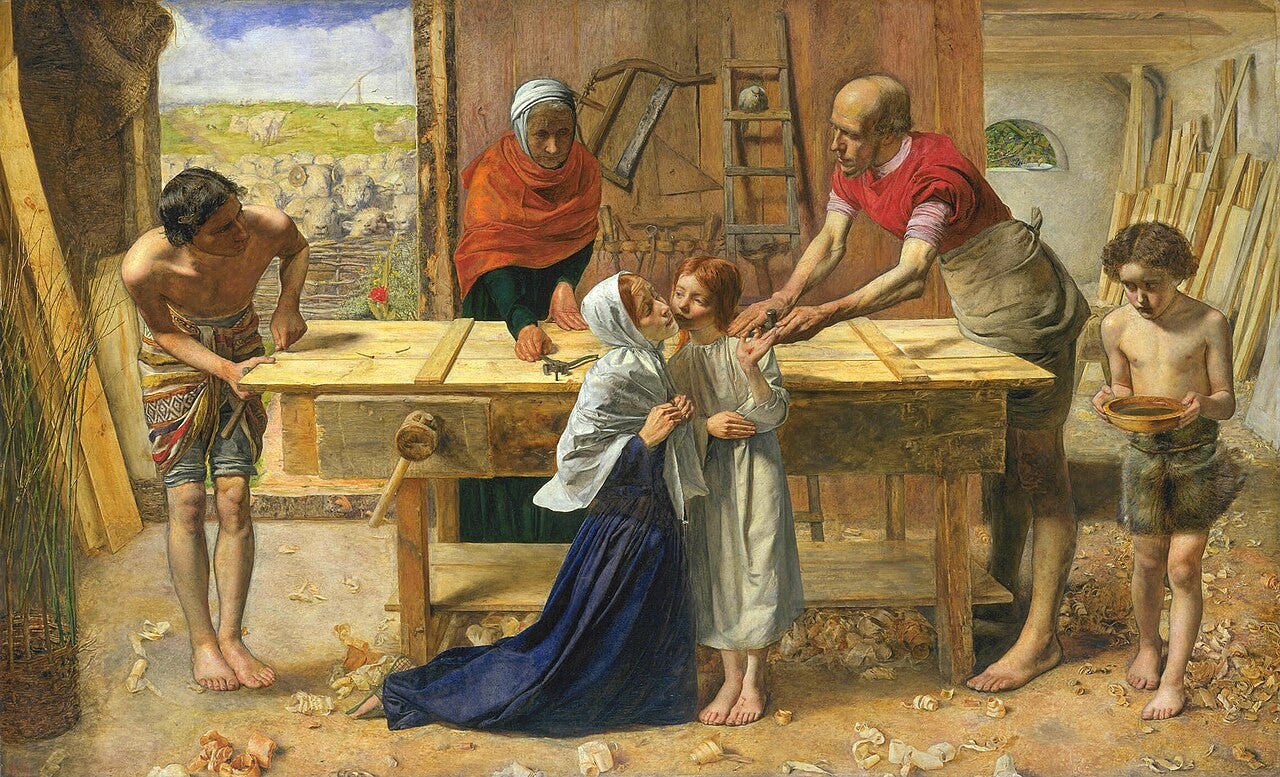
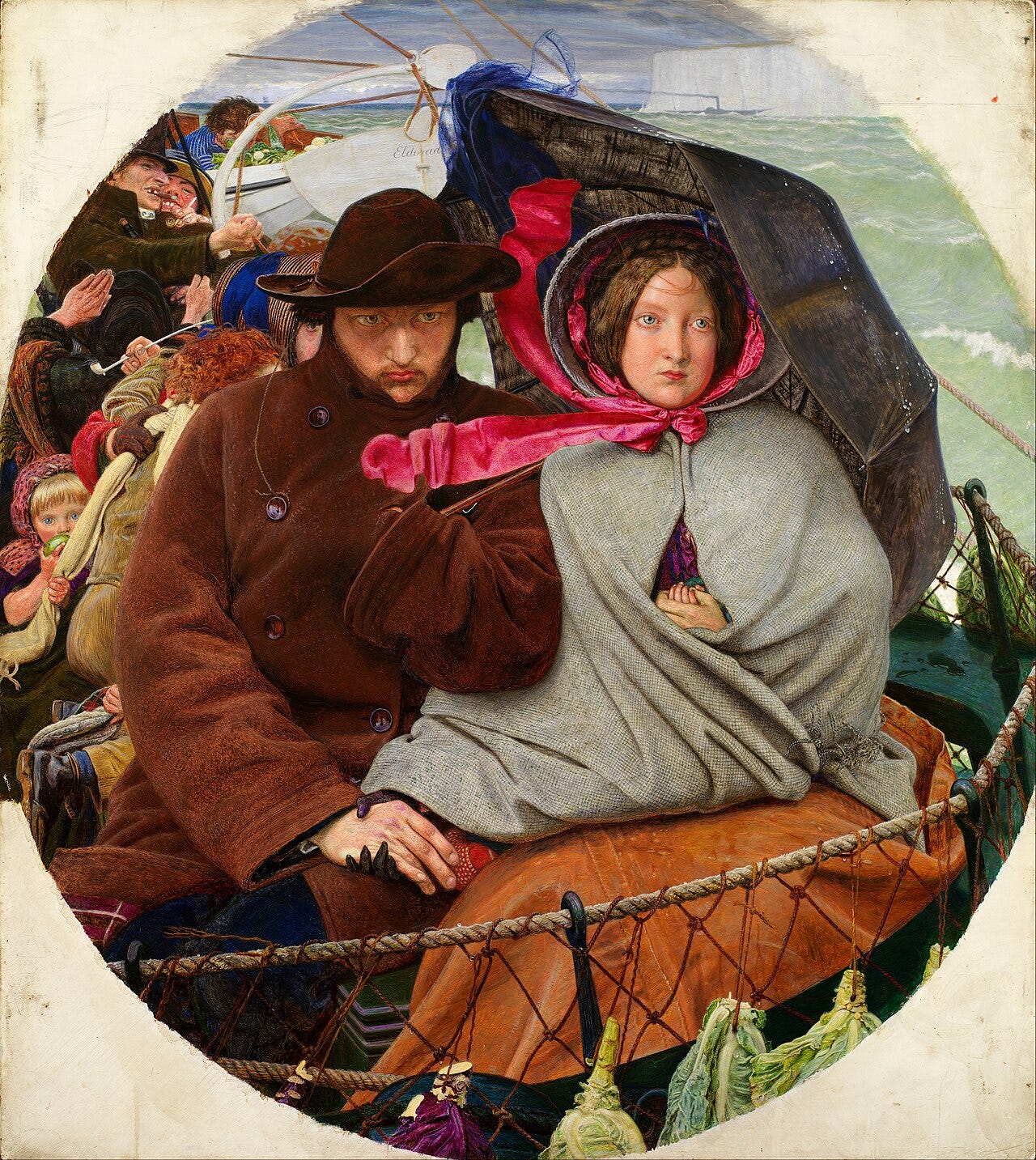
3. William Holman Hunt. The true believer. The most stubborn and devout, who travelled to the Holy Land for accuracy and packed his paintings with dense religious symbolism. He never abandoned the original creed.
How the Brotherhood still shapes fantasy
The Pre Raphaelite look quietly shaped modern fantasy.
That blend of glowing color, real nature, flowing hair and tragic romance is everywhere now.
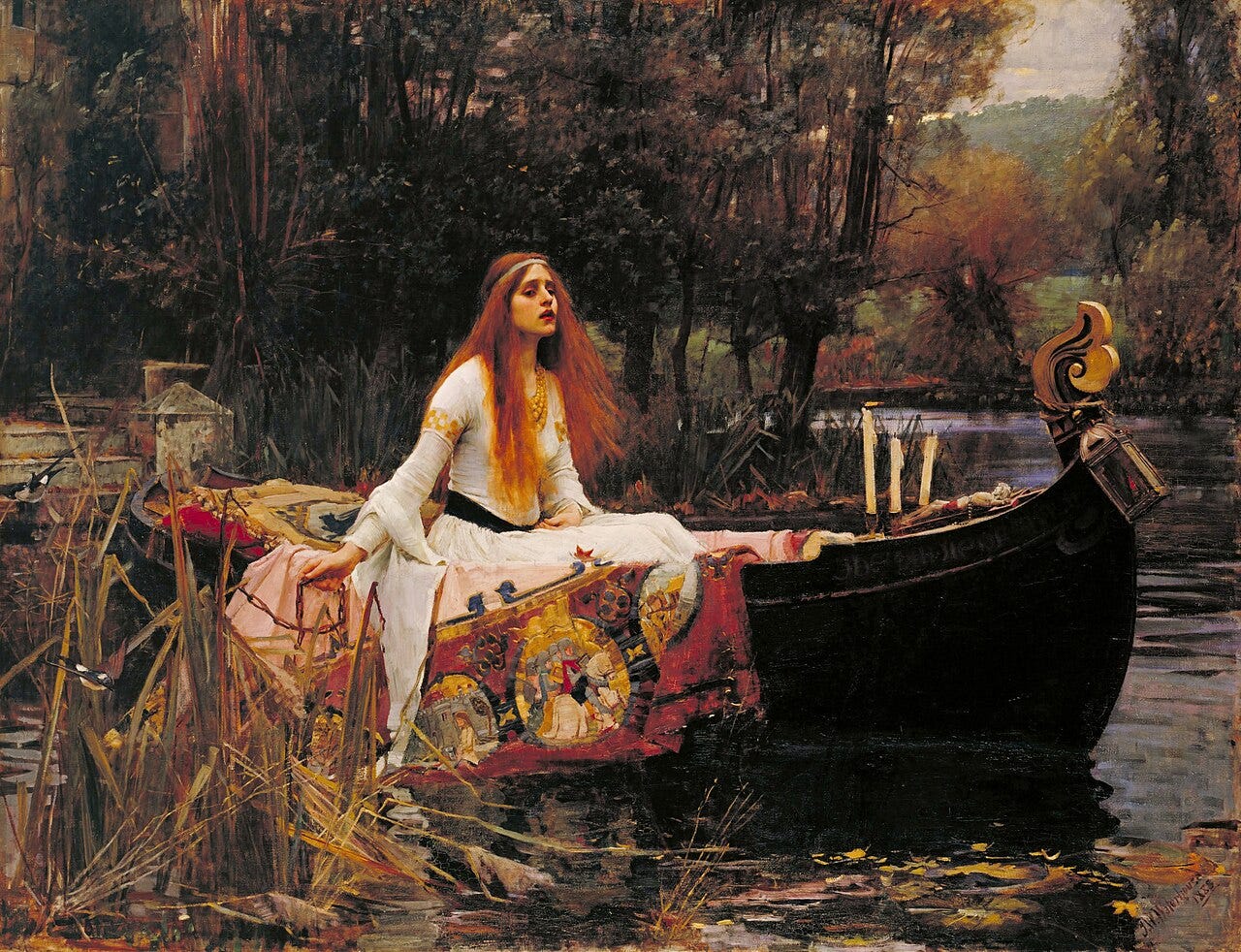
Fantasy art and film. The look of pre Raphaelite heroines runs straight into the imagery of myth and fantasy on screen.
Album covers and fashion. The dreamy, romantic, flower crowned aesthetic keeps returning.
Romance and gothic visuals. Beautiful melancholy, nature and longing, their exact emotional register.
So when a modern image drowns a beautiful figure in flowers and sorrow, that is the Brotherhood, still working.
Where the Brotherhood still glows
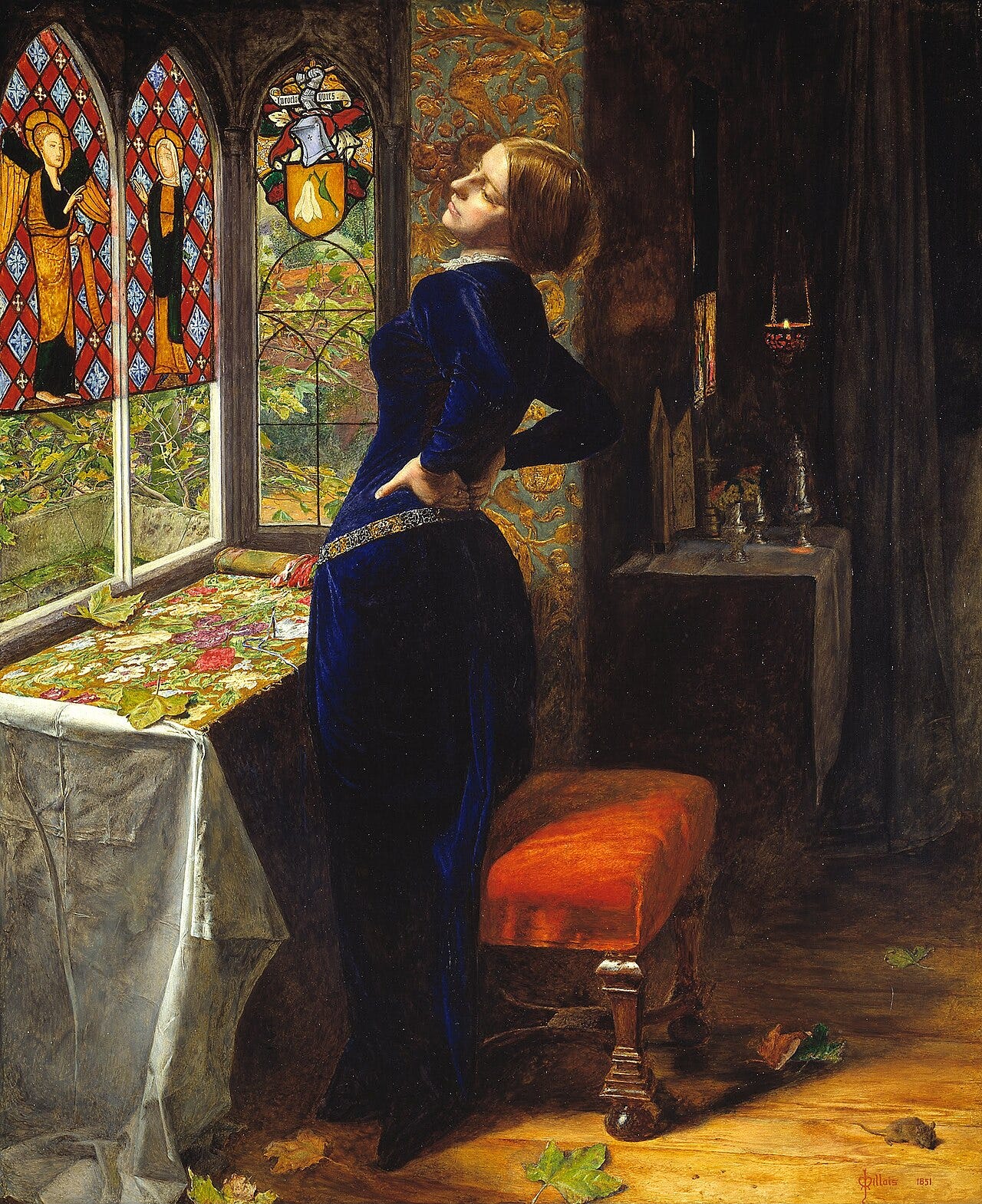
This is a deeply British movement, and Britain is where it glows.
Tate Britain, London. The heart of the collection, including Ophelia and Beata Beatrix.
Birmingham Museum and Art Gallery. The greatest Pre Raphaelite collection in the world.
The Manchester Art Gallery. Major works including Hunt and Millais.
The Victoria and Albert Museum, London. Drawings, design and the wider Pre Raphaelite world.
Another Brotherhood landmark hangs in the same collection: Rossetti’s Beata Beatrix at Tate Britain.
Pre Raphaelite art, the brotherhood questions
What is Pre Raphaelite art in simple terms? Art by a group of rebel Victorian painters who rejected academic rules and returned to the bright color, detail and sincerity of art made before Raphael.
Why is it called Pre Raphaelite? Because the artists rejected the worship of Raphael and the Renaissance ideal, looking back to the honest, detailed style of earlier painters.
Who were the main Pre Raphaelites? Dante Gabriel Rossetti, John Everett Millais and William Holman Hunt founded the Brotherhood in 1848.
What is the most famous Pre Raphaelite painting? John Everett Millais’s Ophelia, showing Shakespeare’s heroine drowning among meticulously painted flowers.
Why were they called Pre-Raphaelite? They wanted to return to the honesty and bright detail of art before Raphael, whom they blamed for making painting formulaic. Hence before Raphael.
More secrets to unlock


Beauty that had to mean it
I will admit it is easy to dismiss them as pretty, sentimental, a bit overripe. Flowers and drowning girls and flowing hair.
But look at what these barely grown rebels actually did. They refused to copy a master everyone told them was perfect.
They went outdoors and painted every real leaf instead of a studio formula.
They poured genuine, unfashionable feeling, love, grief, faith, into an art world that had gone cold and slick.
They believed beauty had to be sincere, or it was worth nothing. That is a braver idea than their soft surfaces suggest.
The wildest irony came later. Millais, who in 1848 wanted to burn the academies down, ended up President of the Royal Academy and a baronet, the establishment he had attacked.
But the creed held: for them, sincerity was the whole point of beauty.
Of the Brotherhood's three founders, one kept its original principles the longest, painting by them well into the 1900s: William Holman Hunt.
