Robert Delaunay set Cubism on fire with colour. Born in Paris in 1885, he painted the Eiffel Tower until it buckled, invented Orphism with his wife Sonia, and taught the German avant garde that colour alone could carry a picture.
Cubism's browns and greys got one great answer in pure spectrum, and it came from a husband and wife working at the same table. Here is his half of the partnership. Fernand Léger pushed Cubism toward machine forms and bold color in the same Paris years, a path traced in the Fernand Léger complete story.
Robert Delaunay (1885 to 1941) was a French painter, one of the founders of Orphism alongside his wife Sonia Delaunay and the Czech painter Frantisek Kupka, the movement named in 1912 by the poet Guillaume Apollinaire.
Robert Delaunay at a glance:
1885: born in Paris; raised by an aunt and uncle after his parents' divorce, with no formal art training beyond a set-painting apprenticeship.
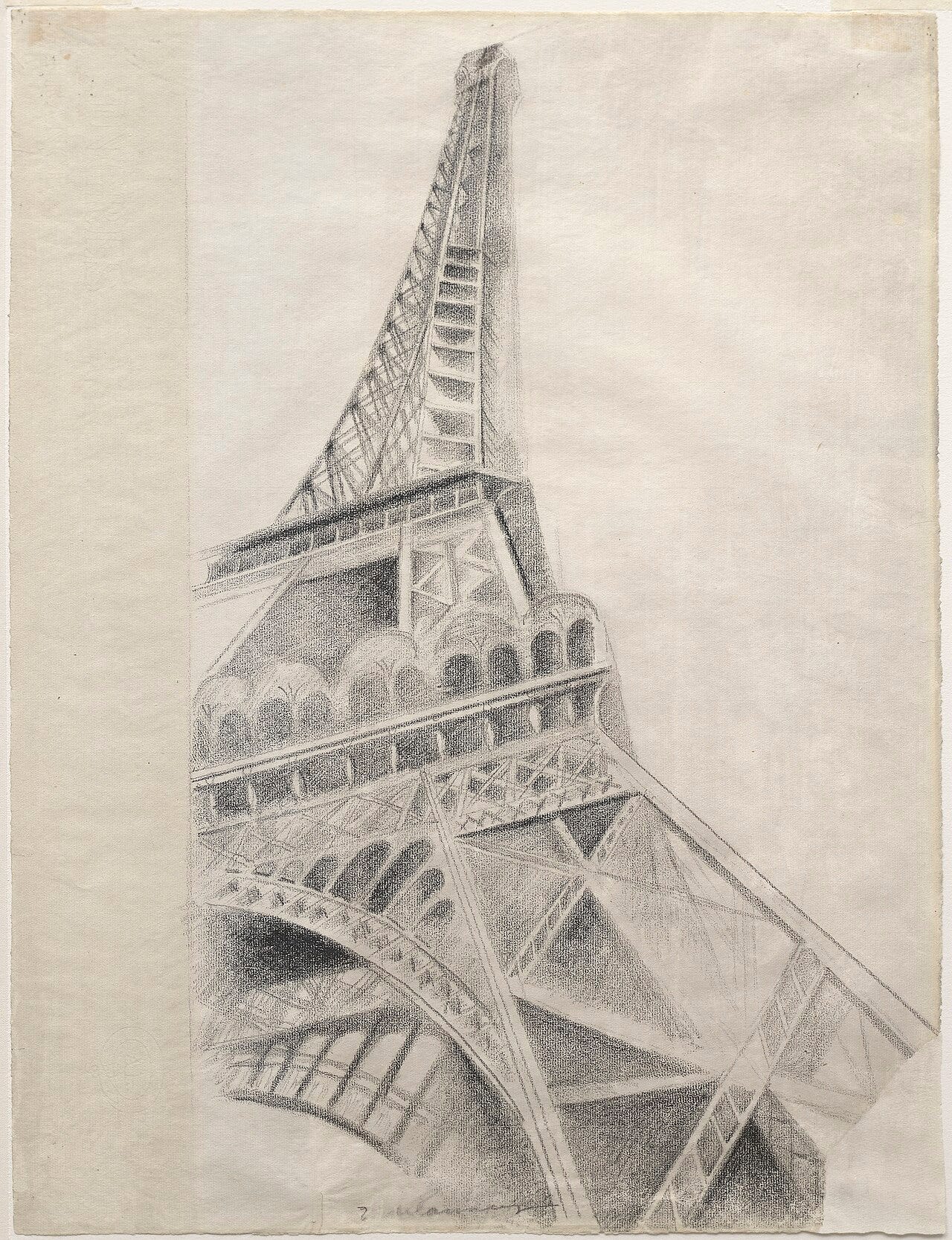
1909: begins the Eiffel Tower series, cracking the monument open like a prism.
1912: the Windows series reaches pure color; Apollinaire names the movement Orphism and writes a poem about it.
1914 to 1920: sits out the war in Spain and Portugal with Sonia, exporting the style to everything from ballets to shop windows.
1937: directs teams of painters on giant murals for the Paris Exposition's rail and air pavilions, his last full-scale statement.
The tower, again and again
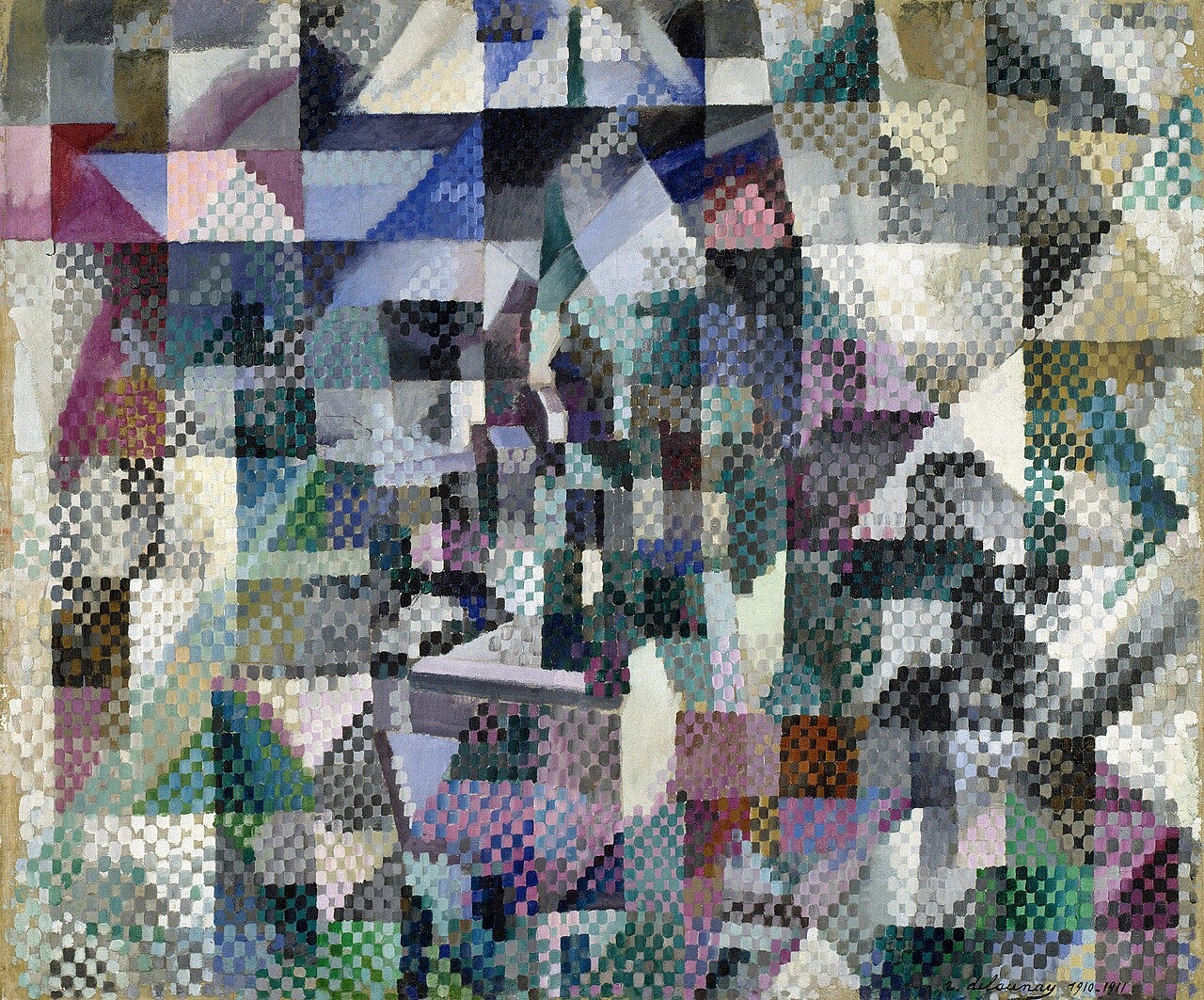
Around 1909 Delaunay took the Eiffel Tower as his motif and refused to let go: across some thirty canvases the iron giant tilts, fractures and blushes red between curtains of Paris housing. The tower series turned Cubist fragmentation into drama, and his Windows series of 1912, the city dissolved into panes of translucent colour, crossed the line into near total abstraction, among the first in France.
Orphism, named by a poet
The poet Guillaume Apollinaire, watching the Windows, named the movement in 1912: Orphism, after Orpheus, painting as pure lyric. Delaunay grounded it in science, the colour theories of Chevreul and his law of simultaneous contrast, and preached what he called simultaneity: adjacent colours creating light, movement and depth without any drawn object at all.
More incredible painter stories
If Robert Delaunay pulled you in, you will love these too:


The partnership
He married the Ukrainian born painter Sonia Terk in 1910, and the movement was a two person firm: Robert theorised and painted; Sonia painted, bound books, designed dresses, blankets and a famous 1913 simultaneous dress, carrying their colour into life itself. The Blaue Reiter painters in Munich, Kandinsky, Klee, Marc and Macke, exhibited him, translated his ideas, and took the lesson east.
The myth: one idea, endlessly repeated
The discs and rings that fill his later work read, to skeptics, as a single trick.
But the trick was a hypothesis proved: his 1913 Disc, a target of pure rings, is arguably the first entirely abstract French painting, and the giant rhythms he painted for the 1937 Paris Exposition, murals for the air and railway pavilions covering hundreds of square metres, showed the idea at architectural scale two decades on.
He died of cancer in Montpellier in 1941; Sonia carried the firm another four decades.
Where to see Delaunay
The Pompidou holds the great towers and discs, and the Musee d'Art Moderne de Paris the 1937 rhythms; MoMA and the Guggenheim keep the Windows. Sonia's own retrospectives now tour as often as his, which he would have called simultaneity of another kind.
Rugby players, billboards, biplanes
In 1913 he painted The Cardiff Team: rugby players leaping under a billboard, with a Ferris wheel, the tower and a biplane crowding in above them.
Sport, advertising and aviation were his Louvre. Homage to Blériot turns the Channel crossing into rotating suns of color.
The claim was consistent: modern light deserves modern subjects, and a poster can carry painting as far as a cathedral once did.
Exile in Iberia
The war caught the Delaunays in Iberia and kept them six years: Madrid, Lisbon, a fishing town in the north of Portugal, where the color wheels absorbed melons and striped awnings.
In Madrid they redesigned Cleopatra for Diaghilev's Ballets Russes, Robert the sets, Sonia the costumes.
Iberia turned a Paris experiment into an exportable style: pure color, applicable to anything with a surface.
Fifty painters, two pavilions
For the 1937 Exposition he ran mural crews of unemployed painters for the rail and air pavilions: discs and propellers at architectural scale, among the largest paintings ever attempted in France.
It was an abstract works program with him as foreman, the studio finally the size he had always argued for.
He died four years later in Montpellier, at 56, during the exodus of 1940-41, with the pavilion walls already demolished and the argument not yet won.
The Robert Delaunay questions that keep coming up
What is he known for? The Eiffel Tower series, the Windows, and founding Orphism with Sonia Delaunay.
What is Orphism? Colour driven abstraction named by Apollinaire in 1912: light built from contrast alone.
Who was Sonia Delaunay? His wife and equal partner, who took simultaneous colour into design and fashion.
When did he die? In 1941, in Montpellier, at 56.
What is simultanisme? The Delaunays' word for color contrasts strong enough to create movement without depicting it. Robert lifted the science from Chevreul, the same optics the Neo-Impressionists used, and pushed it to abstraction.
Who did he influence? The Blaue Reiter circle translated his essays; Klee, Marc and Macke visited the studio, and American Synchromism is largely his echo.
More secrets to unlock


117 works, both names, the Louvre
In 1964 Sonia gave the French state 117 works by them both, and became, that year, the first living woman ever given a retrospective at the Louvre. The firm's colours ended up exactly where Robert aimed them: on the biggest wall in France, under both names.
Robert developed Orphism together with his wife, Sonia Delaunay, whose parallel career in painting and textile design is the subject of Sonia Delaunay, The Complete Story.